Kalispell Mayoral Race Sees Record Campaign Spending
Candidates Kisa Davison and mayor-elect Ryan Hunter spent $31,202 and $11,014 on their respective campaigns, shattering the spending record set by previous municipal candidates
By Zoë Buhrmaster
Mayoral campaigns in Kalispell have historically culminated in candidate expenditures in the thousands of dollars. Mayor Mark Johnson encountered just one contested race during his three terms between 2013 and 2025, spending less than $8,000 on his winning bid against Sid Daoud, who in turn spent about $3,300.
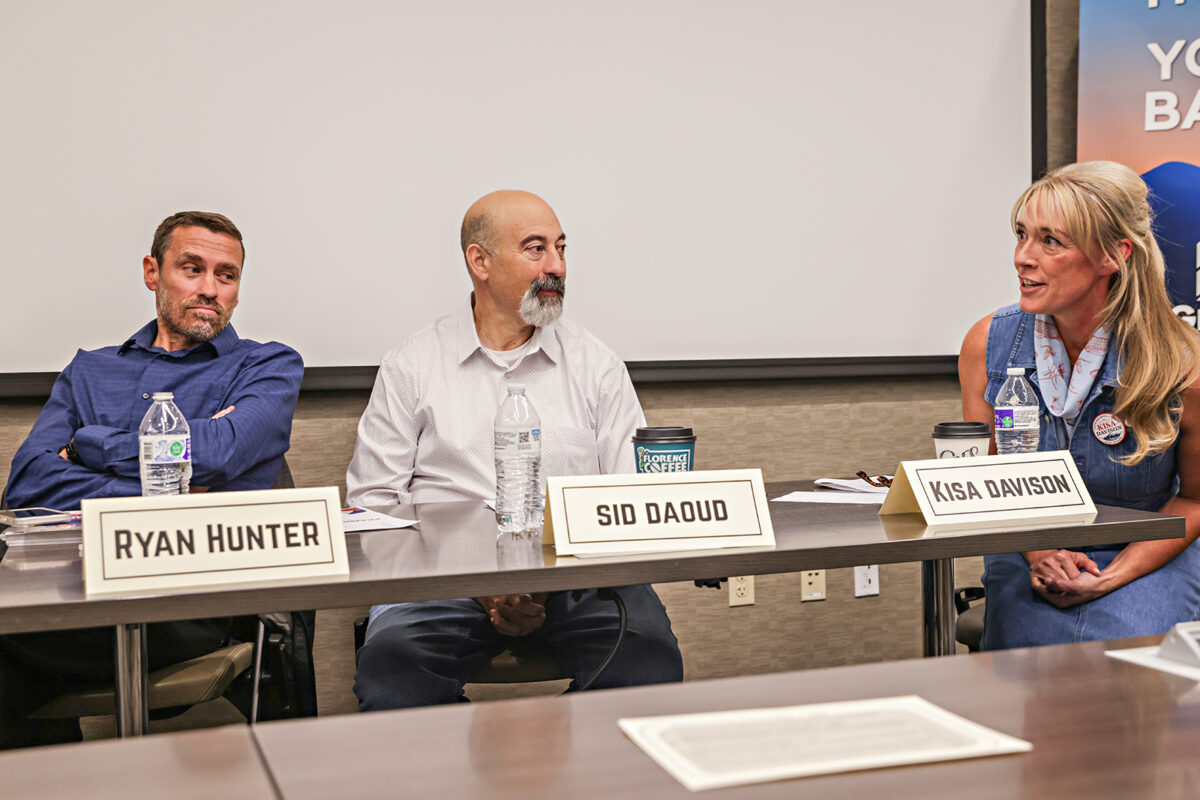
Campaigns for a position at the city’s helm saw increased competition this year, with a three-way race between local businesswoman Kisa Davison and current councilors Daoud and Ryan Hunter. According to preliminary results, Hunter won the race on Tuesday, with Davison conceding the following morning.
During their campaigns, Davison and Hunter both broke into the tens of thousands on campaign expenditures — spending $31,200 and $11,010, respectively. Daoud spent $2,200.
Generally speaking, campaign funding has spiked in elections across the nation. But for a city of 31,912 people, and for a nonpartisan position that pays $9,000 a year (with an $1,800 stipend), high expenditures raise eyebrows, said Tammi Fisher, an attorney and former Kalispell mayor from 2010 to 2014 who won office with a campaign promising fiscal conservatism for the city’s budget.
“The amount of money that is put into these local elections now is absurd,” Fisher said.
Although the position of mayor is technically nonpartisan, the race wore heavy shades of political partisanship. Hunter was supported by members of the Flathead Democrats, while Davison received official endorsements from Montana’s Republican U.S. Rep. Ryan Zinke in addition to the Flathead Republicans, and Daoud nabbed an endorsement from former Montana congressman Matt Rosendale, who belonged to the far-right Freedom Caucus before dropping out of Montana’s U.S. Senate race in 2024.
In Davison’s campaign, funds came primarily from individual and committee contributions, with temporary help from a few self-funded loans. Committee contributions included donations from the Flathead County Republican Central Committee and Montanans for Affordable Housing PAC, the political action committee of the Montana Building Industry Association.
Fisher lives in Flathead County, but outside of Kalispell city limits, making her ineligible to vote in the mayoral election. When she received a mailer for Davison, she was surprised.
“Spending any money on mailers for county residents, because they don’t vote in the city, is a huge misstep,” Fisher said. “That was a swing and a miss there.”




Hunter’s campaign also primarily stood on the legs of donated funds, with the exception of a $1,819 self-contributed donation. Way Back PAC, a political action committee that funds candidates running on local issues versus national party priorities, also helped finance the city councilor’s mayoral campaign.
Hunter attributed his success to the ground game, walking door to door and talking with local residents about their ideas for the city while articulating his stance on local issues.
“I think it can be done cheaper, but that means you have to work harder,” Fisher said.
When Daoud filed for candidacy in April, he submitted that he wouldn’t spend more than $500 on his mayoral campaign. At the time, Daoud said no one else had filed and he didn’t anticipate a competitive race. When Davison and Hunter joined the race and the competitive stakes ramped up, so did Daoud’s campaign contributions as he scrambled to keep pace with the competition. However, in doing so, he failed to update his campaign finance report accordingly; by the end of October, Daoud had realized his error and updated the appropriate contributions filing in arrears.
“I’ve ran a bunch of campaigns before, I understand the rules,” Daoud told the Beacon a week before Election Day. “I am a little bit late getting my file in … Fundraising has been way lower because I wasn’t really counting on advertising to do the work.”
For Fisher, a strong candidate running for a leadership position in city government should define themselves as fiscally responsible, which she said extends to campaign season.
When she ran for the position in 2009, she built a campaign on a promise of fiscal conservatism, one that she followed through with help from then-City Manager Jane Howington. Together they built up the city’s cash reserves from a dwindled state of under $245,000 in 2009 to roughly $1 million by 2011.
“I just think there’s too much money in politics,” Fisher said. “If politics is really about public service, then especially in local races it should be more about the community and meeting your community. I think that’s the mark of probably the best public servant or politician, is somebody who actually knows the people they’re going to be serving.”