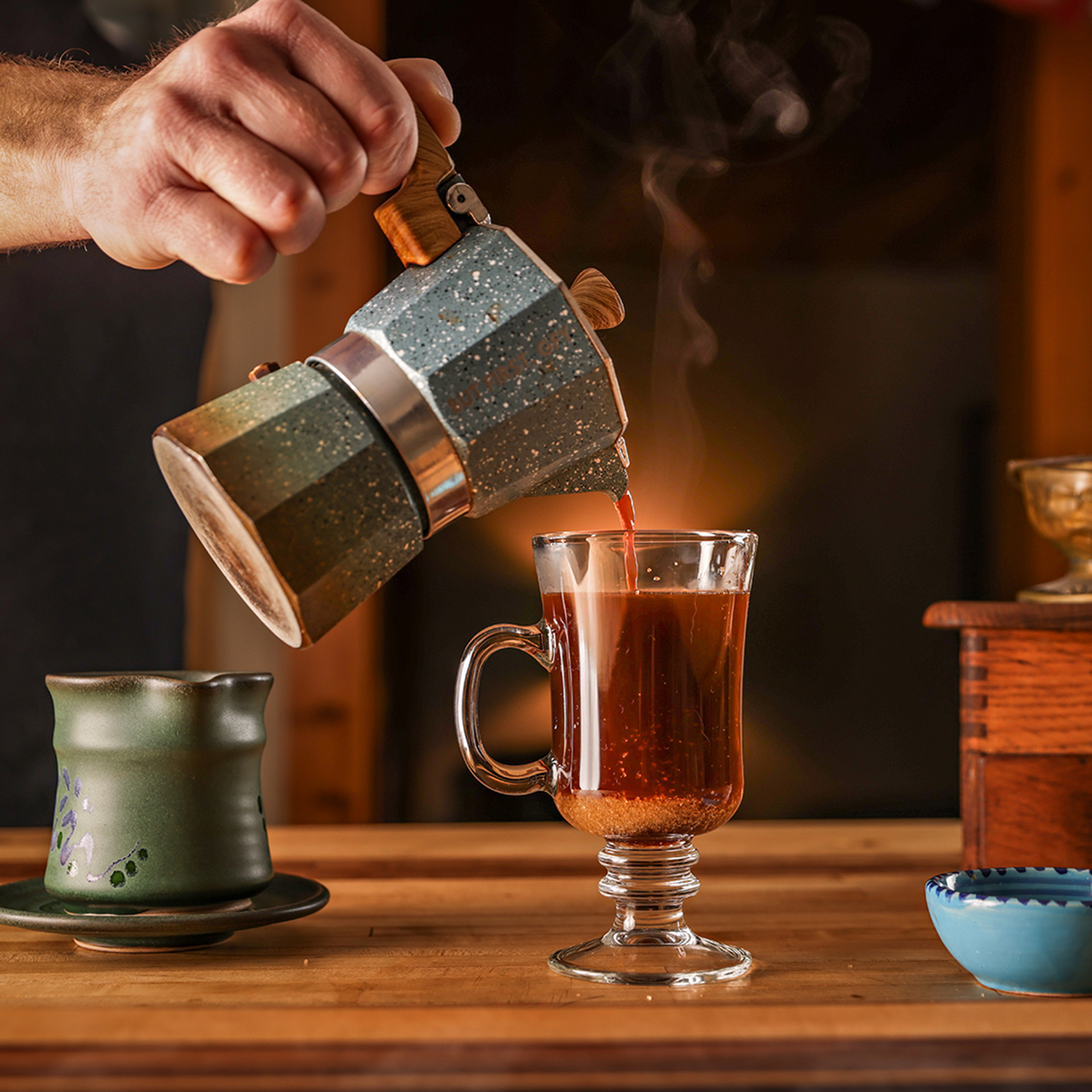
In the Flathead Valley, each winter delivers a few days when the outside world pleads for a person to simply stay at home. The driveway is blanketed with snow and the roads are impassable. The animals won’t go near the door and the chairs on the mountain aren’t even running. The world outside is cold and cruel and conveying alarm.
But despite these indisputable warnings, the region’s human inhabitants still have an inclination to do something. Against all odds they are, albeit slowly, wrapped and ready to head out and brave the elements, off on a perilous journey to satisfy their need for – something.
An argument for waiting out the weather is the Irish Coffee.
In the 1940s, international travel between Europe and North America passed through the small port town of Foynes in County Limerick, Ireland, an essential hub for the large seabusses of the time. Around 1942, a brutal winter storm forced a large Pan Am flight to retreat and wait out the weather. The pilot called ahead to Foynes and asked Joe Sheridan, a local chef, to make a beverage for the rattled passengers about to return from their harrowing ordeal. Joe was a seasoned drinker and undoubtedly knew the benefit of adding a nip to his morning coffee when shaky. He brewed a pot of coffee, added a strong pour of Irish whiskey to each glass and whipped up some local cream to lay on top of the drinks. It was a beverage created specifically for when the outside world doesn’t align with human endeavors.
The calming, caffeinated elixir soon became a staple of Foynes and, with the debut of transatlantic flights, Shannon Airport in County Clare. It might have stayed quietly nestled in obscurity if not for Stanley Delaplane, a Pulitzer Prize-winning journalist and international travel writer for the San Francisco Chronicle. On one serendipitous layover, he found himself on the other side of the airport bar from Sheridan, who had by this time perfected the recipe, which he floridly described as:
“Cream as rich as an Irish brogue; coffee as strong as a friendly hand; sugar sweet as the tongue of a rogue; and whiskey smooth as the wit of the land.”
Delaplane was smitten, recognizing in the drink a perfect companion for the brisk, foggy San Francisco weather.
Delaplane raved in the pages of the Chronicle about The Irish Coffee, and on November 10, 1952, walked into The Buena Vista, his favorite local bar that frequently doubled as his office. Under his arm he carried a bottle of Powers Irish Whiskey and, along with owners Jack Koeppler and George Freeberg, set out to recreate the concoction. Throughout the night the men valiantly experimented, but failed to master the hardest step: floating the cream on top. Though unsuccessful, they consumed enough failed attempts that, according to one account, Delaplane — a consummate professional, completely dedicated to his trade — only narrowly avoided becoming a casualty of the mission by falling asleep on the cable car tracks outside the bar. Failure and near fatality notwithstanding, the owners remained determined. Koeppler flew to Shannon Airport to ask Joe Sheridan himself the secret, eventually cracking the mystery.
Recipe perfected, they added it to the bar menu. Delaplane promoted the drink’s local availability in his column, increasing its popularity and helping cement The Buena Vista as the Irish Coffee capital of the world. Even the drink’s inventor Joe Sheridan eventually emigrated across the pond to work in the famous bar.
To be clear, people have been putting alcohol in coffee since, well, forever. It’s not an Irish endowment, but rather an ingenuity born of being hungover. But the addition of the sugar and, most importantly, a thick layer of cream is what distinguishes an Irish Coffee. Ireland is full of happy cows grazing the verdant countryside, and some bars there top the drink with cream pulled fresh that morning. The cream is the dividing line between the hair of the dog and a delicious daytime cocktail. It is essential for taste and appearances.
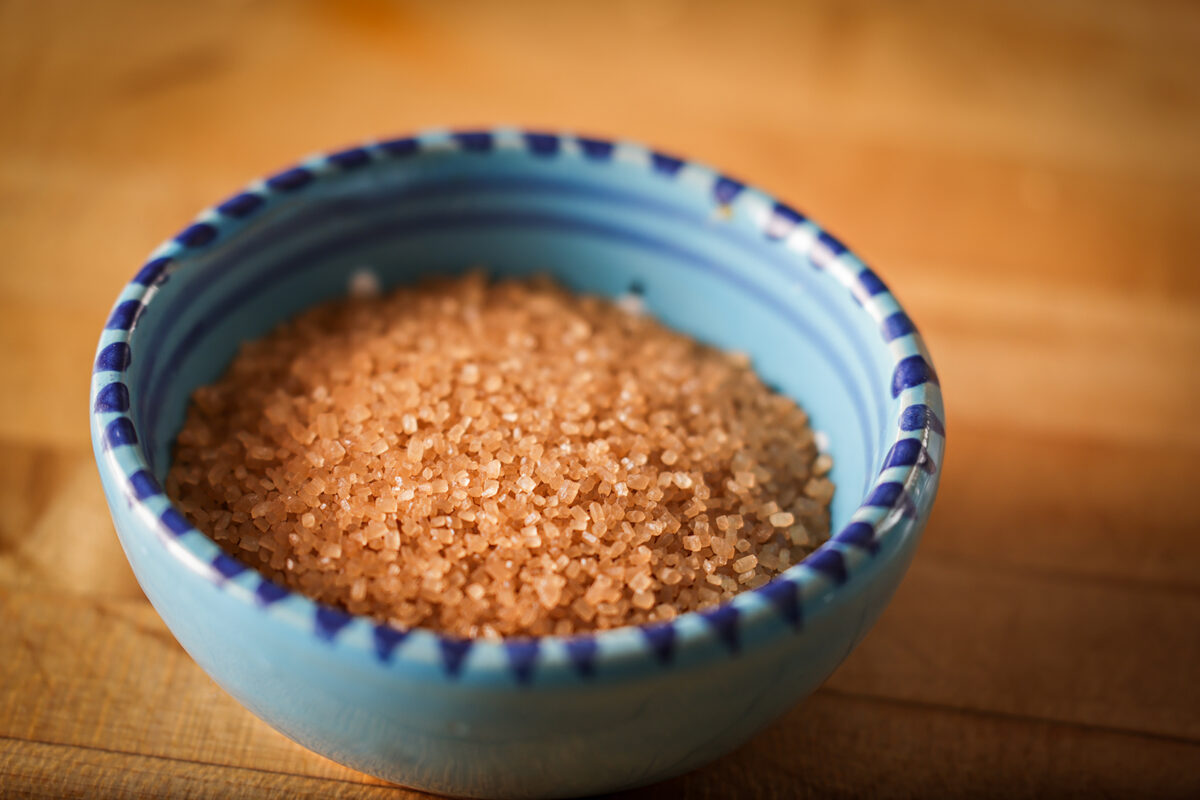
The base of the Irish Coffee is simple, but also shouldn’t be rushed. While brewing strong coffee, warm an 8 oz. mug or glass with boiling water. Once hot, pour the water from the vessel and replace with 2 tsp. brown sugar. Next, toss in a jigger of Irish whiskey, and quickly cover the mix with coffee. Leave a finger of space for the distinguishing feature.
The cream needs to be heavy: 35-40% fat. It should be cold, even chilled in a steel container if needed. It is then whipped or shaken until firm, but not so firm it has to be pulled from the container. The best strategy is to ease it across the top of the coffee by gently pouring it over a spoon.
It really is the perfect drink for winter. It has a smooth cozyness the hot toddy lacks and an everyday accessibility absent in egg nog. The bitterness of the coffee and whiskey mellows when in concert with the cream and, almost at first sip, a warmth originates in one’s core that continues to grow. Almost invariably, the sugar won’t all quite dissolve. This quirk helps transform and sweeten the drink throughout the experience, quickening the pace and guiding the traveler to the bottom of the glass just before it cools.
So, take a hint. Stay inside. Do a puzzle. Read a book. If anyone simply must go out, get some cream.
And stay off cable car lines.
Pub Facts
• January 25th is National Irish Coffee day.
• Brendan O’Regan (who brought Joe Sheridan to Foynes and has also laid claim to a portion of the first Irish Coffee) was controller of Shannon Airport and the person who introduced duty-free to airports.
• The Buena Vista sells 2,000 Irish Coffees a day on average.
• A plaque outside The Buena Vista commemorates Stanton Delaplane, Jack Koeppler and George Freeberg for their ingenuity in recreating the Irish Coffee.
• Stanton Delaplane also inspired the invention of the Duke’s Martini by world-famous bartender Salvator Calabrese of Duke’s Hotel in London, and contributed to its subsequent popularity with its inclusion in one of his columns.