Page 21 - Flathead Beacon // 7.23.14
P. 21
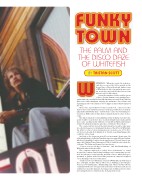
FUNKY
TOWN
THE PALM AND THE DISCO DAZE OF WHITEFISH
BY TRISTAN SCOTT
WHITEFISH – When the strobe-lit, polyester- clad disco scene of the 1970s arrived in the sleepy, blue-collar railroad and timber town of Whitefish, its tide of popularity was crest- ing in the big-city hotbeds that fostered the meteoric rise of club culture.
It was the summer of 1976, and the Queen of Disco, Donna Summer, was sizzling in se- quins while the serial killer David Berkowitz terrorized New York City with a .44-caliber handgun, adopting the nickname “Son of Sam” and signaling an end to the summer-of-love hippie zeitgeist that dominated
the ‘60s.
There were reportedly 10,000 discos in the U.S. – discos for roller
skaters, discos for children and senior citizens, portable discos in shop- ping malls and Holiday Inns – and the dance craze was sustaining a fe- ver pitch as Billboard’s weekly charts regularly featured a slate of disco songs.
The halcyon days were just alighting on this working-class ski town, and it would be years before disco reached its high-water mark and the wave came crashing down with Disco Demolition Nights and bumper stickers bearing the infamous anti-disco sentiment “Disco Sucks.”
The counterculture born of the 1960s wasn’t yet ready to wake up to its collective hangover or wink away the haze of the 1970s. In Whitefish, the effort to reforest clearcut-logged areas created scores of U.S. For- est Service jobs and drew hundreds of twenty-something hippies who could live on the cheap.
And just as the town was poised for a movement, along came the golden handshake of a flashy Canadian investor named Fraser Baalim, who hired a handful of contractors from a Denver, Colorado-based com- pany called Lights Times Dimension (LTD) to build the state’s first dis- cotheque, The Palm, and change the town forever.
“I was a 23-year-old disco-technician,” said Jim Blankenship, of Whitefish, who worked for LTD.
The company employed so-called “disco-technicians” to travel around the country remodeling buildings and constructing special- ized discotheques, sound systems and dance floors, which were pro- grammed to pulsate with fractal-like patterns in a myriad of lighted colors, flashing to the beat of the music.
“I had never been to Montana or heard of Whitefish, and when I got here I thought, ‘Really? This is where we’re building a discotheque? You’ve got to be kidding me,’” Blankenship said. “There was this old-boy community with a lot of loggers and railroaders at the bars, and all of a sudden there was this infusion of young people in white polyester suits pretending they were John Travolta. It changed the town.”