


Page 32 - Flathead Living // Spring 2015
P. 32
THE BISON RANGE HAS
launched a program for invasive species management, particularly Medusahead, an aggressive invasive grass species native to the Mediterranean region in Europe, which was discovered this year on the Flathead Indian Reservation. The Bison Range has been working closely with tribal lands, and Lake, Missoula, and Sanders counties to map out the locations of the plant. Lisk says cattle are believed to be the main transporter of Medusahead.
forage from horses, brought over in the 16th century by Spanish explorers. Further com- petition came in the form of cattle, which also brought communicable diseases. The demand for bison robes and leather increased the hunting pressure by Native Americans and fur trappers, while the railroads paid professional hunters to provide meat to workers.
In 1880, the mass slaughter began as mil- lions of bison were shot for their meat, hides and for sport. Carcasses were left to rot in the prairie sun, and by 1883 they were close to extinction.
When President Theodore Roosevelt established the National Bison Range in 1908, there had never been an appropriation of money to buy lands expressly to provide shelter and space for wildlife.
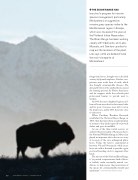
As one of the three initial reserves set aside for the preservation of American bison, the National Wildlife Refuge in Moiese has played an important role in the success story of recovery of the once endangered plains bison. Today, the herd is maintained at between 350 and 500 animals, while excess bison are sold or donated to provide a gene pool and breeding stock to augment other herds.
The mission of the National Bison Range is “to provide a representative herd of bison, or buffalo, under reasonably natural con- ditions, to help ensure the preservation of the species for continued public benefit and enjoyment.” CONTINUED NEXT PAGE
30 FLATHEAD LIVING | SPRING 2015


