


Page 22 - Flathead Beacon // 9.14.16
P. 22
COVER SUPERFUND
July 20, 1955 At 9:15 a.m., the  rst electrical power is applied to the plant’s 120 aluminum reduction pots.
Aug. 12, 1955 After three years of development and cost overruns, the Anaconda Aluminum Company plant opens with a formal dedication that draws over 7,000 people. Originally planned to cost $45 million, the plant ended up costing $65 million, equivalent to $580 million today after adjusting for in ation. Robert E. Dwyer, president of the Anaconda Company, celebrates the facility as “the most modern aluminum plant in the world.”
1965 The plant adds a third potliner to the two existing potliners, expanding the annual capacity from 67,500 tons of aluminum pro- duced to more than 100,000 tons.
1968 A fourth potliner is added, increasing production to 180,000 tons of aluminum per year.
July 1969 Clinton Carlson, a researcher with the U.S. Forest Service, reports on the impacts of  uoride emissions from the aluminum plant on the surrounding plant species and wildlife. Carlson continues to report on negative environmental impacts spreading into Glacier National Park and the surrounding valley due to the polluting plant. Carlson said the  uorides are extremely toxic and pollution remains three to  ve times higher than air quality standards.
September 1970 Local orthodontist Loren Kreck and his wife Mary  le a class-action lawsuit against the Anaconda Aluminum Company, citing scienti c evidence that industrial air pollution — speci cally,  uoride emissions from the Anaconda-owned Columbia Falls aluminum plant six air miles away — were harming wildlife by pumping poisonous gas into the air at a rate of 10,000 pounds per day. Kreck’s lawsuit becomes the largest civil lawsuit in the history of the 11th Judicial District Court, seeking more than $24 million in damages. Kreck becomes somewhat of a public pariah due to the high-pro le lawsuit against the town’s top employer, and bumper stickers emerge reading, “To Heck with Kreck.”
May 15, 1973 District Court Judge Robert C. Sykes dismisses the Kreck lawsuit without prejudice. As per the agreement, the compa- ny spends millions on new environmental controls, and emissions soon drop from 10,000 pounds per day to 861 pounds.
1976 Following the lawsuit, the plant’s owners invest $42 million in product techniques and e ciencies to reduce emissions and electrical consumption, bringing production to 185,000 tons per year.
Jan. 12, 1977 Atlantic Rich eld Company (ARCO) purchases the Anaconda Company, a merger with combined assets of $9.37 billion. With 981 employees and a payroll of $16 million annually, the aluminum company is the largest employer in Flathead County.
1980 The aluminum property is registered by the state Department of Environmental Quality as a large-quantity hazardous waste genera- tor and transporter.
1983 ARCO announces intentions to divest its metals division — the brass and aluminum operations — including the Columbia Falls plant. Low aluminum prices and high electric costs plague the facility, which consumes nearly one-quarter of all the power used in Montana.
1984 The Montana Department of Health and Sciences conducts a preliminary site assessment at the property,  nding hazardous and solid wastes are generated on site.
June 1985 Brack Duker and Jerome Broussard begin negotiat- ing the purchase of the aluminum plant, which is losing money due to the struggling market. ARCO is seeking to get rid of the Columbia Falls facility as it divests its metal division.
September 1985 ARCO sells the plant to the Montana Aluminum Investors Corporation, led by Duker, a former ARCO o cer, and Broussard, for a symbolic $1. The property begins operating as Co- lumbia Falls Aluminum Company, or CFAC. Company o cials persuade hundreds of workers to take a 15 percent pay cut in return for a 50 percent share of any future pro ts. Duker assures workers that if the aluminum market ever recovered they would be properly compensated.
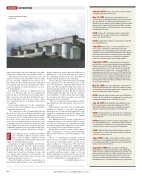
Columbia Falls Aluminum Company.
BEACON FILE PHOTO
while bolstering the objective authority of the EPA, rather than caching all the eggs in CFAC’s basket.
“This gives us the insurance that we needed, and which we couldn’t get from a CFAC-driven cleanup process,” she said. “I know it’s not reason to cele- brate when you have a Superfund site designated in your landscape, but if you already have a land- scape that quali es for Superfund then it is a posi- tive development.”
Pat Munday, a professor at Montana Tech in Butte, is a historian who for years studied the political and social dynamics surrounding Super- fund operations. He said that although the pro- gram is imperfect and can lead to delays, it has been extremely e ective at holding corporations accountable.
It also adds a prodigious tool to the community’s toolbox in terms of providing resources to facilitate community engagement.
“One of my hopes is that Columbia Falls follows the model of other successful Superfund sites and forms a local citizens’ group,” Munday said. “It will be critical to get local stakeholders involved from all corners of the issue, from real estate to busi- ness to the environment and recreation. It gives the community some directional force and a voice that they wouldn’t have otherwise, and it also helps the community push the issue along and hold the agen- cy’s feet to the  re and not let them be too relaxed.”
F ederal o cials proposed adding the CFAC site to the NPL on March 26, 2015, and the EPA received 77 public comments on the potential listing, a wide majority expressing
support for the Superfund cleanup.
Among those to support listing were the Colum-
bia Falls City Council, Gateway to Glacier Trail, National Park Service, Glacier National Park, Montana Fish Wildlife and Parks, Flathead Basin Commission, several local business owners and river guides, and a number of other private citi- zens, including current and former residents and frequent vacationers to the area.
Chas Cartwright, a former superintendent of Glacier National Park who serves on the Flathead
Basin Commission, said he appreciated Glencore’s willingness to come to the table and restore some of the community’s faith, but the iron-clad authority of Superfund designation is more binding.
“It’s the old adage of trust but verify,” Cartwright said. “And I’m not so sure that based on a couple years of work that the company is always going to be at the table. We already know that some of the con- taminants in the ground are going to present prob- lems, and I think they are more likely to be rigorous and thorough if they have the structure and asso- ciated funding to really come up with a good plan. Because if you don’t have a good plan, you are likely not going to have good results.”
“There is no doubt in my mind that going the Superfund route was the absolute best way to go,” he added.
Mark Johnson, president of the Columbia Falls Chamber of Commerce, said his board members had prepared for a Superfund designation by dis- cussing the community’s vision for the future of the CFAC property, as well as the future of Columbia Falls in the next 10 years.
It’s a di cult discussion, he said, because it forces community leaders to accept that CFAC’s closure cost the city nearly 1,500 good-paying jobs, while the timber company Weyerhaeuser’s recent closure of two mills jettisoned an additional 200 jobs.
The harshness of that economic reality comes at a time of signi cant economic growth in Columbia Falls as new businesses and young families settle there.
“We are a community in transition from an extraction-based economy to something else. What that is we are still trying to  gure out, but we are eager to embrace it,” Johnson said. “We want to be the  rst Superfund site in the state of Montana that comeso oftheNationalPrioritiesList.Wewantthis process to go as e ciently, thoroughly and as quickly as possible, and that is going to require every com- munity stakeholder be engaged in the process. We are going to make sure that everyone involved hears our voices and that there is no dragging of feet.”
tscott@ atheadbeacon.com
22
SEPTEMBER 14, 2016 // FLATHEADBEACON.COM


