Fueled by Winds, Nearby Fires Contribute to the Flathead Valley’s Smoky Skies
Lightning-caused fires in the West Lolo Complex include the Thorne Fire burning north of Thompson Falls
By Beacon Staff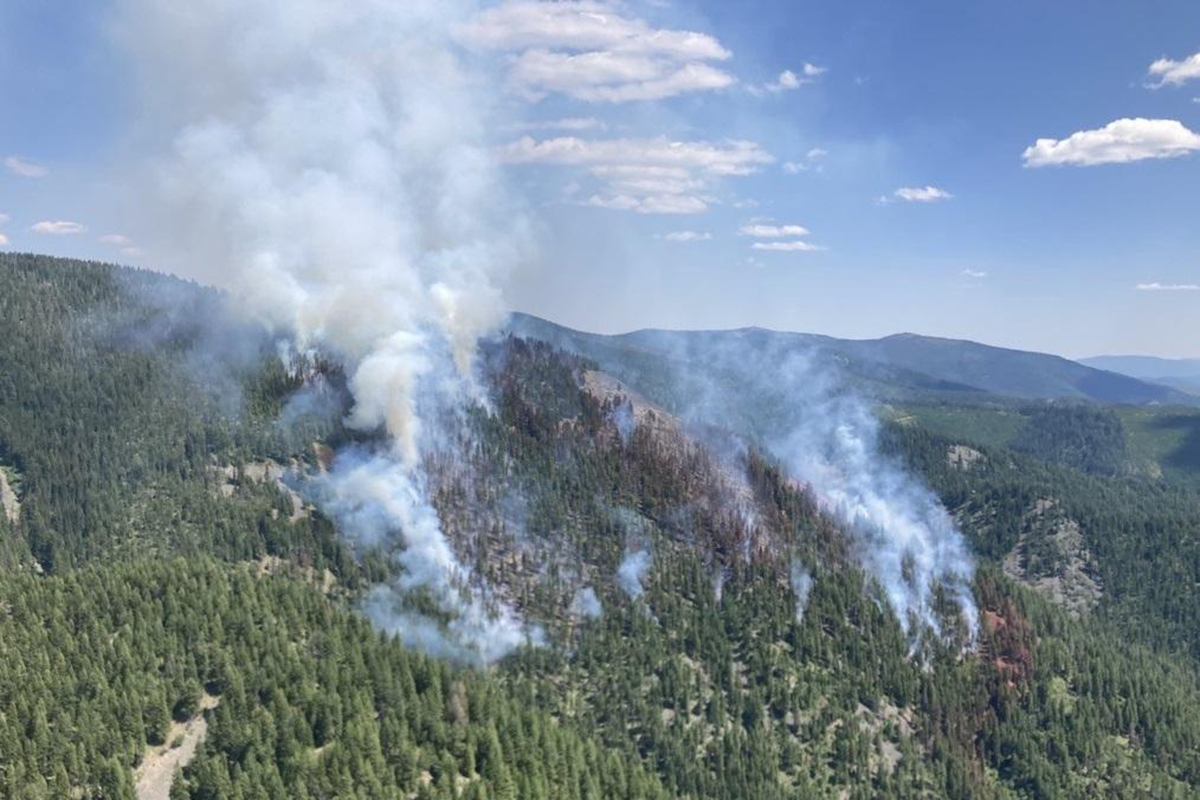
Numerous fires burning in western Montana, as well as in northern and central Idaho, have contributed to diminished air quality and smoky skies in the Flathead Valley, with the nearest grouping of wildfires, dubbed the West Lolo Complex, burning at various locations in St. Regis, Superior, Plains, and Thompson Falls.
Caused by lightning strikes on July 8, the complex of seven wildfires burning on portions of the Lolo National Forest in Sanders County was estimated at 1,240 acres as of July 12 and is being managed by a Type 1 Incident Management Team, which is using a full suppression strategy consisting of about 220 personnel. As individual wildfires in the complex are contained, they are reassigned to the local U.S. Forest Service districts. Firefighting costs were estimated at $1.9 million as of July 12, when the Beacon went to print.
Forest fuels are at historically dry conditions in the region, allowing for fires to grow quickly in high winds, which also helps clear out smoke; however, with lighter winds forecast for July 12-13, smoke will continue to build, according to Incident Commander Mike Goicoechea.
Four of the complex’s fires are burning in the Lolo National Forest’s Plains/Thompson Falls Ranger District, including the 928-acre Winniemuck and Thorne Creek Fire, located northeast of Thompson Falls, as well as the 19-acre Siegel Fire, located several miles up the Siegel drainage northeast of Quinn’s Hot Springs.
Both of those fires have contributed to the smoke-filled skies in the Flathead Valley.
Nationally, the Northern Rockies area is the highest priority due to multiple new large incidents and the historic number of Incident Management Teams assigned. Fire activity is high in many locations across the country and fire resources are limited. To view a summary of fire activity nationally and incident management team assignments please visit https://www.nifc.gov/nicc/sitreprt.pdf.