The Rippling Effects of High Housing Costs
In the Flathead Valley, a lack of housing is stalling job growth while preventing younger generations from achieving financial stability
By Maggie Dresser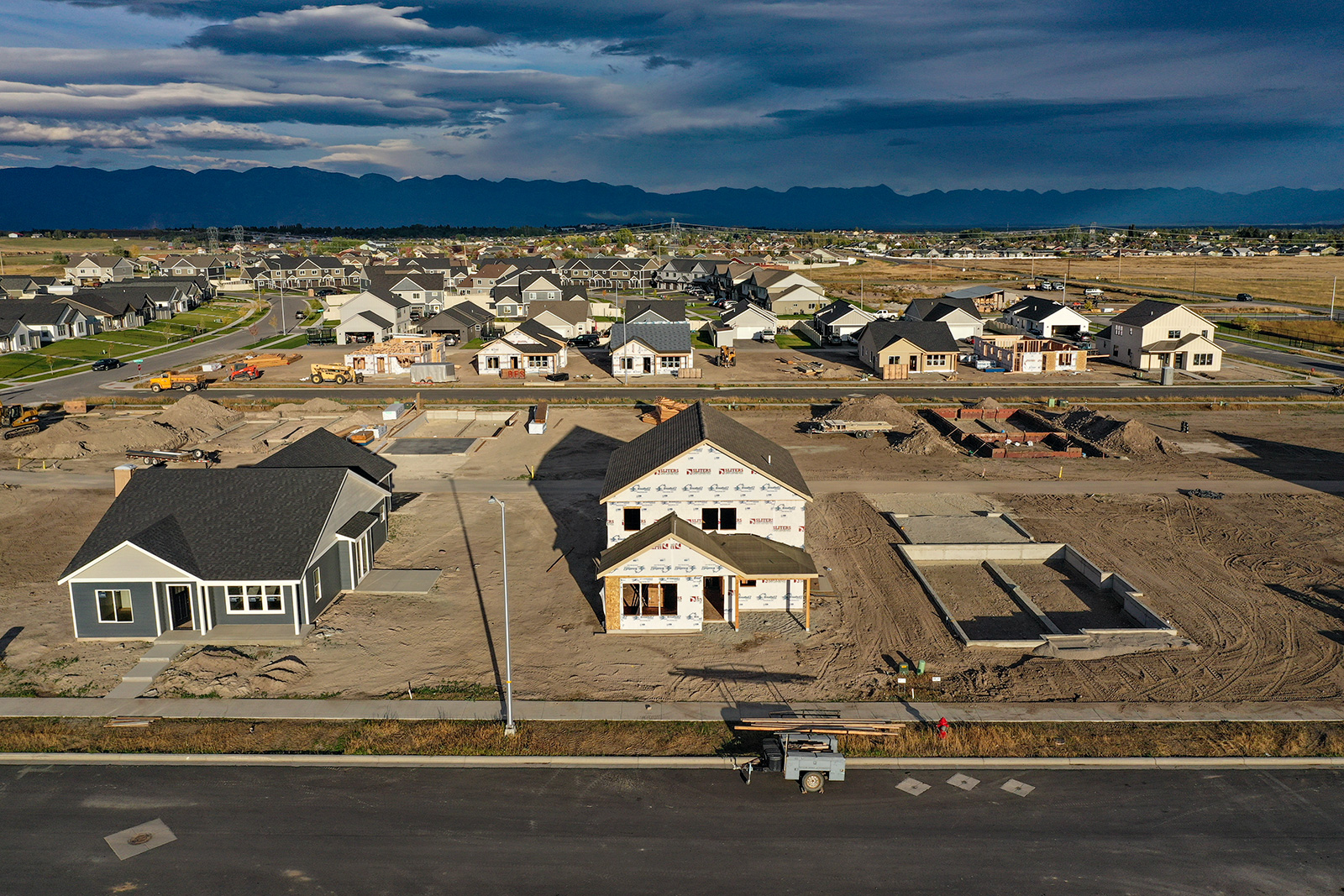
Even before the pandemic exacerbated housing prices, the cost of homeownership was already outpacing monthly incomes, which has subsequently eroded the labor force, muddled the path to homeownership and disrupted the traditional formula for wealth accumulation for younger generations.
“When you look at what happened over a five-year period, housing prices were going up and eclipsed the growth and income,” said Patrick Barkey, the director of the Bureau of Business and Economic Research (BBER) at the University of Montana at its annual economic outlook seminar in Kalispell in February. “Then the pandemic hit. The gates opened and everybody wanted housing … Prices were growing by 25% last summer.”
Between a higher demand and national policies like near-zero interest rates and the conventional 30-year mortgage rate dropping below 3%, the Federal Reserve is preparing to raise rates in March, which will likely cause housing prices to dip.
Although median housing prices have already dropped since their peak in 2021, with Flathead County topping out at $635,000 in December 2021, the housing supply isn’t going to outpace demand anytime soon, meaning market pressure will remain high.
Housing unaffordability has rippling effects across the economy, Barkey says, and with an inflation rate of 7%, the high costs of living are straining bank accounts, taking an outsized toll on the labor market as employers struggle to recruit workers because they cannot find a place to live.
“We have inflation because we have a healthy economy,” Barkey said. “We have some very familiar problems today that have come back surprisingly fast. We had labor market shortages and boy, have we got them now.”
High costs are also pushing individuals out of cities, creating an urban sprawl that impacts the labor market as people move further away from amenities.
“That’s when you’re trying to hire a mid-level employee,” Barkey said. “It becomes difficult to swing that. When you’re talking about essential jobs … Like public service and teachers, the economy doesn’t function well without those workers. High housing prices, nationally speaking, are an issue. It’s changed the way our economy has evolved.”
At the Kalispell Chamber of Commerce, CEO Lorraine Clarno says the housing crisis continues to severely impact job growth in the Flathead and several manufacturers and other companies tell her that housing continues to prevent job growth.
“Attracting (workers) into our area is continuing to be a challenge,” Clarno said. “Hopefully with the City of Kalispell’s new units coming online here in the next couple of months, we’ll see a little bit of relief. But supply is not going to outpace demand anytime soon.”
At the seminar, Clarno said one of the top interview questions that employers ask potential employees is if they have stable housing.
“More than 50% of renters are spending 30% to 50% of their household income on rent,” Clarno said.
Despite a low unemployment rate of 2.5% in Montana as of January, Barkey says the labor participation rate has significantly dropped since the pandemic began, with workers over 55 dropping out of the workforce.
In addition to the labor force, high housing prices are an indication of economic inequality as the path to first-time homeownership leaves younger generations with fewer opportunities, Barkey said.
“When you look at the assets and liabilities of a typical American household as they go through life working, one of the biggest items on the assets is real estate,” Barkey said. “You buy the starter home and that’s a big part of your economic security. With high entry levels for housing, people can’t get in on that game.”
At First Interstate Bank in Kalispell, mortgage loan officer Annika Harris said during the seminar that the number of young locals and families interested in buying their first home has decreased significantly.
“When a monthly mortgage payment exceeds 50% to 80% of the gross monthly income, home ownership isn’t really an option for many,” Harris said. “A lot of young people get discouraged and they resort to renting or they move out of the area. At the same time, homeownership is a key way to build wealth. I don’t really know what the future holds for young local families.”
Harris describes the housing market as a “rising rate” environment, which will be difficult for lower-to-middle class families to break into.
“This area will continue growing,” Harris said. “It’s very desirable … Affordability is going to continue being a great challenge for locals.”