‘A Cascading Effect’: Grant Cuts Hit Local Food Programs Now, Federal SNAP Reductions Loom
Nonprofits prepare for decreased funding and increased demand as SNAP cuts from the Big Beautiful Bill come in the next months, years
By Mariah Thomas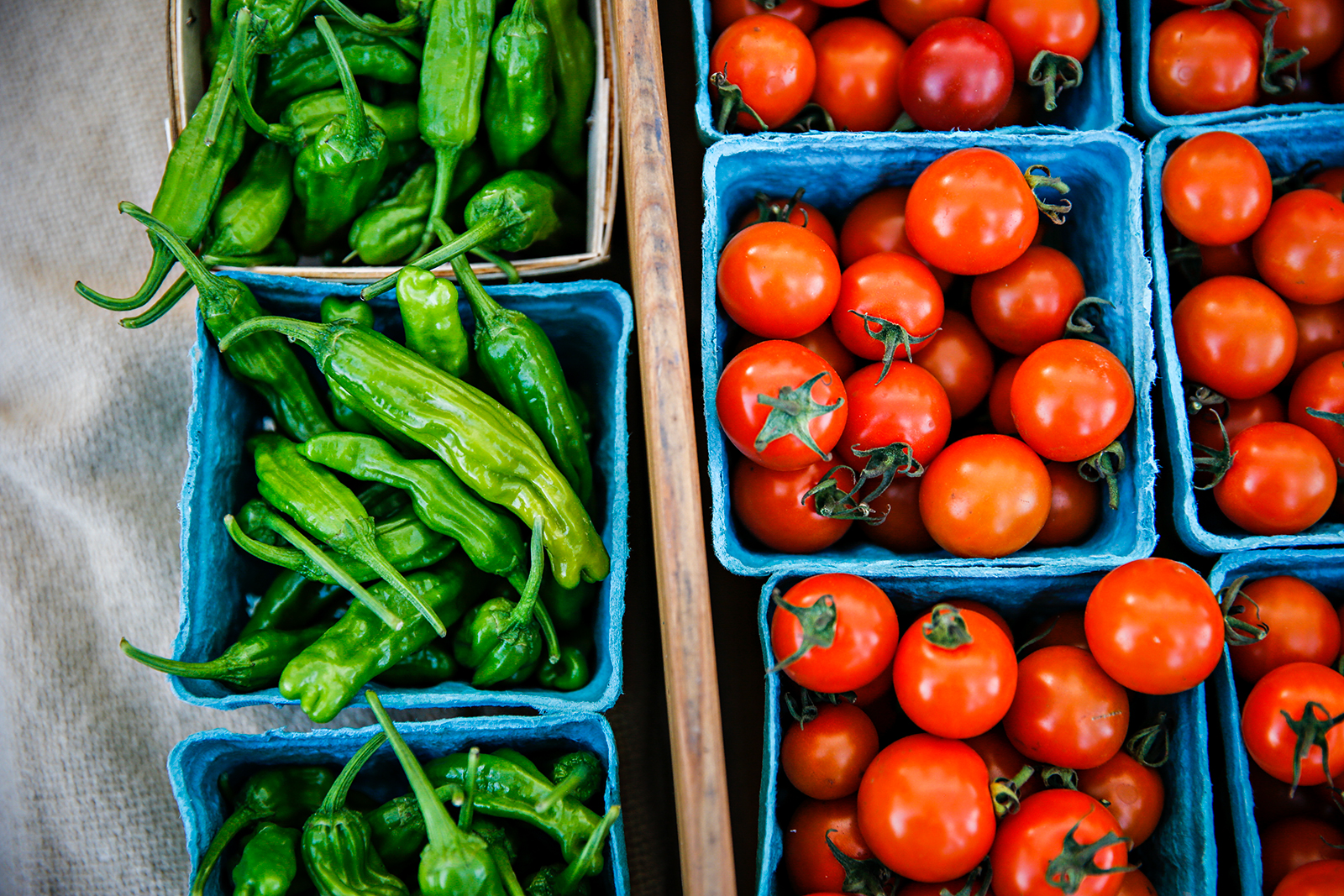
When Gretchen Boyer got word the Gus Schumacher Nutrition Incentive Program grant was ending in the middle of the summer and a new grant cycle had yet to open, she knew Land to Hand needed to raise funds to keep its Double SNAP program functioning throughout the end of farmers market season in October.
The program helps those on the Supplemental Nutrition Assistance Program (SNAP) double the impact of their dollars at local farmers markets. The SNAP program is a federal one that “provides food benefits to low-income families to supplement their grocery budget so they can afford the nutritious food essential to health and well-being.” It serves more than 80,000 Montanans. That figure includes 6,240 people in Flathead County, per May figures from the Department of Public Health and Human Services.
Montana received one of the Gus Schumacher Nutrition Incentive Program grants for $622,673 in 2020, and another totaling $500,000 in 2021. Both grant cycles stretch through August 2025. Boyer explained the funds get doled out across the state to local groups who help administer the funds.
Boyer and her team at Land to Hand — a local nonprofit helping provide access to nutritious food — have handled Double SNAP in northwest Montana for years. Land to Hand administers Double SNAP for SNAP recipients at farmers markets hosted weekly in Whitefish, Kalispell, Columbia Falls and Bigfork.
Recipients can double up to $20 of their SNAP dollars to purchase fresh fruits and vegetables from local vendors. It helps SNAP benefits stretch even further, while also putting federal money back into the local economy.
Mara Schradle, Land to Hand’s Food For All program manager, said that in 2024 farmers markets in Whitefish and Kalispell saw 152 SNAP recipients use the Double SNAP program. Altogether, they redeemed $22,346 from SNAP. Nearly half — $10,689 — came from Double SNAP.
But this year was different for Land to Hand thanks to the grant’s end. The nonprofit had to launch a last-minute fundraising campaign in May. It asked for $50,000 in donations to maintain the program through the end of market season.
“It was amazing,” Boyer said. “We raised the money, and it was incredible because our community is incredible.”
Double SNAP will be available in the area through the end of this market season. But there’s no guarantee Double SNAP will exist at all next year. Boyer, who has been with Land to Hand for 20 years, doesn’t yet know whether the grant that paid for the program will be available to apply for again.
In fact, much of this year has proved an exercise in uncertainty for Boyer’s organization, as well as others like it that are in the business of feeding those in need in the Flathead.
Food banks, too, have seen cuts to grants they’ve historically relied upon. And it’s a weighty ask to lean completely on the community to fill those holes.
But Boyer and those in her sphere of food assistance are priming for the gaps in food access that they fill to get bigger. That’s thanks to a historic cut to SNAP coming down the pike with the passage of the One Big Beautiful Bill Act.
The sweeping legislation contained an estimated $186 billion cut to SNAP by 2034. It’s a cut that could leave millions of people nationally without assistance to purchase nutritious foods.
The combination of grant cuts and SNAP cuts paint a bleak picture for organizations like Land to Hand.
“I think the cut to SNAP federally is more of a strain on all of our other programming,” Schradle said. “… The part that I struggle with the most is we already know the benefits cliff is real, and we already know people are struggling with it. And if this many more people are suddenly affected by it, that means our community in general is going to be struggling in a huge way.
“And, if in combination, we aren’t getting federal grants for this, then those gaps that we’re trying to fill are just getting larger, and we have less to fill them with. I think it is a cascading effect.”
The One Big Beautiful Bill, a sweeping federal budget reconciliation bill, passed the U.S. Congress on July 3. President Donald Trump signed it into law at a fanfare-filled celebration at the White House on Independence Day. All four members of Montana’s congressional delegation — Sens. Steve Daines and Tim Sheehy and Reps. Troy Downing and Ryan Zinke — voted yes on the legislation. Their yes votes followed their work to cut a public land sale provision from the bill.
“The Big Beautiful Bill will benefit Montana for generations to come and ensure that we remain The Last Best Place,” Daines said about the bill’s passage.
The legislation contained cuts and increases to several federal programs, offering billions more in funding to the military, border security, immigration enforcement and continuing Trump’s 2017 tax cuts. It simultaneously slashed funding to Medicaid, green energy credits and SNAP.
Proponents of the cuts to SNAP and Medicaid were vocal about concerns of fraud and abuse within the programs.
“Work requirements and removing illegal immigrants from Medicaid and SNAP are not cuts, they are savings and needed reforms,” Rep. Zinke posted on X, formerly Twitter. “The Big Beautiful Bill strengthens these programs by ending abuse and ensuring help goes to Americans who need these essential services.”
The SNAP cuts contained in the bill will come from cutting funding for most states’ basic food benefits, beginning in 2028. If a state can’t make up for those federal cuts, then it would have to cut its SNAP program. It would do so either by restricting eligibility, or opting out of the program altogether.
The legislation also implements a new work requirement for people between the ages of 18-65, stating they must work, volunteer, or be in school at least 20 hours per week to be eligible for the benefits. Work requirements did already exist in SNAP for people through age 54. The budget bill’s new work requirement will go into place in January of 2026. There are some exceptions to the work requirements, including for those “medically certified as physically or mentally unfit for employment.”
The bill also axes SNAP eligibility for non-citizens who aren’t permanent residents or Cuban and Haitian entrants. That piece of the legislation will specifically impact refugees and people who’ve been granted asylum in the U.S. Asylum seekers can include those who’ve been persecuted against based on race, religion, nationality or political opinion, or people who have been victims of sexual violence or abuse. People who are undocumented are already ineligible for SNAP benefits.
There is a quality control system baked into SNAP. State agencies must identify payment errors, which often come as a result of mistakes when calculating a family’s benefits. There are two types of payment errors: underpayments, where households receive less than they’re entitled; and overpayments, where they receive more.
Each year, the USDA analyzes data from the states and determines national and state payment error rates. Montana’s payment error rate sat at 8.89% for fiscal year 2024 — a figure that came from 6.47% of payments being classified as overpayments, while 2.41% were underpayments.
Even so, claims about widespread fraud and abuse existing in the system are ones Boyer struggles to get onboard with. In her experience, applying for SNAP benefits is an “onerous” process. She said it requires proof and documentation every step along the way.
That’s an assessment Sophie Albert, the executive director of the North Valley Food Bank in Whitefish, agrees with.
Albert has served as executive director of the North Valley Food Bank in Whitefish for the last five years, leading the nonprofit through a pandemic, historic inflation and, now, the unprecedented cuts to SNAP.
“Food banks are kind of like a subsidy on top of SNAP,” Albert said. “Not everybody who comes here receives SNAP.”
But people on SNAP use the food bank to help fill gaps the program doesn’t cover, Albert said.
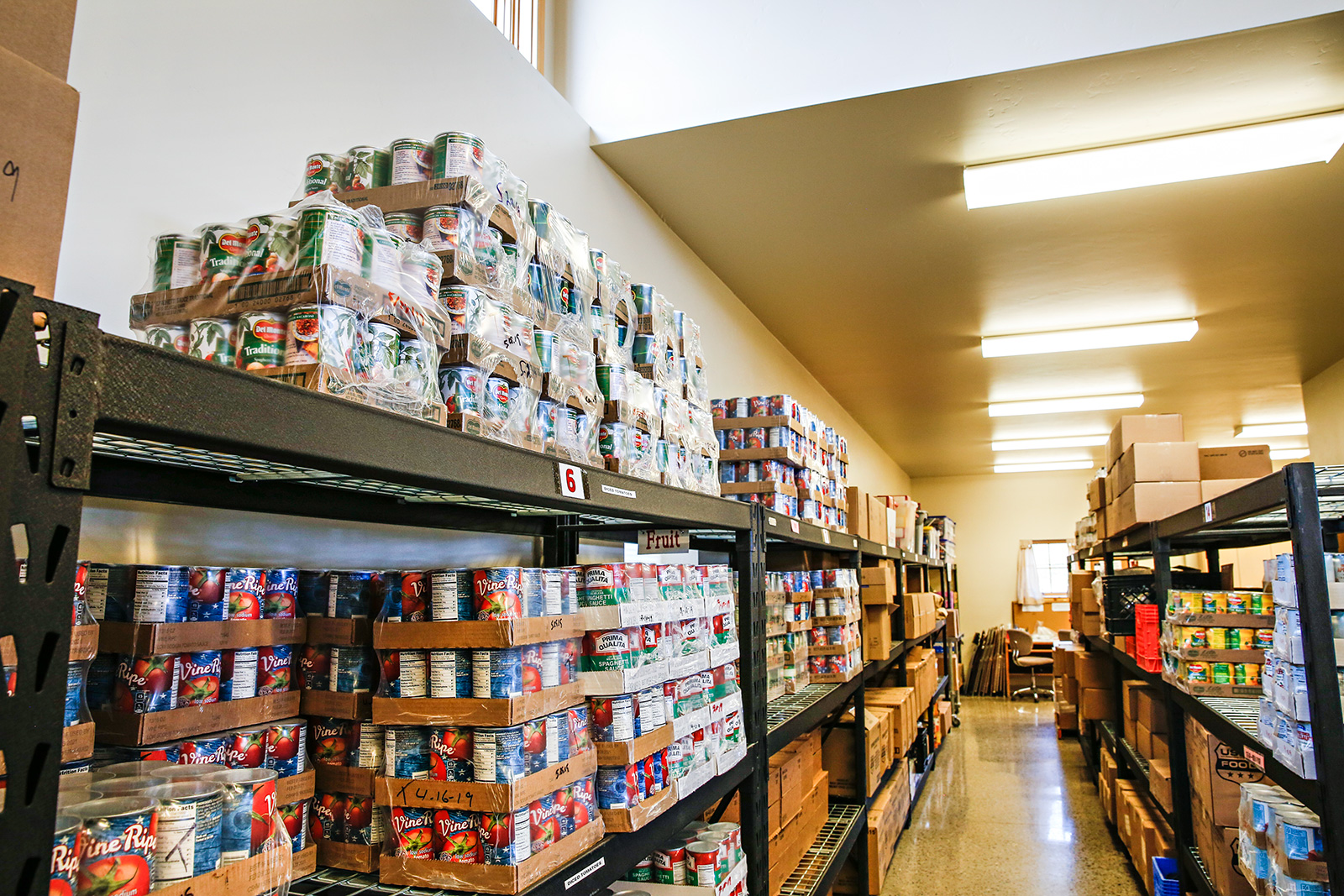
The food bank’s grocery store — which is free for the public to come and take what they need three days per week — sees SNAP recipients who use the food bank’s resources to grab expensive items and stay within their budget.
One staff member at the food bank also handles case management. That includes helping people fill out SNAP applications, a process laden with paperwork and requiring proof of low-enough income to qualify for the program. To qualify in Montana, an individual must make $1,632 or less as their gross monthly income. For expanded categorical eligibility, a single-person household must make $2,510 or less as their gross monthly income.
Since COVID, Albert said the food bank has seen the number of people coming in weekly triple. A total of 1,200 people per week use its services. She credits that increase to a number of factors: uncertainty about the world, inflation creating ballooning costs for food and a high cost of living in the Flathead all likely contribute to the higher needs. She expects that number will climb higher as SNAP cuts go into effect in the coming months and years.
Even as demand has increased, Albert is dealing with cuts. A 40% cut to The Emergency Food Assistance Program hit the food bank earlier this spring. The Local Food Purchase Assistance Program, which the food bank also relied on, was discontinued by the U.S. Department of Agriculture in March, too.
Albert said she has to raise $1.2 million from private donations this year — a hefty sum. She’s working on adapting to the changes though. That’s something she appreciates about the grassroots nature of her role: her team can respond quickly and creatively as new developments happen.
So, the food bank announced new hours in May. It is now opening its doors three days a week instead of two. That’s a change it made, according to Albert, in anticipation of SNAP cuts. It now has two months of lead time under its belt to ensure volunteer capacity can meet expanded demand.
And while she knows she has a larger fundraising burden to contend with, she also has faith her community will help out.
“While I think private donations can’t make up for federal funding losses around the country, I think looking at the local level, that actually is possible because we have a lot of wealthier community members,” Albert said. “So I’m hoping that people will pitch in. And we have a really generous community, so … if people have time, come volunteer, because we have these extended grocery store hours and we need to fill a lot of shifts every week.”
For others, the path forward is less clear.
The Montana Department of Public Health and Human Services (DPHHS) administers the SNAP program in the state. The department responded to questions about upcoming programmatic changes by saying it was too early to know the impacts the bill may have. DPHHS is reviewing the legislation, it said in an emailed statement.
“Once DPHHS has a full understanding of the potential impacts to the SNAP program, as well as other programs we deliver, we will communicate those changes to the thousands of Montanans we serve.”
Boyer and Schradle with Land to Hand also have several questions that, for now, are unanswered. Like Albert, they’re anticipating an increased need for their programming, which they plan to continue. And they’re working on applying for different grants to ensure they can keep funding all their programs.
But they worry about the people in the valley who could see benefits disappear — and that doesn’t just include SNAP.
“We know that people that are facing food insecurity, it’s not the only issue they have,” Boyer said. “Like, their cost of living outweighs what they’re getting paid and transportation in our valley is super difficult, and there’s just so many different factors and it feels like all of those benefits are getting cut currently. And all of those things will just trample people. If someone’s on SNAP and Medicaid right now, and they’re kind of on the edge, I would be terrified.”
In Schradle’s eyes, one of the biggest barriers to getting help with food insecurity is the stigma of asking.
“The amount of humility it takes to do that, to apply for SNAP, and knowing that people are making those decisions because they want to feed their families nutritious food, it’s heartbreaking to think that they have to feel badly in any way,” Schradle said.
She hopes that as the community girds for the cuts to SNAP, people talk to their neighbors and help each other. That includes volunteering, donating to nonprofits and sharing resources.
Boyer and Albert both added they think advocacy remains critical. They encouraged those at risk of losing benefits to contact their representatives. It’s something they both did as the Big Beautiful Bill went through the legislative process, and something they’ve continued even after its passage.
“I think we can advocate for ourselves, and I think it’s important to do that,” Boyer said.