The Faces of Indian Relay Races
As the sport continues to gain popularity, Indian Relay team participants say the horsemanship, camaraderie and adrenaline rush keeps them addicted to racing
By Maggie Dresser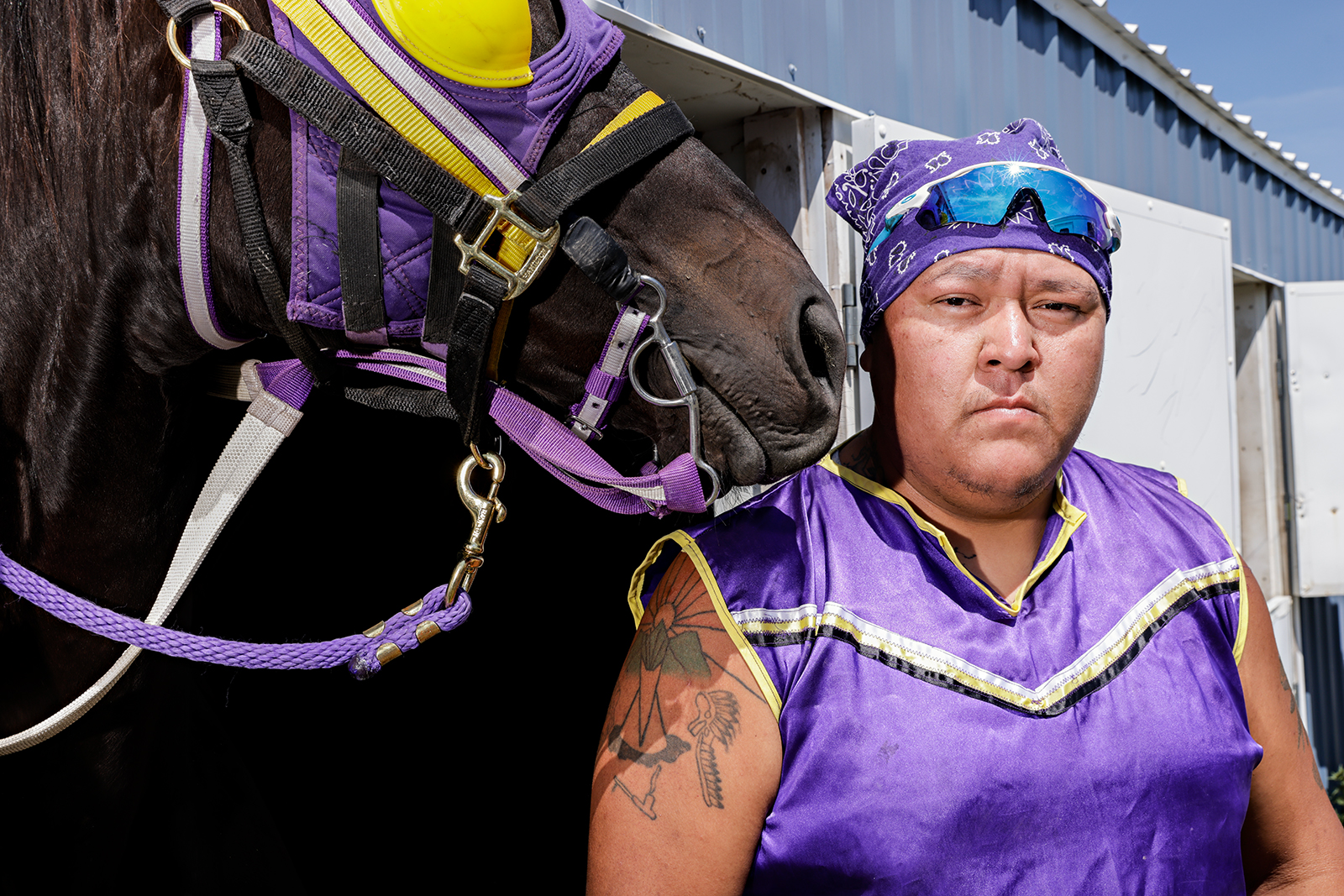
At the North American Indian Days, teams from around Montana and the Mountain West came together for a weekend of Indian Relay races on the Blackfeet Nation, a sport that is growing in popularity since becoming more official in the 1980s.
While it started gaining popularity about four decades ago when the Shoshone-Bannack Tribes in Idaho began acquiring more thoroughbred horses, the sport has been around unofficially for hundreds of years.
Indian Relay teams are composed of four people and three horses, with the rider taking three laps around a racetrack, switching to a new horse at the beginning of each lap – riding a total of three horses for the men’s circuit and two horses for the women’s in three heats. The two “holders” wait for the rider to finish a lap, holding the next horse on deck while keeping the animal calm. The “mugger” catches the incoming horse to allow the rider to dismount and jump onto the next horse.
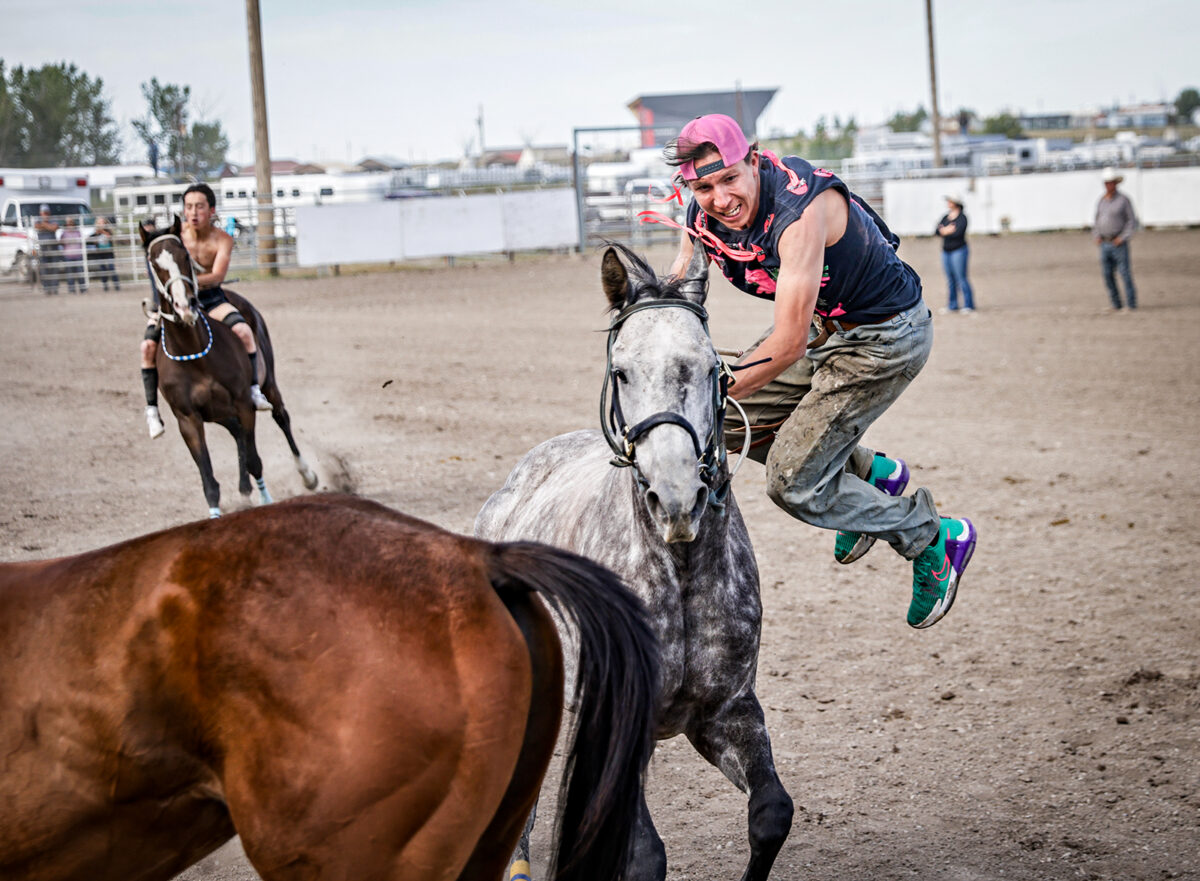
Teams travel around the West and Canada to compete in the relays, with big races at Canterbury Park in Minnesota, Emerald Downs in Washington and the world championships in Casper, Wyoming. Purses have grown in recent years, with most hovering around $20,000 while the championship has jumped to $100,000 for the men and $25,000 for the women’s relay.
The Beacon spoke with a handful of Indian Relay competitors at the North American Indian Days on the Blackfeet Indian Reservation earlier this month. Athletes described the camaraderie, horsemanship and adrenaline the races bring to Stampede Park every year as they prepare for bigger races in other parts of the country.
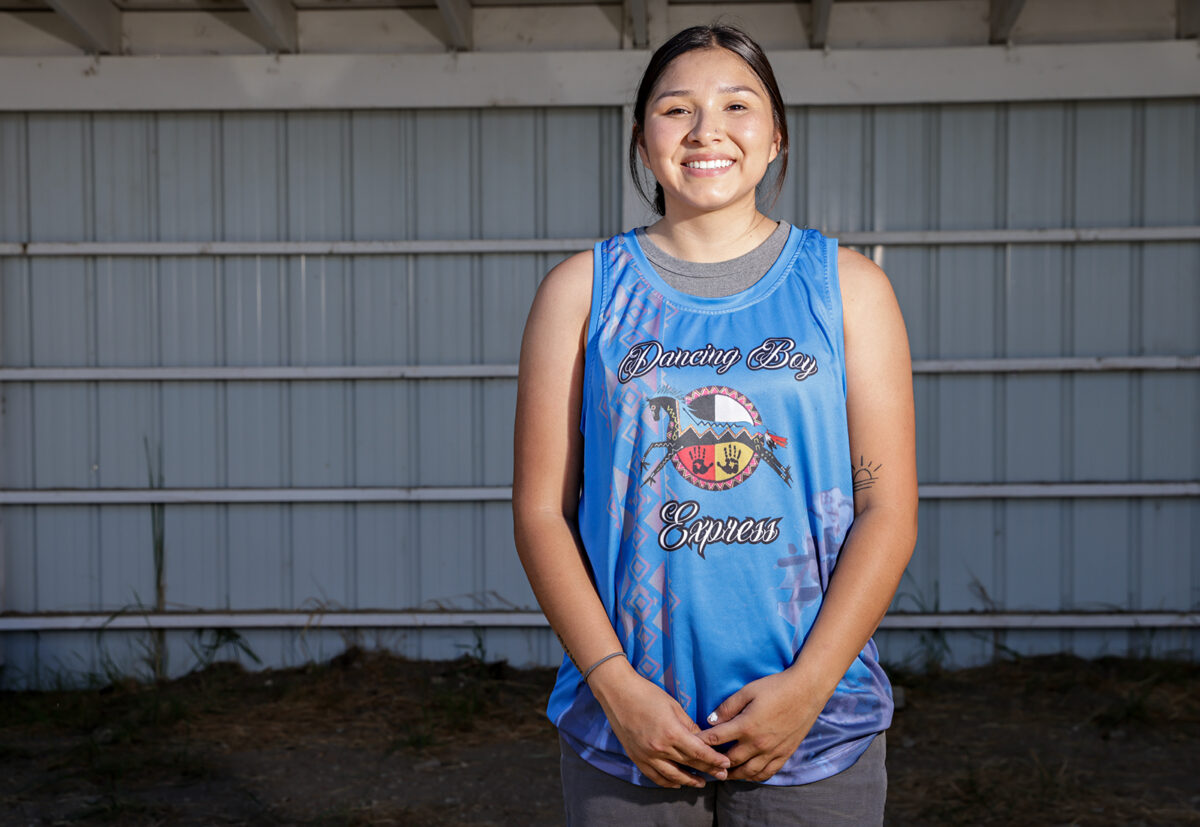
Jazelyn Wells
Growing up as a rodeo kid on the Blackfeet Indian Reservation, Jazelyn Wells decided to follow in her older sister Shayanna’s footsteps and try relay racing. Soon after, she was hooked.
“It’s a whole different type of rush,” Wells said. “It’s an addiction – an addiction you can’t quit.”
Wells substituted as a holder for Dancing Boy Express out of the Flathead Indian Reservation at Indian Days, but she typically rides. She started racing for Little Badger, a team based out of the Blackfeet Nation, and she won her first race at Indian Days in 2019. She’s been racing ever since, despite a crash in 2022 that left her with several broken bones, including her hip, collarbone, sternum and tailbone after she clipped another horse on the track, causing her to flip her own horse.
Following a full injury recovery, Wells returned the next year for the women’s relay and eventually went to the championships in Casper.
Wells trains year-round to prepare for the relays doing cardio and strength training and she places special care on her knees, which take a beating during the horse exchange when she jumps off one horse before jumping onto the next.
In addition to physical strength, Wells also continues strengthening the bond with her horses.
“It’s all about really connecting with your horse,” she said.
Before each race, Wells describes a nerve-wracking experience as she waits in anticipation.
“Once you get on the track, you’re like, ‘okay, here we go,’ and then you’re going and you just feel the adrenaline rush,” Wells said. “It’s just a different type of high.”
As part of her racing ritual, Wells prays with her horse before each race, asking for a strong and safe race. She places special emphasis on this following her accident.
Over the years, Wells has built strong connections with teams across the Mountain West and in addition to the adrenaline rush, she’s drawn to the camaraderie of the relays.
“When relay comes together, you’re family. No matter what,” she said.
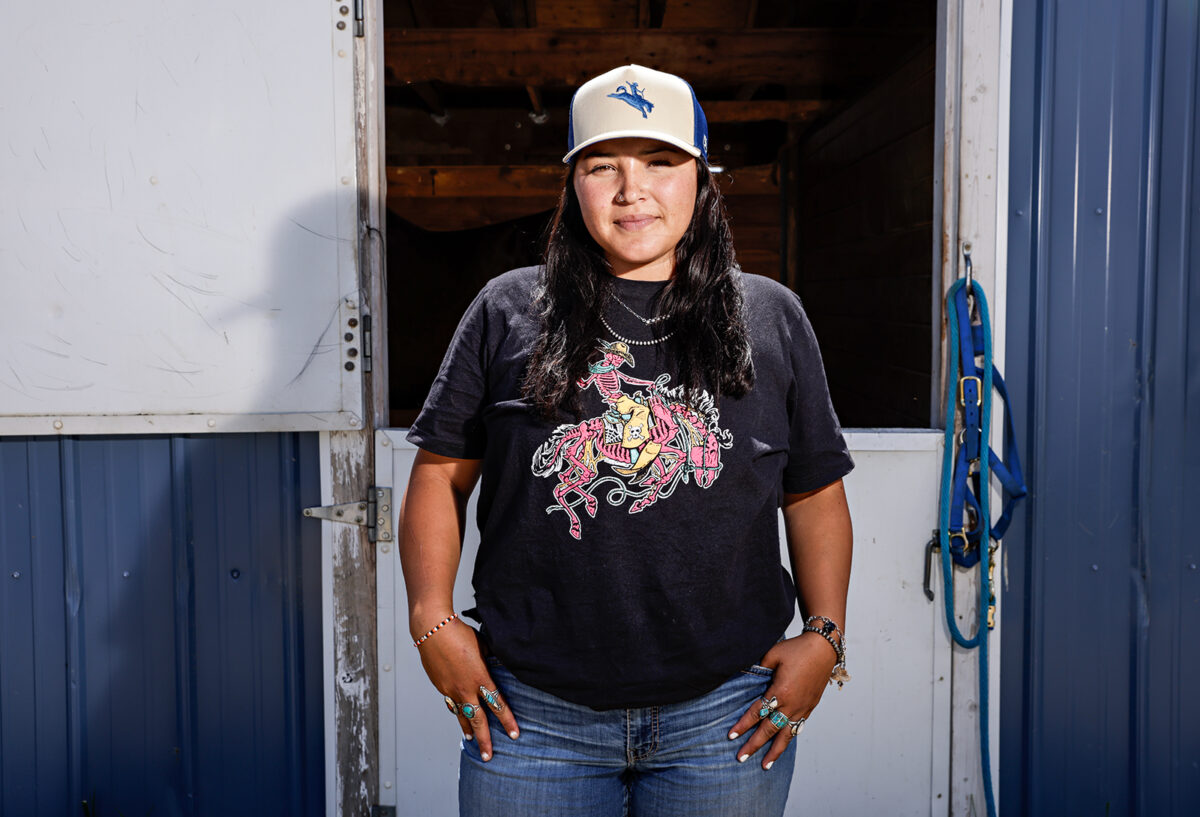
Shayanna Campbell
After the first time Shayanna Campbell rode a horse on the track at age 10 at Stampede Park on the Blackfeet Indian Reservation, she remembers her mom constantly yelling for her to come home as she continued hanging around the track.
“I can’t stop,” Campbell said. “After you do it one time, it’s just this addiction.”
When teams were racing at Stampede, Campbell would wander over to the park to see if anybody needed another teammate for the relays. If there was an opening, she would “sneak up to Kalispell” for the Northwest Montana Fair and Rodeo, usually without telling anybody.
At the 2025 North American Indian Days, she was there to support Dancing Boy, a team based out of Ronan, which her sister Jazelyn was filling in for. They sometimes race against each other, but this past weekend, she was there to support her sister with whatever she needs with her 3-year-old daughter, Kylyn Honey Real Bird, in tow.
“She’s a barn rat – it all starts when we’re this big,” she said, pointing to her daughter. “Then when we get older, we’re ready to go.”
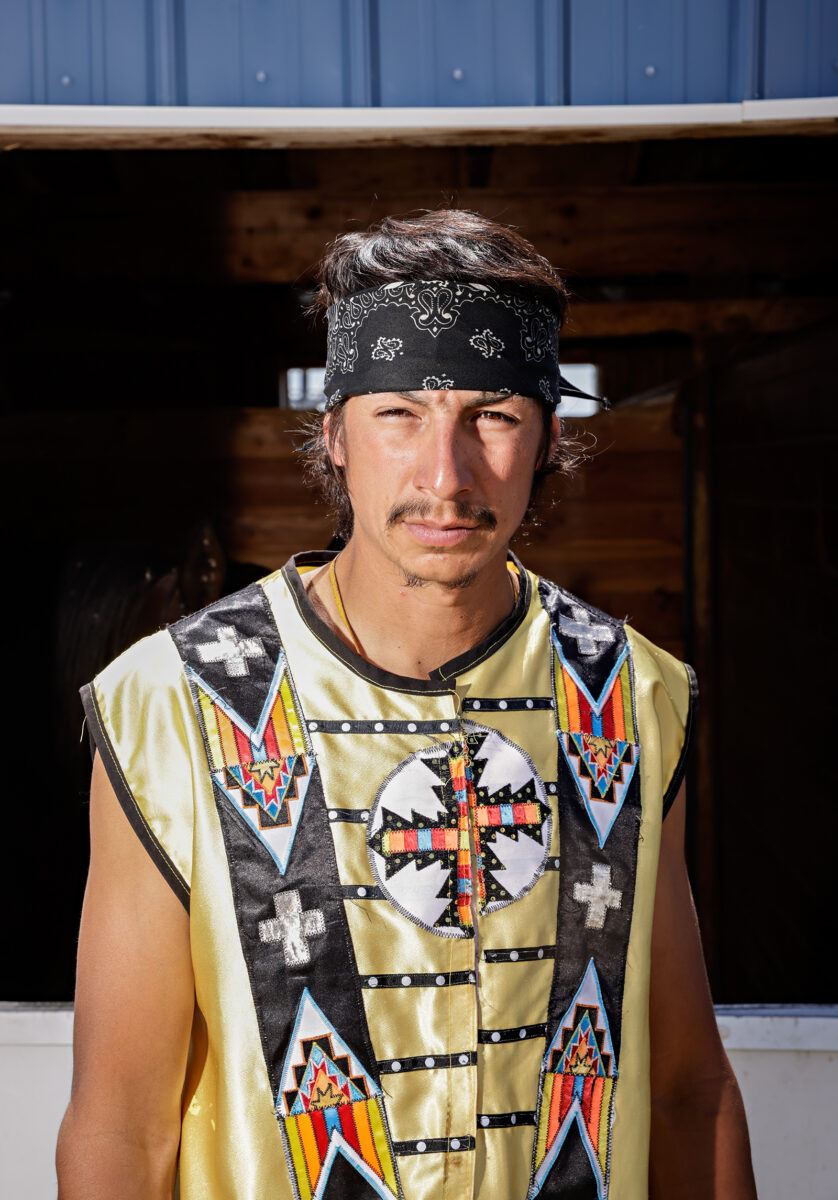
Chazz Racine
Riding for the last 25 years, Chazz Racine is the rider for Carlson Racing based out of the Blackfeet Nation and after years of injuries, he’s learned how to stay physically and mentally strong.
“You’ve got to be tough,” Racine said. “It’s one of those things where you’ve got to be pretty physically and mentally tough.”
Racine rides every day in addition to running and strength training to stay and shape and help prevent injuries. Over the years, he’s injured his ankles, knees and eyes during races. Even the kicked-up dirt hurts, he said, which feels like someone is throwing dirt as hard as they can.
Before each race, Racine asks his Creator for protection, and he performs a smudging ritual with his horses and teammates.
In the years Racine has spent building upon his skills, he says the more experience he develops, the more passionate he becomes about the sport.
“It’s a high adrenaline rush in relay,” Racine said. “Especially with three horses going full speed bareback, it’s one of those things you’ve got to really put work in to control that speed. Once you get it with your horsemanship, it’s a real rush. The competitiveness is there.”
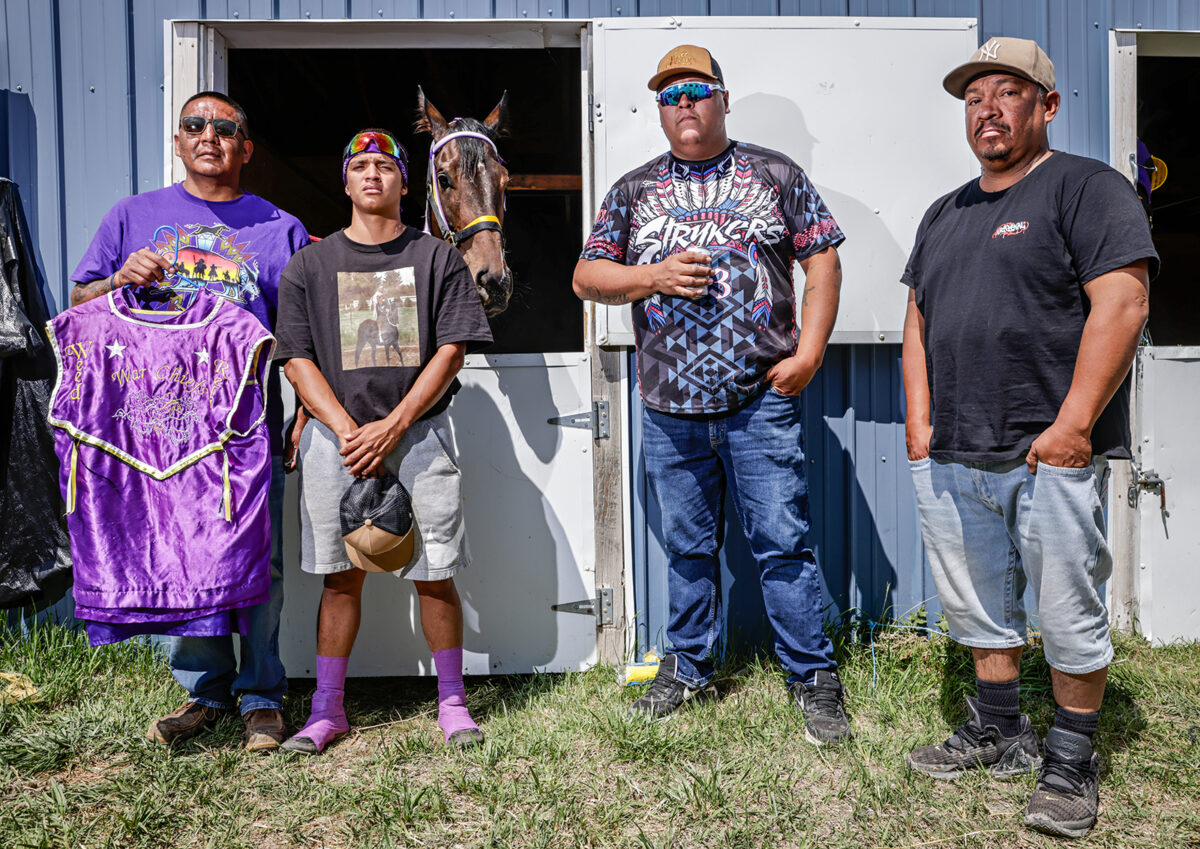
War Chiefs
Traveling from the Wind River Indian Reservation in Wyoming, the War Chiefs are part of a 100-year legacy of relay racing after Dennis Posey’s grandfather started riding at 5 years old. He died at age 104.
Posey has been around relays his whole life and bought the team, which was originally called Star Weed, and he’s owned the team for the last four years.
“We just carried on the tradition,” Posey said.
The team has been around for decades and is now composed of Posey as the mugger, Kenny Enos as the rider and Donny Medicine Horse as one of the holders.
Medicine Horse joined the team this year after a few years in Oklahoma where he attended farrier school. In his role as the holder, his job is to remain calm to set the horse up for the horse exchange
“These horses feed off your energy,” Medicine Horse said. “You just have to calm them down and let them know they’re okay. They trust you – you’ve got to build trust with each one of these horses. Each one is different.”
As the rider, Kenny Enos is proud to keep his ancestor’s tradition alive and he’s been riding in the relays for the past seven years.
Now at age 19, he says the hard work and dedication pays off and like Medicine Horse, he works to build trust with his horses.
“You’ve got to treat your horses good,” Enos said. “If you don’t treat them good – they won’t treat you good.
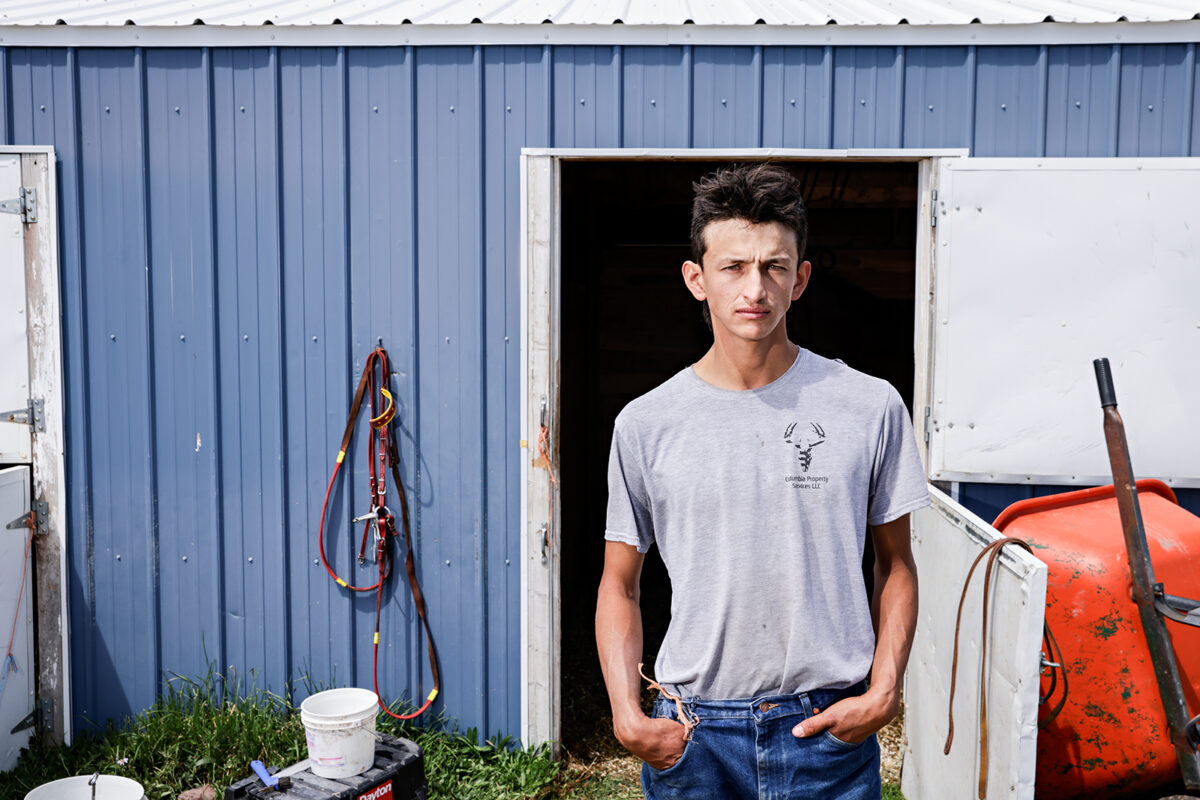
Devyn Campbell
While Campbell doesn’t ride for one team, he’s known as a “relief rider,” substituting when another team member can’t compete. He rode for Dancing Boy Express at Indian Days.
Campbell’s been riding horses since he was 3 years old and now works as a range rider on the Blackfeet Indian Reservation, checking on the cows and bears, but he subs in for relay races when he can.
“I spend all my time on horseback,” Campbell said.
In recent years, he’s started riding more on relay teams instead of catching, which he has done in the past. He favors riding over catching because of the adrenaline rush.
“For me, it’s just a couple minutes of freedom,” Campbell said. “There’s nothing but you, that horse and your heartbeat. You just got to listen to what the horse is telling you.”
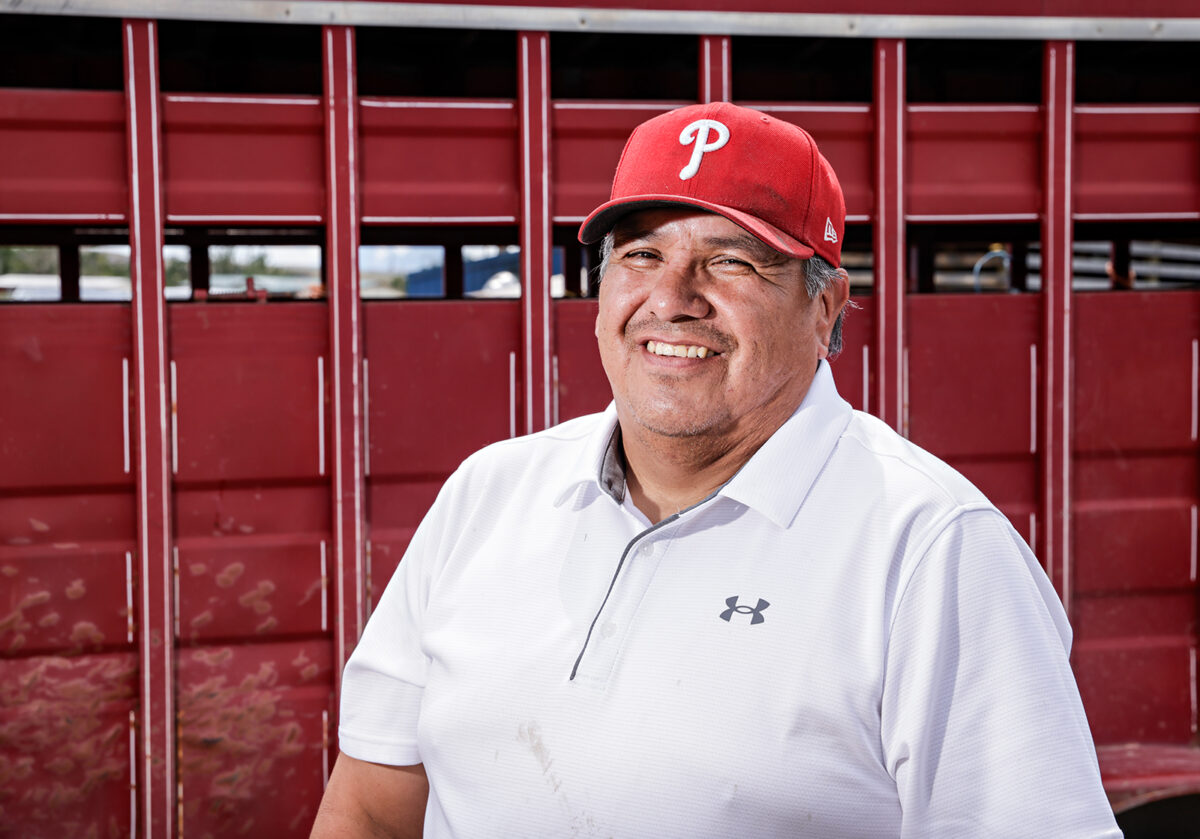
Dale Carlson
Dale Carlson got into Indian relays back in the 1980s and raced with his dad at the Northwest Montana Fair and he’s been involved with a variety of Blackfeet teams over the years. After a brief pause, he got back into the sport in 2016 and sees himself as more of a mentor nowadays.
After riding in his youth, he’s now a holder for Carlson Racing and prefers to sit back and watch the younger team members progress.
Since the 1980s, Carlson has watched race venues in Shelby, Great Falls and Missoula quit hosting relays while Canada and other states move to expand its relay presence. He also says horses and riders are getting faster while there are more frequent races• than years past.
“This sport was fast, and now it’s everywhere,” Carlson said. “It’s just all over – it’s an exciting sport.”
For more images, see the full gallery here