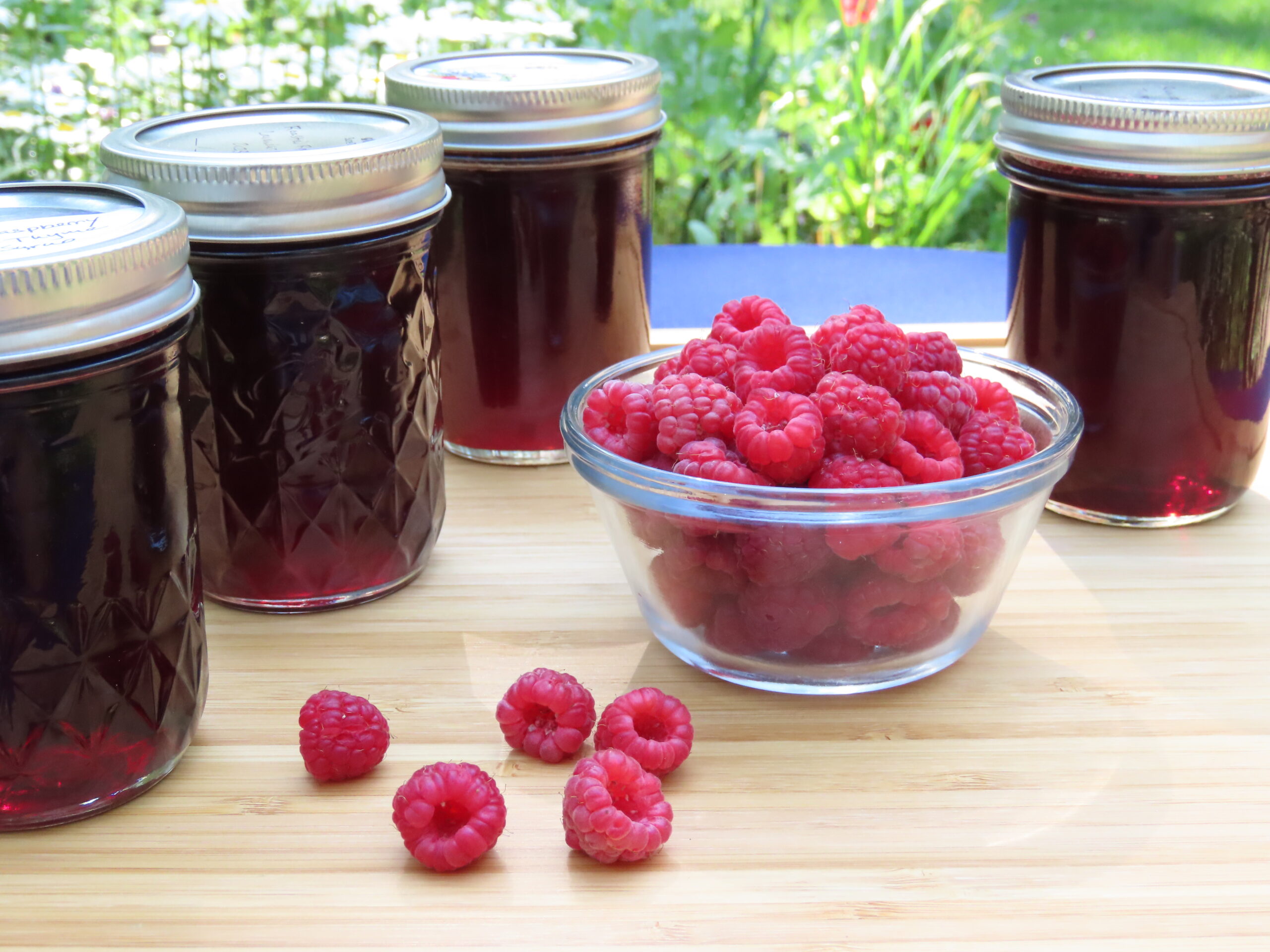
Last month, I was using up raspberries from my freezer to make Raspberry Shrub for mocktails and cocktails. Now I’m picking pounds of fresh raspberries every couple of days, so I bump up the juice’s flavor by roasting the berries.
Fresh berries usually need encouragement to release most of their juice. Macerating them overnight lets sugar start to draw out the liquid. Then, as the macerated berries sit in the hot oven, the added sugar caramelizes – and extracts even more juice.
Roasted raspberries make a complexly flavored shrub or a delicious sweet syrup. If you’re skeptical about the vinegary tang of a shrub, start with just the syrup and then enhance a sample portion with vinegar.
The syrup keeps well in the fridge and freezes into somewhat-sticky portions. I also can this syrup in half-pint jars, a technique I’ll explain this week on my blog.
Making raspberry shrub and syrup leaves behind a mound of tasty but seedy pulp. I freeze this in cubes and blend it into smoothies, dehydrate it in sheets to crumble into granola and use it in recipes where meatier fruit, like apricots or plums, minimizes the seediness.
Roasted Raspberry Syrup
Makes about 2 cups
3 pounds fresh raspberries
About 1-1/2 cups sugar, divided
2 tablespoons lemon juice
4 sprigs fresh thyme, rosemary or another herb
Place the raspberries in a 9-by-13 inch baking pan and toss with 1/2 cup of sugar. If desired, let the pan sit overnight, covered, in the refrigerator to start releasing juices. Uncover the pan and let it return to room temperature.
Roast the raspberries at 400°F for about 25 minutes, until the berries float in juice. Remove the pan from the oven and mash the berries lightly with a large spoon.
Strain the juice through a fine-mesh colander set over a large liquid measuring cup or bowl, working in batches as needed. Stir gently, and then let the fruit sit until the juice stops dripping. Set the pulp aside for another use.
Measure the juice and pour it into a large saucepan. Add half as much sugar as juice: if you measured 2 cups of juice, add 1 cup of sugar. Stir in the lemon juice. Place the herbs in a cheesecloth bag or tea infuser and add it to the pot.
Bring the mixture to a boil over medium-high heat and then cook for one to two minutes, until the sugar dissolves and the syrup starts to cling to a spoon. As the syrup boils, use a slotted spoon skim off any foam. If desired, continue cooking for up to 20 minutes for a thicker, more reduced syrup.
Remove the syrup from the heat, let it cool for about 10 minutes and pull out the herbs. Ladle the syrup into a glass bottle or jar to use warm. Alternatively, let it cool completely, pour it into a lidded container and refrigerate for up to two weeks. For longer storage, freeze the syrup in airtight containers.
Julie Laing is a Bigfork-based cookbook author and food blogger at TwiceAsTasty.com.