Montana Fish, Wildlife and Parks’ Latest Wolf Proposal Aims to Increase Harvest
The proposal raises statewide wolf harvest quota to 500 and eliminates regional quotas; Commission to make final decision at Aug. 21 meeting
By Katie Bartlett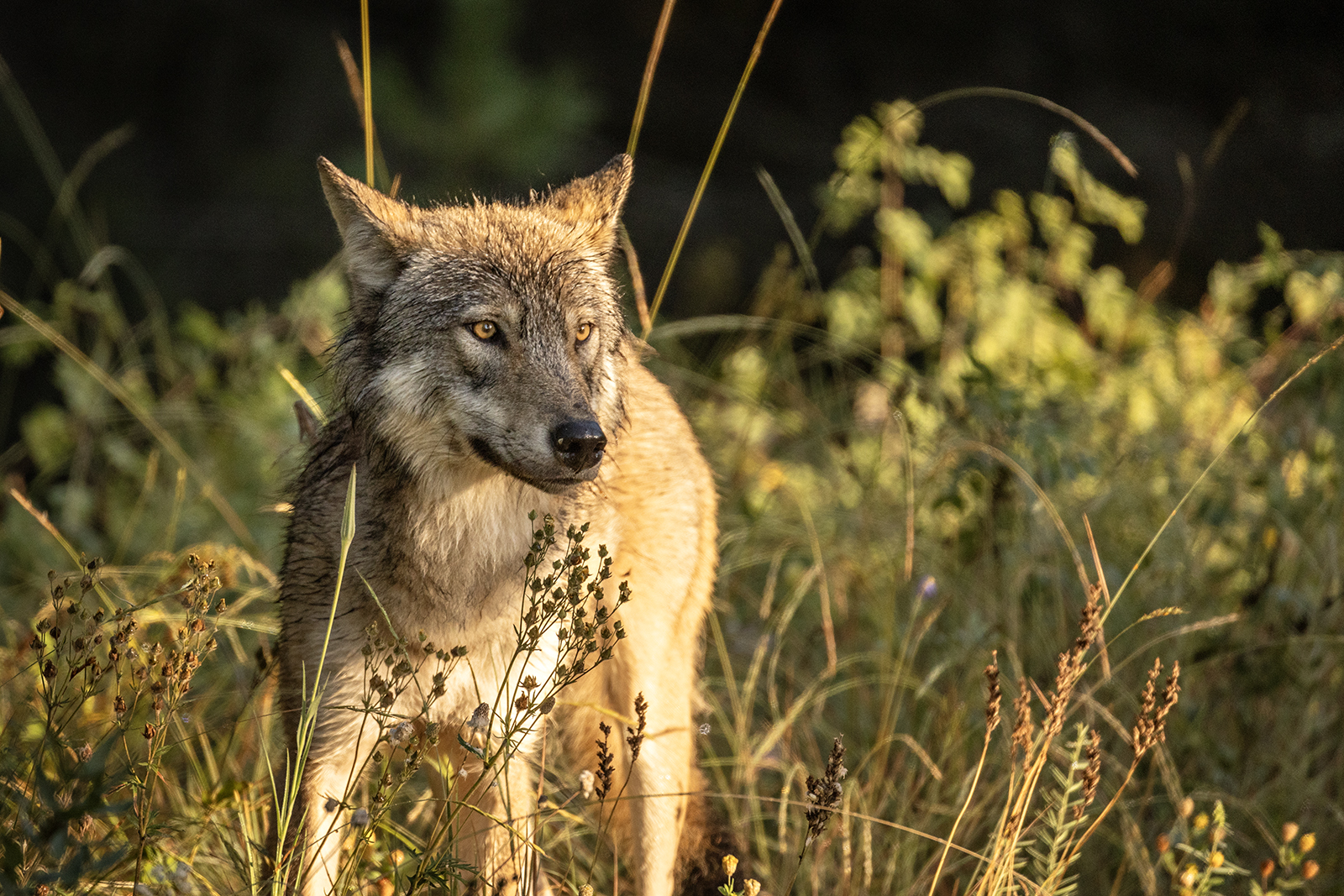
Montana Fish, Wildlife and Parks (FWP) is proposing changes to wolf trapping and hunting regulations aimed at reducing the statewide wolf population, the agency announced earlier this month.
According to FWP’s 2024 Wolf Report, Montana is home to an estimated 1,091 wolves, just 12 fewer than the 1,103 wolves reported in 2023. The proposal will be presented to the Fish and Wildlife Commission on Aug. 21. FWP says it aligns with a 2021 directive from Montana’s Republican-controlled legislature, which ordered it to manage wolves at a “sustainable level.”
FWP defines a “sustainable level” as a number that will maintain wolves at recovery status and keep them under state management, while also reducing the population in accordance with statutory directives, according to the department’s Chief of Conservation Policy Quentin Kujala. This translates to supporting a minimum of about 450 total wolves, which amounts to 15 breeding pairs under the recovery standards established by the U.S. Fish and Wildlife Service.
Kujala described FWP’s new proposal as the latest iteration in a trend toward an “increasingly liberal structure, year after year” when it comes to wolf regulation. He emphasized that the agency hopes to make a reduction “more visible” to Montana’s lawmakers.
“Wolves have proven to be resilient to a wide range of season structures,” Kujala added. “That’s something we’re keeping in mind in our long-term strategies.”
To achieve this reduction, FWP is proposing removing regional quotas while increasing the statewide quota of wolves that can be harvested to 500, up from the current limit of 334.
Kujala said the decision to shift to a statewide quota reflects how difficult wolves are to harvest, explaining that hunters and trappers typically take fewer animals as the season progresses. He added that FWP expects this “natural tapering” in harvest to work in tandem with the increased statewide quota to reduce overall numbers without risking population collapse.
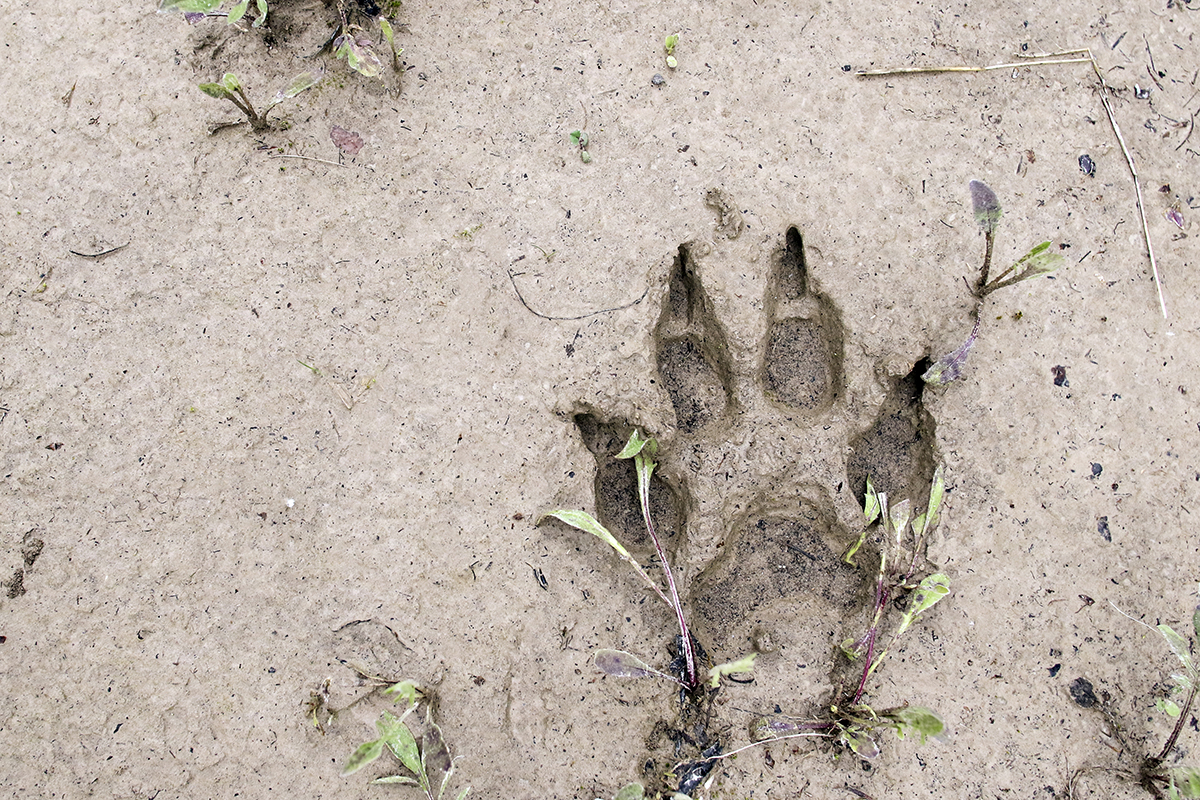
Hunters and trappers would also be allowed to harvest 30 wolves total with up to 15 on a single license. To reach that total, at least five must be hunted and five trapped in FWP regions 1 (northwest) or 2 (west-central), where the wolf population is most concentrated. This represents an increase from the current bag limit of 20 wolves and eliminates the requirement to purchase a separate license for each wolf.
Despite the overall increase in quotas, the proposal retains stricter limits in high-profile regions near Yellowstone National Park. Specifically, it caps the harvest at three wolves in Wolf Management Unit (WMU) 313 and three in WMU 316 — the two zones adjacent to the park.
FWP removed wolf hunting quotas near Yellowstone, where wolf watching is a significant tourism driver, in the fall of 2021. The agency ultimately reinstated quotas after hunters killed 20% of the park’s wolf population the following season.
Cara McGary, owner of the Yellowstone-based In Our Nature Guiding Services, said she was relieved the low quotas remained intact in the new proposal, noting that business owners in the wildlife watching industry are “adamant” they are necessary near the park.
“Wolves are the top shelf thing that everybody wants to see when they come to Yellowstone,” McGary added. “They’re a huge deal for our businesses.”
Livestock conflicts remain a key factor in wolf management decisions. According to the FWP Wolf Report, wolves killed 62 livestock in 2024, including 35 cattle and 16 sheep. This marks an increase from 2023, though it is still lower than the average over the past decade. FWP credited a more aggressive approach to depredation control with helping keep recent losses relatively low.

More broadly, hunters and trappers harvested 297 wolves in 2024, according to the Wolf Report — the highest number since 2020. Montana’s wolf population peaked in 2011, the year Congress delisted wolves from the federal endangered species list. The population has declined slightly since, as hunting and trapping regulations have grown more liberal.
Lizzy Pennock, an environmental attorney with the conservation nonprofit WildEarth Guardians, said the new proposal is part of a “marked shift” approach to wolf management — one that makes it “super easy to kill as many wolves as possible.” She said the shift began with the Montana Legislature’s 2021 directive to reduce the state’s wolf population.
Lawmakers at the time cited goals of preventing declines in deer and elk numbers and reducing livestock predation. That same session, the legislature also lengthened the wolf trapping season, authorized the use of neck snares, and allowed hunters to receive reimbursement.
Since then, however, Pennock said the state’s appetite for more aggressive wolf hunting measures goes beyond the legislative directives. She also noted that FWP and the Fish and Wildlife Commission, whose members will review the proposal, “do not have their hands tied” when it comes to how they implement the law.
“It is true that they have to obey the law to reduce the population, but they have options with how to go about it,” Pennock said. “They aren’t required to make some of the really aggressive tools — like thermal imaging and infrared scopes on private land — available, but they’re choosing to do so.”
Legislative efforts to aggressively reduce wolf numbers have continued into 2025.
In January, Republican Rep. Lukas Schubert of Kalispell introduced House Bill (HB) 222, which would have established an open wolf hunting season until the population drops to 600 animals. Though the bill failed, it reflects ongoing pressure from lawmakers to drive down the population.
However, McGary believes the political appetite doesn’t extend as far as FWP’s latest proposal might suggest. She pointed to the failure of House Bill 126, introduced by Republican Rep. Shannon Maness of Dillon, as evidence. The bill would have allowed unlimited hunting when the statewide population was at 550 wolves or higher.
“The bill was shot down, and that shows that we’re not seeing interest politically in removing regional quotas,” McGary said. “Montana is a diverse state and different areas have different needs, so it feels like a counterproductive proposal.”
FWP is accepting public comment on the proposal through Aug. 4, and all feedback will be delivered to the Fish and Wildlife Commission, which will vote on the changes at its Aug. 21 meeting. Both in-person and virtual attendees will also have an opportunity to comment during the meeting.
Kujala emphasized that FWP “always encourages people to participate” in the public process.
“Seasons are set annually for wolves,” he added, “which means no wolf decision from the Commission is more than a year away from being revisited.”