The Blue Byrd Bus of Essex Route
Martin City resident Gerard Byrd has shuttled generations of students through the Middle Fork Flathead River corridor on an isolated section of U.S. Highway 2, where he has witnessed a slew of wrecks and wildlife while building lifelong friendships over the past 42 years
By Maggie Dresser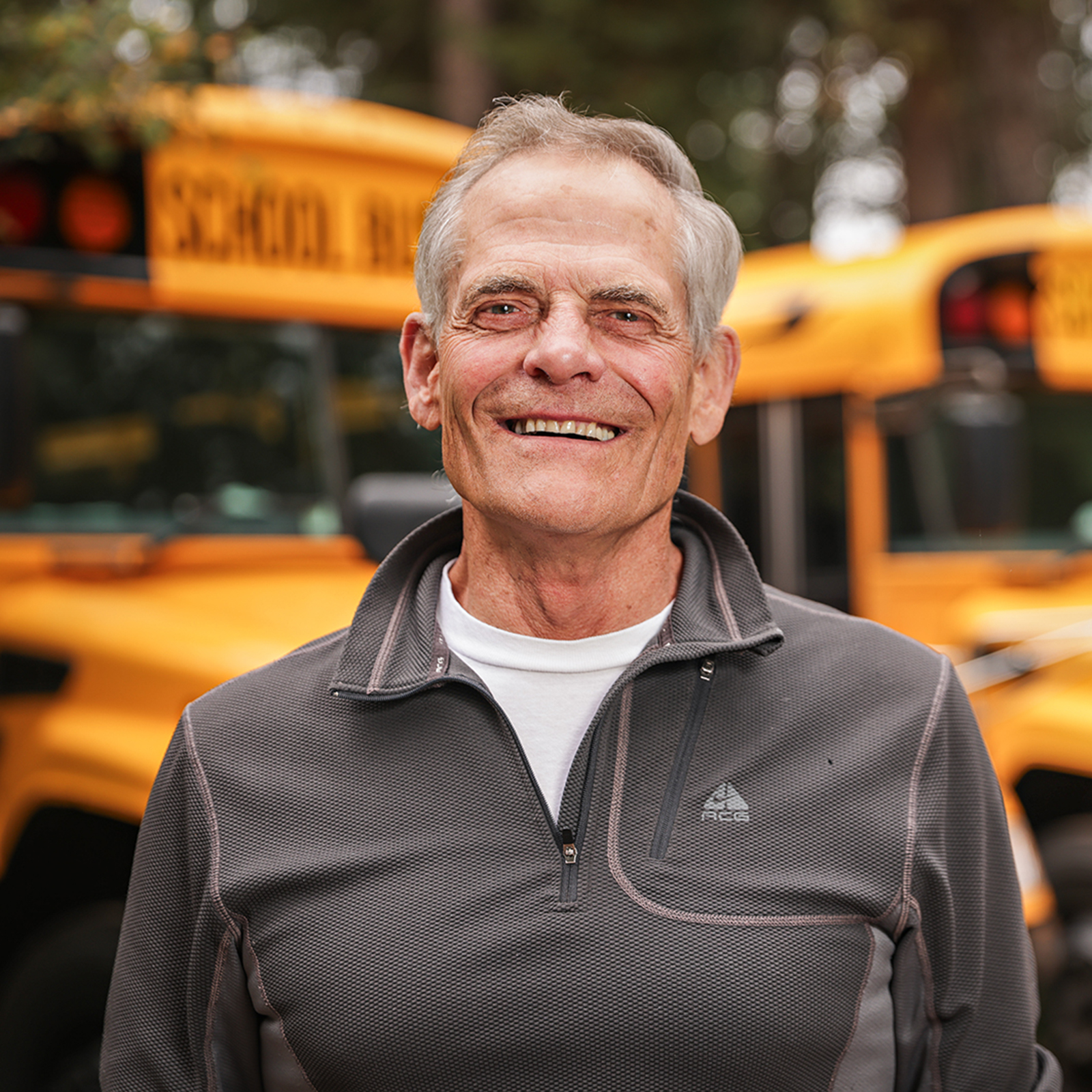
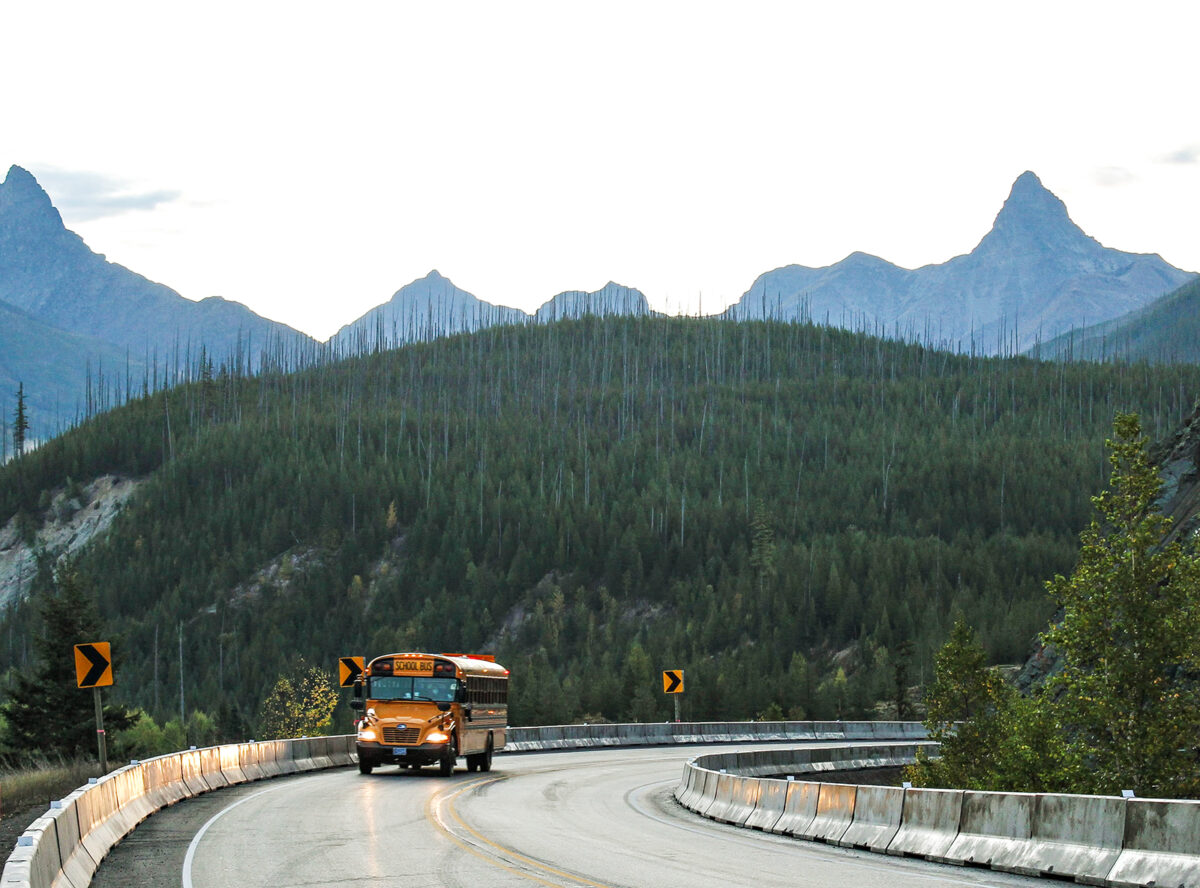
For 42 years, Gerard Byrd left his home in Martin City at 6:30 a.m. and drove east on U.S. Highway 2 through Bad Rock and John F. Stevens canyons, threading a yellow school bus through the Middle Fork Flathead River corridor against the backdrop of Glacier National Park’s southern border. His most committing routes involved driving 186 miles per day as he navigated the narrow, two-late artery between Essex and Columbia Falls. But for the bulk of his career, Byrd’s daily route only spanned 164 miles, affording him the luxury of turning his 72-passenger Blue Bird around at Pinnacle near Glacier Haven Inn.
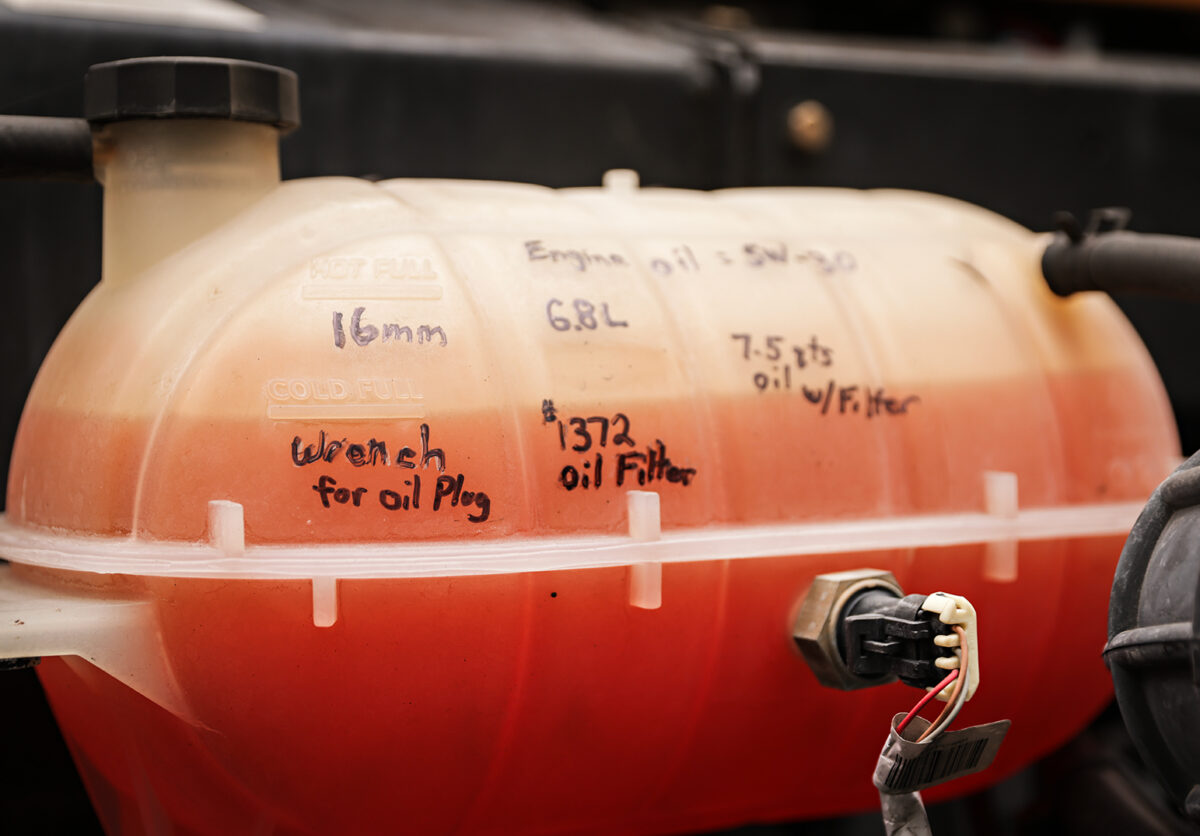
In the more than four decades as a bus driver on a treacherous and remote stretch of highway, Byrd clocked 1.2 million miles of windshield time and maintained a perfect driving record. His meticulous maintenance of the fleet of buses he owned as a contractor helped ensure that he never blew a motor or a transmission.
Flanked by Glacier to the north and the Flathead Range to the south, Byrd navigated through high winds, falling rocks and every type of precipitation imaginable on the highway adjacent to the Middle Fork and BNSF Railway. His daily wildlife sightings included critters like beavers and wolves along with grizzly bears and herds of deer and elk. He witnessed logging truck accidents, and stranded motorists regularly hitched a ride from him into town.
“I’d run that route in the craziest conditions,” Byrd said. “I’d be picking these kids up and get to West Glacier and realize they canceled school. I was just committed to making sure the kids were getting to school.”
There was only one time in the last 10 years that inclement weather prevented Byrd from running his route. According to Randy Martindale, the Montana Department of Transportation’s West Glacier Section Supervisor, that’s an impressive record for a canyon corridor notorious for its challenging driving conditions.
“When we get the freeze-thaws and rocks fall in the canyon – that’s pretty dicey at times from Nyack to the end of his bus route,” Martindale said. “It gets pretty snow covered — snowing and blowing and drifting. It gets to be a wild time.”
Now 66, Byrd announced his retirement last year and did not return to his route for the 2025-2026 school year. His five-year contract with the school district was up, and he wanted to spend more time with his wife, Loretta, and their five adult children.
Still, it was a bittersweet decision for Byrd, and an emotional end to an era for the communities he served.
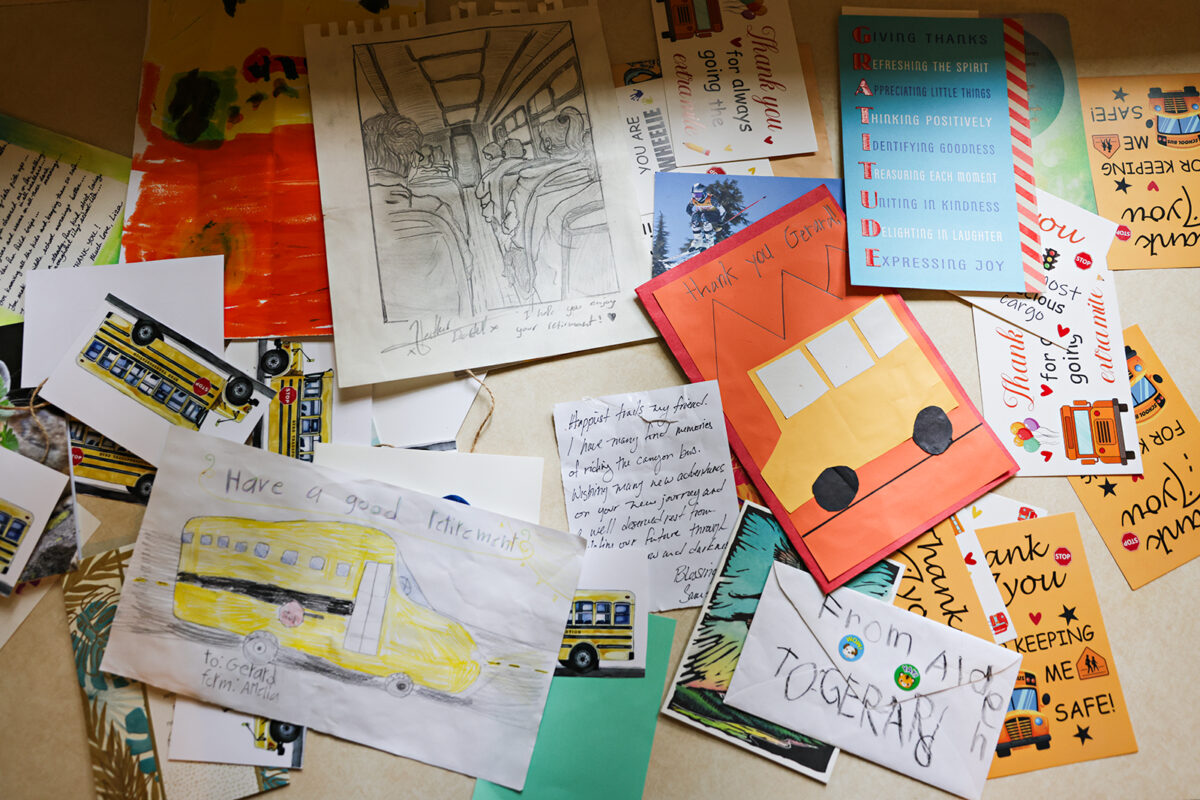
During the last week of the 2024-2025 school year, Byrd pulled up to West Glacier Elementary School District No. 8 to a surprise party where 150 people that included teachers, parents and generations of students showed up to say goodbye.
“You just don’t think of the impact you make on people, especially as a bus driver — that’s as common as it gets,” Byrd said. “There’s nothing flashy about it, but when you have a safe driving record and the respect that you give the kids and parents — I was blown away. It was very heartwarming.”
Born and raised in Martin City, Byrd spent the summer of 1983 working for Great Northern Raft Company, where he guided river trips on the Middle Fork of the Flathead River and worked as a mechanic.
With deep roots in Martin City after his great, great uncle Gaspar Martin settled the region more than century ago, Byrd wanted to establish a base in Bad Rock Canyon to raise a family with his wife, Loretta, who he met at Carroll College in Helena. His brother, Jim Byrd, connected him with Dennis Borgen, who owned a fleet of school buses and contracted for Columbia Falls School District No. 6.
“I really wanted to have my roots here and so I was just putting my tentacles out there and my brother goes, ‘They’re hiring a bus driver for the Essex route’ and I said, ‘How much does it pay?” Gerard Byrd said.
The gig paid $25 per day, which did not impress Gerard, but his brother Jim told him it was “better than nothing.” He took the job.
While the pay was low, the schedule allowed Byrd to pick up other jobs during the daytime hours and summer months. He worked throughout his bus-driving career as a mechanic and did some construction work along with running a property management company while Loretta kept the books. But he always shuttled students to and from school during the morning and late afternoon hours.
That same school year, Byrd asked Borgen if he’d sell the Essex route to him, an offer he repeatedly rejected.
Borgen finally gave Byrd the route later that year — but it was in the wake of tragedy. On Jan. 21, 1984, his brother Jim died in Montana’s deadliest motor vehicle accident while driving the Whitefish High School wrestling team home from a match in Browning.
The wreck, which occurred along the same stretch of highway that Gerard Byrd would end up driving for four decades, involved an empty gasoline tanker that slid out of control, jack-knifed and continued barreling horizontally down the road before colliding with the bus. The front end of the bus burst into flames, killing nine people and injuring 18 others on board.
Byrd’s desire to claim the precipitous route that killed his brother struck some as odd. But not Byrd.
“He was surprised,” Loretta said, referring to Borgen’s reaction when Byrd took over the route. “He asked, ‘Why would you want it?’”
“I kind of knew it was my calling,” Byrd said. “I love the drive — I never, ever got tired of the drive.”
A few years later, Byrd and a different brother, Chris, bought the remainder of Borgen’s 13 routes for Columbia Falls School District before a new superintendent complicated matters and cut the route’s mileage. As a result, the Byrd brothers backed out of the School District No. 6 contract but retained the Essex route for West Glacier Elementary School District No. 8, which formed its own district in 1986, rebuilding after the original school burned down.
For the first decade of his career, Byrd’s route stretched all the way to Essex, but it was later reduced by roughly 6 miles to Pinnacle, near the Glacier Haven Inn — the same location where nine roadside crosses mark the lives claimed by the 1984 tragedy.
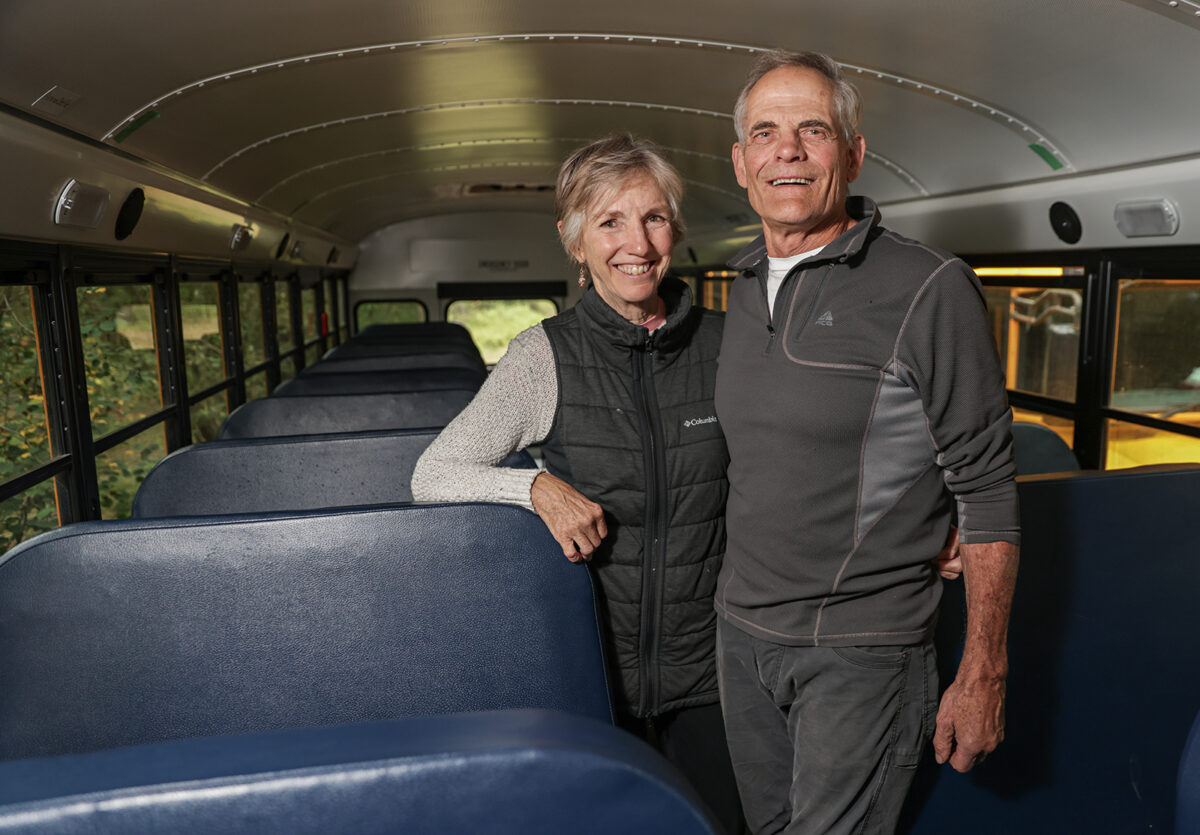
During whiteouts and dicey travel conditions, Loretta couldn’t help but worry about her husband and the 100 kids (during the region’s peak population) he was responsible for ferrying to and from school every day. She never missed a morning with her husband.
“Every morning, he left in the dark and I’d worry,” Loretta said. “I’d say the same prayer and then ask Jim to look out for him. But I just had to let it go. You never know.”
Gerard Byrd has witnessed a slew of wrecks over the years, one of which remains fixed in his memory. The driver of a logging truck hauling lumber westbound from a wildfire near St. Mary Lake came around the bend of a sharp corner called Blue Rock Cut, crashing into the cliffs and causing the logs to hurtle through the cab.
“I’m not a blood and guts guy,” Byrd said. “I just stopped the bus, and I didn’t want to go in there and see a body cut in half. I thought, ‘Oh God.’
But when Byrd walked up to the truck with his medical equipment, nobody was inside. The driver was at the back of the trailer messing with the axles. The truck had lost a shackle pin, causing the chain to break loose as he lost control of the rig. When the driver realized what was about to happen, he grabbed his dog and ducked to the floorboard for safety.
Encountering wrecks and broken-down vehicles was a regular part of Byrd’s route. He’s given rides to untold numbers of stranded motorists — mostly during the winter months.
“I’ve helped so many people through the canyon — that was always fun,” Byrd said. “I always enjoy that because there’s no cell service and people are like, ‘Oh my gosh, what do I do?’”
Before advancements in emergency alert systems, closures and advisories were communicated on FM radio. But if Byrd was out of range during those announcements, he assumed schools were open and students needed to get to school.
Jeanine Dalimata, a fourth-generation Nyack resident, grew up with seven brothers and anywhere from 21 to 36 cousins — depending on the time of year — all of whom at one point rode the bus to West Glacier Elementary. In the 1990s, she remembers waiting at the end of the driveway with her siblings in the dark during a heavy storm when Byrd pulled up with the lights flashing. Everyone boarded the bus and made it to school, but nobody was there. School had been closed.
“Gerard was tougher than emergency travel restrictions,” Dalimata said.
Before early alert systems improved in local school districts, there was also another nascent form of technology that had not yet been widely adopted but would soon result in a dramatic change in bus behavior. Cell phones, Byrd said, have completely altered bus interactions.
“There’s no conversation,” he said. “There’s no socializing.”
Nowadays, kids greet each other at the bus stop for a few minutes and then slump in their seats looking at their phones.
Cell phone distractions have also led to a significant drop in the high volumes of what Loretta refers to as “responsibility talks” her husband has historically given to misbehaving kids.
In addition to conversation, bullying and altercations have long been part of school bus rides, but the responsibility talks have dwindled over the years, and discipline has almost become a “nonissue.”
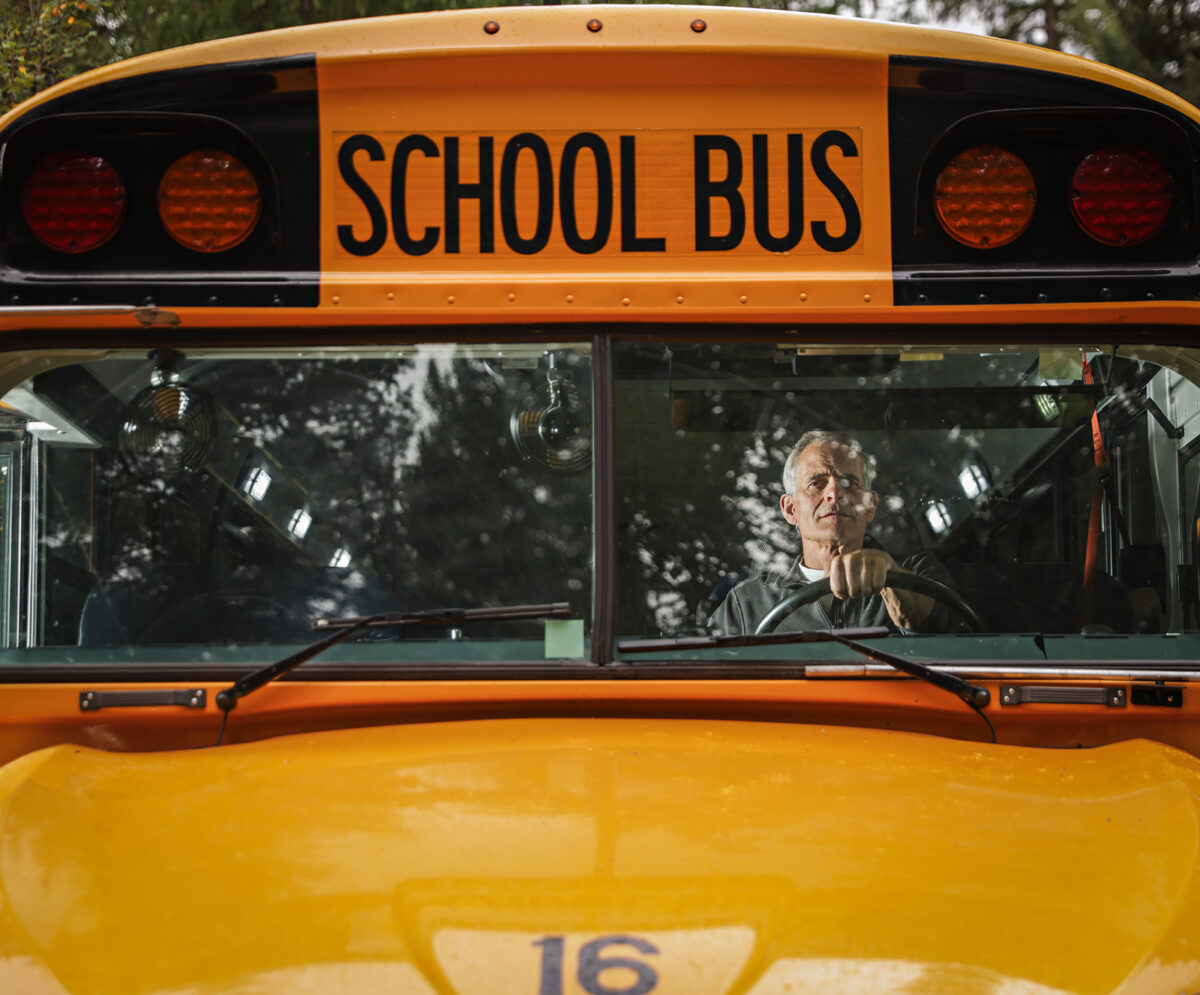
But during the peak discipline era before cell phones, Byrd earned a reputation as a stickler.
“Some of the kids were kind of stinkers,” Byrd said. “I knew who they were, and I just looked at them and said, ‘We’re gonna be best buds.’ I would give kids respect but would also command respect. So, kids cleaned the bus a lot of times.”
When Tim Dalimata rode the bus in the 1990s, he was a repeat offender during the commute between Nyack and Columbia Falls. He recalls having a fun time crawling around on the floor in the dark and tying his fellow passengers’ shoes together.
Usually, Tim got a few chances before there were consequences, which usually entailed an assigned seat in the front with all the elementary schoolers. At the start of each school year, he said punishments didn’t typically roll over from the previous year.
“School had finished, and I was excited about having a clean slate the following year,” Tim said. “But I got on the bus and there was an index card up front with my name on it still there. Gerard said, ‘Oh, no. I’ve got a seat for you right here.’ So, I spent that next year riding up front.”
But Byrd also showed compassion and recognized that some of those “stinkers” on the bus came from divided homes. As one of the most isolated and remote areas in Flathead County, a high volume of the families on his route lived in poverty or were single-parent households.
According to 2023 Census poverty data, 14.5% of West Glacier Elementary School’s student population experienced poverty. By comparison, 6.5% of Whitefish Elementary School District’s student population experienced poverty, while Helena Flats Elementary School in Evergreen was at 8.65%, according to the report.
“I was probably one of the most consistent things in these kids’ lives,” Byrd said. “I was there within a minute or half-a-minute of their pickup time. I always treated kids with a ‘good morning’ — even if I didn’t get a response back.”
While Byrd was a consistent figure in students’ lives during the daily commutes, he also drove for West Glacier School District’s field trips and filled the role of a chaperone, helping on overnight trips and offering to share rooms with the boys when supervision was needed.
Carolyn Wieringa, a fifth- and sixth-grade teacher at the school district, has worked at West Glacier Elementary for the past 34 years. She said Byrd has always been a mentor to her students.
“He really cared about the kids, and he went above and beyond,” Wieringa said. “He wasn’t just a bus driver. He was a great model and an example.”
Lisa McKeon’s two daughters rode the bus between 2008 and 2015, and she remembers feeling confident about her kids’ safety when Byrd was behind the wheel. She was also comforted knowing he cared about their personal lives.
“Gerard always had a big smile for everybody, and I just appreciated knowing that he was a consistent adult in the lives of all the children he interacted with,” McKeon said. “He was such a good influence. He’s the kind of adult you want your kids to be around.”
For Byrd, the last four decades as a school bus driver have entailed more than just a million miles on Highway 2. In addition to transporting kids to school in an isolated part of northwest Montana, he has built relationships with multiple generations. He’s served as a role model for the youth, and he’s garnered widespread respect from Columbia Falls to Essex and beyond.
“It’s been a damn good business,” Byrd said. “I didn’t realize how many lives I had touched. But I had so many kids and parents touch mine.”