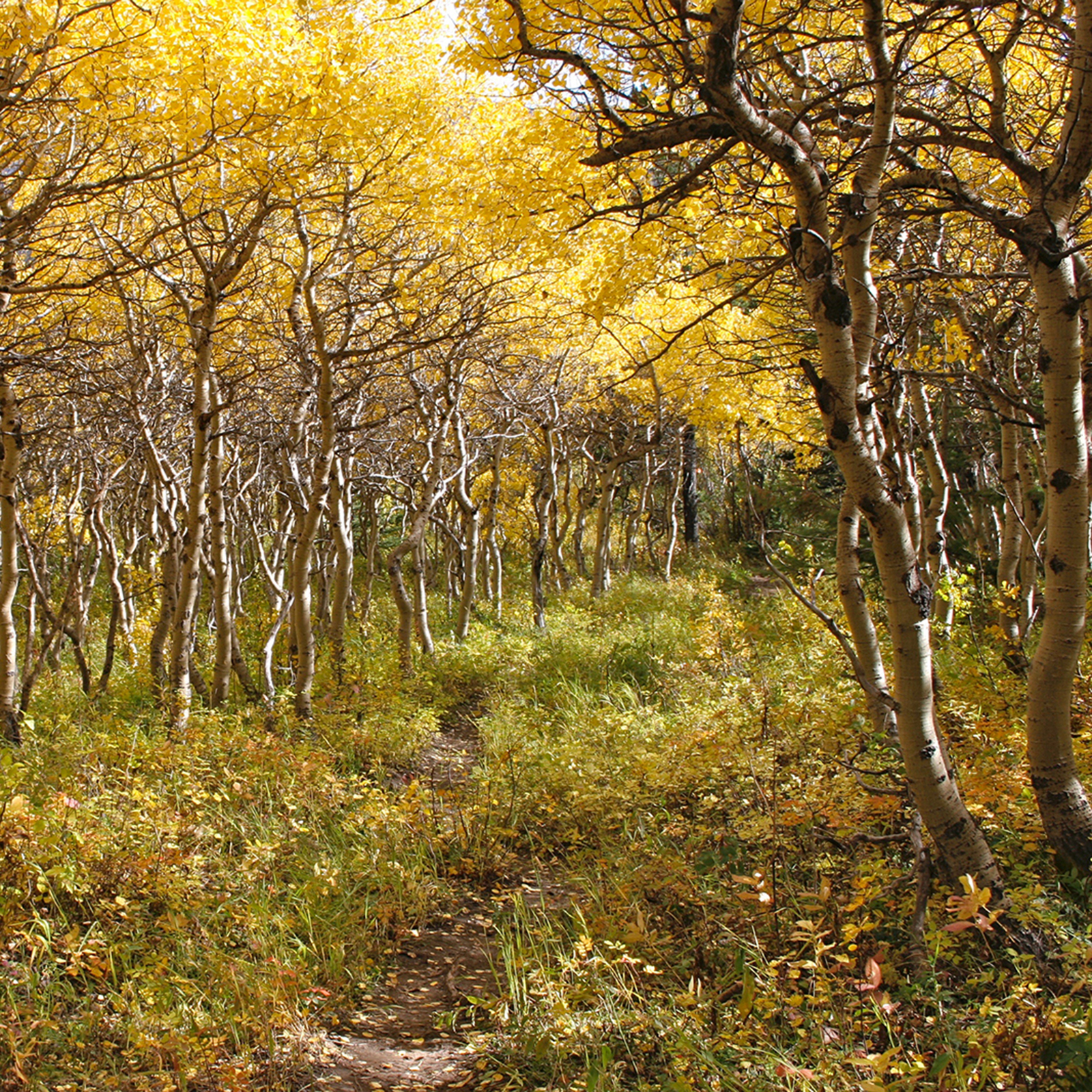
Sunlight streams across the kitchen countertop where I am making sandwiches for today’s hike. The sun seems to lose ambition after a long summer, flattening its arc so that it shines from a lower angle, allowing it to enter a kitchen window at this time of the year. I look outside and notice a few yellow aspen leaves that seem to be shivering in the brisk morning air. Hints of fall. The end of summer.
The end of summer has a wide interpretation for many people. For some it is surrendered to back-to-school shopping, new backpacks and the beginning of football practice. For others, it is marked by Labor Day weekend and a new school year. If you look at your calendar, you will see that the astronomical date for the end of summer and first day of fall (based on the position of the sun in relation to the earth) occurs on Sept. 22, the autumn equinox, when day and nighttime are approximately equal in length.
For some, the end of summer also means the end of hiking season. But it doesnût have be; it can actually be the beginning of a new season of hiking. A season with less traffic on the drive to the trailhead; an extra parking space when you arrive; the electric current of crisp air to clear your head when you step out of your car; fewer bugs rushing to greet you as you hit the trail; fewer people; and to top it off fi fabulous fall colors.
Summer might be considered the best season in the Flathead Valley, when living is easy and the sunshine is plentiful (usually without the stifling heat), while numerous lakes and rivers framed by magnificent mountain ranges offer places to cool off when temperatures do rise. Add the countless events and activities that a tourist-based economy offers and summer can reach a fever pitch. The season’s terminus can bring a sense of relief from summer’s intensity, the burden of 16 hours of daylight and the pressure of making each day count during a notoriously short and fickle season. So, it might be time to let go of summer and fall ahead into the next best hiking season.
Fall for Hiking
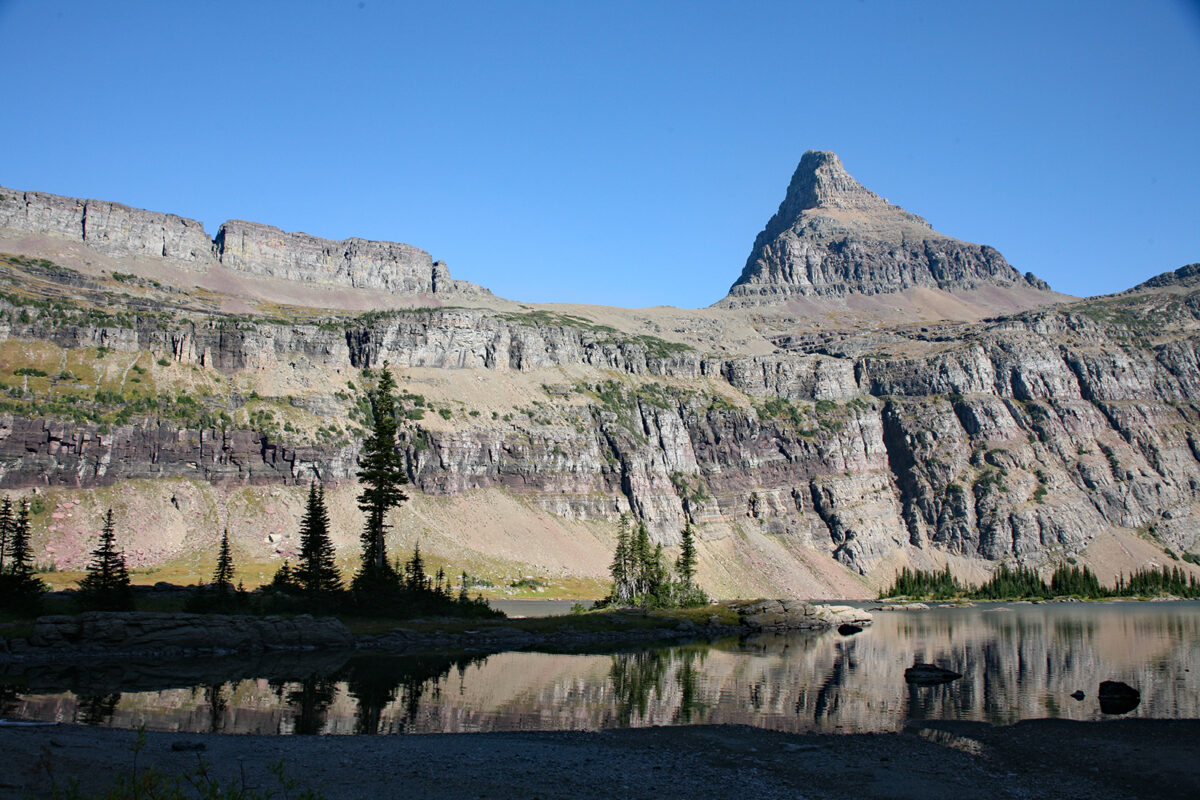
Northwest Montana offers oodles of hiking options with 2,249 miles of trails in the Flathead National Forest and over 700 miles of trails in Glacier National Park. The Flathead National Forest covers 2.4 million acres, reaching north to the Canadian border and south to the Swan Valley where it includes the Mission Mountain Wilderness on the west and portions of the Bob Marshall Wilderness on the east.
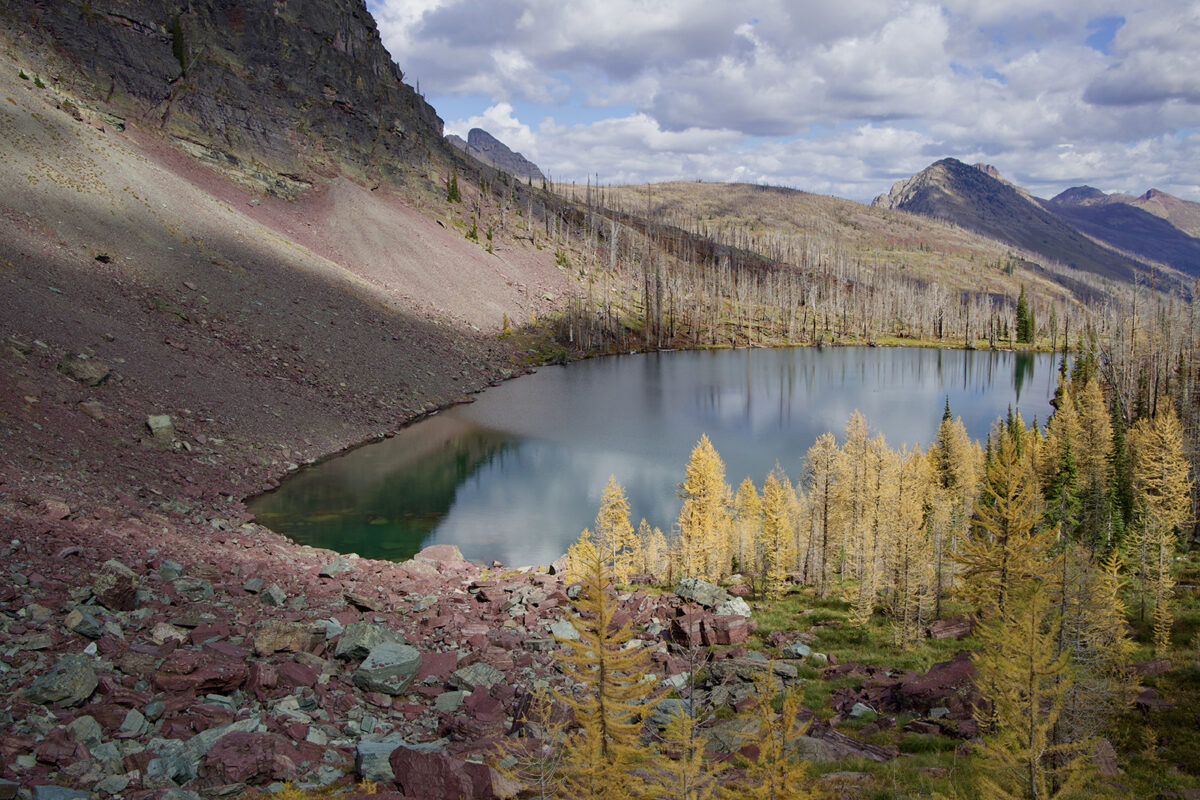
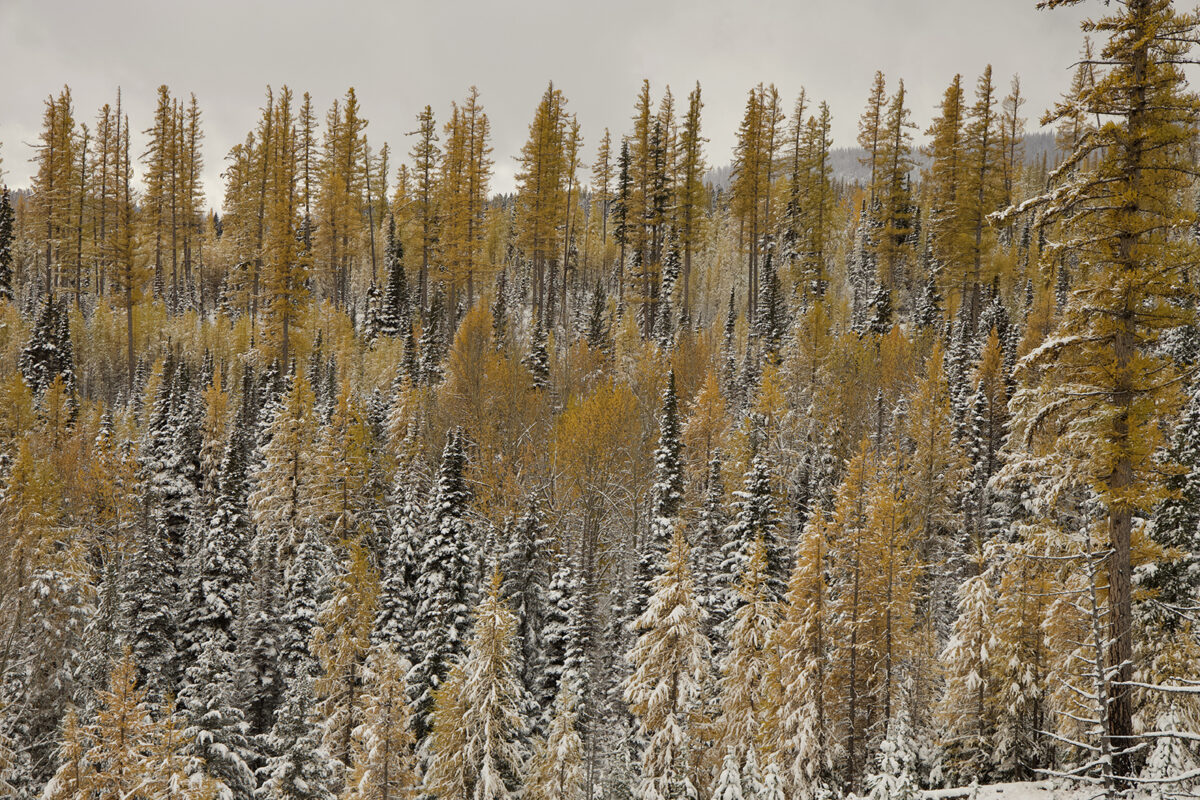
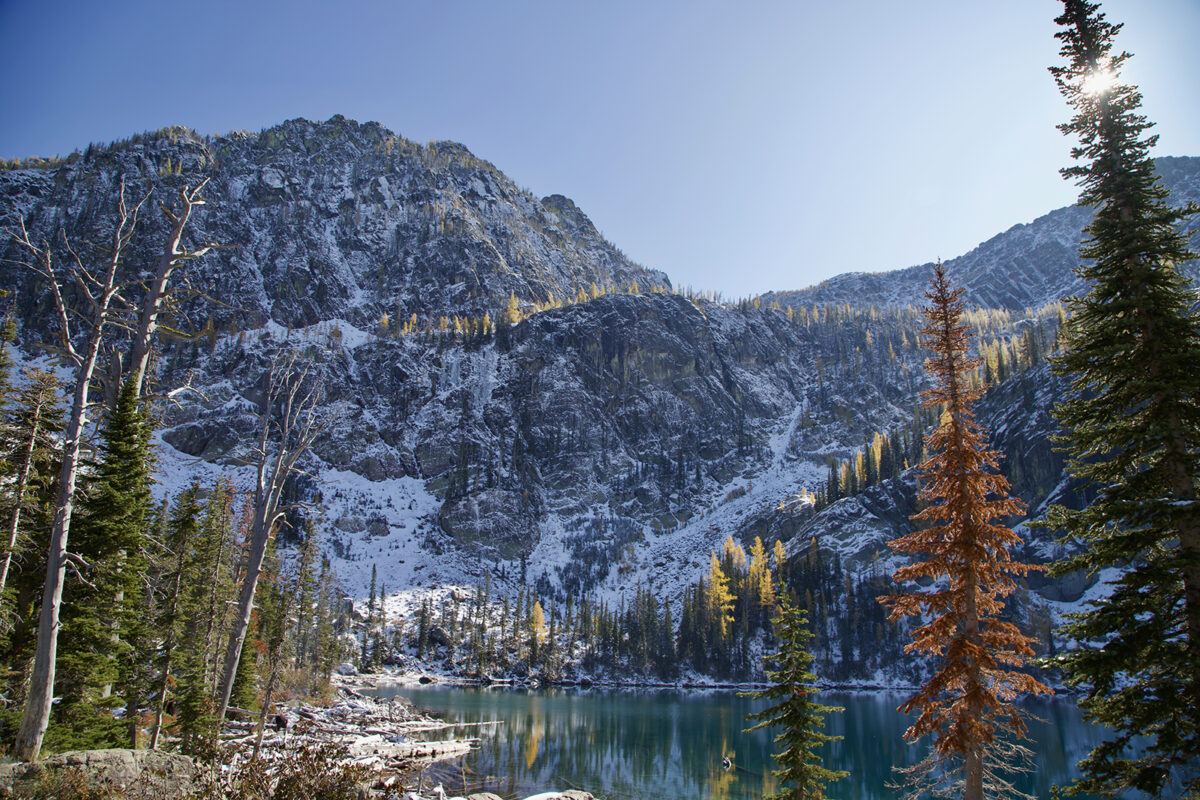
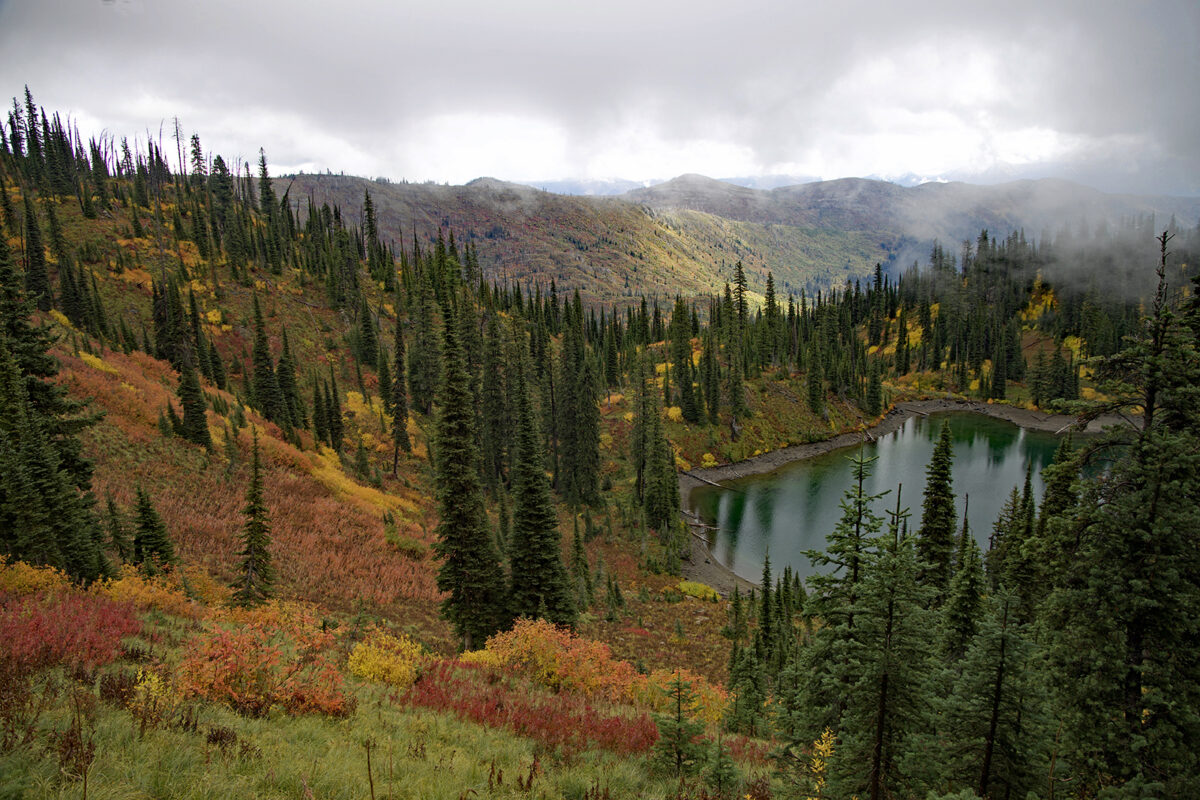
Many hikes require an hour or more of road travel to reach a trailhead, but the lighter highway traffic and spectacular fall color can make the drive a pleasant part of the outing. Fall color in the valley typically begins in late September and peaks in early October, except for the golden larch, which holds out to offer a splendid grand finale in mid-October and sometimes into November. Fall comes earlier in the high country as red huckleberry and orange mountain ash shrubs paint the mountain slopes, while the subalpine larch light their yellow torches in September. The first snow often appears while the larches are still lit, creating a candlelight wedding of two seasons fi the warm glow of the larch contrasted by a veil of winter white.
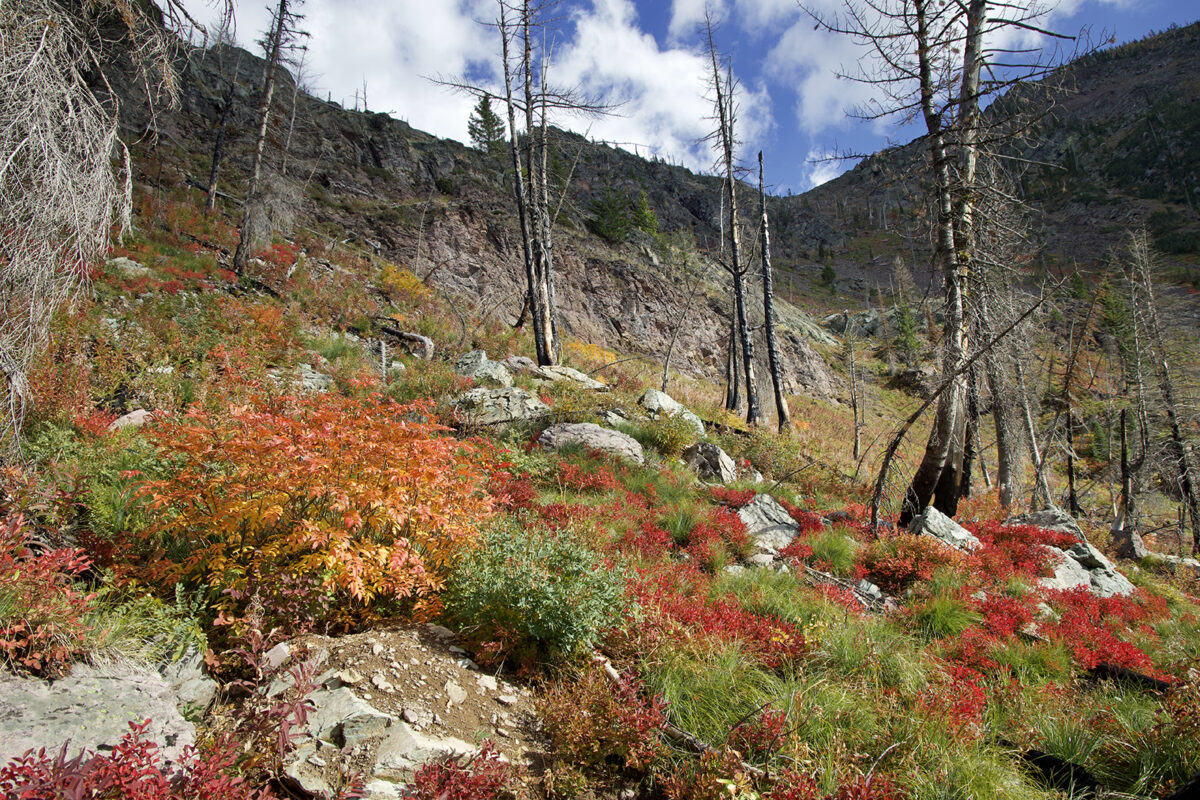
Look for optimal colors in places where there are open slopes. The brilliant red huckleberry bushes, serviceberry and fireweed are prevalent in areas that have seen fire. Areas in the Swan Range that burnt in the Rice Ridge fire in 2017 seem to wave victory flags as shrubs and flowers throw their colorful patchwork quilt over scorched forest land. Other shrubs adding to the brilliant fall color are the rocky mountain maple that can turn yellow, orange or red; chokeberry and dogwood that burn red and orange; and the red-to-burgundy hues of hawthorn and viburnum accented by red or purple berries. Open slopes along the Jewel Basin’s many trails and its trove of turquoise lakes display fall colors in early September.
Yellow aspen, cottonwood, birch and larch trees shine like sunlight, brightening up gray-weather days. The western larch is a bit of an anomaly as a deciduous conifer that loses its needles each year after turning bright yellow in the fall. Western larch are found in many areas of northwest Montana, including the Swan Valley, the Hungry Horse Reservoir, along Marias Pass, and on the trails at Whitefish Mountain Resort. You will also find larch scattered throughout Glacier National Park, including up the North Fork, the Middle Fork, along Camas Road, and on the Lake McDonald West Shore Trail, which offers a moderate hike along the lake near the western entrance to the park.
Subalpine larch are frequently found at the tree line in elevations above 6,000 feet in the high country of such ranges as the Swan and Mission Mountains. These hardy trees commonly live to be 500 years old, but may live to be 1,000 years old. Their needles usually turn yellow in September.
Wildlife also go through seasonal changes. Listen for the bugling of elk during mating season when bulls call out to challenge other males and to attract cows. The high-pitched call can be heard from early September through October, most frequently at dawn or dusk.
Be bear aware as bears become more active, eating and drinking almost nonstop to put on weight for winter hibernation. During this phase called hyperphagia, they consume as much as 20,000 calories a day and can gain as much as two to four pounds a day. Look for their scat, which often contains huckleberries or mountain ash in late summer and early fall. You might also notice areas of disturbed soil, logs or stumps where they have been digging for worms and insects.
From mid-September to mid-October, the Jewel Basin provides a major watch site for migrating raptors that seek updrafts generated by mountains that help them conserve energy on a long journey south. Volunteers keep a daily log that is posted at the trailhead that will give you an idea on the numbers of birds that have been spotted from the ridgeline. Take a hike along the ridgeline or to the top of Mt. Aeneas followed by a leisurely break to watch the graceful dance of the raptors.
Elements of fall
Roads
Be careful on some of those mountain roads that have seen a lot of traffic, such as the Jewel Basin Road. Take them slow. If you start sliding on washboard gravel, it is not unlike the loss of control you experience on an icy road, which is also possible to encounter in the fall.
Falling temperatures and daylight
Weather is unpredictable in the mountain country so be prepared for a variety of conditions. Check weather reports and dress in layers during this dynamic time of the year when days shorten by 120 minutes in September and 100 minutes in October.
September temperatures can go from summer-like to those found in the dead of winter. According to the Western Region Climate Center period of record from June 1,1896, to June 10, 2016, the average maximum temperature in Kalispell is 68.2 degrees Fahrenheit; however, the record high was 99 degrees Fahrenheit on Sept. 1,1967, and the record low was 7 degrees Fahrenheit on Sept. 24,1926.
Also keep in mind that temperatures generally decrease by between 3.3 and 5.5 degrees for every 1,000 feet of elevation gain, a temperature gradient known as the lapse rate (which depends on other weather factors such as humidity, precipitation, cloudiness or inversions). Many trailheads are over 2,000 feet higher than the valley floor, meaning it could easily be as much as 10 degrees colder when you begin your hike. Gain another 2,000 feet on your hike, and you might easily lose another 10 degrees.
The next season
The fall season is often bullied by an early winter storm, as snowfall shuts down road access and covers mountain trails. Even though winter doesn’t officially begin until Dec. 21, the valley often sees its first snow by Halloween. In 1996, the snow began falling in early October with a record snowfall of 143.8 inches in Kalispell by the end of winter. Other years the valley floor has seen a brown Christmas with little snowfall occurring until January. You will find snow occurring earlier in the high country, which can end the hiking season because of road access even if you are willing and equipped to walk on snow.
Getting started
If you are new to hiking and to the high mountain country, start with walks on mellow grades with a good tread. Many of the roads leading to trailheads are on steep and narrow mountain roads, which can prove formidable or even terrifying to the inexperienced; be sure to research your driving route as well as the details of a planned hike.
You can also break into hiking with tamer options. Try riding the chair at Whitefish Mountain Resort ski area to reach the Danny On Memorial Trail system, which offers four different loop variations on hiker-only trails with endless views of surrounding mountains and the valley floor.
The Foys to Blacktail Trails can be reached from five different trailheads offering a wide variety of hiking options, including the Herron Park trailhead that is less than ten minutes from downtown Kalispell. Visit https://www.foystoblacktailtrails.org/trails for more information and a downloadable map.
If you are looking for a casual road adventure, there are numerous gated Forest Service Road that can offer a hike on a mellow grade.
Trail info
Call or visit the website for details to view trail options in the Flathead National Forest and for trail conditions updates.
Flathead National Forest Supervisor’s Office — Kalispell
(406) 758-5208
Office Hours: Monday-Friday, 8 a.m. – 4:30 p.m.
https://www.fs.usda.gov/activity/flathead/recreation/hiking
You can also follow Flathead National Forest on Facebook @discovertheflathead or on Twitter @FlatheadNF.