Climate Advocates Launch Flathead Flood Awareness Campaign with Free Film Event
The nonprofit Climate Smart Glacier Country will host a free Oct. 23 screening of “One in Five Hundred,” a documentary about the 2022 Yellowstone flood. A panel discussion about flood readiness and lessons learned from the 1964 Flathead floods will follow.
By Tristan Scott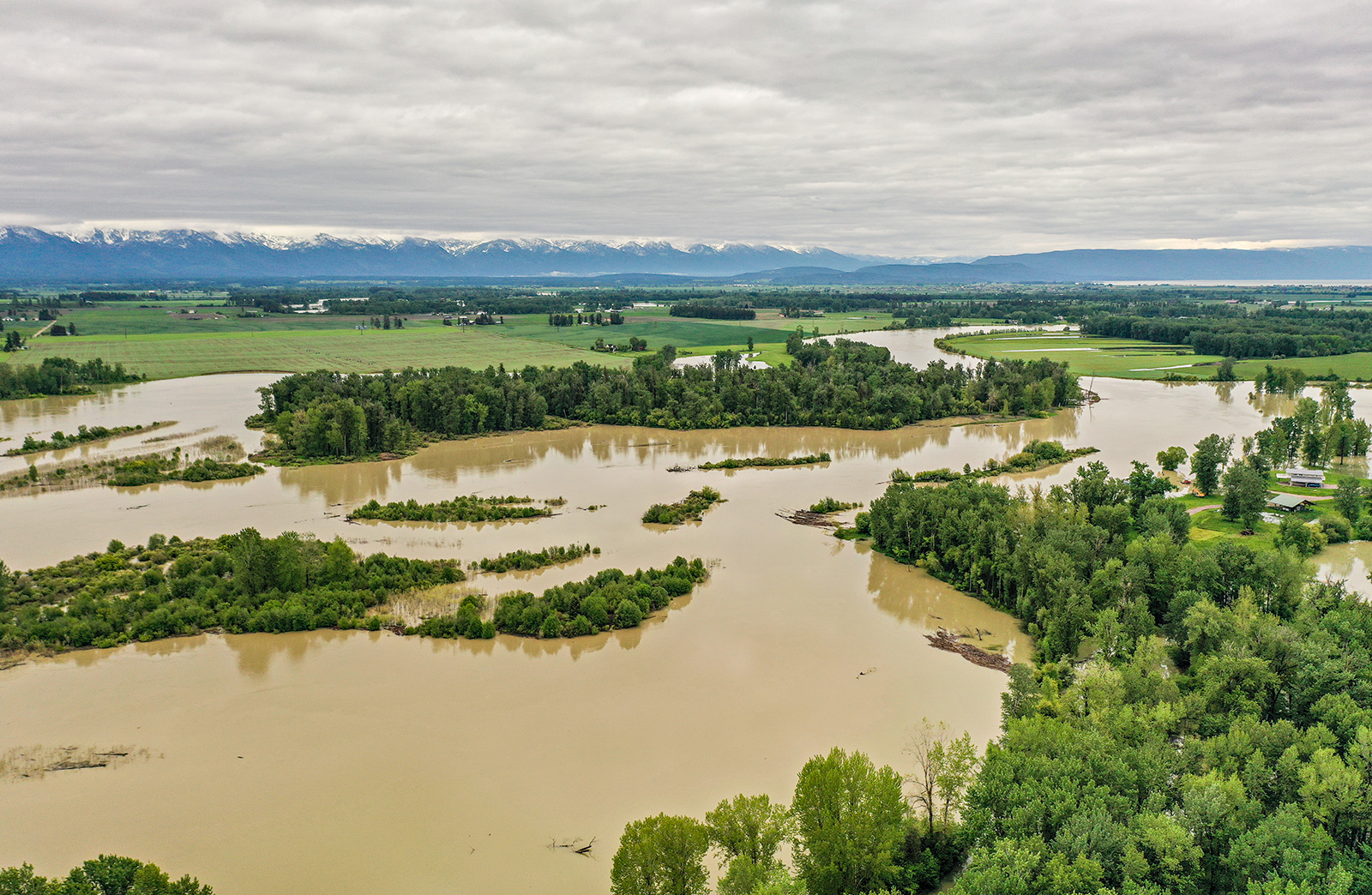
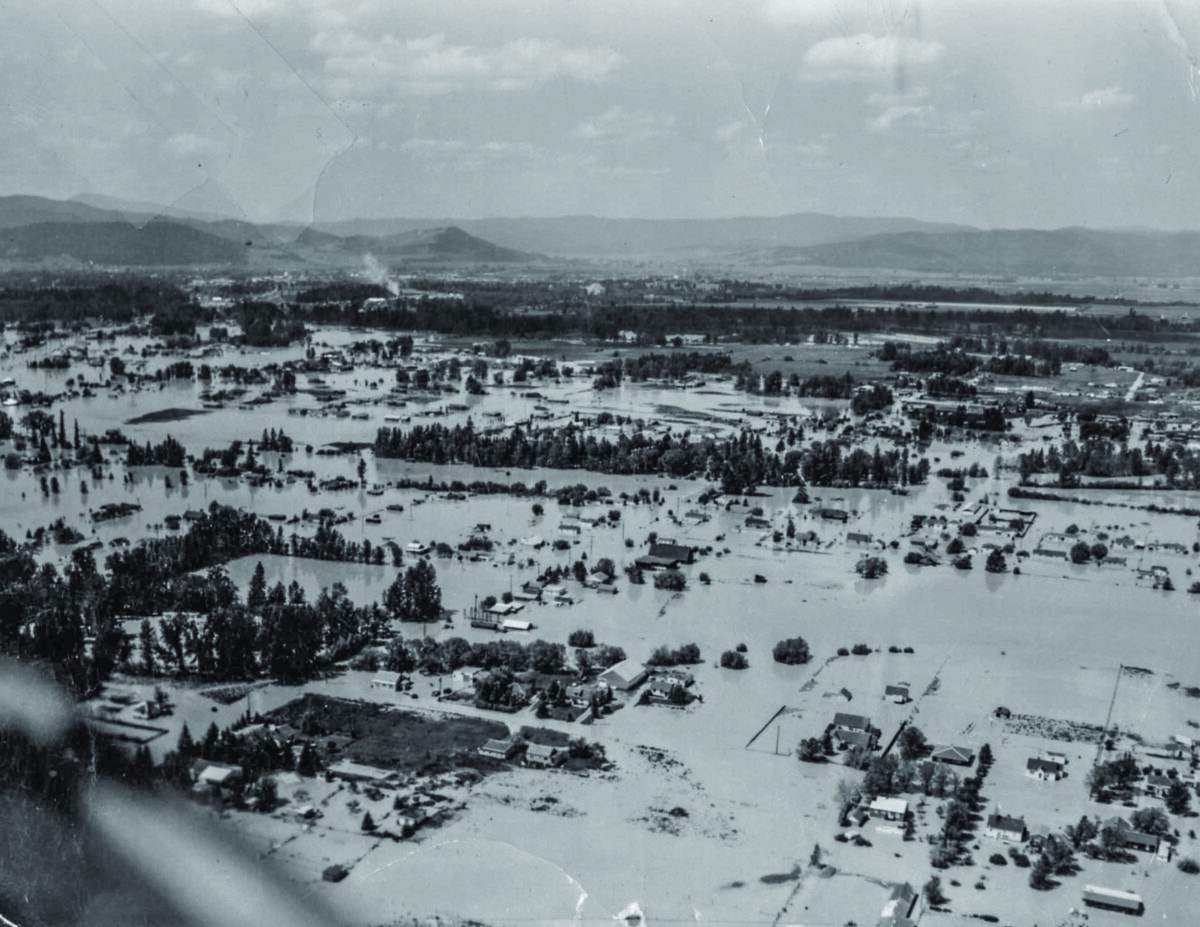
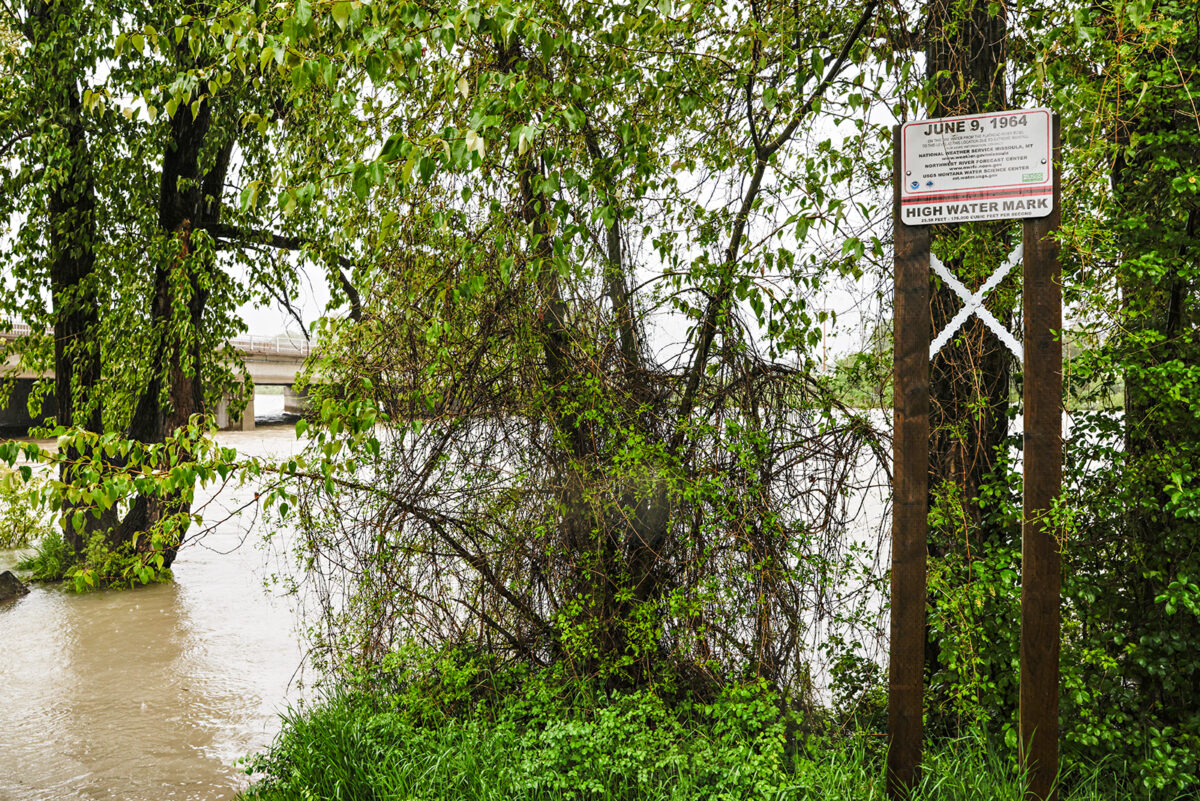
The most severe floods in northwest Montana’s history devastated rural communities spanning the Continental Divide in June 1964, killing dozens of people, injuring hundreds and displacing thousands as recovery efforts stretched on for months. The toll of the 500-year flood would be magnitudes greater today, while the conditions that triggered the deluge — warm temperatures and heavy rain causing rapid mountain snowmelt — are more common than ever before.
More than a half century after the 1964 disaster, the modern framework for emergency flood preparedness in the Flathead Valley and across Montana is developed with a 100-year flood scenario in mind, shaping planning and zoning regulations, building codes, early-warning systems, evacuation procedures, and flood insurance rates.
But what would happen in the event of another 1964-scale flood? How many people would it affect, and what sort of plan is in place to guide an emergency response of that scale?
As the intensity and frequency of natural disasters like floods accelerate amid rising global temperatures, those are question that organizers with Climate Smart Glacier Country posed earlier this year when they approached community stakeholders, as well as city, county and state government officials, about adopting new strategies to improve flood readiness, particularly in communities that have grown up in or expanded to the 500-year floodplain in the past 50 years.
Steve Thompson, chairman of Climate Smart Glacier Country, said that by examining the consequences of those natural disasters, he hopes to help local communities improve their flood preparedness ahead of the next big event.
“The 1964 flood is the biggest Flathead flood on record, and we need to be aware that an event like that will likely happen again,” Thompson said. “It’s not a question of if. It’s a question of when.”
By examining that question, and thereby boosting flood awareness and exploring steps to reduce disaster risk, Thompson said the initiative could have tangible benefits to local homeowners, too.
Through robust community preparedness, Flathead County residents and businesses will be eligible for discounted flood insurance premiums through the Federal Emergency Management Agency. Thompson hopes that the project will give local stakeholders the tools they need to increase their preparedness for a large-scale flood, and help Flathead County improve its Community Rating System (CRS) score, which FEMA uses to determine insurance rates through the National Flood Insurance Program.
Community leaders were supportive, but the initiative hit a roadblock when the Trump Administration withdrew a $75,000 grant through the U.S. Environmental Protection Agency’s (EPA) Thriving Communities Grantmaking program. Those grants were awarded to address environmental justice issues that take a disproportionately heavy toll on communities of low-income and rural areas. In May, Thompson received a termination letter notifying him that Climate Smart Glacier Country’s grant had been canceled.
Undaunted, the climate advocacy group is re-upping its effort to prepare for the next large flood by organizing an upcoming event that will explore lessons learned from the Flathead floods, as well as the 2022 Yellowstone floods that devastated the national park and nearby gateway communities.
Dubbed “When the Waters Rise Again,” the event includes a free screening of a documentary film about the 2022 floods that devastated Yellowstone-area communities, followed by a discussion with the filmmaker and panelists who directly experienced the Yellowstone flood and the 1964 flood in Flathead County. The event will be Thursday, Oct. 23, 7 p.m. at the Columbia Falls High School Theater at 610 13th St. W.
The 54-minute documentary, “One in Five Hundred,” depicts the destructive flash flood three years ago that shocked the communities of Cooke City, Gardiner, Red Lodge and the upper Yellowstone Valley. Similar to floods that ravaged the Flathead Valley in 1894 and 1964, the 2022 Yellowstone megaflood is considered a 500-year event. The frequency of such events appear to be increasing across the nation due to a warming climate that increases atmospheric moisture and fuels stronger storms.
“One in Five Hundred tells the story of the devastating 2022 Yellowstone floods and the impact for many of the park’s gateway communities,” said Hugo Sindelar, who directed the documentary and works as an assistant professor of film at Montana State University. “Through the voices of more than a dozen local residents, the film shares valuable lessons about the importance of flood preparedness in the Mountain West.”
Following the film, a panel will discuss lessons learned from the 2022 and 1964 events. Panelists include: Sindelar, the filmmaker who created “One in 500”; Bill Berg, a retired Park County commissioner and Gardiner businessman; Bruce Young, a Lakeside realtor who surveyed the 1964 flood by air with his father; Shirley Rogers Folkwein, a Columbia Falls resident whose family farm was partially inundated in 1964; and perhaps another surprise guest or two.

Thompson hopes it helps orient participants around the risk of flooding and the resources available to mitigate them. Called “Anticipating the Flood Next Time: Building Community Resilience for a 1964-Scale Scenario,” the public-private partnership is timely, Thompson explained, in that it comes on the heels not only of the 500-year Yellowstone River floods in 2022 — a season that also brought flooding to the Flathead Valley — but also in the wake of the recent floods in North Carolina, Kentucky, Vermont, and the destructive and deadly flooding in the Hill Country region of Texas.
The event is also an opportunity to highlight the critical nature of the National Flood Insurance Program (NFIP), the largest residential flood insurance program in the U.S. Authorization for the NFIP expired on Oct. 1, lapsing amid a shutdown of the federal government and leaving homeowners unable to access new coverage. Although claims can still be paid under existing policies, homeowners and renters will be unable to buy, renew or add to policies.
Event sponsors include Climate Smart Glacier Country, Flathead Conservation District, Western Montana Conservation Commission, Upper Flathead Neighborhood Association, and Columbia Falls High School Conservation Crew.