On the Blackfeet Nation, Shield Keepers are Working to Reverse Historical Trauma
Since launching in 2021, Blackfeet Eco Knowledge has united elders and young interns to reconnect tribal members to their land and traditions while protecting sacred places like Chief Mountain
By Maggie Dresser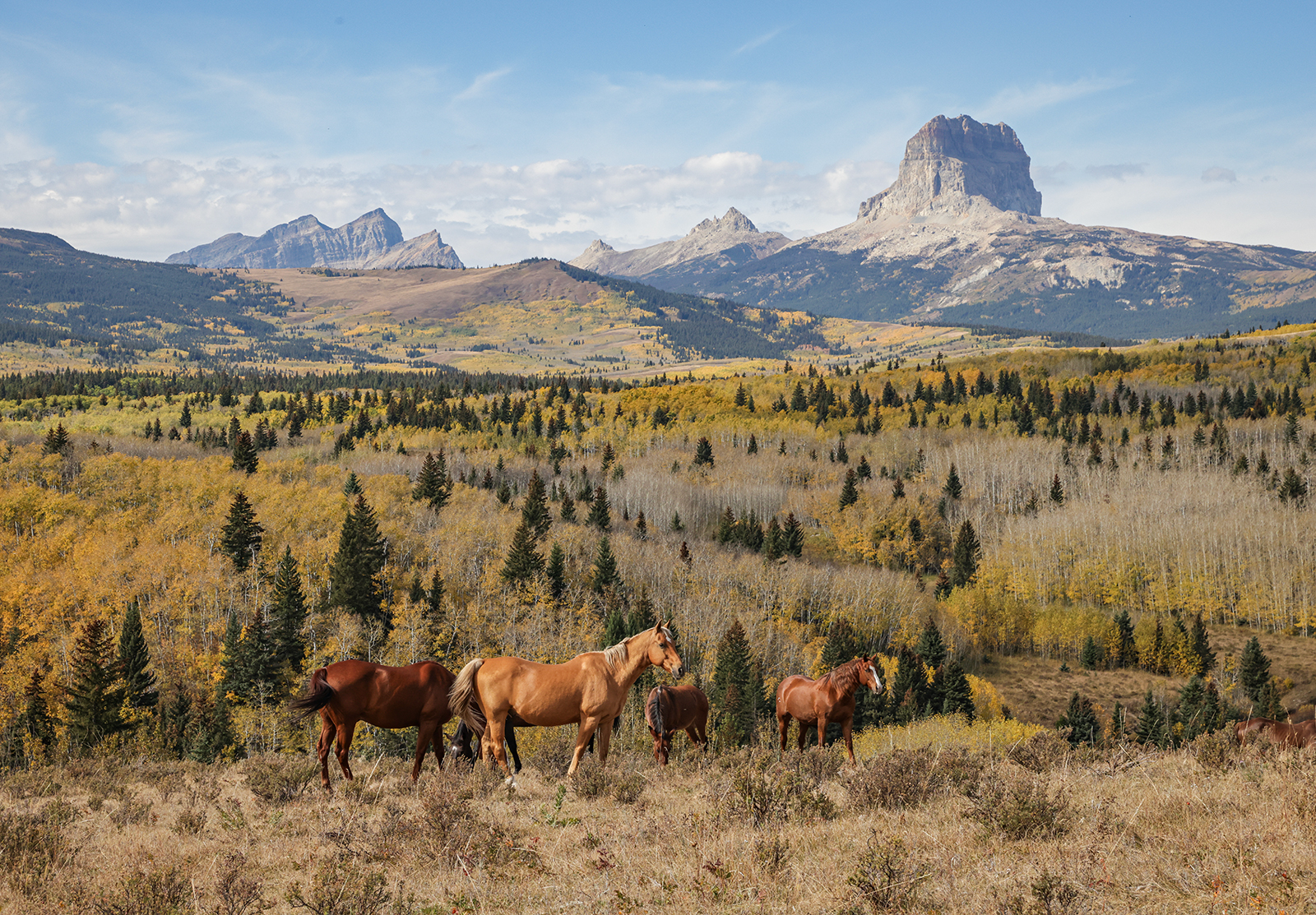
Three months ago when Tucker Juneau started interning as a Shield Keeper for Blackfeet Eco Knowledge (BEK), he struggled to identify with his deep roots in the Blackfoot Confederacy. Although he had experienced some cultural traditions, like sweat lodge ceremonies, he felt too westernized. He needed more guidance.
“I was looking for a door into our culture,” Juneau said.
Once he started the internship at BEK, a nonprofit that blends traditional Blackfeet knowledge with conservation practices on the Blackfeet Indian Reservation, Juneau got to work building that connection. The generations before him were taught to be ashamed of their culture, but Juneau wanted to integrate.
As a Shield Keeper for BEK, Juneau worked with Blackfeet Nation Fish and Wildlife to electroshock fish for research and monitoring. He participated in cultural burning, using fire to heal the land, and he connected with elders for counsel. He also helped set up the Many Lodges Camp encompassing the sacred society lodges of the Horn Society and Brave Dog Society, which have endured as keepers of Blackfeet ceremonial knowledge, safeguarding the traditions after rituals were banned during colonial displacement.
The highlight of Juneau’s 14-week internship was receiving his Blackfeet name – Ninamskaapokaa – during a ceremony.
“You can’t find this experience nowhere else,” Juneau said.
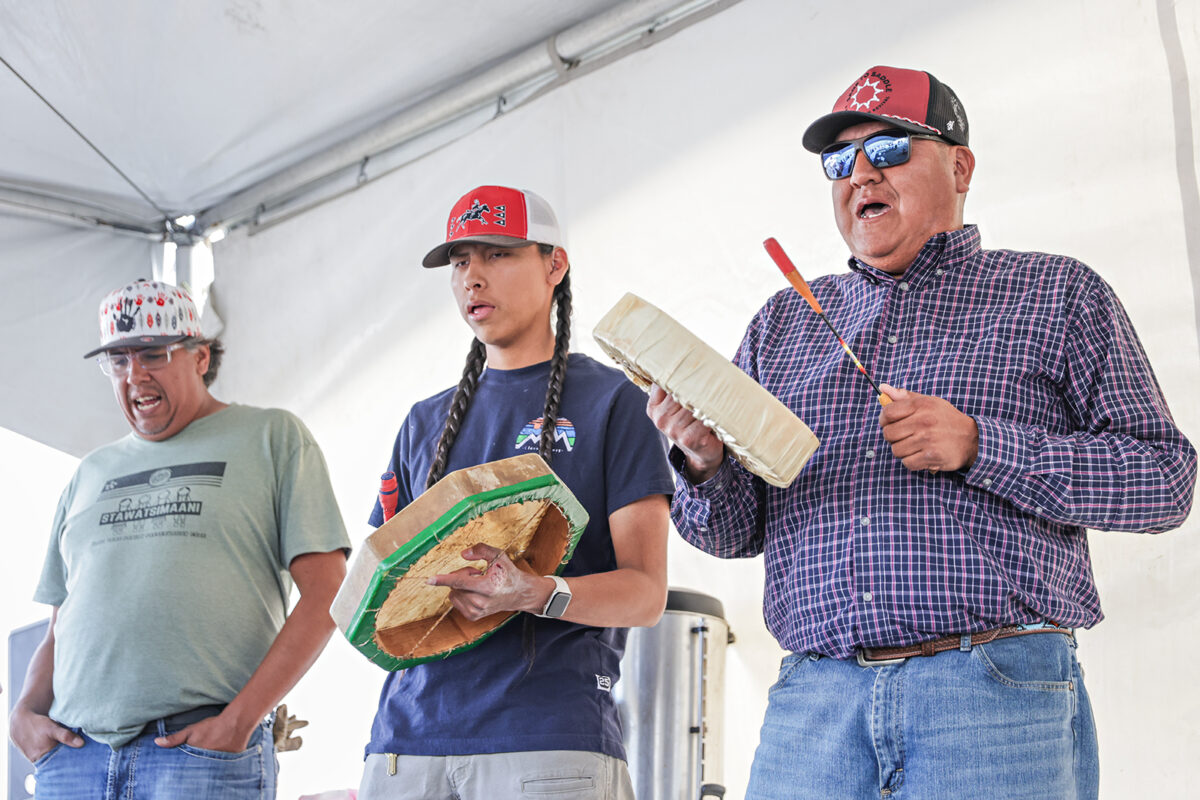
Juneau shared his experience with an audience that included Blackfeet tribal members and visitors from across the U.S.-Canada border and beyond at the Shield Keepers and Chief Mountain Guardians Annual Gathering in Babb last week. In its second year, the event was organized by BEK’s Shield Keepers interns who educated guests about their projects. Elders also led prayers and pipe ceremonies at the two-day event.
Tyson and Lona Running Wolf launched BEK in 2021 to reconnect Blackfeet tribal members to their land and culture following years of assimilation designed to westernize Native Americans who belong to the Blackfoot Confederacy, which makes up the Blackfeet Nation, the Kainai Nation, the Piikani Nation and the Siksika Nation.
With the nonprofit, they aimed to create a cultural movement.
“Not only have our people experienced historical trauma, but the land, the buffalo, our animals have experienced trauma — our language experienced trauma,” Lona said. “We didn’t lose it, but it was in critical condition. So BEK became our entity to reverse the impact.”

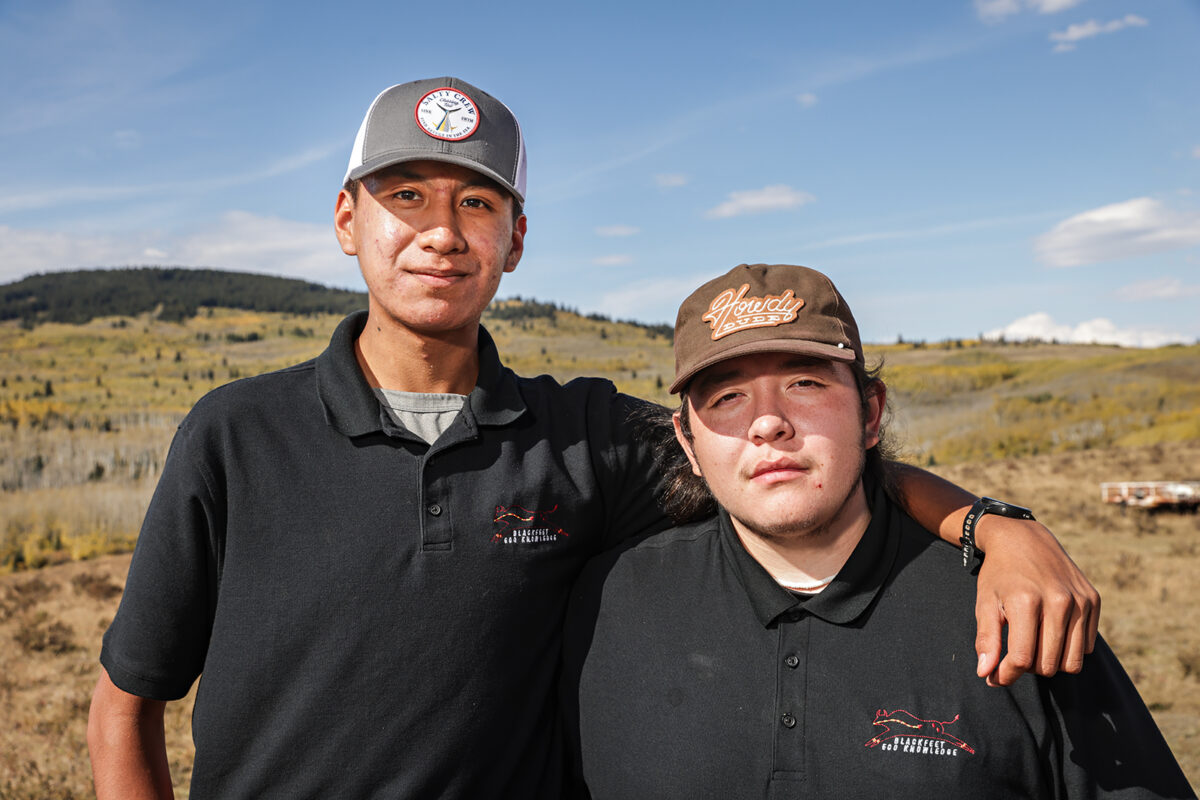
To help reverse that impact, Tyson and Lona hired two Shield Keepers, Darrell Hall and Emmette DustyBull, who came into their roles with their own specialties to protect and spread Blackfeet knowledge.
DustyBull serves BEK as a language guardian and uses his connections with fluent Blackfeet elders to revitalize the language, while Hall specializes as the buffalo Shield Keeper.
Both Hall and DustyBull are dedicated to cultural restoration and developed a curriculum for the intern program. For example, they launched the Nitsii’poowahtsin Language Preservation and Revitalization Project, through which the Shield Keepers recruited seven families to commit to raising their families in Nitsipohwaahsin — the Blackfeet language.
Another project brings language accessibility to Glacier Family Foods where grocery items are paired with a QR code that translates the item into Nitsipohwaahsin words and phrases.
“Darrell and Emmette were really instrumental and basically developed the whole curriculum for the 14 weeks,” Lona said. “They chose the elders. They chose the topics.”
Connecting interns with elders has been an essential part of the learning process. Lona said recruiting younger generations is a crucial step toward resurrecting and reanimating Blackfeet tradition.
“The reason why we’re working toward these specific types of projects is the next generation is the group that’s not afraid to learn our culture,” Lona said. “We’re still really impacted by the boarding school era where generations are taught to fear our culture.”
Intern CJ Smith, whose Blackfeet name is Many Rifles, didn’t feel like he had opportunities to learn his culture prior to his introduction to BEK. He wanted to distance himself from the pervasiveness of drugs and alcohol that frequently entered his orbit, but he didn’t know where to start. Now at the end of the internship, Smith feels a clearer identity, and can see a clearer path forward.
Blackfeet Tribal Historic Preservation Officer and elder John Murray, who worked with the interns, said the younger generation is more engaged than those that came before them.
“There was times when I used to have anxieties — but I don’t anymore,” Murray said. “There was times when people were totally ashamed to be Blackfeet. It’s not that way anymore.”
While approaching elders can be intimidating for younger members, Tyson said it’s just as important for each party to have that exchange of knowledge, which is typically passed down in the form of oral history.
“They can go sit down for five or six hours and learn from them or you can go with them up in the hills and they’ll teach you something,” Tyson said. “Because these elders are lonesome. They’re needing a purpose and they have all that knowledge, but they just don’t have an avenue of somebody to share it with. We’re killing two birds with one stone. When we do this, we’re having an interaction where they’re not just sitting in a nursing home all the time … all of our elders are excited. They’re sitting, they’re waiting, and they’re available to give that knowledge.”
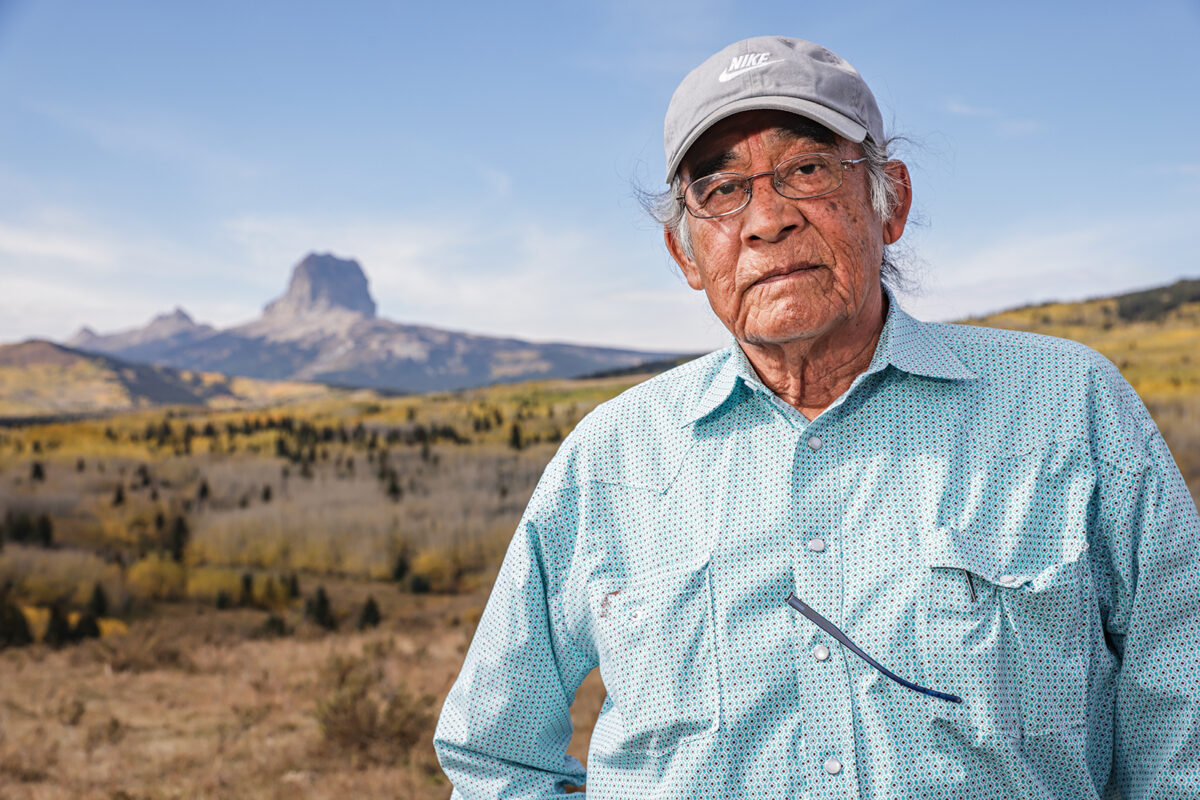
Murray partners regularly with BEK through the Blackfeet Tribal Historic Preservation Office (THPO), leading pipe ceremonies and working to resurrect the Blackfeet language. He’s also dedicated to protecting sacred places like Chief Mountain, known as Nínastakoo in Nitsii’poowahtsin language.
While BEK has no dedicated Shield Keeper for Chief Mountain, which has been a destination for hunting and ceremonial use for thousands of years, the organization partners closely with THPO staff to protect it.
But since the summit of Chief Mountain is in Glacier National Park, Murray said formalizing protections to the land has been complicated. He traces the history of those disputes to the early 1900s, when the land was taken from the Blackfeet people.
Since the 1990s, tribal leaders have succeeded in placing some access restrictions on Chief Mountain. The Blackfeet Tribal Business Council passed a resolution restricting non-tribal members from accessing it from the east, within the reservation boundary, after a Blackfeet man was interrupted during a fasting ceremony. Still, the tribe has documented other disrespectful incidents over the years, including hikers hitting golf balls from the top of the mountain, as well as unauthorized commercially guided trips and widespread recreational conflicts.
Since the 1980s, the Blackfeet have been pressuring various Glacier National Park superintendents to close off access from the west side. Murray said current Superintendent Dave Roemer is the first leader who has been open to the prospect, but bureaucratic hurdles remain uncleared.
In recent years, the tribe has been working to close off Chief Mountain permanently to non-tribal members to protect it, but the tribal council recently reopened access amid mixed political perspectives.
The mountain’s fragility has also contributed to the pressure to close it, which has been impacted by heavy traffic. A portion of Chief Mountain’s northwest side sloughed in 1972 and again in 1992, with both incidents occurring on hot days in July.
While BEK doesn’t have a dedicated Shield Keeper for the Chief Mountain Unit, Ryan Running Crane serves as a guardian through the THPO, hiking to the mountain’s base multiple times per week. But he said non-tribal members have frequently been disrespectful, and that trespassing and other transgressions were common even before the restrictions were lifted.
“Tribes come here to sweat — that’s one of our big reasons for keeping it sacred,” Hall said. “We don’t want it to get desecrated because it has given us a lot of gifts.”
“When you have something that’s sacred, you want to keep it pristine. It would be like inviting people into your church and letting them stand on your pew and taking pictures and grabbing your holy items. You know, that’s what they’re doing up there,” he added.
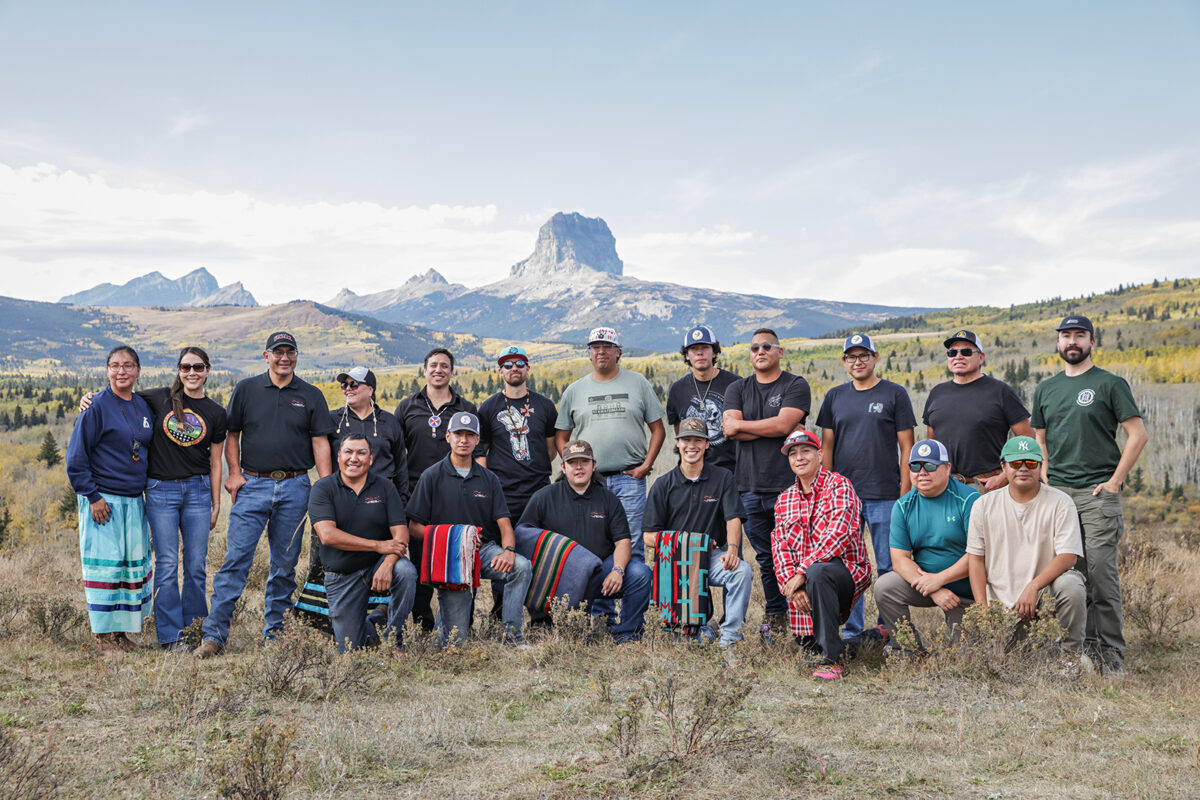
Protecting places like Chief Mountain and reversing historical trauma has been a major goal for BEK. In addition to reconnecting the youth to their culture, Tyson and Lona hope the Shield Keepers will help lay a stronger foundation for the future of the Blackfeet Nation.
This summer was the first year BEK had enough funding for an internship program, which Tyson said has been instrumental in the organization’s mission as they recruit more interns next year.
“With these new interns, what we’re trying to do is we’re trying to reverse the western way of thinking and trying to think Blackfoot,” Tyson said.
Danielle Antelope, the co-director of development at the nonprofit FAST Blackfeet, has worked closely with BEK’s interns. She’s noticed their transformation since the beginning of the summer, which she described as Indigenization.
“You say Indigenize and you get to recreate this framework. That’s building culture,” Antelope said. “I think building the identity in these young men and making them proud of where they came from is what made this experience so impactful for them. There are these traumas built into the generations before us, and I think what’s different about this generation is we get to spark that rebellion.”
For intern Jeffrey DeRoche, embracing his culture has become a priority. And while he hasn’t completely rejected the western world, BEK taught him to remember his identity.
“One thing with this is really learning to put the Blackfeet way of life at the forefront of your mind, you know, and just keep it there.”