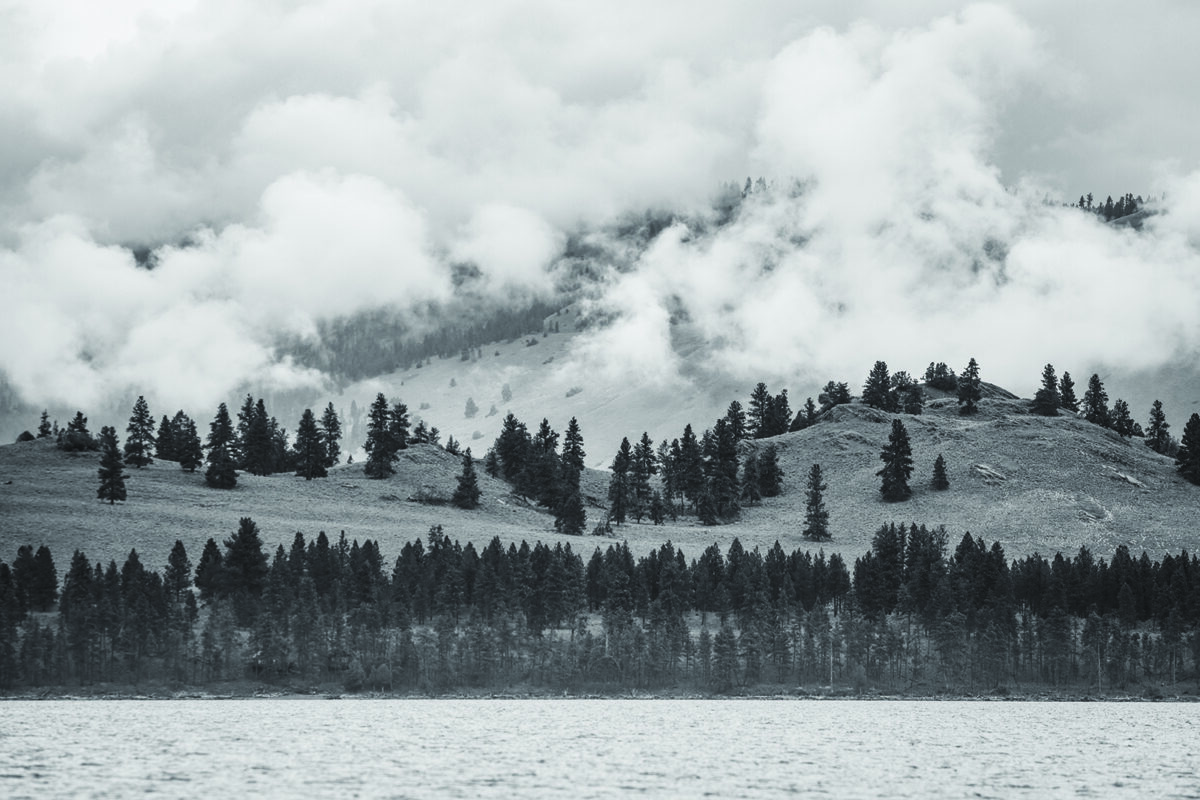
The Philosopher King of Wild Horse Island
As one of the earliest — and only — homesteaders to occupy Flathead Lake’s Wild Horse Island, Herman Schnitzmeyer nearly starved to death before turning his attention to photography, a talent he used to capture a turning point in the American West
By Butch Larcombe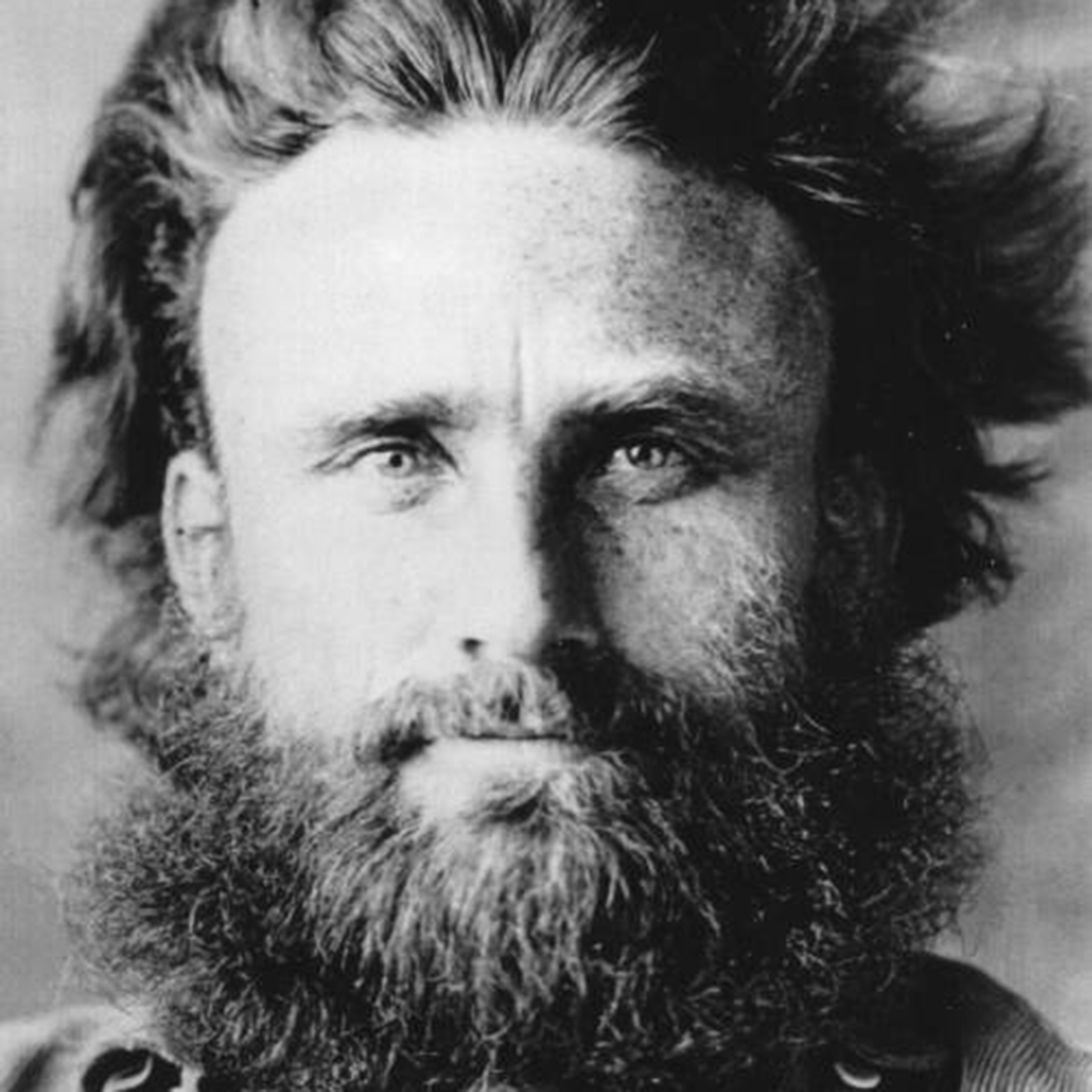
Herman Schnitzmeyer was lucky, at least in his early years.
Born in 1879 in Illinois, Schnitzmeyer, the son of German immigrant parents, worked as a house painter before getting training in photography in St. Louis. He was one of more than 81,000 people who entered a lottery in hope of winning the right to select a homestead on the Flathead Indian Reservation. One of 1,600 lottery winners, Schnitzmeyer filed a claim to 160 acres on the southeast portion of Wild Horse Island, with ideas of an idyllic life filling his head. He developed plans, including bylaws and a constitution for a self-sustaining society on the island that he called Apollo Heights.
While Schnitzmeyer planted crops and built a dwelling on Wild Horse Island, the reality of an isolated, agrarian life didn’t seem to suit him. “He wasn’t much of a farmer or rancher, more of a philosopher,” noted Denny Kellogg, a Bigfork-area historian and historical collector. While on the island he kept journals filled with his thoughts. Samples of his musings: “Submit as little as possible to insignificant things,” and “The mind receives the most healthful exercise in creative activity.”
Although Schnitzmeyer often captured his thoughts and ideas in written form, it found little audience and ended being “mostly for his own consumption,” Kellogg says. As for Apollo Heights, there is no evidence that the society had a member other than its founder.
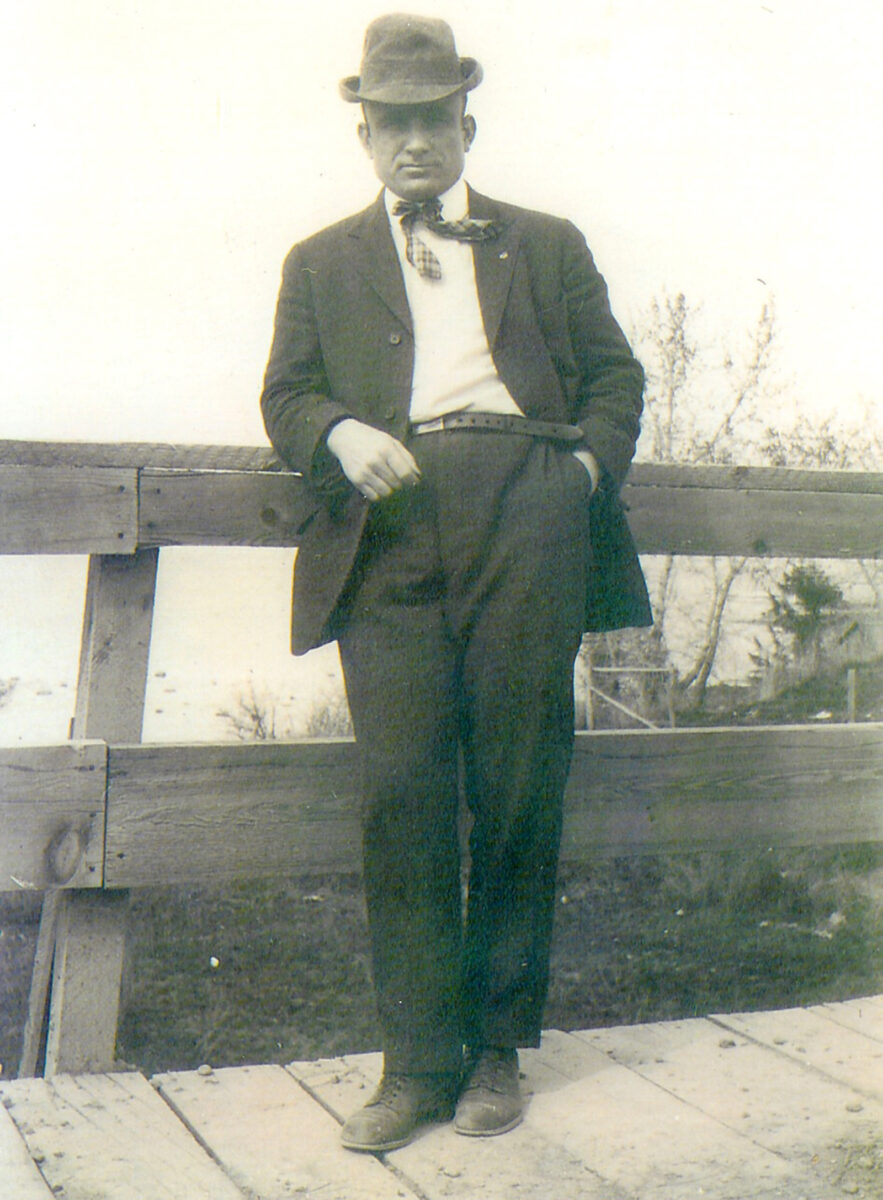
Schnitzmeyer met the requirements to “prove up” on his Wild Horse homestead claim, possibly the first person to do so, but island life wore thin. He spent the winter of 1913-14 living on the roughly 2,100-acre island, likely as its only human occupant. He battled isolation and, by his own account, starvation. A self-portrait made shortly after that winter shows a gaunt, wild-haired Schnitzmeyer, a possible reflection of his harrowing experience.
“His Wild Horse Island days were hard on him – physically as well as mentally,” the late Paul Fugleberg, longtime editor of the Flathead Courier in Polson, wrote nearly a century after the long winter. While living at least sporadically on the island, Schnitzmeyer worked as a hotel clerk in Kalispell for a short time and developed a photo postcard business based in Dayton with Louis Desch, another area homesteader. He also hatched a plan for a photo studio in Polson. A 1914 journal entry outlined this vision: “My ambition now is to make a nationwide reputation for depicting the sentimental beauty of natural scenery, and while doing this, accumulate a nice competency.”
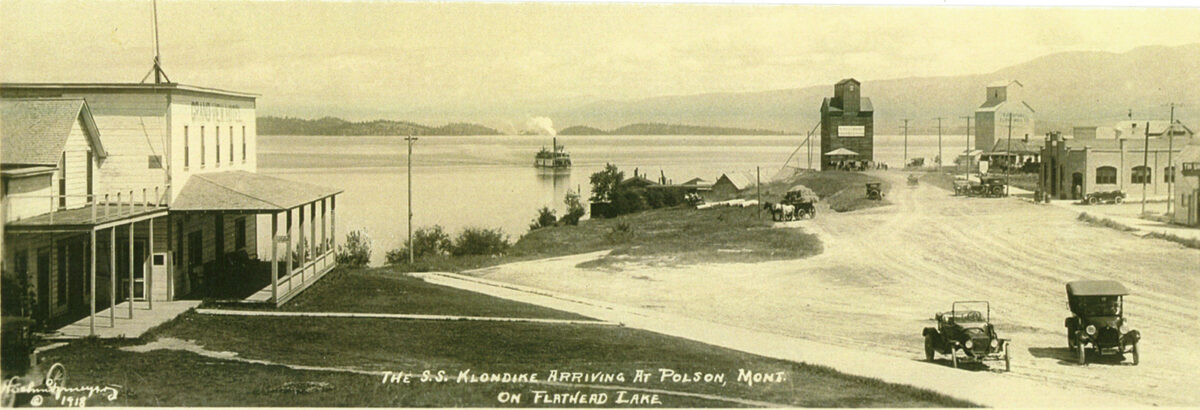
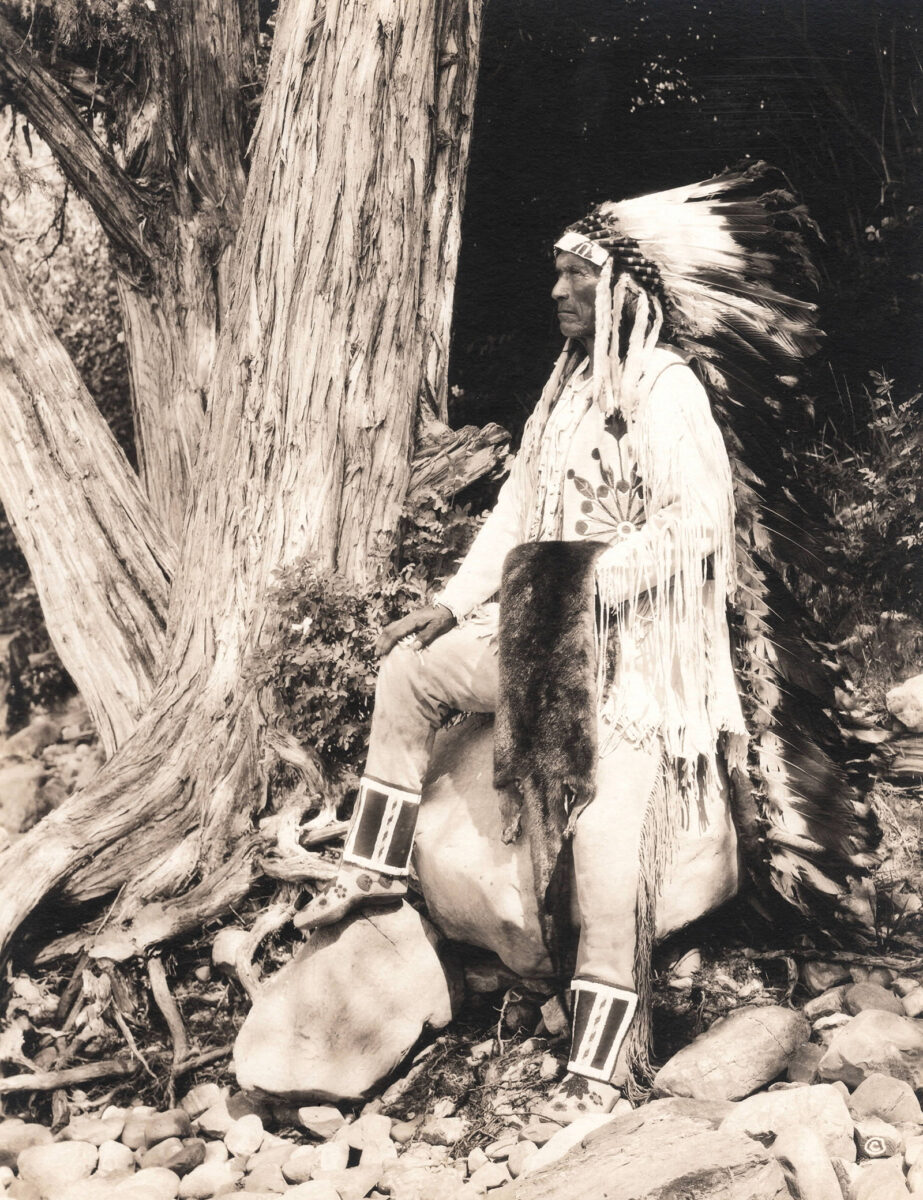
Schnitzmeyer was a skilled photographer, especially in an era of bulky cameras and glass-plate and large film negatives. He doggedly pursued images of Flathead Lake, the surrounding mountains, steamboats and native inhabitants, including one of his favorite human subjects, Koostahtah, the Kootenai chief. He captured several historic moments, including the first flight of a “hydro-aeroplane” in Montana by aviator Terah. T. Maroney in 1913 and the 1930 groundbreaking for what would become Kerr Dam.
He also documented everyday life in and around Polson, Fugleberg wrote, noting “his camera clicked on sweaty threshing crews, lumberjacks, ice-cutting operations on the lake, school activities, community plays, tribal events and chiefs, Boy Scouts, World War I doughboys, landmarks, buildings, people, hotel card games, and parties. He even took pictures of corpses in caskets.” All told, the photographer’s work captures “a dynamic turning point in western Montana’s culture and economy,” Kellogg says.
Schnitzmeyer opened his Polson studio in 1912. A jovial sort, he also developed a reputation for unreliability, often missing photo appointments and other commitments. Fugleberg, the newspaper editor, observed that the photographer appeared to lack “even the slightest semblance of business knowledge or procedure.” Desch, his partner, had more business and marketing sense and helped produce hand-tinted images of Schnitzmeyer’s work. The two produced a series of photo cards depicting scenes of Polson and the surrounding area that proved popular with homesteaders who sent them to family elsewhere.
Schnitzmeyer also developed an appetite. Acquaintances noted his fondness for breakfast, roaming from one Polson café to another, often eating multiple times in a morning. As a young man, Bill Gregg drove Schnitzmeyer around the area in a Ford Model T and recalled that on numerous occasions, the photographer would ask to stop at farmhouses and offer to trade a photo of the home for a meal. Odd behavior aside, “that man was a genius with a camera,” Gregg told an interviewer.
Schnitzmeyer sold his photo studio in 1922 to Julius Meiers, an apprentice, who subsequently operated Lake City Studio in Polson for many years. Between 1922 and 1930 Schnitzmeyer did freelance photography work for the Northern Pacific Railway across Montana, in Yellowstone and Grand Teton national parks and in the Cascades in Washington state. His images that were used to promote settlement along the railroad’s route, passenger travel and the freight business.
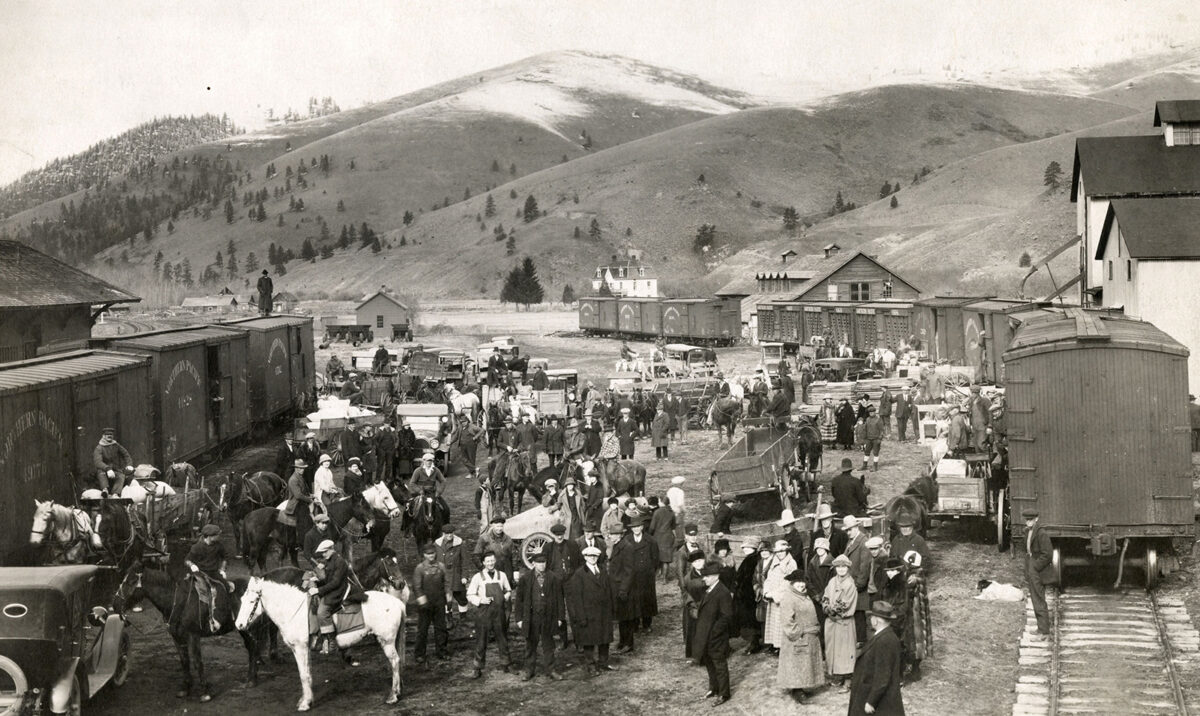
Schnitzmeyer’s railroad work has parallels with that of Tomer J. Hileman, who moved to Kalispell in 1911 to start a photo studio and, shortly thereafter, started shooting promotional images for the Great Northern Railway. While Schnitzmeyer made many photos of rural landscapes, Flathead Lake and the Mission Mountains, Hileman received acclaim for his images of Blackfeet people and Glacier National Park, which were popular with tourists and locals alike. Hileman was also skilled at marketing his work, establishing early-day photo labs in several of the park’s hotels that also provided greater exposure of his personal work.
While his work was more obscure, Fugleberg, in 1961, wrote that Schnitzmeyer, at least in the eyes of some, “was probably the outstanding depicter of natural scenery of his time in Montana – even surpassing the famous Glacier National Park photographer Hileman.”




While they may have been rivals to some degree, Schnitzmeyer and Hileman appear to have had a cooperative relationship. Kellogg’s collection includes a panoramic image of Polson in 1915, with a stamp and copyright crediting both men. The effort needed to create the stamp provides “definitive evidence of their collaboration,” he says.
In 1926, Schnitzmeyer, in need of money, sold some of his camera equipment and images to a man named Johan Rode, a Polson acquaintance. Most of the images he sold had not been copyrighted, and Rode either added his name to the images or altered the negatives to remove Schnitzmeyer’s signature and replace it with his own. The scheme found at least reasonable success, with altered images later found across the U.S. There is no evidence Rode produced any original images on his own. “For every Rode (photo) out there, there is a previous Schnitzmeyer,” Kellogg says.
Long after Schnitzmeyer’s death, Kellogg received a phone call from Roger Stang, Rode’s grandson, who offered to give him his grandfather’s Eastman No. 2 view camera and related items. Kellogg accepted the offer without hesitation and drove to California to retrieve the gear.
While some of Schnitzmeyer’s photos were donated to the University of Montana decades after his death by the Desch family, others popped up in surprising places around Polson. In 1965, Fugleberg reported in the Flathead Courier that a water-soaked box of Schnitzmeyer’s images had been discovered during the demolition of a local lumberyard. In the ensuing weeks, Fugleberg recalled fielding phone calls from folks who also found caches of the photographer’s work depicting scenes of early-day Big Arm, Flathead Lake steamboats, families and fishermen.
After his Northern Pacific freelance work ended, Schnitzmeyer landed in Missoula. While he did several talks about his photography and UM hosted an exhibit in 1932 that included 200 of his images, he faded into obscurity in the ensuing years, living in the Penwell Hotel near the landmark Milwaukee rail depot and Clark Fork River. He also began to suffer physical and mental health issues.
“He began to be somewhat paranoid,” Fugleberg wrote years later, “and was obsessed with the idea that the British were trying to take over America. He went around insulting people he suspected of being in on the plot.”
Schnitzmeyer died in 1939 of what was likely an intestinal obstruction, probably the result of a poor late-life diet. “He was down to eating bread and milk,” Kellogg says. “He didn’t have any money.”
He was buried at public expense in the pauper’s section of a Missoula cemetery, with a barebones grave marker and his name misspelled on his death certificate. The man who almost starved on Wild Horse Island weighed nearly 300 pounds at death. When his casket was being carried for burial, its handles broke off due to the weight.
Kellogg, an Iowa native who came to the Flathead Valley in the 1970s, is a stone mason by trade and a historical researcher and collector by avocation. He maintains a large collection of books, art, photos and items related to Montana’s past in general and western Montana’s history in particular, including Indigenous art and artifacts. “More important than the objects is the story behind them,” Kellogg says, noting Schnitzmeyer was an example of an artist “forgotten by history, either by the lack of promotion or tragic consequences.”
Kellogg bought his first Schnitzmeyer image, a view of the Mission Mountains from Wild Horse, at an antique store in Helena more than 30 years ago. Since then, he has amassed 800 to 900 items related to the photographer, including many images, publications and brochures featuring his work, glass-plate and sheet-film negatives, and the bulky camera equipment.
More than 60 years after the photographer’s death, Kellogg located Schnitzmeyer’s crude concrete grave marker and worked with a Missoula monument business to place a new headstone on his grave. The new stone includes a statement about the three qualities that the enigmatic, philosophical photographer believed exist in all people: “Love for Motive; Reason for Guide; Will for Strength.”
Kellogg’s motive for helping resurrect the Schnitzmeyer story? “I love the thrill of rediscovery,” he says.
Butch Larcombe worked for nearly 30 years as a newspaper reporter and editor and as editor of Montana Magazine. His book, Historic Tales of Flathead Lake, was published in 2024, while another book, Montana Disasters: True Stories of Treasure State Tragedies and Triumphs, was released in 2021. He lives near Woods Bay.