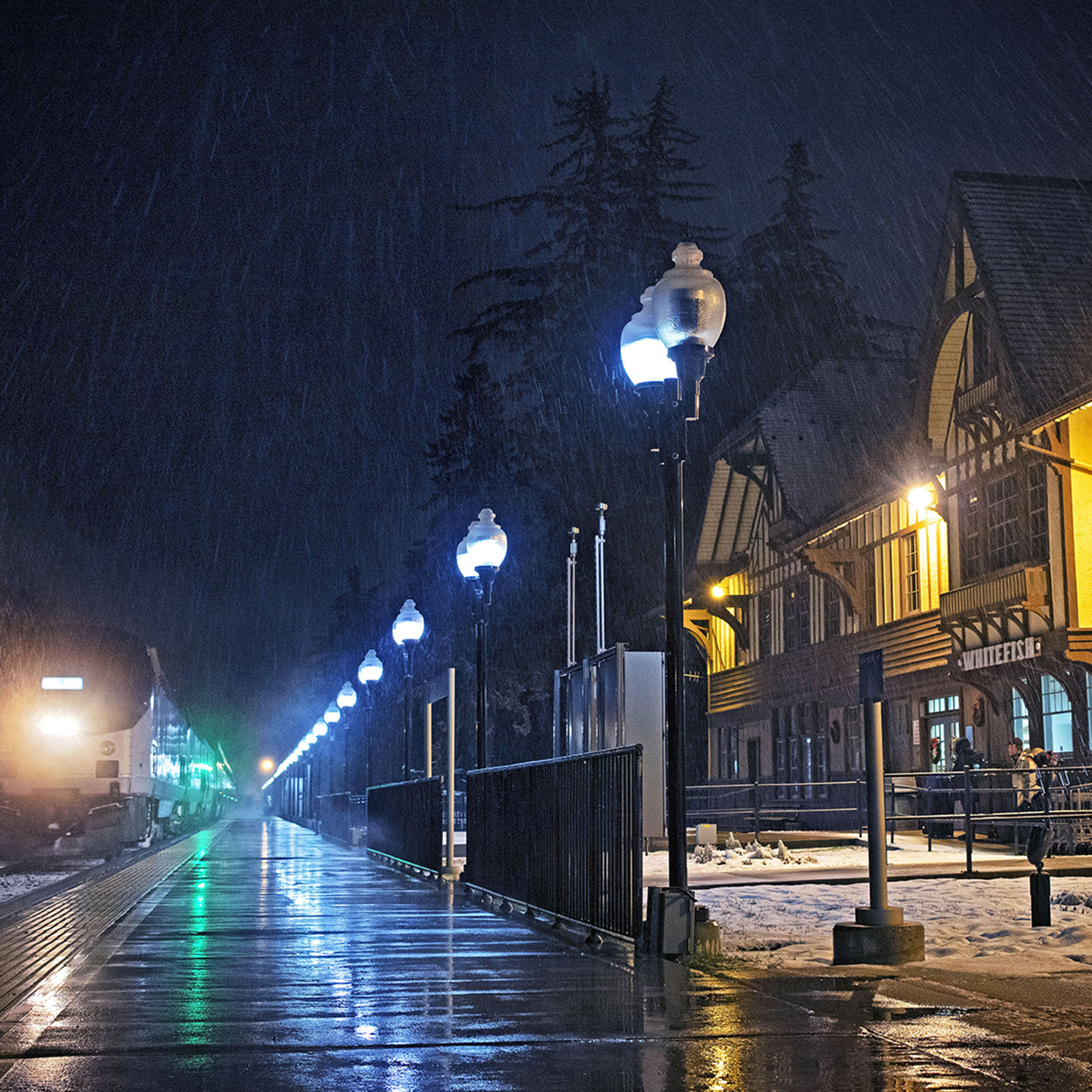
For years, the Stumptown Historical Society has depended on the donation box and the generosity of visitors to do most of the nonprofit’s fundraising. Jill Evans, the executive director of the Whitefish nonprofit that owns and manages the town’s historic railroad depot, said she and the society’s board of directors were loath to compete for donation dollars against the many other deserving organizations around town. Plus, they knew they were fortunate to have a steady income from the station’s two main tenants: BNSF Railway, which has offices on the second floor, and Amtrak, which occupies the west half of the main floor. Not to mention a gift shop that sells local history books and prints of historic photos.
But with the cost of nearly everything going up, along with the demands of an aging three-story building that is quickly approaching its centennial, Evans said the historical society doesn’t have many options.
“I can’t get anyone in here for less than $150 these days,” Evans said.
While there are countless little projects that need to be done to keep the 97-year-old building open, there are a number of big-ticket items. Over the past few years, the nonprofit has replaced five of the station’s seven furnaces, and the remaining three are overdue, which could cost at least $15,000 per unit. The carpet in the Amtrak lobby is in dire need of a successor, which will be another $25,000. Not to mention the water fountain is on the fritz, which Evans has not had a chance to price yet. But the biggest issue of all is the roof, which must be replaced within the next three years and will likely cost at least $150,000.
As Evans went down the list of needed repairs, there was a knock at the door.
“Oh, I think that’s the plumber,” Evans said. “Can I call you back in 15 minutes?”
There goes another $150 — at least.
Even nearly a century after it was built, the Whitefish Depot still plays an important role for the railroad. Tens of thousands of passengers pass through it every year to board Amtrak’s daily Empire Builder passenger train between Chicago and Portland/Seattle, making it the busiest passenger station in the state. The station’s builder, the Great Northern Railway, first arrived in the Flathead Valley in 1892, but for the first 10 years, its main line to Seattle went through Kalispell. But the railroad line west of Kalispell was mountainous and challenging to run trains on, so in 1904, the railway redirected its main line through Whitefish, reconnecting with the original route near Libby. As part of the move, Whitefish became the local division headquarters, although it was still referred to as the “Kalispell Division.”
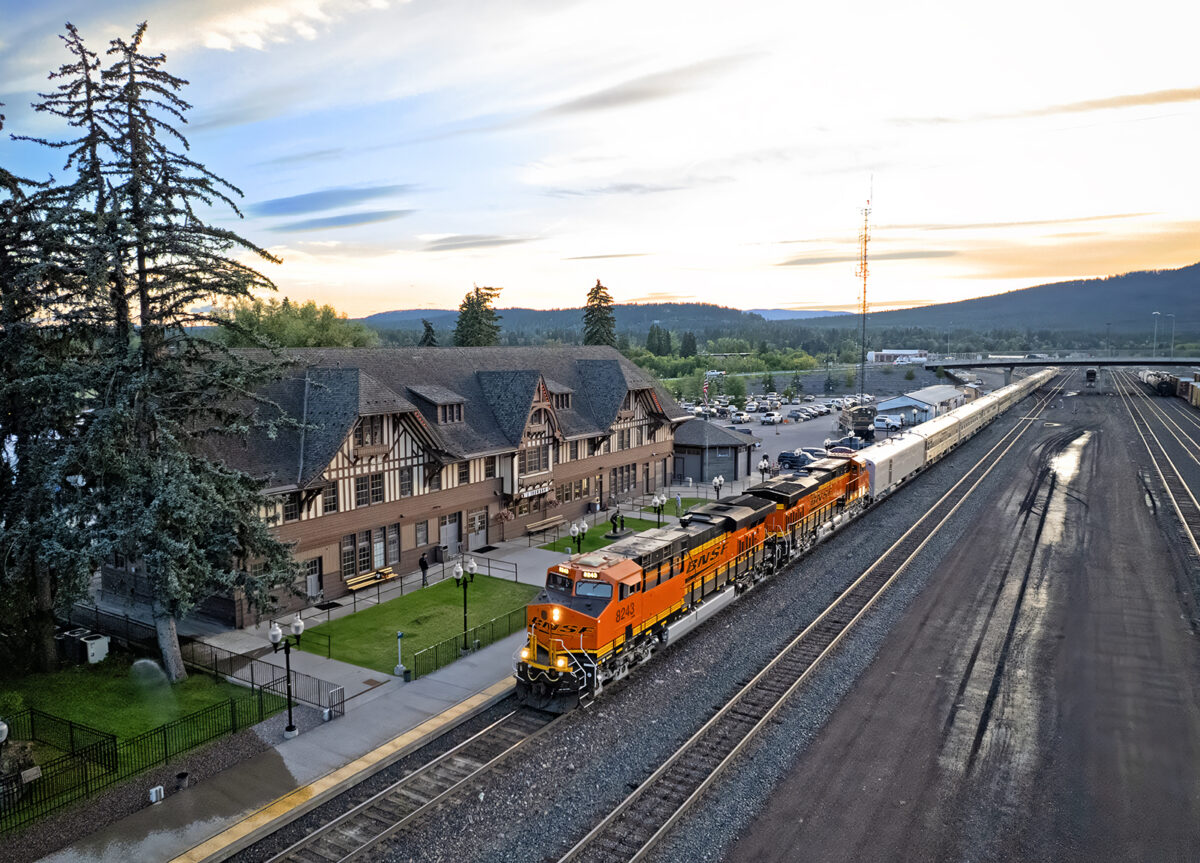
The Kalispell Division headquarters oversaw all track between Havre and Spokane, and as such was the home base for a number of managers, like those who took care of locomotive and track maintenance. As the division’s responsibilities grew, so too did the number of offices in Whitefish, which had been cramped into an old depot and a few other buildings around the rail yard. By the 1920s, it was obvious something needed to be done, so the railroad approved the construction of a new station and division headquarters. The railroad originally planned to spend $56,675, but overshot that estimate by more than $24,000 (when the railroad originally approved the expenditure, detailed plans were still in the works, and the exact costs had yet to be determined).
The station was designed by Thomas D’Arcy McMahon, the same railroad architect who planned the Glacier Park Lodge and Many Glacier Hotel for Glacier National Park, part of the Great Northern’s tourism developments there. The Whitefish depot featured a Tudor-style of architecture that was popular at the time. It also featured a clipped gable roof, decorative carved brackets and rafter tails, which, like the structures in Glacier Park, were meant to evoke the mountains of Europe. At the time, the Great Northern was still encouraging people to “See America First” (and to do so while riding its trains). The new station was opened in 1928. Inside there were railroad offices, baggage rooms, a ticket office, a telegraph room, a “men’s smoking room,” and a “ladies’ rest room.” The new depot was built on top of the site of the original structure, which was moved east down the tracks and turned into a potato house by noted Whitefish farmer and cafe owner Mokatura M. Hori. Hori sold potatoes and other produce to the railroad for its dining cars. That original station was later torn down.




In 1990, the station was sold to the Stumptown Historical Society, and two years later, a small museum opened up inside. In 2002, it was added to the National Register of Historic Places.
Over the years, the Whitefish community has financially supported the depot when big-ticket items needed to be replaced, and Evans said she was confident that would happen again. In October, the museum hosted a successful “Sock Hop Fundraiser” at the Whitefish Moose Lodge. Evans said that could become an annual event to help the museum with fundraising. But more than money, it helped remind the community that the station on the north end of downtown isn’t just another building, but rather an important part of their history.
“This is about more than just replacing the roof,” she said. “This is also about building relationships with the community again to help us in the future … We want to get the town of Whitefish in our corner again.”
For more information and to learn how to donate, visit stumptownhistoricalsociety.org.