Long-time Samaritan House Director Removed by Board
The board of directors chose to remove Chris Krager after 25 years of leadership, citing the “long-term stability” of the nonprofit homeless shelter
By Maggie Dresser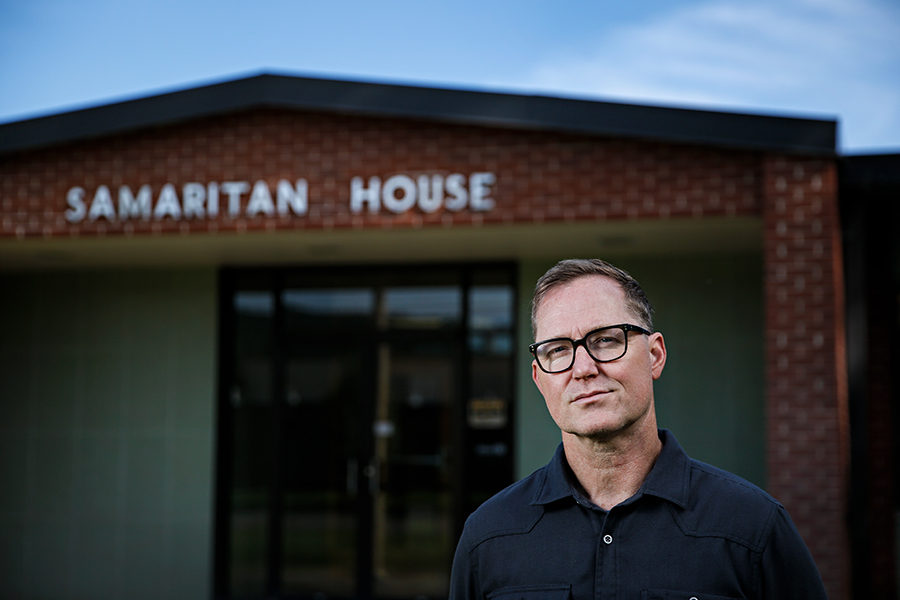
The 12-person Samaritan House Board of Directors on Thursday announced its decision to remove long-time executive director, Chris Krager, citing “long-term stability and “best interests” of the nonprofit homeless shelter.
“It was a board decision,” Board Chair Nikki Lintz said. “Our focus is on strengthening leadership for long-term health. We are in a stable transition, and we are continuing forward with all projects as planned.”
Board members include Lintz, Kim Morisaki, Todd Rogers, Ryan Bowman, Joan Corbin, Kyle Waterman, Jennifer Sevier, Kris Carlson, Amy Dexter, Connie Tuman, Marty Flores, and Christopher O’Boyle.
After serving 25 years as the Samaritan House’s director, Krager said he’s enjoyed leading the nonprofit and he looks forward to see the organization’s next steps.
“I’m proud and very fond of my time at the Samaritan House,” Krager said. “I’m excited to watch as it grows and the new project that they are working on at this time and I am looking for other ways to serve the community.”
Associate directors Bill Greel and Morgan Winchester will serve as interim leaders during the transition as the board conducts a nationwide search for the next director.
Shelter services remain fully operational during the transition and construction and capital campaign efforts are steadily progressing, Lintz said.
The decision comes in the middle of the $16.9 million “Building Stability” project, which broke ground a year ago to bring family apartments, veteran-dedicated units and community space to Second Street West in Kalispell.
Lintz said tariffs have caused delays in construction materials and there’s been a lapse in funding after the $4 million grant through the U.S. Department of Housing and Urban Development’s (HUD) Continuum of Care program was rescinded this spring.
As part of phase one, crews are building 18 two- and three-bedroom apartments that are planned to be priced at fixed affordable rates and subsidized under the HUD program.
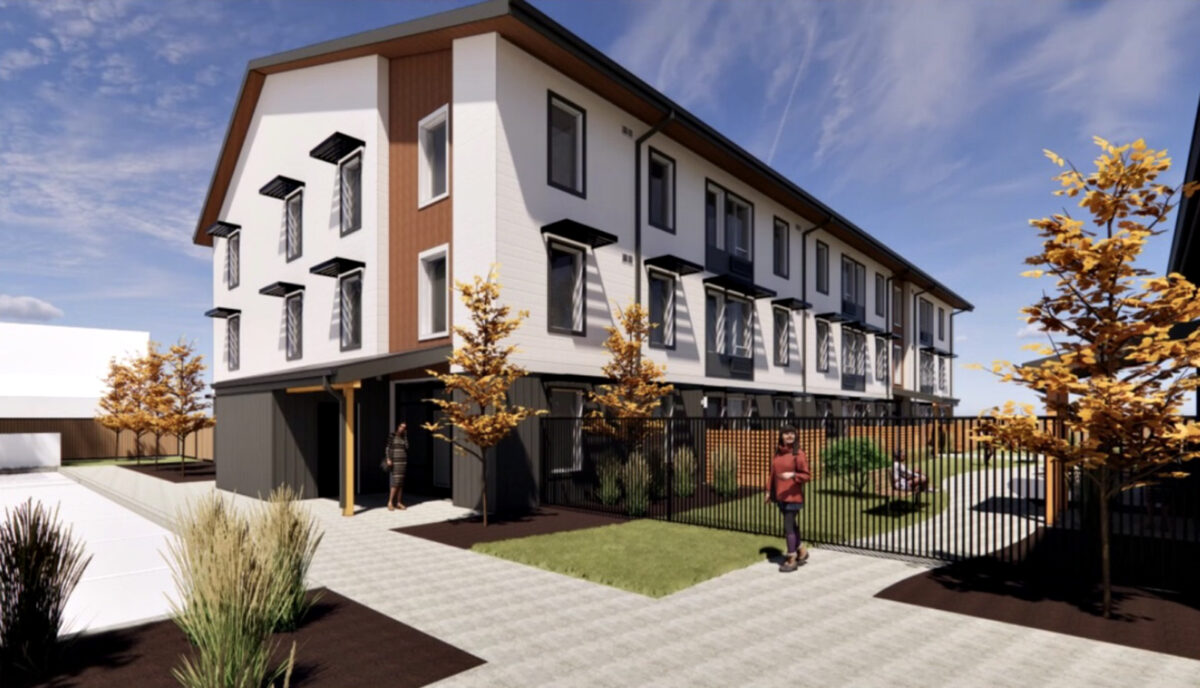
The “Building Stability” project is also planned to include 15 handicap-accessible single-occupancy units and a community center for veterans. Kalispell has the second-highest population of homeless veterans in the state of Montana, only behind Missoula — a leading factor in Samaritan House’s goal to increase veteran-related services.
In a subsequent phase, the former armory building that currently houses administrative offices is planned to be remodeled to condense the office space while also serving as overflow space for pop-up shelter beds during emergencies, such as severe cold weather or during wildfire season.
The expansion will add to the studio and one-bedroom units on its second campus two blocks away, which also offers emergency shelter, transitional and permanent housing, a homeless veteran’s program, case management, and a cafeteria. The cafeteria on the main campus will be reallocated to serve up to 126 people three meals per day.
“We are under construction and that is moving forward,” Lintz said. “As of now, there are no setbacks.”