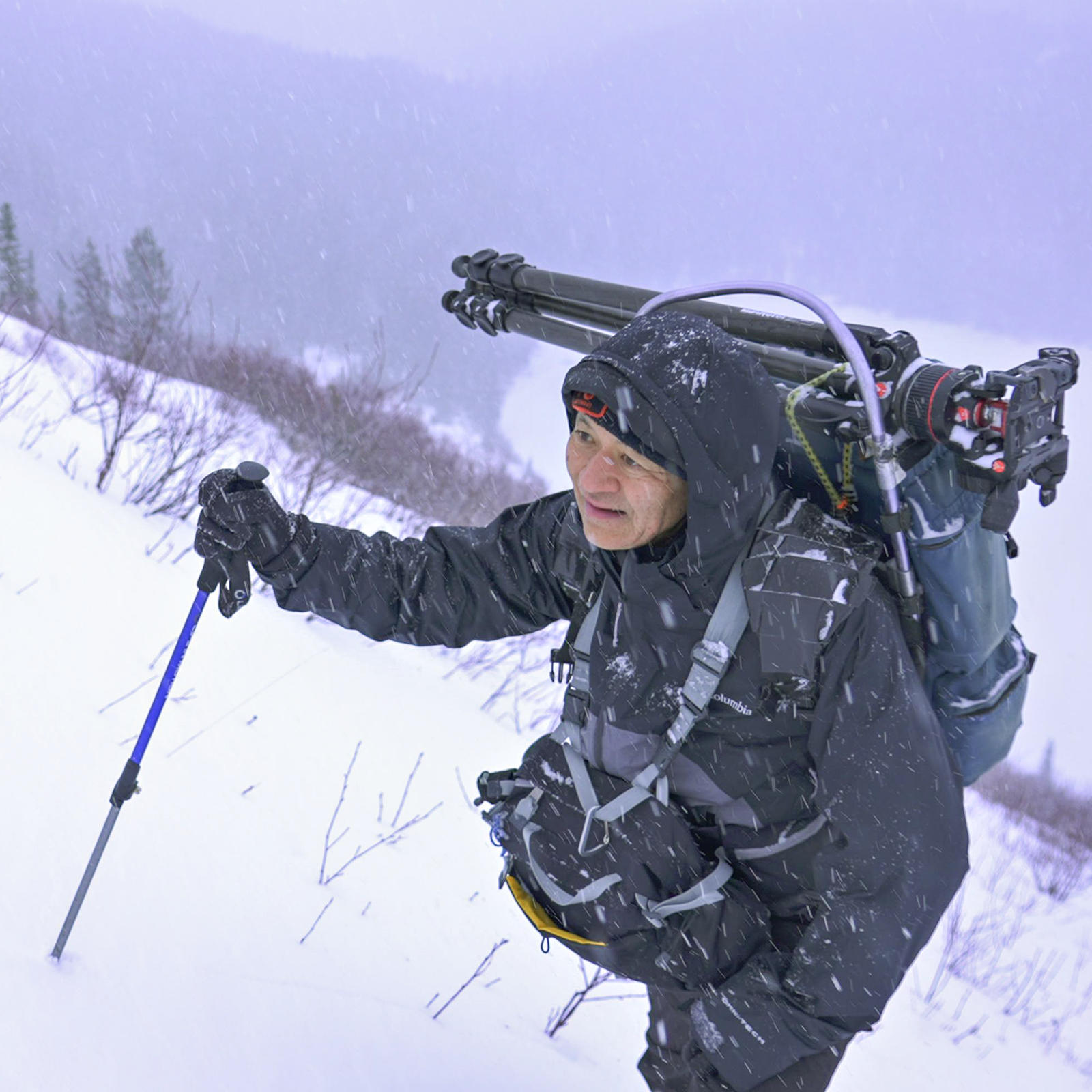
Sumio Harada is best known for his striking photographs of one of Glacier National Park’s most alluring animals: oreamnos americanus, the mountain goat. While the average park visitor runs decent odds of meeting the inquisitive stare of a mountain goat on a casual hike in the Logan Pass area, what sets Harada’s images apart is many are captured in the depths of Glacier’s harsh winters, when roads close and trekking into the backcountry is the only option.
Though Harada’s homeland of Japan is replete with mountains, he grew up in the populated coastal plains the Shizuoka prefecture and didn’t have many opportunities to explore the high country until he commenced his college studies at Tokyo University of Agriculture.
“Then first time I see high mountains and see real wildlife, I was kind of shocked. Wow! I thought only in the TV I could see that — bear and deer and big animals,” Harada recounted. “And I concentrated study on wildlife.”
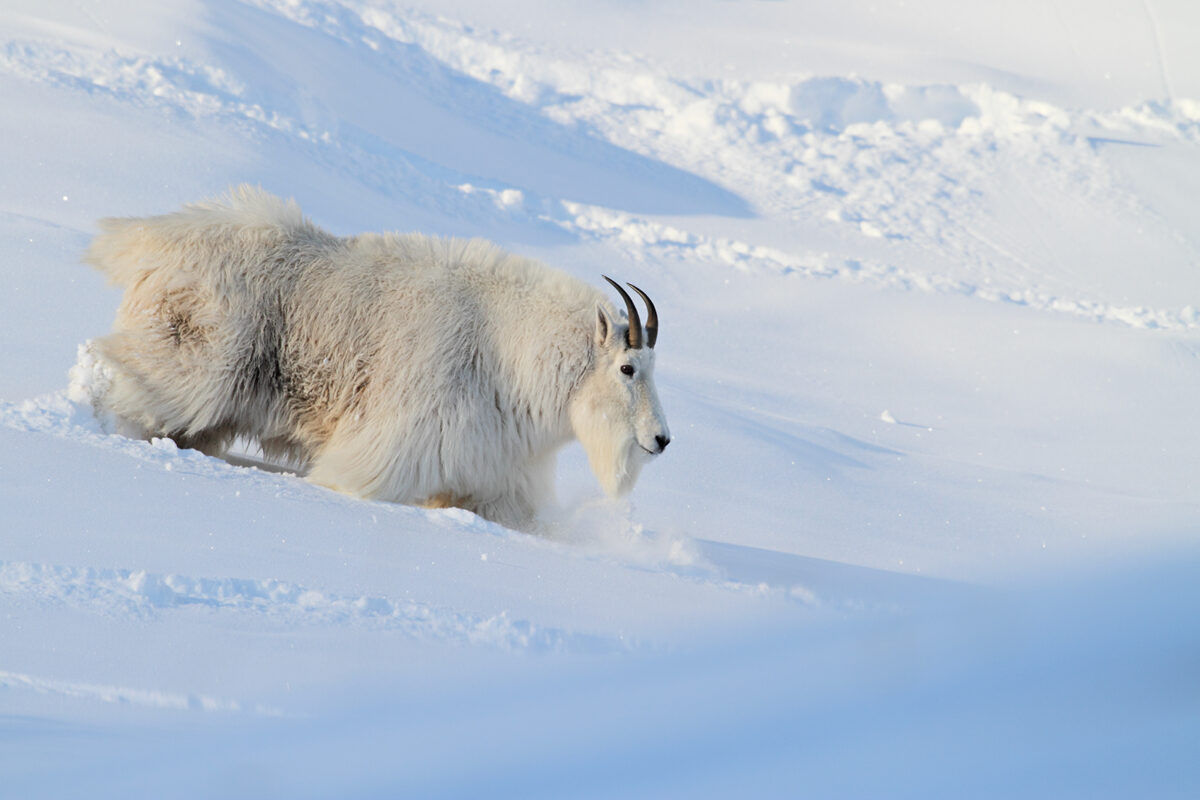
Harada became especially captivated by Japan’s serow, or kamoshika, a goatlike creature.
But his first deep dive into big mountain living came after reading naturalist Farley Mowat’s, “Never Cry Wolf.” He struck out for Canada in the late 80s, where he delighted in the presence the serow’s snowy-haired North American counterpart. While the mountain goat spotting in Canada proved sublime, American tourists tipped off Harada to another goat hotspot south of the border: Glacier National Park.
He and his wife, Kumi, honeymooned in the park in 1989 and became smitten with the landscape. Determined to carve out a life on the goat ledge with his camera, the couple spent a lot of time living out of a van through the early 90s, even after the arrival of their baby daughter, Moyu. Be it rain, snow, shine or subzero temperatures, the young family braved a multitude of park expeditions together.
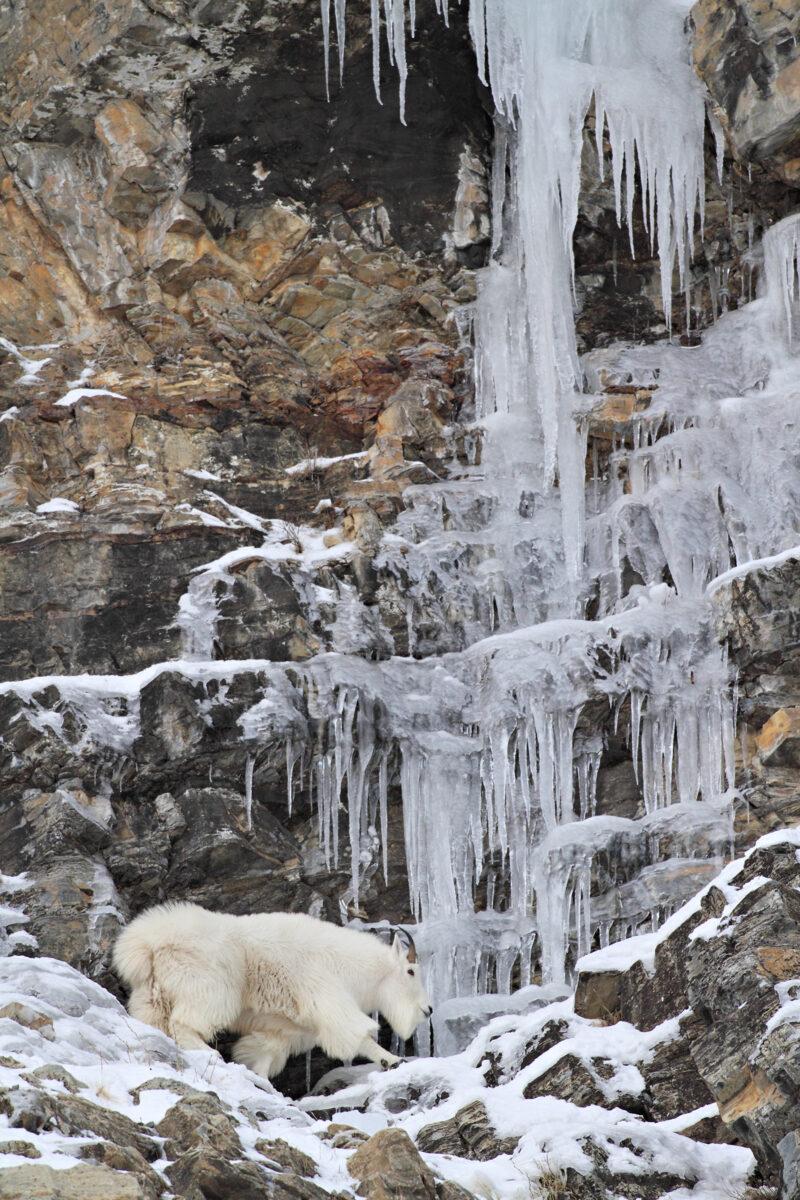
Harada’s big career break came in 1995, when his photographs illustrated a National Geographic piece on mountain goats written by renowned Whitefish wildlife biologist and author Doug Chadwick. The earnings from that assignment enabled Harada to purchase a trailer home in West Glacier, and Montana became their fulltime home.
In more recent years, Harada has shifted from still photography to videography. A couple of years ago, a Japanese television crew for NHK, Japan’s equivalent of PBS, shadowed Harada on some of his winter expeditions. The 90-minute production features an abundance of Harada’s own film clips of Glacier’s landscapes and wildlife, representing about 200 days of shooting within the park.
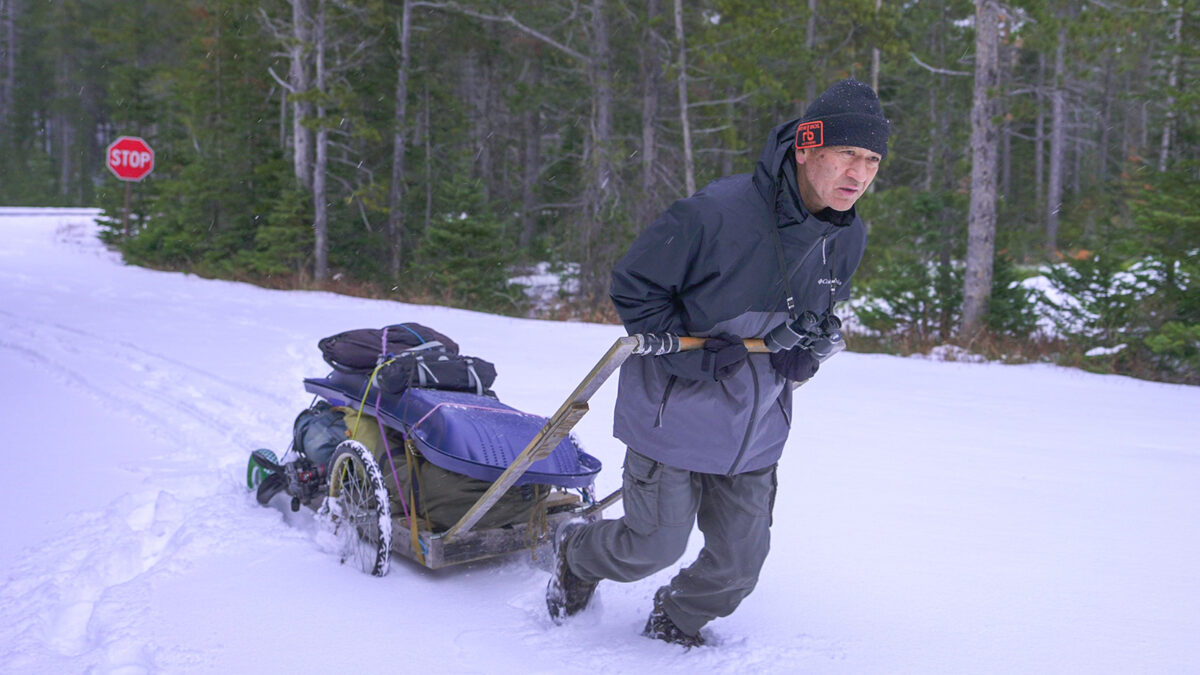
Harada regularly camps out in Glacier for up to 10 days at a time. He hauls in his camping and camera gear on a hybrid cart of his own design, which can be converted into a sled for travel over snow.
“It’s just fun in the mountains,” Harada said with a grin.
Despite his myriad wildland excursions, Harada only once found himself in a life-threatening situation, when he fell into a glacial crevasse in Canada decades ago. His backpack wedging between his body and the wall of the crevasse prevented him from plunging to the bottom of the icy abyss. Fortunately, he was exploring the glacier with others, and Harada had extra rope stashed at his base camp, which his companions retrieved in time for his rescue.
And despite innumerable hours spent in the presence of large wild animals, he’s never once needed to deploy his pepper spray during a bear encounter. He’s avoided every avalanche and navigated every frozen stream Glacier’s thrown at him, typically while shouldering a hefty 600mm lens.
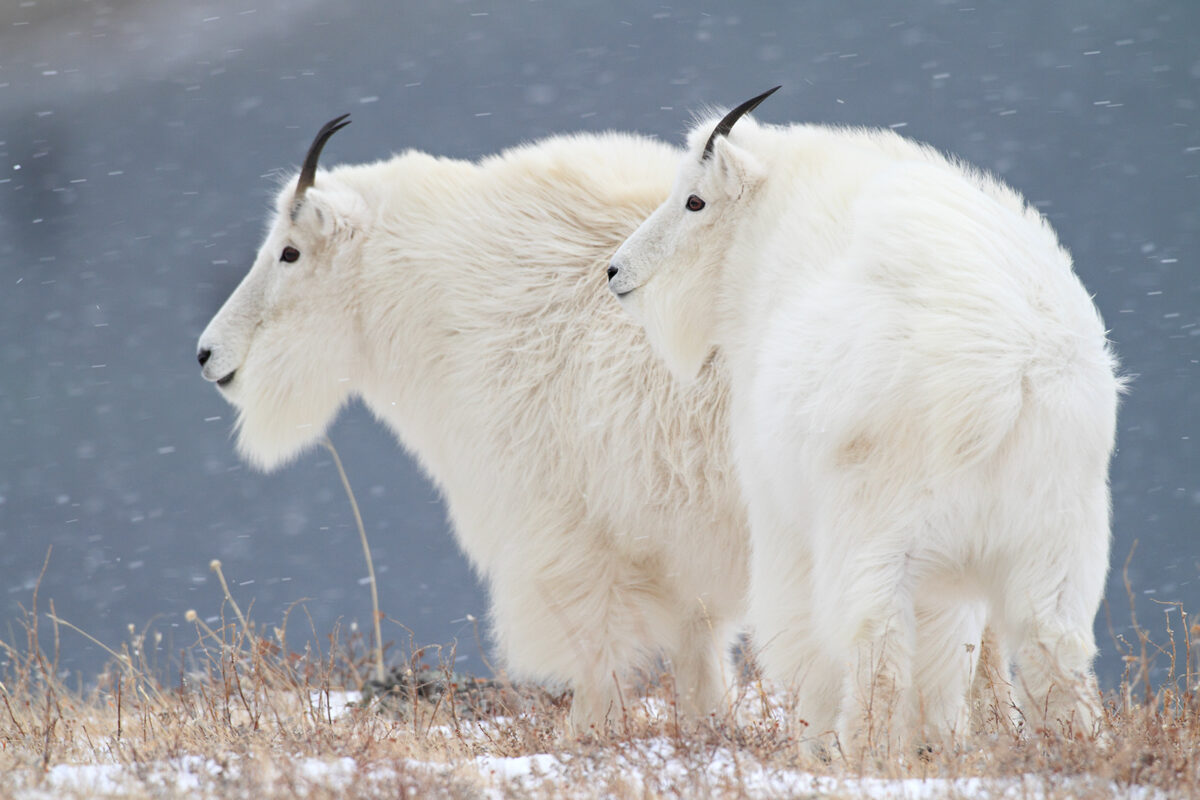
The 65-year-old’s latest project is comparatively mellow: filming bison in Yellowstone with NHK.
“Compared to mountain goat, Yellowstone bison really, really easy,” Harada laughed. “It’s flat.”
He’s published two photography books in English in North America, “Mountain Goats of Glacier National Park” and “Wild Harmony of Glacier National Park,” as well as half a dozen others in Japan about the Rocky Mountain ecosystem.
Over the decades, Harada noted the exponential rise in park tourism and a dwindling mountain goat population. He believes climate change may be one reason behind the goat’s declining numbers; a slew of milder winters allows the tree line to creep higher, shrinking the goat’s rocky alpine habitat.
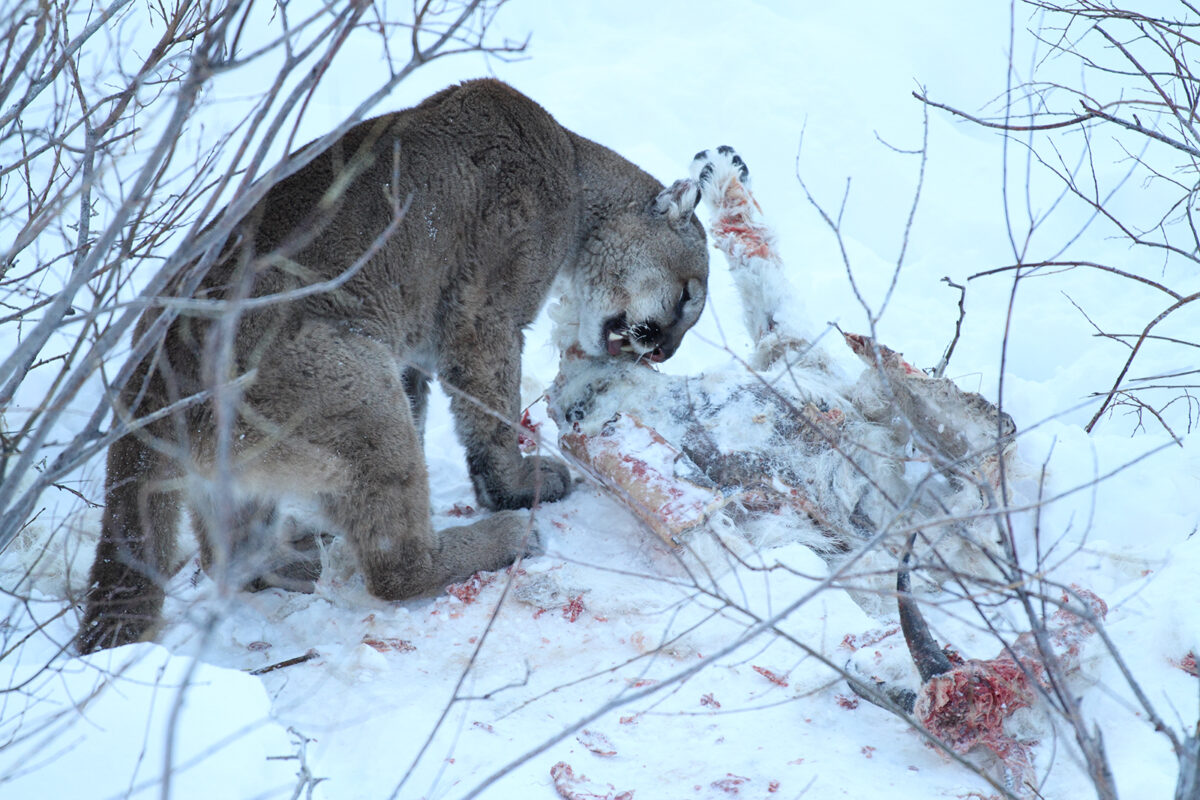
But to focus on the goats alone is to miss the full picture. His most memorable shoots are the ones that reinforce the importance viewing ecosystems wholistically. In one instance, Harada filmed a herd of mountain goats that ventured out into an alpine meadow a touch too far from the protection of the cliffs. Capitalizing on their vulnerability, a grizzly bear ambushed them, picking off a kid mountain goat. On another unforgettable day, Harada shot a series of photos of a mountain lion devouring a goat in the snow.
“I really appreciate the whole nature. Gave many special days for me. We cannot understand all if we see only goat,” Harada said. “Surrounded by other creatures and everything. Everything connected for me. I feel it when I’m in it. I feel all the connections.”