A Cross Country Skier’s Guide to the Flathead Valley
As snow piles up around northwest Montana, Nordic groomers are hard at work creating a winter wonderland for cross-country skiers of all stripes; Glacier Cyclery and Nordic is hosting a free ski waxing clinic Jan. 9 at 5:30 p.m. at the downtown Whitefish shop.
By Tristan Scott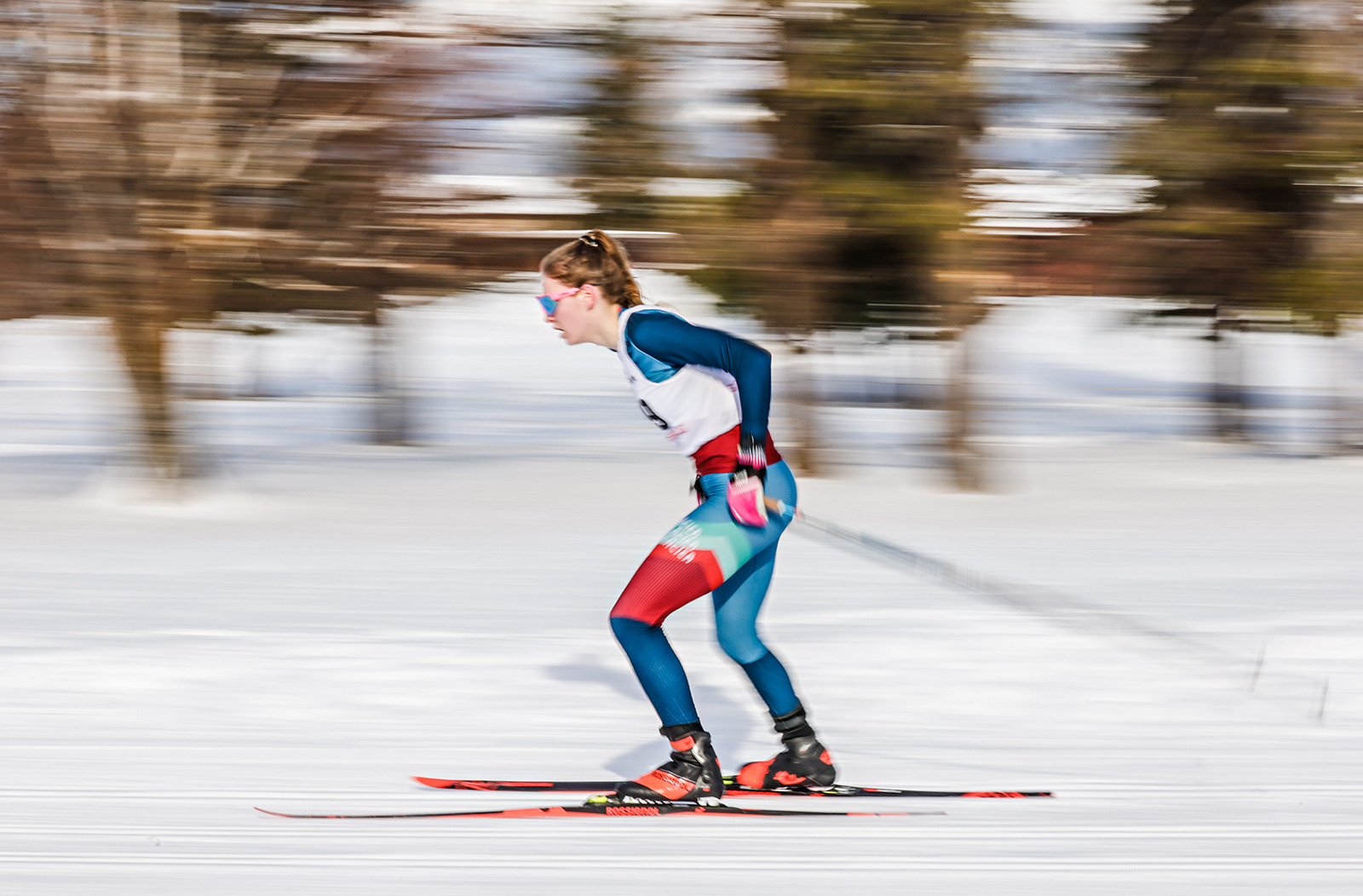
For novices, cross-country skiing can be an intimidating sport requiring specialized gear, expenses, technical expertise, and access. But relative to other winter sports, its barrier to entry is among the easiest to clear. And in the Flathead Valley, where a rich proving ground awaits anyone with the desire to try, most folks can ascend the ranks from knock-kneed neophyte to Nordic ninja in a single season — or even a weekend.
The range of opportunities and ease of access the region affords is a key reason that the Flathead Valley has gained a reputation as a nexus for Nordic skiing, while the area’s dependable snowpack leads to long seasons that often outshine other popular Montana ski destinations.
Over the years, northwest Montana has progressively expanded its inventory of Nordic skiing trails, opening a winter wonderland of opportunities for classic cross-country and skate skiers alike. The trails range from the quickly accessible — as in, directly on the outskirts of town — to the slightly more remote, although none of the popular destinations listed below require serious winter travel to reach.
Here’s how to get started.
Decide Which Country to Cross?
The famously deadpan stand-up comedian Stephen Wright joked that cross-country skiing is a fun activity so long as its adherents live in a small country. But what is cross-country skiing? And what are its different disciplines?
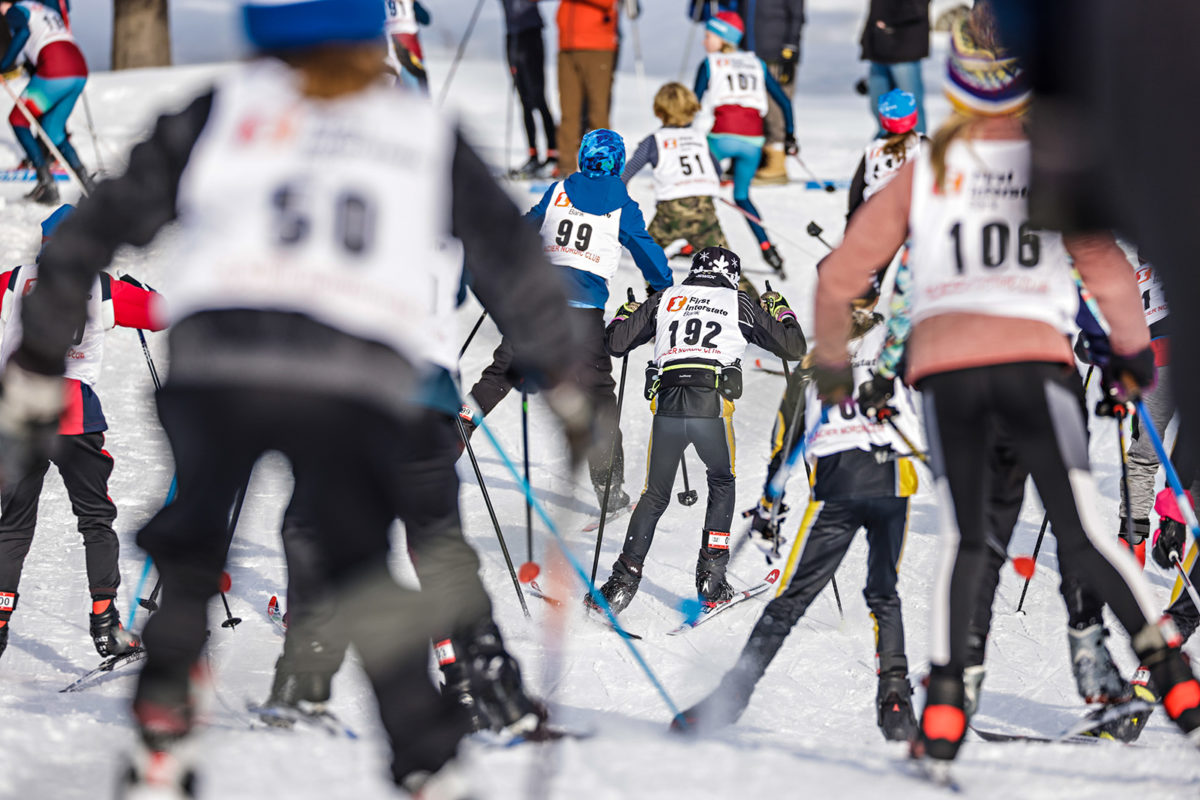
Cross-country, or Nordic skiing, is the umbrella term for a type of skiing that includes two primary techniques: classic, in which skiers employ traditional parallel (diagonal) strides to move forward, either by locking their skis in groomed tracks or by maintaining a running/walking form to kick-and-glide forward; and skate skiing, which requires a lateral V-shaped motion to push off from one ski to another, much like ice skating. Both disciplines require poles to propel the skier forward, but the techniques vary widely.
Classic skiing is the traditional style of cross-country skiing that most people envision, and it is the most accessible form to beginners. But it also contains an almost limitless potential for developing technical prowess, so don’t write it off as the “easy” discipline. Beginner skiers will find that waxless fishscale skis provide them the easiest entry to the sport. A classic-style base is split into different zones: a mid-ski kick zone (or grip zone) underfoot and glide zones at the tip and tail of the ski. Although skiers should always wax the glide zones on their skis, how they treat the kick zone will depend on whether their skis have fishscales (waxless) or are waxable, which is evident from a smooth flat base requiring the application of different types of “kick wax” to adapt to a particular snow type or temperature.
A majority of cross-country skiers eager to strike out on a wooded ski trail, explore an off-piste logging road or access a backcountry cabin opt for a wider and waxless classic ski setup. Others seek out acres of manicured corduroy maintained daily by a fleet of grooming machine operators who sculpt the trails into a skate-skier’s paradise.
No matter the discipline you elect to pursue, you’ll need poles, boots and bindings in addition to your skis.

Buckle Your Boots
The difference in technique between classic and skate skiing means that there are also differences between the boots for each discipline. Classic cross-country ski boots have a soft outsole which promotes forefoot flexion. They have lower cuffs for a greater range of movement and are generally looser around the ankle. Skate boots generally have a more rigid outsole which helps you lift your ski up and reduces torsional movement. A higher cuff and spoiler, or brace, help hold your ankle in place and provide lateral support. There are also more versatile boots on the market that allow skiers to train in both disciplines with a single pair of boots.
Further complicating matters, classic skiers will find that different types of classic boots match different intradisciplinary styles, depending on whether your ski uses a narrower, lighter binding (like standard NNN or SNS) for groomed trails, or wider NNN-BC bindings for backcountry touring in off-piste conditions.
Be sure to inquire about the differences at a local retail or rental shop, or research it online if purchasing used gear.
A Binding Agreement
Determining what cross country ski bindings you need depends on your boot, ski and the type of terrain you choose to pursue. Most advanced skiers will have accumulated a quiver of skis and corresponding gear for a variety of disciplines; others want a versatile one-stop-shop ski they can deploy in any conditions. Either way, the bindings are the connective tissue between your feet and your skis.
You’ll want to be sure to check with your local retail or rental shop to match your boots to your bindings, but in general you’ll either need NNN (New Nordic Norm) backcountry ski bindings, NNN touring bindings or SNS (Salomon Nordic System) touring bindings. If you have a pair of boots and aren’t sure which binding system they use, take a look at the sole: If there are two thin, shallow grooves running the length of the boot bottom, then it’s an NNN boot (Salomon’s NNN boots are called Prolink); if there are two bars, it is a SNS boot.

Poles Apart
When you’ve chosen your cross-country skis, boots and bindings, you need to find a pair of poles to help propel you forward and provide balance. When selecting a pole, options will range from size and shape to straps and weight. For most cross-country skiing disciplines, the poles are a fixed length, so getting the measurement correct is critical. Cross-country skiers interested in touring off-piste terrain might prefer a sturdier adjustable ski pole with larger baskets.
For classic cross-country skiing, poles should come up to shoulder height, or you can follow a formula in which your height in centimeters is multiplied by 0.83. For skating, poles should generally come up to the same height as your nose or ears, or you can follow a formula in which you multiply your height in centimeters is multiplied by 0.89.
Wax On
Wax repels water. It causes moisture to bead up and wick away from your ski bases, which is why skiing without wax on a warm spring day is akin to the nightmarish sensation of attempting to sprint in quicksand. And while dripping melted wax on ski bottoms to reduce friction and improve glide is on its face a simple practice that does more to improve the long-term performance of your skis — and your skiing — than anything else (other than skiing a lot), its most ardent adherents often speak of ski waxing as a mix of religion, art and science.
From kick wax and klister to glide wax and paste, the apparent wizardry of ski waxing mystifies newbies and seasoned skiers alike, which is why each winter most ski clubs and shops offer waxing clinics like the one happening next Friday, Jan. 9 at 5:30 p.m. at Glacier Cyclery and Nordic in downtown Whitefish, 326 2nd St. E.
Taught by ex-pro skier Jennie Bender, who is also the executive director of the nonprofit Glacier Nordic Club, participants should feel free to bring their own skis, as well as questions about how best to maintain them for getting the best glide possible.
Go Ski!
Now that you’re well-versed in the peculiar Nordic nuances that make this winter activity so weird and wonderful, it’s time to go ski. Whether you’re looking for a leisurely backcountry tour after work, a glide along the rolling network of illuminated loops at the Glacier Nordic Center (Whitefish Lake Golf Club), a leg-burning ascent from Haskill Basin to the base of Big Mountain, a ski with your dog around the Stillwater State Forest, or an abundance of trails along the north shore of Flathead Lake, the local options are ample for Nordic skiers of all levels and abilities.
The Flathead Valley’s extensive list of cross-country ski sites allows people to bust out their skinny skis and hit the corduroy, even during the week, when time and light are limited. Here’s a rundown of some of the best spots in northwest Montana to hit the trails.
Glacier Nordic Center
1200 U.S. Highway 93, Whitefish
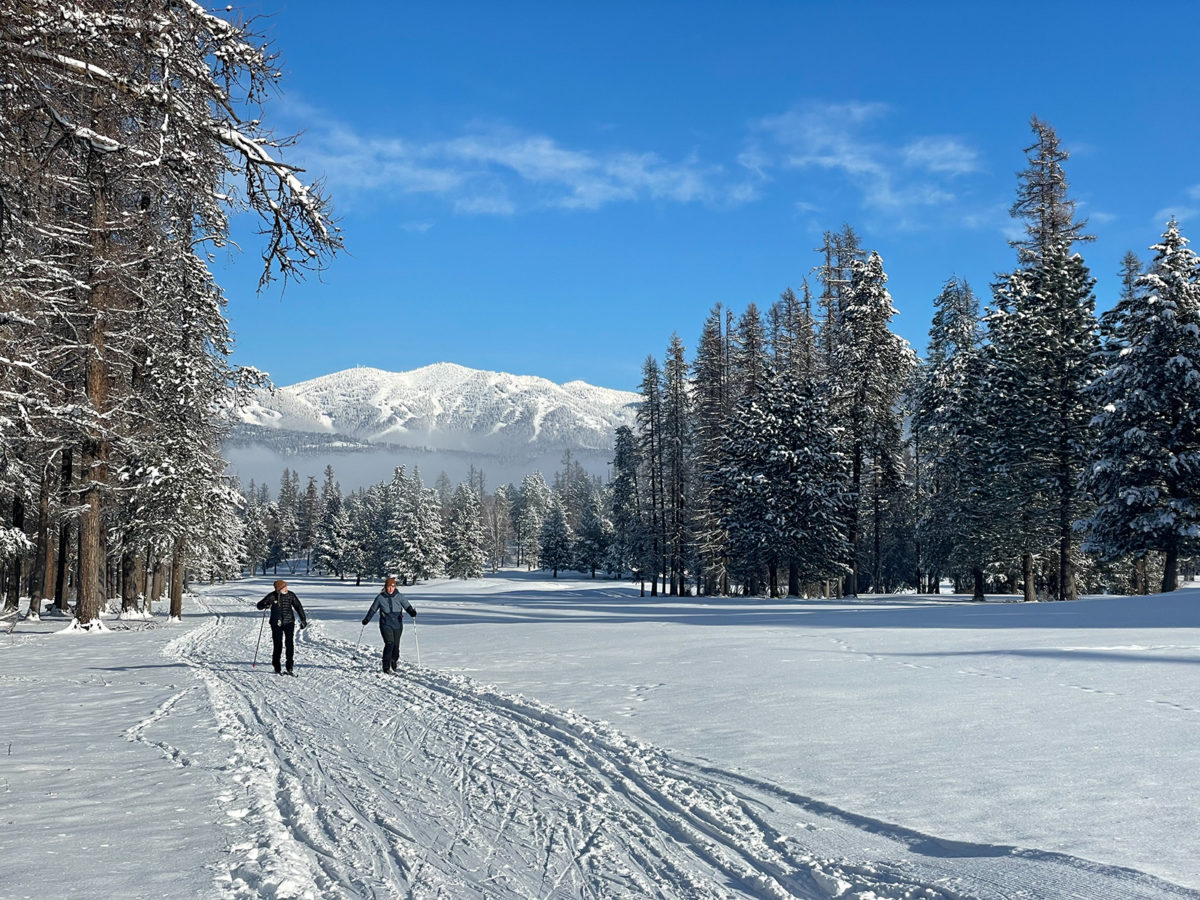
Conveniently located just a mile from downtown Whitefish, the Glacier Nordic Center at the Whitefish Lake Golf Course offers 12 kilometers of groomed trails for skate and classic skiing. About 4 kilometers are lit at night so people can ski from sundown until 10 p.m. The trails are maintained and groomed by the Glacier Nordic Club, which also runs the Glacier Nordic Shop where people can rent gear, get their skis waxed and purchase day or season passes.
Check out daily grooming reports at nordic-pulse.com for conditions, or download the Nordic Pulse app on your smart device.
Big Mountain Nordic Trails
3315 Big Mountain Road, Whitefish
On the slopes of Big Mountain, the Glacier Nordic Club maintains more than two-dozen kilometers of trail through the forest in collaboration with the Iron Horse Golf Club. Featuring an online database that offers real time grooming reports, the club’s expert groomers transform the trails into a river of corduroy every day before 9 a.m. Access to the trails is also available at the trailhead off Haskill Basin Road. There is no fee to ski on the trails; however, donations to the Glacier Nordic Club help keep it maintained, and members can add a BMNT grooming support premium to their annual pass fee.
Check out daily grooming reports at nordic-pulse.com for conditions, or download the Nordic Pulse app on your smart device.
Round Meadow Winter Trails
Star Meadows Road, Tally Lake
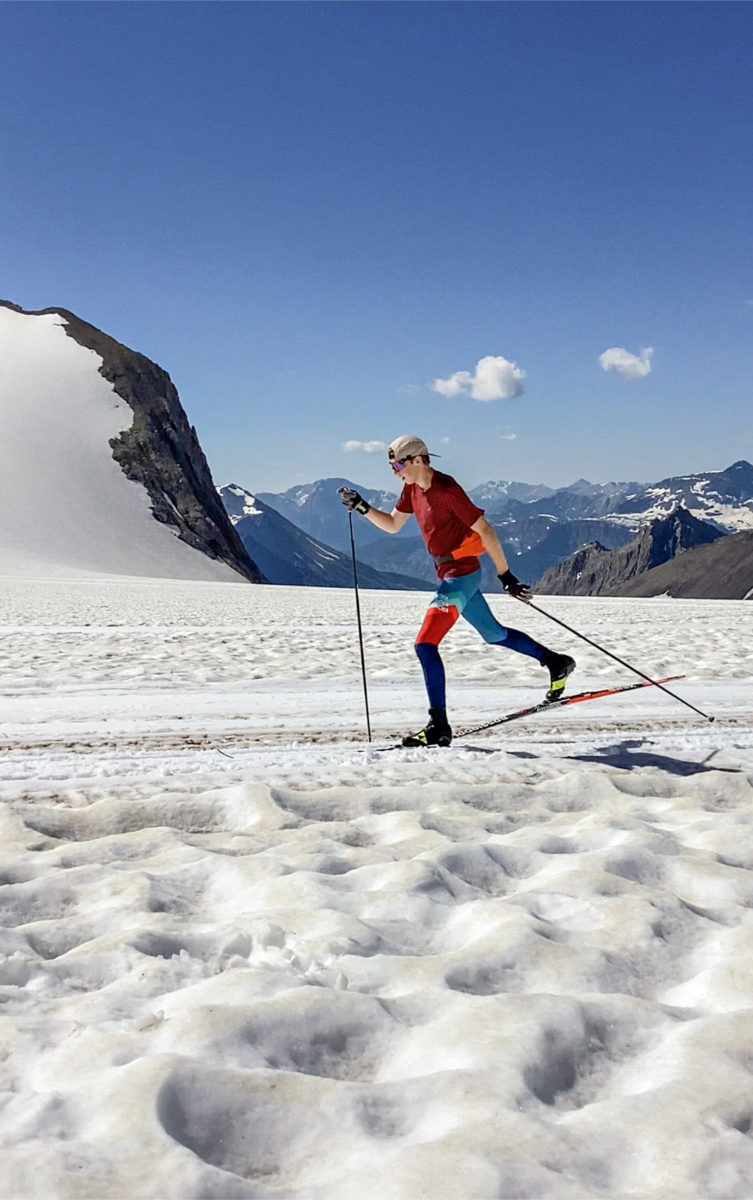
Located on the Tally Lake Ranger District northwest of Whitefish, the Round Meadow Trails are regularly groomed with assistance from the Glacier Nordic Club and are open to the public.
Check out daily grooming reports at nordic-pulse.com for conditions, or download the Nordic Pulse app on your smart device.
Meadow Lake Nordic Trails (As of Jan. 2, grooming had not yet begun at Meadow Lake)
100 St. Andrews Drive, Columbia Falls
The final trail maintained by the Glacier Nordic Club is located at the Meadow Lake Resort near Columbia Falls, about a mile north of U.S. Highway 2. The 9-kilometer trail is mostly flat with a few gently rolling hills that are perfect for skiers of all ages and ability. An adult day passes costs $20; children and teen passes are $10; folks below the age of 7 ski free. Passes can be purchased at the Meadow Lake Resort Center. The trails are open from 7 a.m. to 10 p.m.
Check out daily grooming reports at nordic-pulse.com for conditions, or download the Nordic Pulse app on your smart device.
North Shore Nordic Club
Blacktail Road, Bigfork
This organization grooms and maintains two Nordic networks in the Flathead Lake area: Blacktail Mountain Nordic Trails, with 25 kilometers of varied terrain, and Bigfork Community Nordic Center, with 10 kilometers of varied terrain.
Check out daily grooming reports at nordic-pulse.com for conditions, or download the Nordic Pulse app on your smart device.
Dog Creek Lodge
8775 U.S. Highway 93 North, Olney
Located near Olney, the lodge’s Nordic center maintains about 30 kilometers of dog-friendly trails groomed for skate and classic skiing. The trails span private land and Stillwater State Forest, while a restaurant and bar offers locally sourced food, including wood-fired pizza from a brick oven, as well as craft beer and artisanal cocktails.

LOGE Glacier (formerly the Izaak Walton Inn)
290 Izaak Walton Inn Road, Essex
www.logecamps.com/property/glacier-natl-park
This historic inn in Essex grooms 33 kilometers of trails that are convenient for guests but also open to the public.
Follow them on Facebook for daily grooming reports, trail conditions and photos.