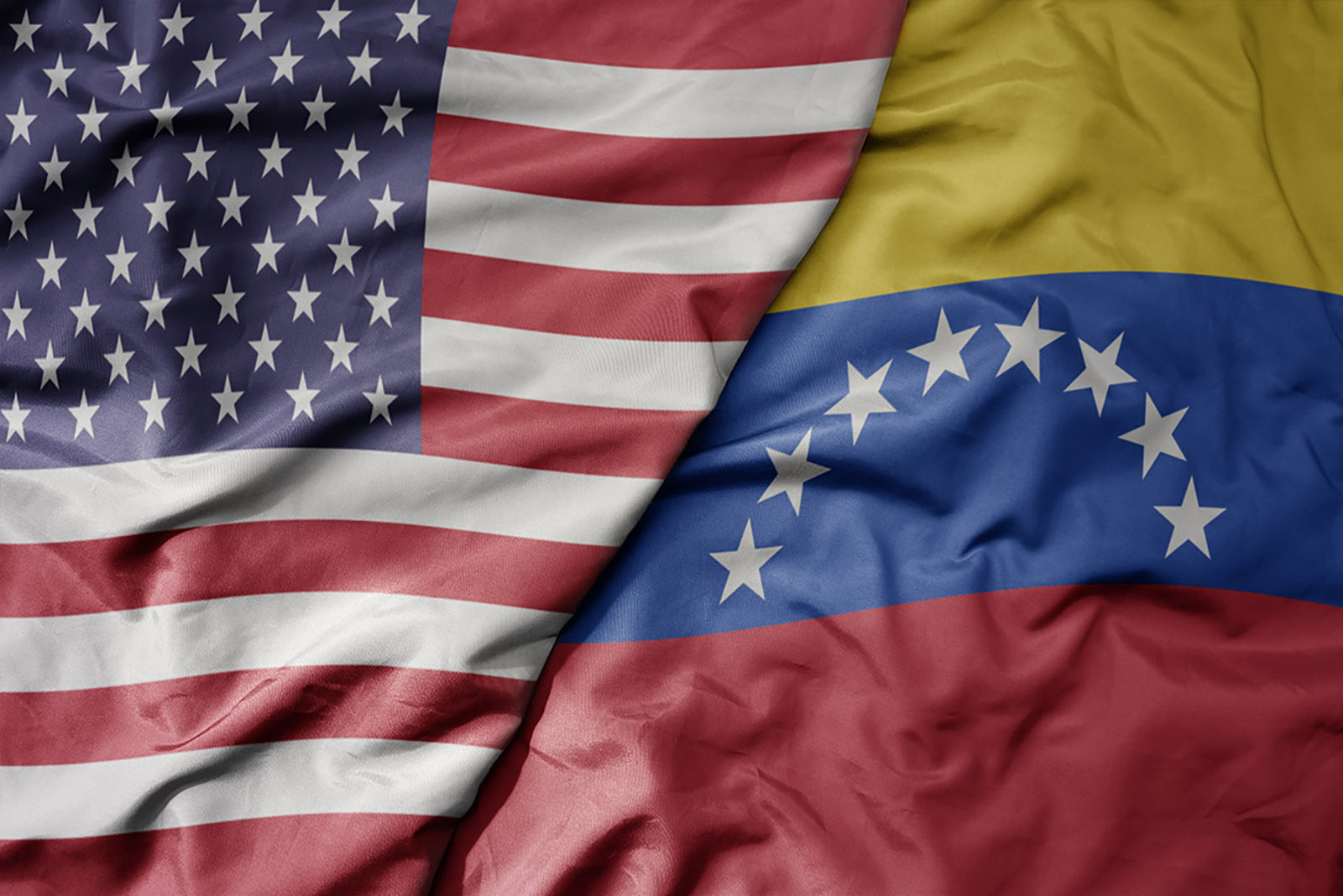
Miguel Navarro’s choice to leave Venezuela for the U.S. wasn’t an easy one.
Navarro grew up in Venezuela and attended school there for a while, before entering the police academy. He worked seven years in the country as a police officer. But as the country plunged deeper into political and economic crisis, Navarro decided the best thing for his two children would be to come to the United States, where they settled in the Flathead Valley. The valley has seen growth in its immigrant population as population has grown since COVID — and a large swath of the new arrivals have come from Venezuela, a group that has been a focus of President Donald Trump’s immigration crackdown.
Venezuela, Navarro’s home country, has long been wracked by social and political challenges: authoritarian leadership, hyperinflation, human rights crises, food shortages and high crime rates percolate in the country. In the past decade, an estimated eight million Venezuelans like Navarro have fled, seeking asylum from political persecution and violence. Many have settled in other Latin American countries, creating a regional humanitarian crisis as neighboring countries struggle to bring in refugees. Some have come to the U.S.
In recent months, the U.S. has mounted a pressure campaign against the country as President Donald Trump accuses Venezuela and its president of trafficking cocaine into the U.S. Since Sept. 2, the U.S. government has carried out actions against Latin American drug cartels, mostly in the form of maritime strikes. Thirty-five strikes have killed 115 people in operations some legal experts have said constitute war crimes, even as the White House claims the strikes and killings are lawful.
The situation escalated in the past week. The U.S. conducted a strike in Caracas, Venezuela’s capital, last Saturday, capturing Venezuelan President Nicolás Maduro and his wife, Cilia Flores. Maduro and Flores were transported on a U.S. warship to New York, where they face criminal charges for narco-terrorism. They pleaded not guilty to the charges in court on Jan. 5.
The action’s consequences have reverberated, both on a domestic and international scale.
In the U.S., politicians — including Trump’s own party — have been divided over the strikes, as the Trump administration didn’t seek congressional approval beforehand. Officials in the administration have said the operation served as a law enforcement effort, and thus, congressional approval wasn’t required.
In Venezuela, Navarro’s home country, instability continues as Maduro’s vice president has taken power, and the path forward remains uncertain.
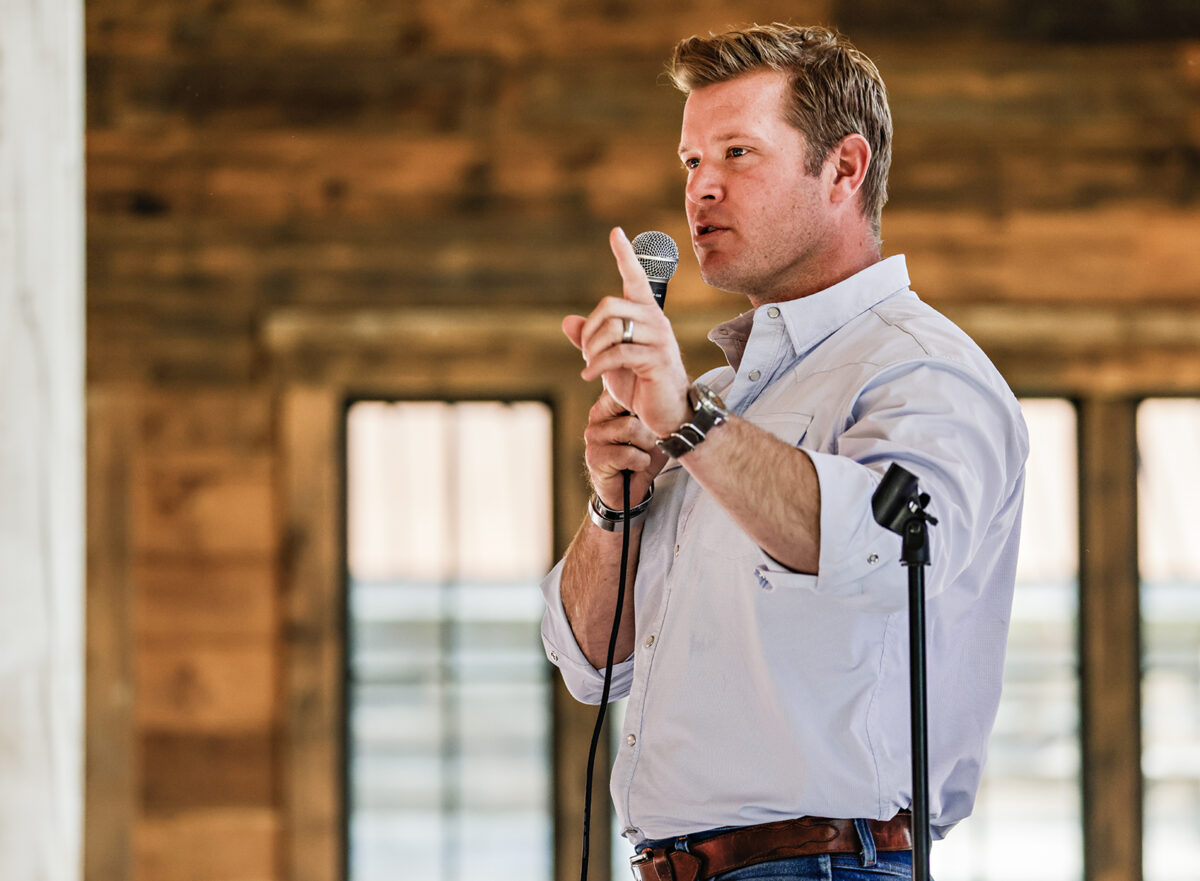
Navarro, who spoke to the Beacon through a translator, said many Venezuelans feel “profound happiness” that Maduro is no longer present, and feels glad for the U.S. intervention that led to his ouster. But he thinks the country’s internal struggles are likely to continue and said he hopes the U.S. will help Venezuela rebuild.
That question remains unanswered as the Trump administration and Congress butt heads over further military and diplomatic action.
On Thursday, the Senate advanced legislation that would require Trump to seek congressional approval before taking any new military action in Venezuela. Five Republicans — Sens. Rand Paul, Kentucky; Lisa Murkowski, Alaska; Susan Collins, Maine; Todd Young, Indiana; and Josh Hawley, Missouri — crossed the aisle to vote with Democrats on the legislation. The president took to Truth Social to say the senators should “never be elected to office again.”
Montana’s all-Republican congressional delegation has expressed support for the administration’s action in Venezuela. The state’s senior senator, Steve Daines, opposes the Kaine resolution — the legislation the Senate voted to advance Thursday — and plans to vote no on the expected final vote next week.
“I commend President Trump and our brave military and law enforcement for helping bring indicted narco-terrorist Maduro to justice,” Daines said. “The world is safer thanks to peace through strength.”
Sen. Tim Sheehy echoed that position, calling Maduro an “illegitimate dictator.”
“For too long, the narco-terrorist Maduro regime was able to intentionally destabilize our hemisphere and serve as the money launderer for our adversaries around the world, including China, Russia, Iran, North Korea, Hezbollah, Hamas, and the Houthi rebels,” Sheehy said. “As Americans, we should all agree Operation Absolute Resolve is a major win for America, the Western Hemisphere, and the world, thanks to President Trump and the best military on the planet.”
In interviews on NewsNation and PBS News Hour, U.S. Rep. Ryan Zinke lauded the Trump administration’s activity in Venezuela. On NewsNation, Zinke also expressed it’s up to Venezuela to determine how to move forward.
Flathead nonprofit Valley Neighbors, which helps provide housing, legal and social services to local Venezuelans, said the response from local Venezuelans has been nuanced.
“The response from the local Venezuelan community has been celebratory of the removal and apprehension of Maduro,” read a statement from the organization. “Even with this development, many of our clients express doubt that the situation has improved or will improve within the foreseeable future. The dangerous and repressive conditions which led many of our neighbors to arrive still exist and we continue to assist clients in connecting them with the support and services they feel best help them continue to carve out a life here in the Flathead.”
H remembers the exact date he left Venezuela — Sept. 16, 2016. He first went to Ecuador, then Paraguay, and eventually, in 2023, came to the U.S. in hopes of providing for his family.
H spoke to the Beacon on the condition of anonymity. Like Navarro, he also spoke to the Beacon through a translator.
H said the Venezuelan government has long disrespected the human rights of Venezuelans. In particular, he takes concern with the government’s crackdown on political expression, citing arrests for protesting, arbitrary detentions and violence.
While he’s somewhat in favor of the U.S. action against Maduro, H worries the intervention may exacerbate instability in his home country.
“Yes, we’re all happy that Maduro is gone,” H said. “It’s really necessary to take out every politician that was in favor of Maduro.” That includes the interim leader, Delcy Rodríguez, who served as Maduro’s vice president.
Trump has thrown his support behind Rodriguez’s leadership as opposed to the leader of the opposition, María Corina Machado — though that support is contingent on Rodriguez complying with U.S. demands, per POLITICO reporting.
H said he doesn’t think continued U.S. intervention is the pathway forward. He hopes his home country can implement new elections and new ideas, but fears that won’t happen without more violence first. Navarro, too, fears continuing internal conflict in his home country. H worries the military will use force to continue exerting its will over the people, and that Venezuela could plunge into a civil war.
“I think it’s important that people understand that Venezuelans are suffering through no fault of their own,” H said.