Changing Montana’s Drunk Driving Culture, One Coffee Card at a Time
Behind lawmakers’ efforts to curb drunk driving in a state with the highest rates in the nation is a nonprofit that started with a simple solution: handing out coffee cards to those who choose not to drive home drunk. The impact has been wider than the Montana Bar Fairies’ founders imagined.
By Mariah Thomas
The streets of Whitefish were quiet, and the sun had yet to rise as Carli Seymour, Kelsie Ring and Glacier Raymond got out of their cars, bundled in coats and hats, on a chilly Saturday morning in November.
The trio pulled on bright yellow vests with the emblem of the Montana Bar Fairies on the backs as Ring and Raymond explained why they wanted to host a group “fairy” event. The Montana Bar Fairies, a locally run nonprofit, advocates against drunk driving.
Ring, a University of Montana grad who grew up in the Flathead, and Raymond, a massage therapist who moved from Bozeman to the Flathead earlier this summer, started a chapter of Girl Get After It in the Flathead Valley. The national organization aims to build a community of women interested in “getting outside and finding a hobby to fill their cups,” Ring said.
Seymour, who works for the Montana Bar Fairies in addition to running her own photography business, said she used to drink. But she’s since stopped and said it’s challenging to find activities to do with others when drinking serves as a large part of the Flathead Valley’s social fabric.
In November, Girl Get After It wanted its latest event to focus on giving back, Raymond said. All three said the partnership with the Montana Bar Fairies felt “intuitive.”
Seven women joined the group in Whitefish at 5:30 a.m., pulling on matching Montana Bar Fairies vests before starting with their activity to give back for the morning: walking through the streets of downtown Whitefish, placing coffee cards on cars that had been left outside the bars overnight.
“Let me tell you a little bit about why we’re here,” Seymour said.
ORIGIN STORY
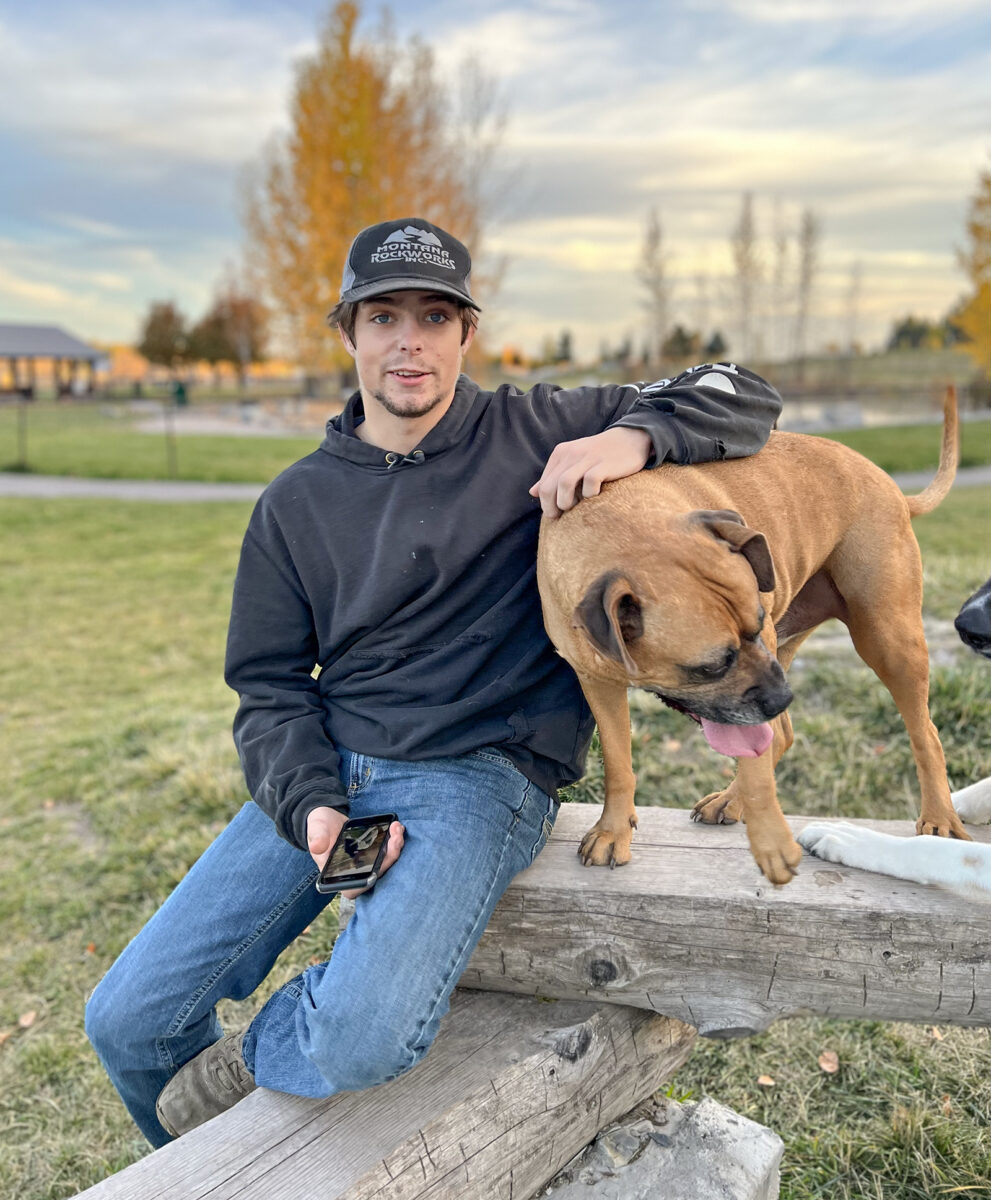
Bobby Dewbre was kind, funny and adventurous, according to his mother, Beth McBride, who has lived in the Flathead Valley for most of her adult life and works at a landscape supply company.
McBride has heard many stories about her son’s kindness. When he worked as a “lifty” on Big Mountain, he helped a six-year-old girl get over her fear of the chairlift by making up a game, so she felt more comfortable getting on it. As a young child, McBride encouraged Dewbre to help an elderly neighbor shovel her sidewalk. Unbeknownst to her, Dewbre struck up a friendship with her — one that lasted into his adulthood. In junior high, Dewbre saved a peer who was choking by performing the Heimlich maneuver on him.
He was 6 feet 2 inches, blue-eyed and “adorable,” McBride said.
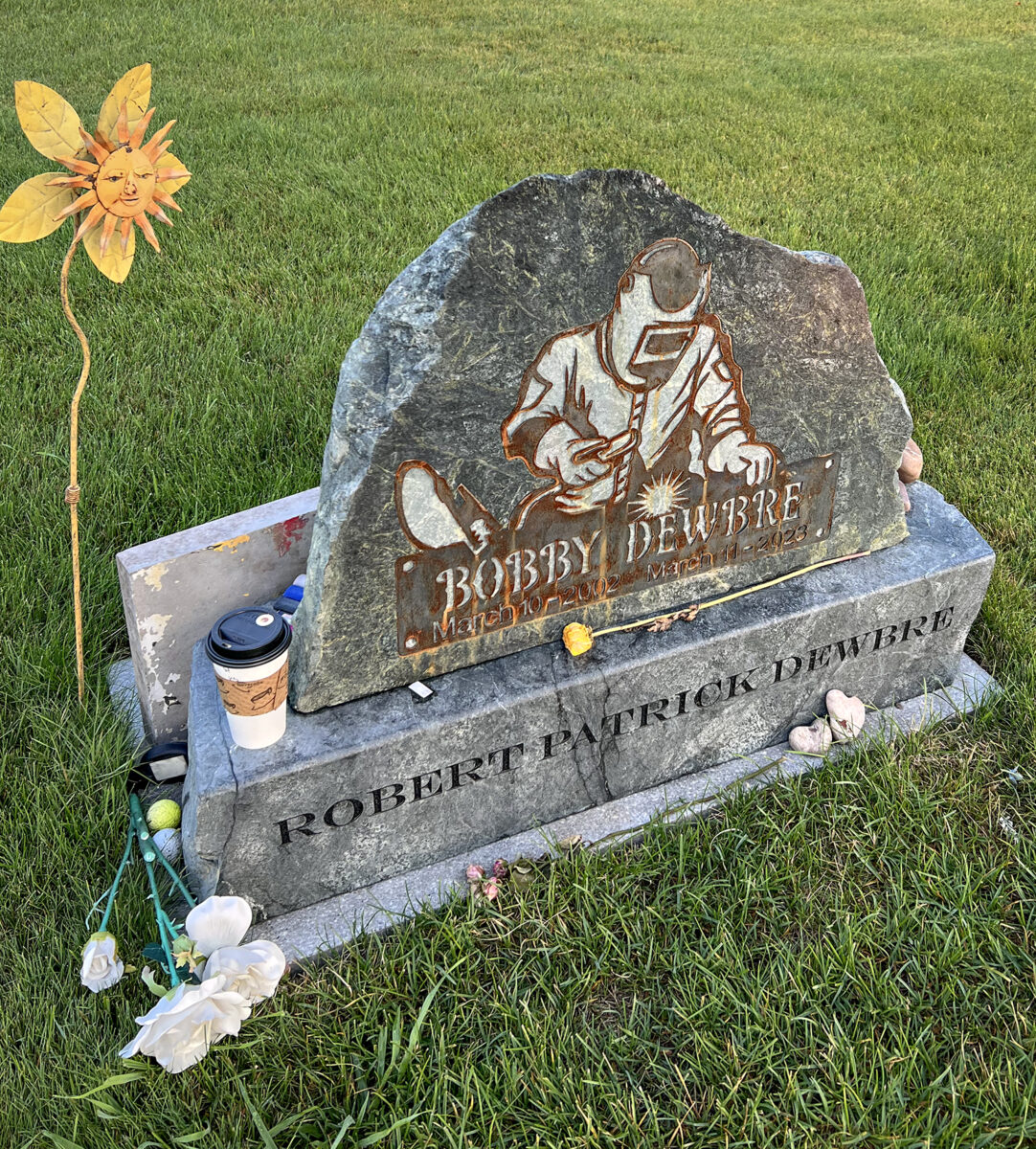
On his 21st birthday, March 11, 2023, Dewbre went out to the Blue Moon in Columbia Falls with his friends. The bar has a reputation as a local gathering spot. At the end of the night, Dewbre and his friends ran across the street to catch a sober ride. As Dewbre crossed the street, a drunk driver struck and killed him.
Dewbre was Seymour’s little brother, and after he died, McBride and Seymour were left to deal with their grief.
At the time, Seymour worked for the locally based Copper Mountain Coffee chain. One morning, McBride got a call from her daughter on the way into work. Seymour pointed out that several cars remained parked outside the bars in the early morning. She told her mom many of those cars’ drivers likely made the choice not to drive home inebriated that night. Seymour suggested they should be rewarded for it.
It was from that phone call that the idea for the Montana Bar Fairies was born.
McBride and Seymour procured coffee gift cards from Seymour’s workplace. They also developed story cards, which have photos and stories of local victims who have died because of drunk drivers, and thank-you notes for recipients for making the choice to get a sober ride. Then, they placed the cards on cars on a Saturday or Sunday morning, after nights when people were likely to be at the bars. They went out and “fairied” — a term coined to refer to the Montana Bar Fairies’ activities — for the first time on Jan. 1, 2024, McBride said.
McBride described the nonprofit’s mission as “changing the culture” of drinking and driving, something she — along with several others Flathead Living spoke to while reporting this story — views as far too common in the Flathead Valley. One Montana Bar Fairies volunteer referred to the area as the “valley of sorrow” for its higher-than-average rate of roadway fatalities involving a drunk driver.
Montana ranks as the worst state in the nation for drunk driving, per Forbes, with 8.57 drunk drivers involved in fatal crashes for every 100,000 licensed drivers. Drunk drivers cause more than 44% of the state’s traffic deaths, which is again, the highest rate in the nation. The rate of drunk drivers under age 21 involved in fatal crashes in Montana leads the country. Flathead County’s rates of drunk driving are also among some of the state’s worst. Out of 166 roadway fatalities between 2013-2022, 42% involved an alcohol-impaired driver.
While laws can punish offenders, McBride said punishment places the focus on what happens after somebody has already gotten behind the wheel drunk. She said the Bar Fairies’ larger goal is that their outreach can help touch people before they make the choice to drink and drive in the first place.
Over the past two years, what began as a simple idea snowballed into a nonprofit organization with national reach.
The Bar Fairies have gone viral on social media several times. Their Instagram and Facebook pages boast thousands of followers each. Chapters have sprung up across the state, and even across the country as word has spread — all of it spearheaded by unpaid volunteers. Seymour told the women from Girl Get After It that the nonprofit would launch new chapters in Ohio and North Carolina in November 2025. They are pursuing grant funding, and more coffee shops have donated gift cards, from Florence Coffee Co. to Montana Coffee Traders to Uptown Hearth, in Columbia Falls. They’ve expanded their activities, educating people at community events about the dangers of drinking and driving, helping to pass a bill at the state legislature earlier this year and continuing to explore further legislative options.
“Anybody who helps is a part of making the difference, a part of making the change,” McBride said.
CRAFTING LEGISLATION
While the Montana Bar Fairies provided an outlet for the grief McBride and Seymour faced in the wake of Dewbre’s death, the founding of the organization coincided with court proceedings. Dewbre had been jaywalking when he was hit and killed, McBride said. Though the driver had been under the influence — more than double the state’s legal limit at the time of the accident — that fact complicated Dewbre’s case, according to McBride.
Dewbre’s killer ended up receiving an 18-month prison sentence. It was through the legal process that McBride said she learned driving under the influence and killing somebody wasn’t automatically considered negligent homicide in Montana. She questioned why Montana didn’t already have that policy on the books. What McBride found was that Montana has historically been behind on enacting policy when it comes to drunk driving.
Until 2005, driving while drinking was still legal in some places in the state. Montana had to change state standards to align with the federal blood alcohol content limit in the early 2000s, decreasing the legal limit from 0.10% to 0.08%. And even in legislative sessions as recently as 2021, the state was still rewriting its DUI laws, according to Rep. Amy Regier, R-Kalispell, who serves as the chair of the legislature’s Law and Justice Interim Committee.
McBride said she asked the Flathead County attorney what she needed to do to change the state’s rules about negligent homicide and drinking. The answer: the law itself would have to change, something which could only happen through the state legislature.
“I went, ‘wait a second. I know a legislator,’” McBride said.
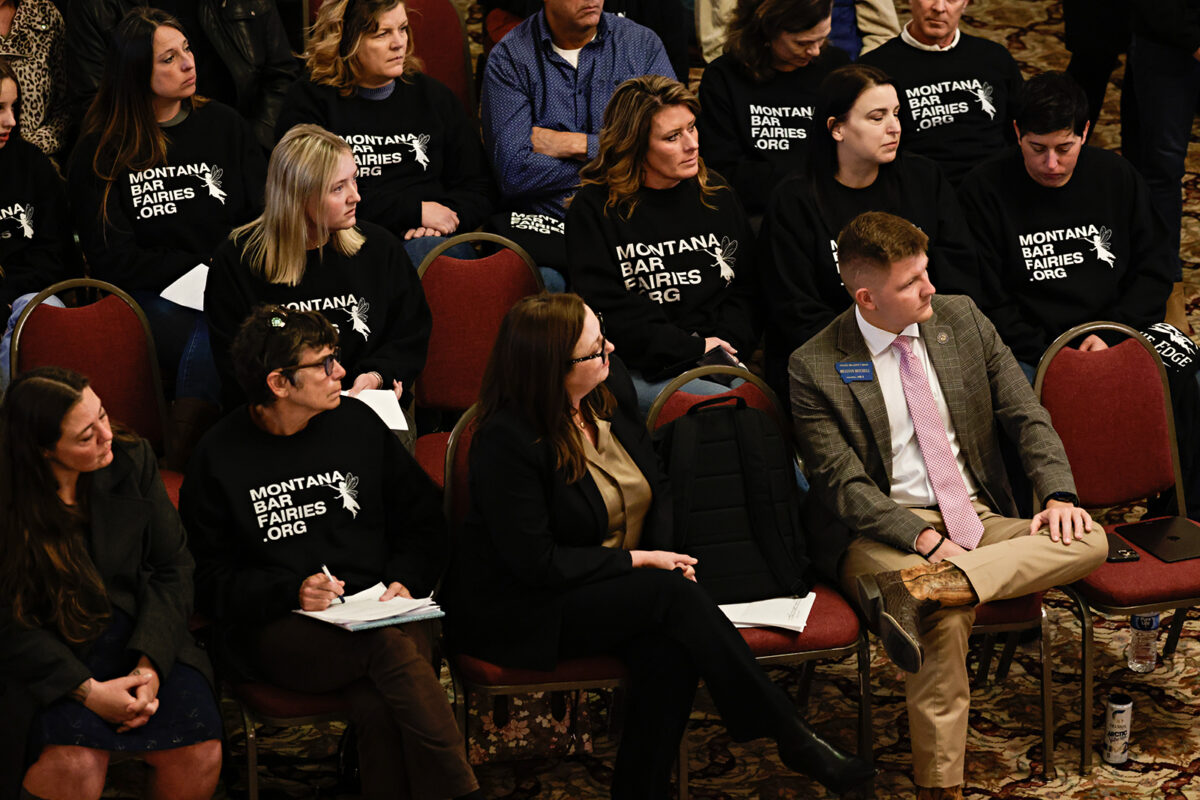
The legislator she was referring to: Braxton Mitchell, R-Columbia Falls. Mitchell, a 25-year-old Republican, grew up down the street from Dewbre.
“We weren’t like best friends, but we were friends growing up … We were pretty much the only ones that were our age on the block, and we just hung out a bunch,” Mitchell said.
Mitchell, who first won election to the state’s House of Representatives in 2020, was serving in the House in 2023, when Dewbre was killed. After Dewbre’s death, Mitchell held a moment of silence on the floor to honor him, and texted McBride about it.
McBride remembered the gesture, and when the county attorney told her legislative action would need to happen to change the law, McBride asked Mitchell to dinner. She pitched her idea for a bill to him. Mitchell told her to write a legislative concept letter and promised to help her pass the legislation in 2025. But with a long lag time between legislative sessions, which happen once every two years in Montana, McBride wanted to make sure Mitchell didn’t forget about her pitch. She set an alarm on her phone to call him — something she said she did each month throughout 2023 and 2024.
“So, then he contacts me in late October (2024), and he says, ‘all right, I just want to let you know that if I get reelected on Tuesday, that Bobby’s Law is in my top five bills,’” McBride said. “And if I get reelected on Tuesday, then Thursday we begin.”
Mitchell was re-elected, and he remained true to his word. He sponsored House Bill 267, which became known as “Bobby’s Law,” named after Dewbre. The bill, in its final form, created the crime of aggravated vehicular homicide while under the influence. It applies to anyone who causes the death of another human while operating a vehicle with a blood alcohol content of 0.16% or higher — twice the legal limit — and implements a three-year mandatory minimum sentence.
BATTLING FOR BOBBY’S LAW
The battle to pass “Bobby’s Law” began in the House judiciary committee, in which McBride and Mitchell both described running into Democratic opposition. Democrats’ concerns stemmed from concerns about mandatory minimums, which the bill would have established. While McBride said Mitchell expressed confidence that with a Republican majority, the bill would likely pass, she wanted to ensure it received support from both sides of the aisle.
“This is not a partisan bill. It doesn’t matter,” McBride said. “You know, I didn’t go with Braxton because he was Republican. I went with Braxton because he was my neighbor and he knew my son from here, you know? Because it’s a totally nonpartisan bill. It shouldn’t even matter what your politics are with this is what I thought, but that’s not the case that I learned.”
She became an unflagging champion for the legislation, rallying and organizing testimony to help prove to legislators across the aisle that it was a vital bill to enact. Mitchell said that helped the bill’s case, as legislators heard harrowing stories of those who’d lost family members to drunk driving. The bill also earned support from several law enforcement groups: the Montana Department of Transportation, the Montana County Attorneys Association and Montana Sheriffs and Peace Officers Association.
“Beth the entire way through was a major advocate,” Mitchell said. “I mean, if I sent her an email the night before or something, she was on it first thing in the morning. She was very responsive about the whole process, wanted to be in Helena for every single vote, definitely was very passionate about it, and as she should be. I mean, it was really great working with them.”
McBride also chose the legislative session to launch a chapter of the Montana Bar Fairies in the Democratic stronghold of Missoula, passing the story to local media there as the work to pass Bobby’s Law pressed on. It was around that time that the Montana Bar Fairies also went viral for the first time on social media, as a Missoula-based influencer received a coffee gift card from the Bar Fairies and took to TikTok to show it to the world. Still, McBride was uncertain the bill would find the broad bipartisan support she hoped for.
But as the bill came to the House floor, it did find Democratic support, thanks to an unexpected ally.
“Zooey Zephyr stands up,” McBride said. “She, she won it for us. I am so grateful to her.”
Rep. Zephyr, D-Missoula, has earned a reputation as one of the state legislature’s most progressive members. She has clashed with the legislature’s Republican wing, most notably when the House voted to censure her near the end of 2023’s session. The conflict sprung up because of a bill banning gender-affirming medical care for transgender youth. One of the legislature’s first openly transgender members, Zephyr had said legislators who voted for the 2023 bill would have “blood on their hands.”
Zephyr explained that her caucus tends to stray from supporting bills that simply enact higher penalties, or “mandatory minimums” — concerns members of the Democratic caucus shared during the bill’s hearings. On the issue of drunk driving, Zephyr said her caucus tends to support more preventative measures, rather than opting to increase penalties.
“If we are crafting policy that people are only encountering after they’ve hit and killed somebody, we’re only dealing with half the equation,” Zephyr said in an interview with the Flathead Living.
But things were different for Zephyr when it came to Bobby’s Law.
Mitchell said Zephyr sought him out before the bill went to the House floor, and they spoke about her support for the legislation and a personal history of family members who struggled with drinking. Zephyr said she’d also talked to the members of her caucus and voiced her support for the legislation before it came to the House floor. And it’s Zephyr that McBride credits with building bipartisan consensus around the legislation, through an impassioned speech in support of Bobby’s Law from the House floor on Feb. 6.
“As a card-carrying member of the radical left, I often don’t find myself in support of these types of bills and I particularly deeply dislike mandatory minimums and there’s so much of my sort of core belief system that finds these types of bills incredibly frustrating,” Zephyr said in the speech. “However, I will be rising in support of this bill, and I’m doing so for two reasons. The first of which is one of the things I think is important as we deal with policy is listening to the people who come in. And I know I have felt deep frustrations when bills very dear to me come in (with) 100-plus people opposing them and two proponents and we pass them anyway. But I think the sponsor noted, we had 80 people come in whose lives have been devastated, and no one came in opposition, and I cannot find it in my heart as a policymaker to listen to that kind of plea — those kinds of pleas — from constituents and do nothing.”
Zephyr continued: “And the second reason is because I think about the impact of drunk driving and how simple of a decision it is to not get in that vehicle, and I had the joy of doing my genealogy recently and diving back into the records of the dozen or so generations of my family that have been in America since the moment we immigrated. If you go through that family tree, every single generation, someone has either died due to recklessness with alcohol or someone has been the cause of someone’s death directly with alcohol, and this is such a simple decision to not get in that vehicle.”
Bobby’s Law passed the state House on April 22 with a vote of 95-3 and passed the Senate 45-4. It was signed into law on April 25 by Gov. Greg Gianforte, who held a ceremonial signing for the bill on a visit to Kalispell over the summer.
For McBride, the bill’s passage was a victory, but the work remains far from finished.
MOVING FORWARD
Amy Regier, the Kalispell representative who heads the Law and Justice Interim Committee, said her committee is continuing to examine the state’s drunk driving laws ahead of the next legislative session in 2027. While Bobby’s Law passed, Regier said other bills relating to the issue have historically failed to garner adequate support. She attributed it to “taking too big of a bite,” and her committee has begun its work on the topic by taking a lay of the land of Montana’s history with DUI legislation. She hopes doing so will help provide lawmakers with a clearer picture of how to move forward policy-wise.
Mitchell and Zephyr both sit on the Law and Justice Interim Committee with Regier. Both legislators confirmed the issue is one their committee hopes to work on ahead of the 2027 legislative session. Mitchell and Regier said the committee’s work is still in early phases, but Regier hopes the committee can bring a bill on the issue during the next legislative session.
All three lawmakers heralded the work of the Montana Bar Fairies.
“They took a horrible tragedy and turned it into positive advocacy, and just definitely incredible work that they have done since then with the Bar Fairies and whatnot,” Mitchell said. “But we reach change not just in our state, but across the country, and I know they’ve been getting a lot of national media coverage with this whole thing, and that kicks off in our state here.”
For McBride, continuing to work through the legislature to reshape the state’s drunk driving legal landscape remains a priority. She hopes the Montana Bar Fairies will continue with the legislative work it first began with Bobby’s Law, bringing future bills to address the problem.
But the lawmaking side of the issue only works when it comes in tandem with a cultural shift around drinking and driving, in McBride’s mind. McBride said she’s waiting for new information surrounding DUI fatalities to come out in the Flathead and hopes that, if those numbers are down, it will provide fact-based evidence that the Montana Bar Fairies’ work is making a difference.
For now, the evidence of a shifting culture remains anecdotal. But by gifting the coffee cards, McBride and the Bar Fairies’ supporters have seen minds change in real time.
Jessie Hanson, an insurance producer in Whitefish, has long been a volunteer with the Bar Fairies. Like McBride, Hanson lost a child to a drunk driver. Her daughter, Brooke, was struck by a drunk driver in Columbia Falls in May 2021. She was 15, and per her story on the Montana Bar Fairies’ website, Brooke played sports, participated in 4-H shooting and loved attending the local rodeo series.
When the Montana Bar Fairies started, McBride reached out, told Hanson about the mission, and asked her to come along.
Now, Hanson has become a director in the organization — a volunteer position where she helps put out a monthly newsletter and coordinates other volunteers behind-the-scenes. She also testified at the legislature in favor of Bobby’s Law, speaking to legislators about the experience of losing her daughter too.
Hanson described working with the Montana Bar Fairies as “healing.” While she said she spent a lot of time angry at the woman who killed her daughter, the organization has helped her share Brooke’s story.
Brooke is one of the victims on the story cards the Montana Bar Fairies hand out alongside the coffee cards they leave on cards. For Hanson, the organization has made it feel like her daughter’s death wasn’t in vain.
“I feel like there are so many people out there that want to see change, and now there are actually folks who are doing something,” Hanson said. “I feel very honored to actually be a part of the Bar Fairies. I think that we are just making leaps and bounds as far as progress, and I just am really excited to see how far it goes and see how many lives we can save.”
McBride described meeting people who have shared with her that they’ve received the cards, and the impact it has left on them.
“The biggest impact we had was a woman came up to us and said that she had five cards,” McBride said. “And she said — we were at an event, you know, working a booth — and she said, ‘I’m embarrassed, but I have five cards.’ I go, ‘don’t be embarrassed. You’re doing the right thing.’ She goes, ‘yeah, well, the first time I got a card, I thought ‘oh God, this is cool.’ The second time I got a card, it was like, ‘oh, wow, maybe I shouldn’t do this anymore.’ And the third time I got a card, I had planned to leave my car, and I was excited that I got the card.’
“And she goes, ‘now I don’t ever drink and drive,’” McBride continued. “And it was someone who did it on a regular basis, because it’s Montana.”
McBride said she’s also spoken to several people who’ve gotten multiple cards, but have said it only took receiving one before they started leaving their cars behind and opting to find a safe ride home.
“I mean, we hear this all the time,” McBride said.
And for volunteers like the ones who ventured out with Girl Get After It, the experience of giving out the cards marks a chance to make a difference.
On the November morning they joined Seymour, the women placed cards on car windshields, under the driver’s side wiper blades. Seymour tallied the number of cards they gave out.
The group waved to staff at Whitefish’s VFW, who were cleaning the bar in the early hours of the morning. At the end, one attendee talked to Seymour about becoming a regular volunteer and taking on a bigger role with the organization. The pair exchanged contact information.
“I would be so pumped if I came back to my car and had a coffee gift card,” one woman said.