As Flathead County Begins Update to Lakeshore Protection Rules, Public Urges Stronger Enforcement and Review
Several recent high-profile construction projects and a host of new land-use trends prompted a workshop to modernize lakeshore protection regulations last updated a decade ago
By Tristan Scott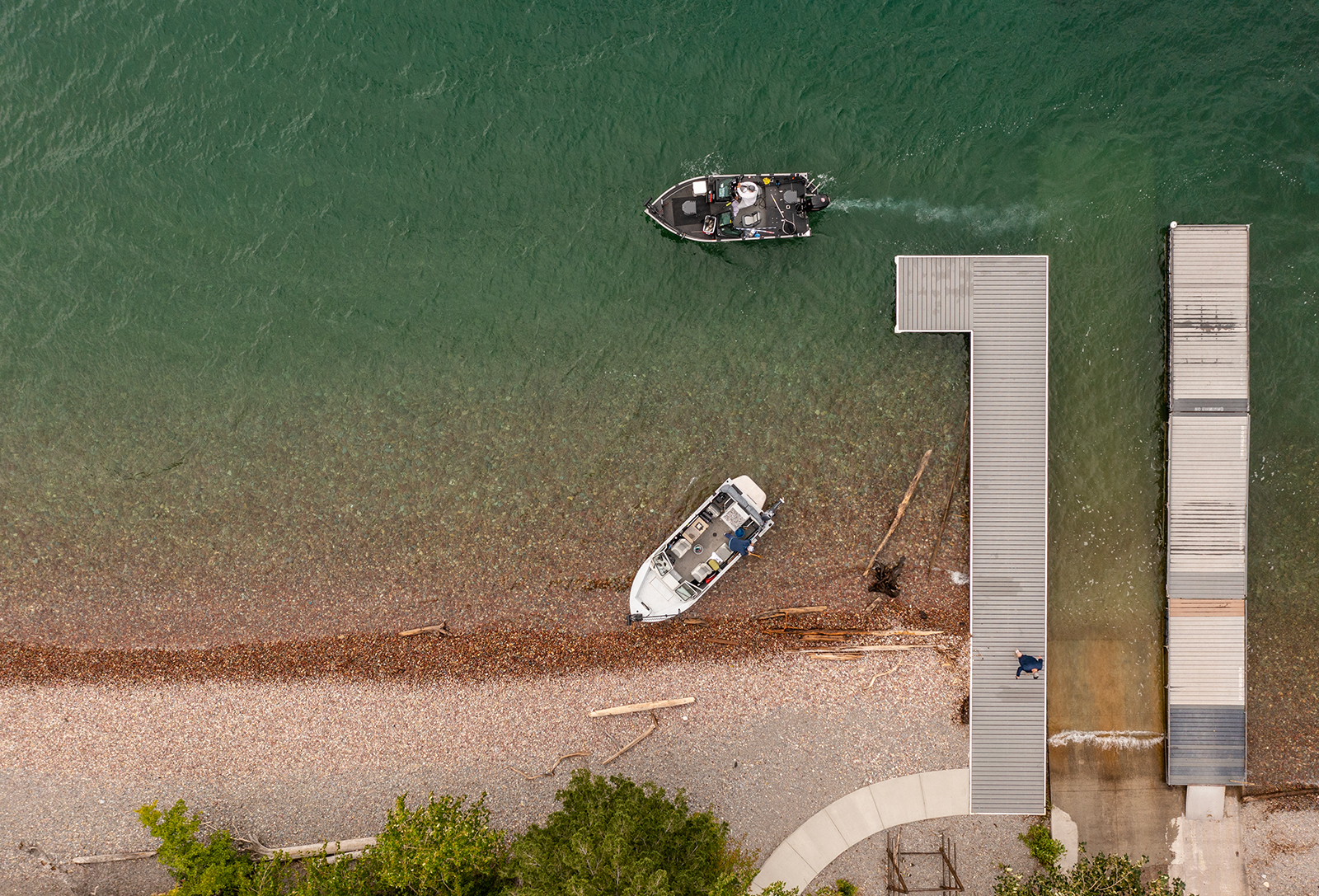
As Flathead County’s population grows, so does the amount of development on its lakes and lakeshores, where some residents and land-use advocates say county rules aimed at protecting lake resources have gone unheeded or unenforced.
To help keep pace with the growth and the wide range of construction activities and property uses occurring on Flathead County’s lakes, planning officials recently hosted a public workshop to begin the process of amending its lake and lakeshore protection regulations last updated in 2016. The regulations govern “any work which alters the character of any lake,” including the process for issuing work permits authorizing construction projects in designated lakeshore protection zones, such as docks, retaining walls, buildings, beaches, vegetation removal, and shoreline restoration.
At a Jan. 14 hearing and public workshop before the Flathead County Planning Board, county planning and zoning staff presented draft amendments to the lake and lakeshore protection regulations, proposing new restoration standards when lakeshore violations do occur, and outlining new rules for boathouses, boat lifts, docks, buoys, and aquatic toys.
During a lengthy public comment period, residents advocated for stricter enforcement of lakeshore violations by county code technicians and urged county leaders to strike a cooperative agreement with the city of Whitefish, where city-county jurisdiction on Whitefish Lake is divided.
Others implored planning board members to exert greater influence over the regulatory review process so that projects that run counter to the regulations are not approved in the first place.
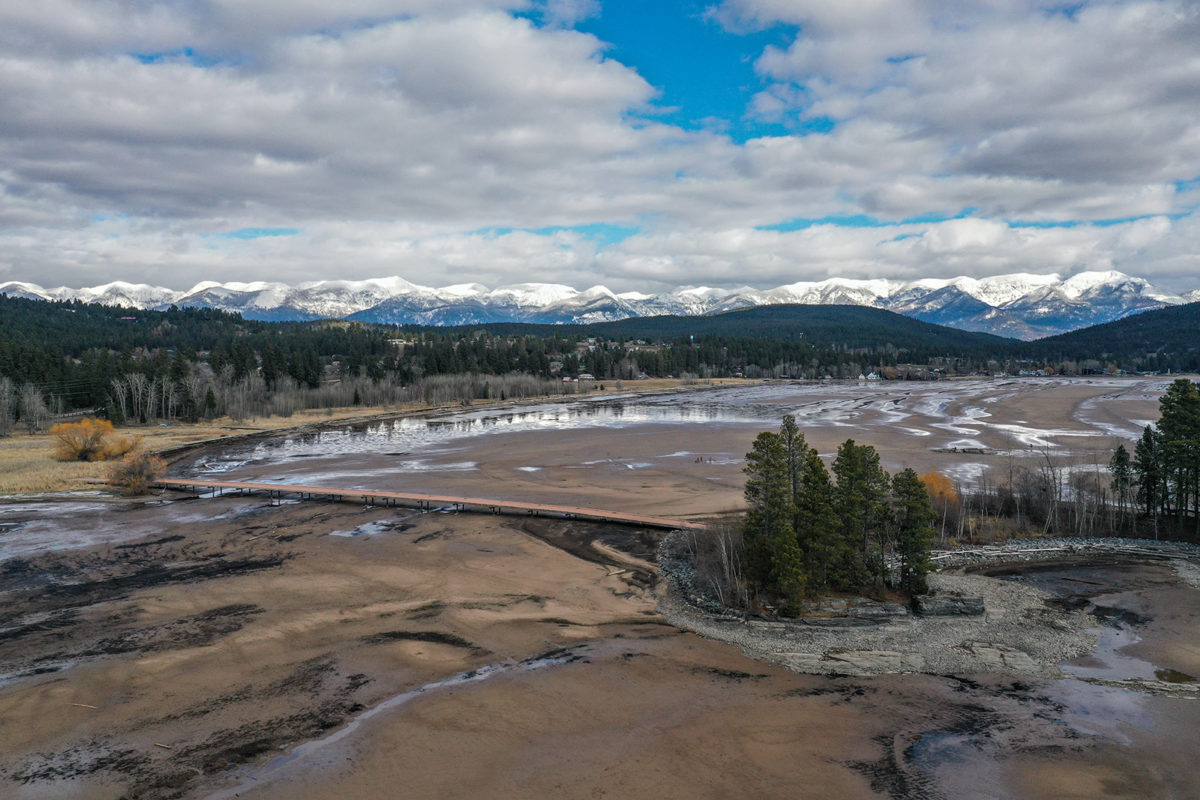
Calling for more sunlight and procedural review, Kalispell attorney Don Murray raised as a cautionary tale the costly demolition of a vehicular bridge connecting the north shore of Flathead Lake to Dockstader Island, which was the subject of litigation for eight years before the Montana Supreme Court ordered its removal. Murray, who represented the plaintiffs in that case, said the Flathead County commissioners issued a permit for the construction of the 481-foot bridge without hearing public comment or requiring planning board review.
“That case started because that permit was issued without ever having come before the planning board,” Murray told board members last week, explaining that Montana’s 1975 Lakeshore Protection Act that requires local governments to adopt regulations to protect their lakeshores demands review. “When it comes in front of you, that’s the window, and the only window, through which the public has an opportunity to be heard on these matters. So while I’ve got lots of ideas about changes that could be made to the Lakeshore Protection Regulations, I just wanted to bring up the point that, under the Act, it should be the rule and not the exception that permit applications are reviewed by you. But I think they rarely are, and I think that’s become a matter of course. And I don’t fault anybody for that, but I just think it’s worth emphasizing that the default process under the Act is planning board review.”
Flathead County Planning and Zoning Director Erik Mack said the county last updated its lake and lakeshore protection regulations in 2016. Administrators began the process of updating the regulations two years ago, but staffing turnover and other challenges stalled progress.
“There’s a lot that has come up since then,” Mack said
Since taking over as planning director in 2021, Mack said the county has doubled its code enforcement staff to two full-time employees; even so, the department is stretched thin responding to complaints across a sprawling jurisdiction.
“It comes back to our complaint-driven enforcement system. We have a huge county; it is the size of Connecticut, and we have two code enforcement technicians,” Mack said. “We have a lot of area to cover, and we can’t go out and patrol every lake all summer long. We just don’t have the resources to do that. So we do rely on the public to let us know when violations are happening.”
Mack emphasized that complaints from the public don’t have to be submitted in writing if they relate to active work in a lakeshore protection zone, which is defined as activities within 20 feet of the lake’s mean annual high-water mark.
“If it’s active work, you don’t need to sign a complaint,” Mack said. “You can just call us, let us know, and we will go and look at it. We just had one today where there was some work occurring on Flathead Lake, where they had a backhoe in the water, so we went out there and looked at it to see if they were in violation.”
Still, some frustrated residents described feeling helpless as their complaints fall on deaf ears, either due to jurisdictional tensions or a prevailing culture in which wealthy property owners shrug off punitive fines for lakeshore violations as “the cost of doing business.”
“If someone is building a $25 million house, they will ask for forgiveness later and pay the $500 fine,” Jamie Goguen, a Whitefish resident who said “the quality of life on our lake has gotten to the point of mental exhaustion” due to years-long construction projects creating disturbances and transforming the landscape.
Beth Sobba lives near a multi-year construction project on Whitefish Lake’s Beaver Bay, where a rock blasting operation in May 2024 triggered an inadvertent landslide into the lakeshore protection zone. She said her complaints to the county made no difference before the blasting incident; since the landslide occurred, builders have cleared away the rubble and resumed work.
“Rules don’t matter if they’re not enforced, and in this case, nothing has been enforced,” Sobba said. “The most unbelievable means of construction have been used on this project, which is now entering its fourth year, with no end in sight. It’s unbelievable to me that work wasn’t stopped immediately until the circumstances surrounding this project and the scope and magnitude of it were resolved.”
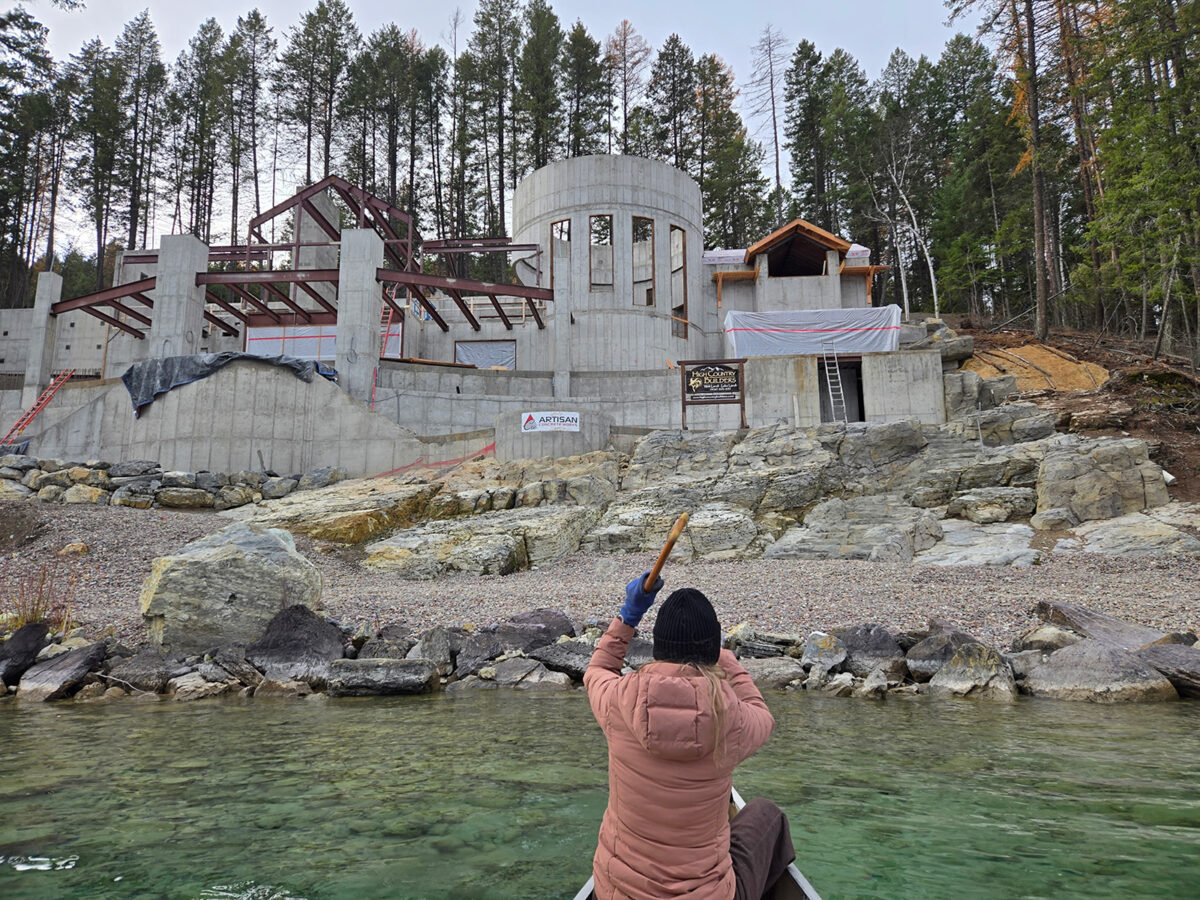
Because the county doesn’t have a building department, however, it does not regulate any activity that occurs outside of either the lakeshore protection zone or the floodplain. Its jurisdiction of rural properties on Whitefish Lake, including the one under construction on Beaver Bay, extends up from the low water mark, while parcels within city limits fall under Whitefish’s building permit jurisdiction.
Toby Scott, who serves on the Whitefish Lake and Lakeshore Protection Committee, said he’d like to see “a little better alignment” between Whitefish’s regulations governing lakeshore development and the county’s.
“Or at least some agreement so that lakeshore regulations are uniformly administered between the city of Whitefish and the county,” Scott said. “Otherwise, we’d be happy to have jurisdiction over the entire lake.”
Following a long-running legal battle over control of the planning “doughnut” ringing Whitefish, the Montana Supreme Court in 2014 ceded control of the lakeshore protection zone on Whitefish Lake from the city and assigned it to the county. Since then, both the county and the city have administered lakeshore regulations depending on jurisdiction.
Mack, the planning director, encouraged Scott to “go talk to your city council about annexing it. We will not put up a fight.”
Mike Koopal, director of the Whitefish Lake Institute, said he and other water quality advocates would like to craft an interlocal agreement between the city and county to administer Whitefish Lake regulations more fairly, while a county-wide lakeshore protection committee could assist planning staff with reviewing applications for lakeshore work permits.
“Basically, we’re at a point where we need to find a way for the county and Whitefish to start playing in the same sandbox together,” Koopal said. “Your staff has a lot of work to do. Flathead County has had a huge population increase. Unless we staff our departments commensurate with our population growth, we’re going to start missing things. So I like the idea of having another layer of review and another set of eyes on these permit applications.”
To establish a clearer framework for development and other activities on Whitefish Lake, as well as other lakes in Montana, state Sen. Dave Fern, D-Whitefish, in 2025 introduced Senate Bill 304, “An Act Revising the Lakeshore Protection Act,” which provides for stop-work orders, surety bonds and liens for unauthorized lakeshore work. The bill was tabled in Senate Natural Resources Committee.
But Fern renewed his call for regulations to be administered “jointly” in cases where there’s jurisdictional overlap.
“I do think that it’s been a long time since the doughnut issue occurred,” Fern said, “and it would make a lot of sense not to have some sort of turf war” over amenities that serve as an economic boon in the region while benefiting local governments.
“Obviously the county is very good with its money. It’s very careful about looking out for the taxpayers,” Fern said. “But it’s also obvious that with the increase in tourism, the increase in building, that we probably need to have more feet on the ground. It’s necessary to make sure we’re following through on the regulations that we have. I think this [workshop] is a great place to start.”
But Whitefish Lake is just one of 269 lakes in Flathead County, where Flathead Lake is by far the largest. Residents also discussed amendments they’d like to see on waterbodies ranging from Little Bitterroot Lake to Ashley Lake. Other themes that emerged at the workshop was an increase of people requesting variances to extend their docks, which in recent low-water seasons haven’t extended far enough to safely launch a boat, and the need for eco-friendly strategies for shoreline erosion prevention and restoration.
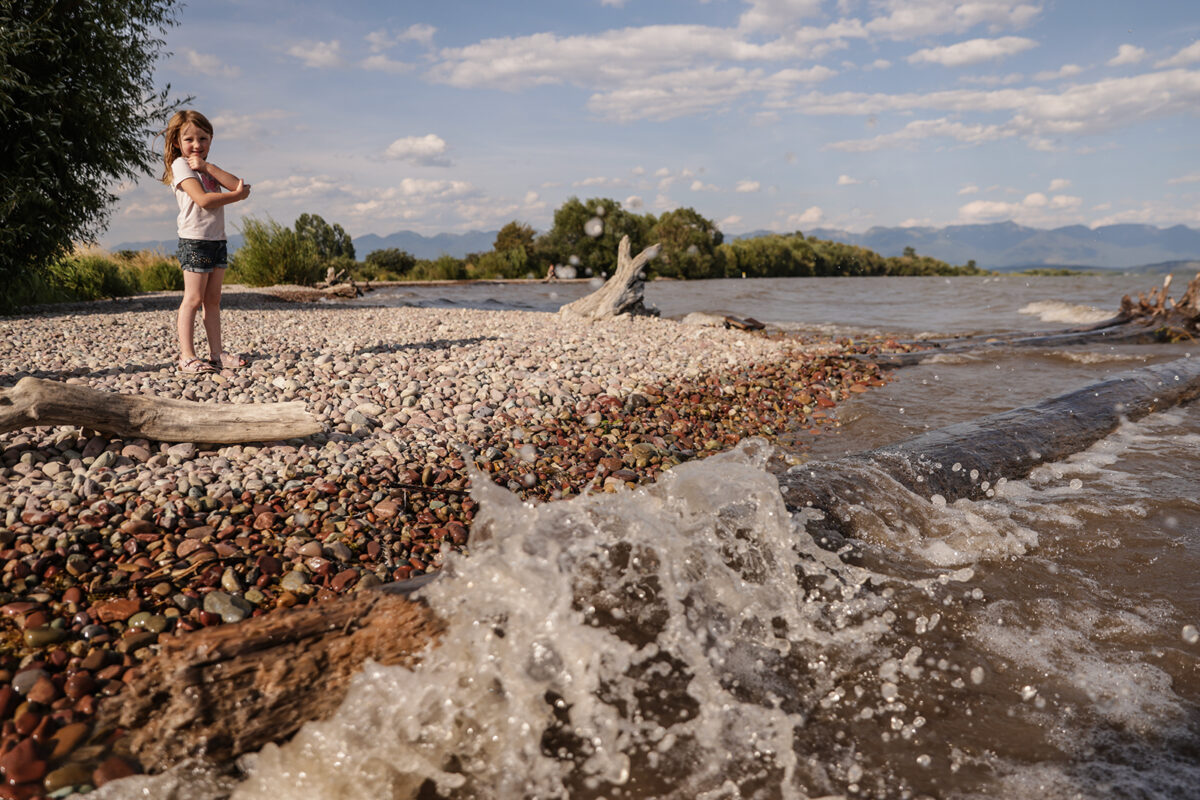
“The big one that comes up a lot is the use of dynamic equilibrium beaches,” Mack said, describing an innovative erosion control technique gaining popularity on Flathead Lake. “We’ve had a lot of variances for that, sometimes major, sometimes minor variances, and that really helps restore the ecosystem of the shoreline.”
“That’s one of the things that we wanted to address, too,” Mack said of the proposed regulatory amendments. “Maybe you don’t need a variance to do that, and it’s something that is allowed because it’s actually better than doing rip rap or a retaining wall.”
Dr. Mark Lorang grew up on Flathead Lake, where as a kid he recalls watching his neighbor build a seawall. Ever since, he’s dedicated most of his time to studying and designing new solutions to shoreline erosion, including a Ph.D. dissertation on the subject followed with a postdoc into wave dynamics and geology.
That expertise allowed him to design dynamic equilibrium beaches that absorb and disperse waves and their destructive force by simulating the lake’s natural shoreline processes.
On Flathead Lake alone, Lorang has designed nearly two miles of gravel beaches, and the Montana Department of Fish, Wildlife and Parks has employed his designs at Woods Bay Fishing Access Site near Bigfork, which Lorang said absorbs “the most energetic waves in the U.S.,” earning it the nickname “Storm Beach,” as well as at the Yellow Bay Unit of Flathead Lake State Park and Somers Beach State Park. The agency said it plans to protect all its sites on Flathead Lake with dynamic equilibrium beaches.
“We’re trying to recreate nature’s drain field,” Lorang told planning board members during the workshop. “The north shore of Flathead Lake had one of the highest rates of erosion globally. We’ve stopped all erosion.”
Lorang offered to participate in the county’s process to update its lake and lakeshore regulations, which Mack described as a long process that will include additional workshops and opportunities for public comment.