Congress Tucks $1M for North Fork Road Guardrails in Federal Funding Bill
Framing it as a critical public safety improvement on a highly trafficked entry point to Glacier National Park, U.S. Rep. Ryan Zinke helped secure the North Fork funding among $27 million in infrastructure projects across western Montana
By Tristan Scott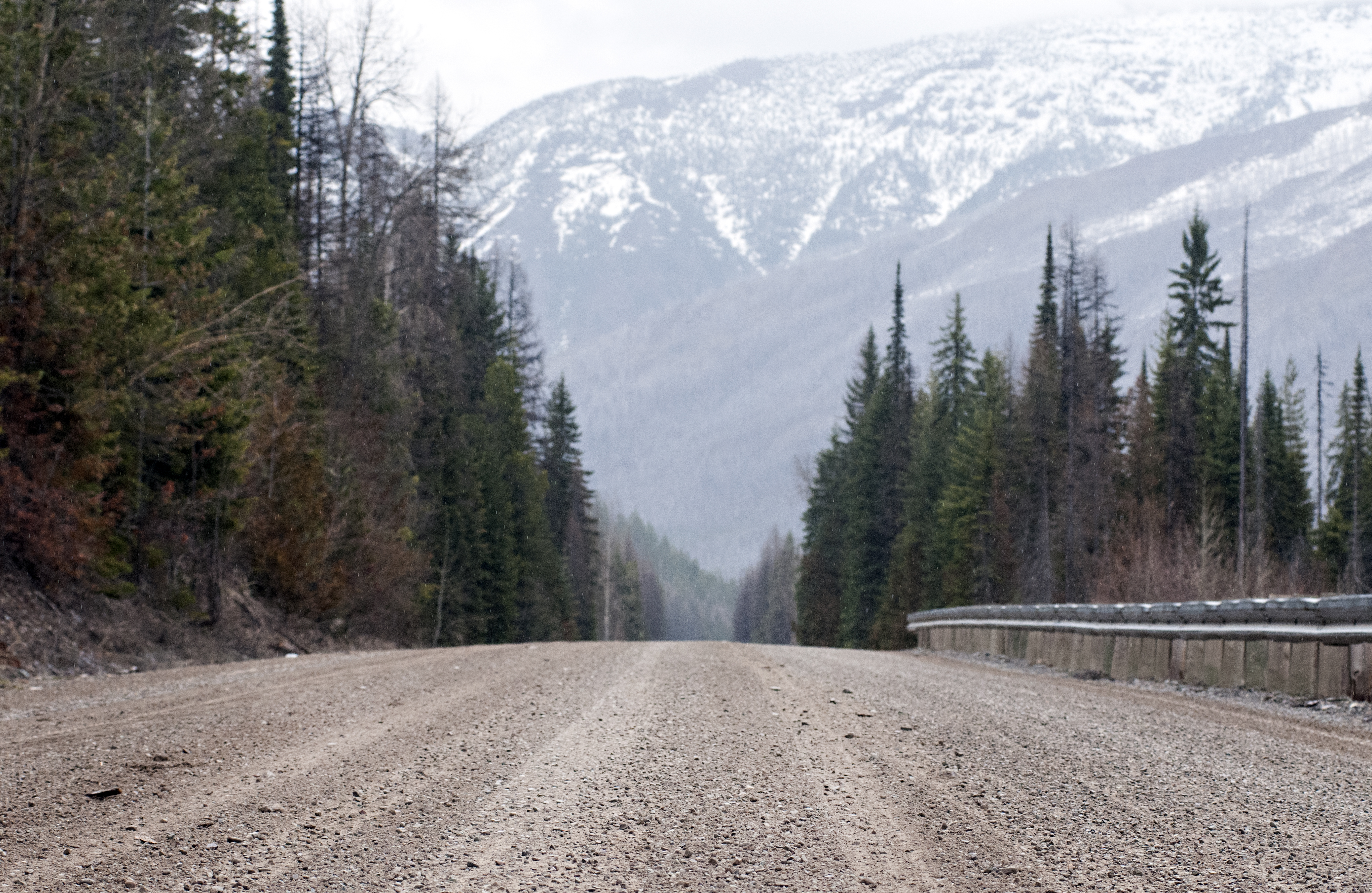
A House-backed slate of funding bills contains $1 million to install guardrails along the narrow, twisty and mostly unpaved North Fork Road, a primitive but heavily trafficked wilderness corridor tracing the western edge of Glacier National Park from Columbia Falls to the Canadian border.
U.S. Rep. Ryan Zinke, the Republican congressman from western Montana, touted the local project as a critical safety improvement on a roadway that serves a wide range of travelers, from tourists, river runners and year-round residents to logging crews and border patrol officers. As an entry point to Glacier National Park through both the Camas and Polebridge entrances, it also serves as the route for approximately 150,000 annual visitors.
“The significance of the North Fork Road cannot be overstated,” Zinke said Thursday after the House passed H.R. 7148, the Consolidated Appropriations Act, in a 341-88 vote. “The North Fork Road plays a pivotal role in the economic and recreational vitality of the region.”
As a member of House Appropriations Committee and of the Transportation, Housing, and Urban Development subcommittee, Zinke played an outsized role in crafting the package. It funds the departments of Defense, Transportation, Housing and Urban Development, Health and Human Services, Labor, Education, and other related agencies. It passed the House on Jan. 22 by a vote of 341-88, while a more contentious measure, the Department of Homeland Security funding bill, passed the House by a separate vote of 220-207.
The House will combine the package of four bills with a separate two-bill minibus package it passed last week before sending the entire package to the Senate. The upper chamber will likely take up the bills when it returns from recess next week ahead of a Jan. 30 deadline.
In northwest Montana, the funding measure to replace 3.71 miles of guardrails earned endorsements from a wide range of stakeholders who cheered the initiative’s early success, saying that, despite the popularity and significance of the North Fork Road, it has long posed safety concerns.
Lincoln Chute, the fire services area manager for the Flathead County Office of Emergency Services, said the road’s precipitous contours have bedeviled emergency responders for decades.
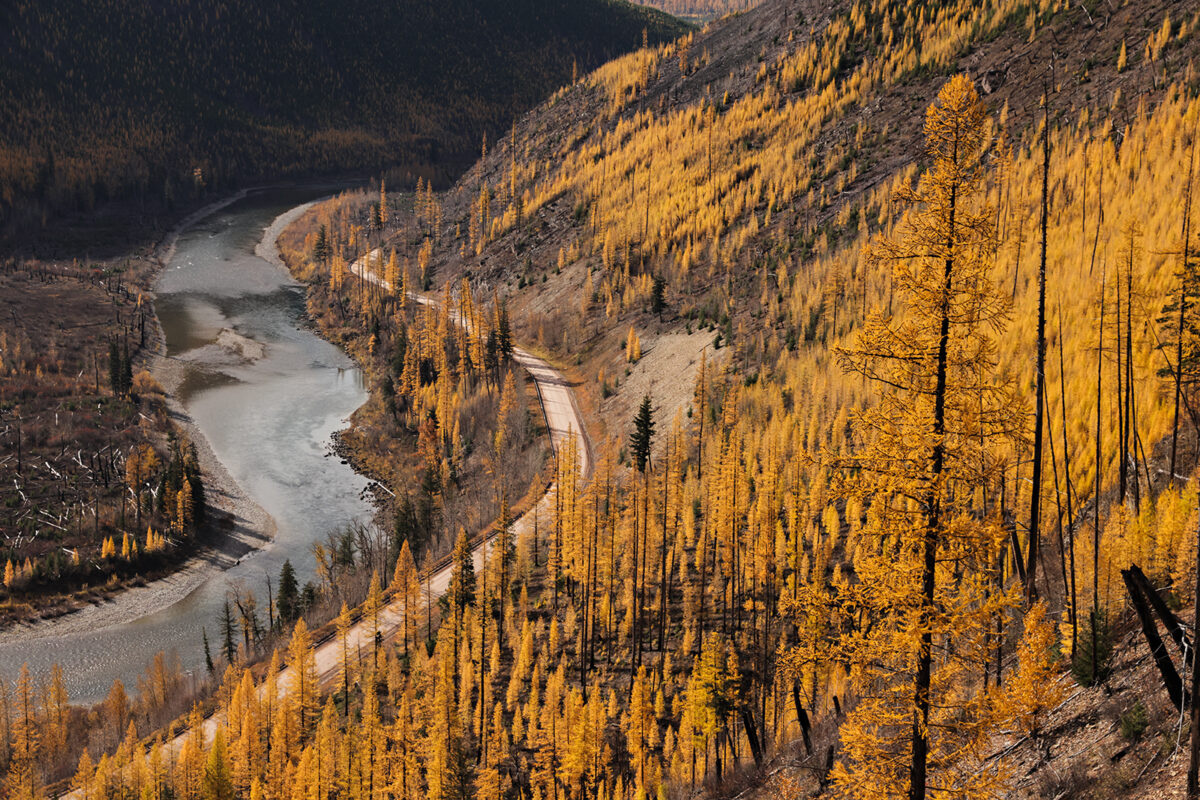
“The North Fork Road presents significant challenges throughout the year, including washboards, potholes, and dust in the summer and heavy snowfall and ice throughout the winter,” Chute wrote in a letter of support for the funding. “These hazards, combined with heavy traffic and sections of very steep embankments, have led to numerous accidents, often resulting in vehicles leaving the road surface and descending down towards the river. Quality guardrails along the North Fork Road is a life safety issue … for residents, visitors, firefighters, and emergency responders.”
Composed mostly of gravel, the North Fork Road has numerous roadside hazards, including sections of roadway with steep embankments descending to the North Fork Flathead River, a Wild and Scenic-designated river corridor that forms the boundary between Glacier National Park and the Flathead National Forest — two federal jurisdictions that command a high level of attention.
Dave Prunty, the director of the Flathead County Department of Public Works, said the existing guardrails along the section of North Fork Road south of Camas Road surpassed their service life long ago, as evidenced by their deteriorating condition.
“I don’t know how long that section of guardrail has been up there, but certainly for all of my 18 years at the county road department,” Prunty said Friday after learning of the measure’s success in the House. “I don’t know how long but I can tell you they get pretty beat up through the course of vehicles hitting them, snowplows getting too close; the wooden posts rot and the galvanized metal rusts. They’re overdue for replacement, that’s for sure.”
Elizabeth Brooks, the 911 director for the Flathead Emergency Communications Center, said her dispatchers have received a growing number of calls regarding vehicle accidents along the North Fork Road.
“Some of these incidents involved vehicles veering off the road surface, descending the steep embankments toward the river,” Brooks said. “This pattern underscores the importance of quality guardrails along this route.”
Lois Walker, full-time resident and North Fork historian, said the existing guardrails on the North Fork Road have “a track record of preventing or at least minimizing tragic accidents on the road.”
“They help save the lives of those of us who live here, as well as visitors who are not familiar with the road,” Walker said. “As a full-time resident, I support Flathead County’s funding request to improve these safety measures along the road.”
In addition to replacing the guardrails south of Camas Road, Walker recommended adding guardrails on the stretch of road just north of the Camas Road, as well as at Vance Hill just north of Polebridge and at Wurtz Hill just north of the Wurtz Cabin owned by the U.S. Forest Service.
“Towing companies are making good money rescuing vehicles that have departed the roadway up here,” Walker said. “But more importantly, being remote requires the sheriff’s office, the highway patrol, and emergency responders to expend valuable time to reach the scenes of these accidents. It’s only a matter of time until we lose someone. Most likely, it will be a distracted tourist who is unaware of the care and attention it takes to drive the scenic North Fork Road.”
A Zinke staff member also shared letters of support from the Flathead County commissioners, the sheriff, a district ranger with the Flathead National Forest, and numerous North Fork residents. The funding request for the North Fork guardrails was among $27 million in infrastructure spending that Zinke lobbied for inclusion in the House package, including $10 million for the Seeley Lake wastewater treatment plant and $10 million for Sanders County’s Noxon Bridge replacement project.
“I’ve worked with county commissioners and local leaders for years on these projects, and now we’re finally securing the support they deserve,” Zinke said in a prepared statement. “This bill funds vital projects that Washington often overlooks but are essential to the people who live there. Seely Lake’s wastewater treatment plant, replacement of the Noxon Bridge, road improvements in Ravalli County, and guardrail installations along the North Fork are prime examples of what Congress should be spending money on. These are good, community driven, shovel ready projects, that come from the ground up, not from bureaucrats who’ve never been to the west. I urge the Senate to act quickly and pass this bill, fully funding the government for fiscal year 2026.”