Legal Challenges Remain as More Developers Want Say in Depot Park Townhomes Project
City staff hope to present a request for proposal to develop the 22-unit project to city council by late February despite a $1.5 million judgment lien remaining on the property
By Lauren Frick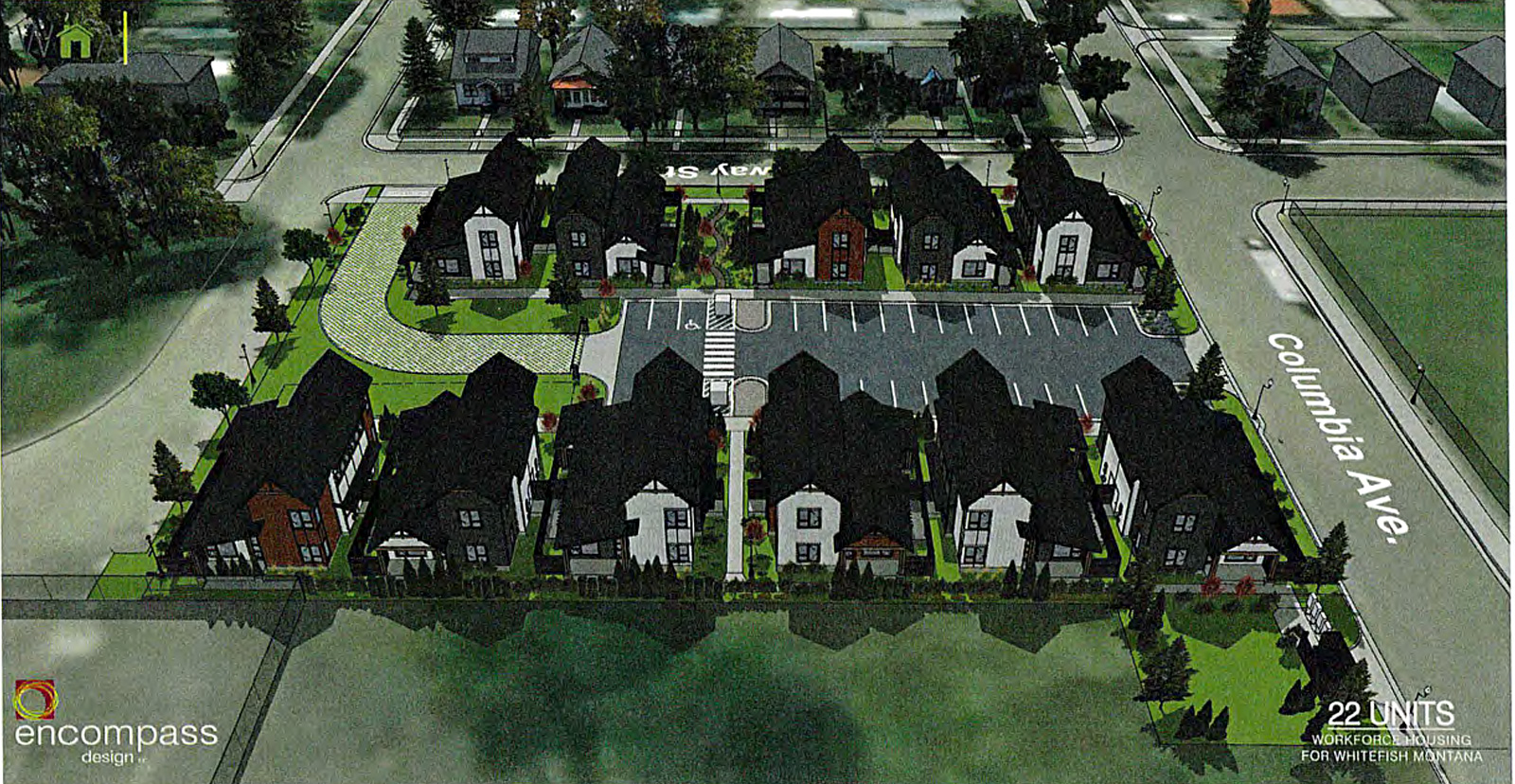
Whitefish is inching toward another step in the nearly 10-year journey to build affordable housing on land once known as the “Snow Lot” as city staff prepare for a potential public bidding process, despite simultaneously navigating a major legal roadblock in the project.
City staff are preparing a request for proposal for the development of the Depot Park Townhomes project, which City Manager Dana Meeker hopes to present to city council for approval in late February. However, the project’s greatest obstacle — a judgment lien on the land from a defamation lawsuit against the Whitefish Housing Authority — still remains, muddying the timeline and path forward for both the city and potential developers.
The move toward a public bidding process follows interest from both Housing Whitefish, who the city initially approached about exploring a developer agreement, and Habitat for Humanity of Flathead Valley, who expressed interest in the project to city councilors earlier this month.
“So with [Habitat’s] interest, it’ll be staff’s recommendation to council at a future meeting to issue a request for proposals to provide opportunity for all parties, because we have not executed that agreement yet with Housing Whitefish,” Meeker said. “Before it just seemed like there was only one potentially interested party, so there wasn’t really a need to.”
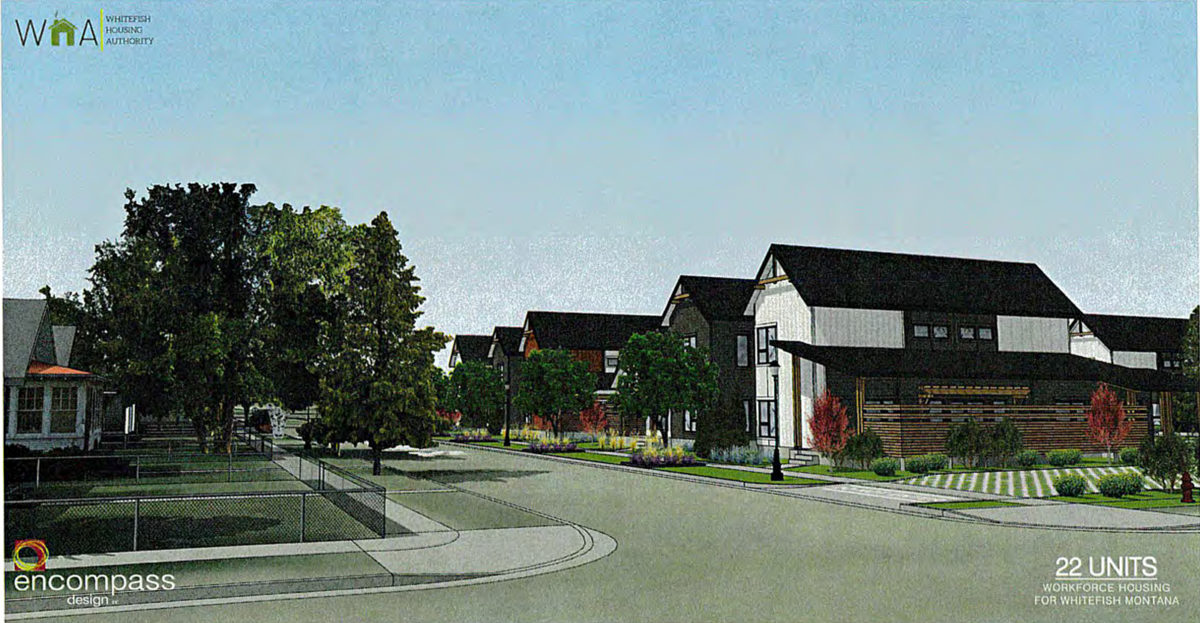
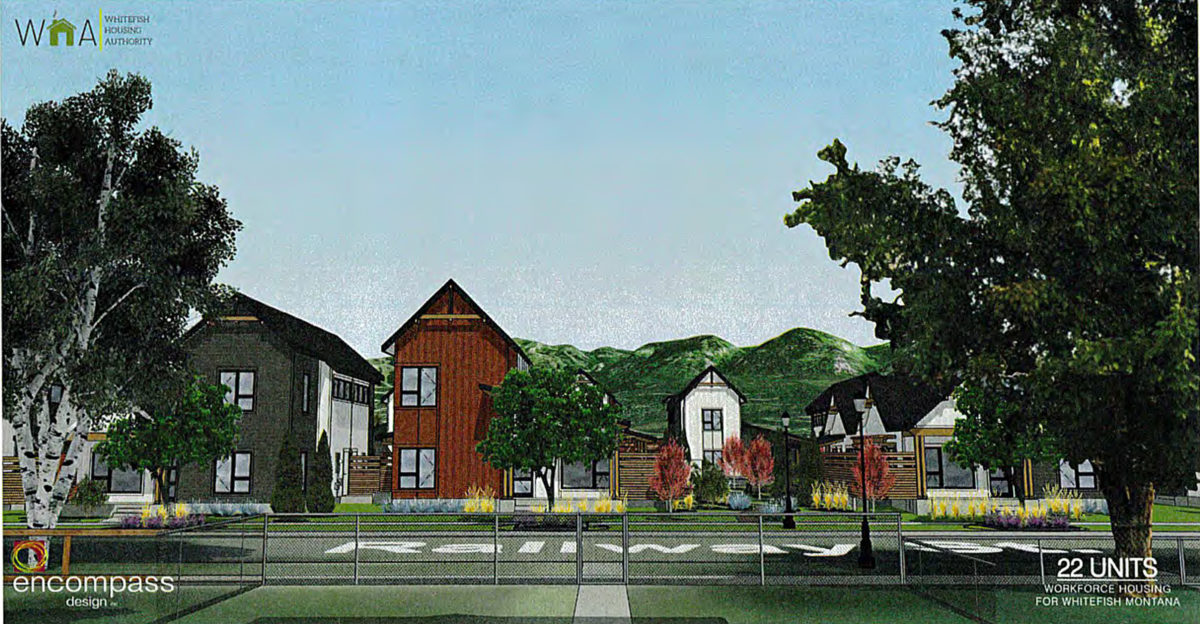
The property, a 1.64-acre piece of land north of Railway Street and east of Columbia Avenue, was once used by the city to store snow cleared from downtown. In keeping with the city’s 2017 Strategic Housing Plan, the land was identified as a high priority project for the development of workforce housing.
The land was transferred to the Whitefish Housing Authority in 2020, with the organization entering an agreement with the city to carry out the project’s development. About two years later, a preliminary plat for the 22-townhome planned unit development was approved, with the final plat approved by the city last year.
A January 2025 $1.5 million ruling against the Housing Authority in a defamation lawsuit, however, essentially brought the project to a complete halt.
When the Housing Authority expressed an inability to continue the project — especially under a May 2027 deadline — the city council in July voted 3-2 in favor of Meeker exploring negotiating a developer agreement with the nonprofit Housing Whitefish to complete the project.
Since then, little has happened with the project due to the judgment lien on all of the Housing Authority’s properties, including the Depot Park Townhomes. That was until MaryBeth Morand, executive director of Habitat for Humanity of Flathead Valley, approached the city council during public comment in early January with a proposal of the nonprofit’s own to develop the affordable housing project.
Morand proposed that a portion of the 22 units would be constructed by Habitat Flathead — which would allow for the same perks as other Habitat homeowners, such as 30-year mortgages with a 2% interest rate through the Montana Board of Housing — while its private partner, Iron Star Construction, would handle the construction of the remaining units. Like Housing Whitefish’s proposal for the development, Morand expressed an interest in also partnering with the Northwest Montana Community Land Trust.
Construction on some of the units could start as early as this spring, Morand told councilors at their Jan. 5 meeting.
In an interview with the Beacon, Morand said Habitat Flathead is looking to throw their hat in the ring for the project’s development because the nonprofit has more construction capacity than available land to build on right now, noting that of 74 homes built in the valley since 1989, less than 10 have been in Whitefish.
Between its local capacity and vendor relationships and its experience building neighborhoods, Habitat Flathead is an affordable solution that can build both quickly and efficiently, Morand said.
“We’re very proud of our energy efficiency, and at the same time, we know we can build on schedule … I think that we can actually make those units truly affordable,” Morand said. “With all of the attention that housing is getting now, I think Whitefish deserves a win, and based on our track record and capacity, we know that Habitat Flathead can serve that win for the community of Whitefish.”
Although city staff is putting together a request for proposal so Habitat Flathead, Housing Whitefish or any other entity can officially pitch their plans for the affordable housing project, the city must still contend with the land’s judgment lien, which is accompanied by an uncertain timeline moving forward.
“This remains a top priority for the city to complete this project as fast as we can,” Meeker said. “There were unforeseen complications that we’re working through. I think in the end, when this project’s complete, it’ll be a project that the whole community can be proud of.”
A $1.5 million jury verdict delivered against the Whitefish Housing Authority last year in a defamation suit brought against it by one of its former executive directors, Lori Collins, has so far proven to be an immovable roadblock in the Deport Park Townhomes project.
Under state law, from the time the judgment is docketed, it becomes a lien upon all real property of the judgment debtor and the lien continues for 10 years unless the judgment is satisfied.
While the housing authority is appealing the jury verdict to the Montana Supreme Court, the city has been working with the housing authority to try to have that judgment lien on the Snow Lot removed.
“We’re not sure how the appeal process will impact the ability to get the judgment lien off of the property, but we’re trying to work with them,” Meeker said. “We believe that Lori Collins is willing to work with the city to remove that judgment lien, but … right now, that’s kind of where we’re held up on that project is trying to figure out how to get that off.”
Sean Frampton, the attorney representing Collins, told the Beacon that his client wants best for the city, but there’s still questions left unanswered, the most prominent one being whether the Whitefish Housing Authority or its insurance company will pay the $1.5 million sum.
“I think Lori wants what’s best for the city of Whitefish and Lori wants to get paid the judgment, the ultimate amount, whether there’s insurance to pay the judgment or not,” Frampton said.
“The question is, what is the intention of the Housing Authority to pay the judgment in the event there’s no insurance? Ms. Collins is not inclined to release the rights to that property until that question is answered.”
Not long after the $1.5 million verdict that initiated the lien on the property, the housing authority’s insurance company, Housing Authority Risk Retention Group (HARRG), filed a lawsuit in Missoula’s U.S. District Court against the Whitefish Housing Authority and Collins.
In the lawsuit, the insurance company is requesting the court declare that HARRG’s duty to compensate the housing authority in connection with the $1.5 million judgment is limited only to $75,000, which represents the portion of the judgment attributable to Collins’ lost wages, according to court documents.
In its response to the complaint, the Whitefish Housing Authority argued HARRG’s policy provides coverage for “personal and advertising injury liability” for claims up to $2 million, and that HARRG “never offered a single dollar to settle this matter,” according to court documents.
The Housing Authority is requesting the court declare that evidence presented at the defamation trial was covered under HARRG policy, and to declare that HARRG must pay the $1.5 million judgment, along with all interest due. Interest is accruing on the $1.5 million sum at a 10.5% rate from the date of the verdict until paid, according to court documents.
With multiple possible timelines and pathways toward resolution of the claims, the removal of the judgment lien on the property will be dependent on the original case under appeal and potentially the insurance case.
Frampton expects there to be a ruling on the appeal of the $1.5 million verdict around the end of March, he said.
“If the appeal is affirmed, that insurance case will continue on,” Frampton said. “If the judge vacates the judgment, the insurance question may or may not be answered.”
Regarding a timeline for the insurance company lawsuit, the deadline for any final motions is set for May 1, with a bench trial currently set for Sept. 28, 2026, according to court documents.
Meeker said a reversionary clause included in the deed for the land could offer another potential avenue for the city to address the lien on the property.
“When we deeded the property over, there’s a reversionary clause that if it is not used for affordable housing, it must revert back to the city,” Meeker said. “The Housing Authority has indicated, or at least their executive director has indicated, that they would be okay with that step.”
If the land reverts back to the city, the judgment lien would remain on the land, so the city would have to go through its own court process to get it removed, which Meeker estimated could take up to six months.
Meeker hopes to have the judgment lien sorted before the city goes out for public bid, but knowing the chance of that is “small,” she said the city is aiming to have “some type of timeline” included in the request for proposal.
“Hopefully we have a strong timeline if we haven’t removed [the judgment lien], so that anybody who’s interested kind of knows when construction could start,” Meeker said.
Housing Whitefish, the nonprofit that city council instructed city staff to explore a developer agreement with in July, is looking forward to reviewing the request for proposal, Executive Director Daniel Sidder said.
“From the start, Housing Whitefish has supported a transparent and competitive process that ensures the Depot Park project delivers long-term value and lasting affordability for the community,” Sidder said in a statement to the Beacon. “We appreciate the city’s efforts to clarify next steps and look forward to reviewing the formal RFP when it is released.”
The judgment lien was a key component in Housing Whitefish’s proposal for the project last year, with Sidder telling councilors at their Jan. 20 meeting the first condition the nonprofit had for taking over the project was “a clean title and ability to transfer that project.”
“My organization, board, a lot of partners we’ve worked with, just didn’t feel comfortable taking on the risk of moving forward with engaging with builders and the whole other process that goes into getting that done without declaring that timeline,” Sidder told councilors. “I think just moving forward with that process, especially around an RFP, I really hope that you consider just making sure that before that RFP goes out, [there is] a very clear process for when that lien is removed, or a timeline for that.”
Morand at the city council’s Jan. 20 meeting called for a request for proposal to be issued as soon as possible, even if the lien remains on the land, saying Habitat Flathead can use the time to begin its extensive homeowner selection process.
“We are all aware that there’s a lien, and I would urge you to circulate the RFP even though the lien is there,” Morand said. “We understand that the lien is a hindrance, but we could get started on that RFP now.”