Letting the Mountains Speak
As homeowners, builders and architects embrace Northwest Montana’s natural contours — ridge lines, dense alpine forests, crystalline lakes, and the ever-changing theater of weather rolling in from the Continental Divide — the region is experiencing a design renaissance
By Colton Martini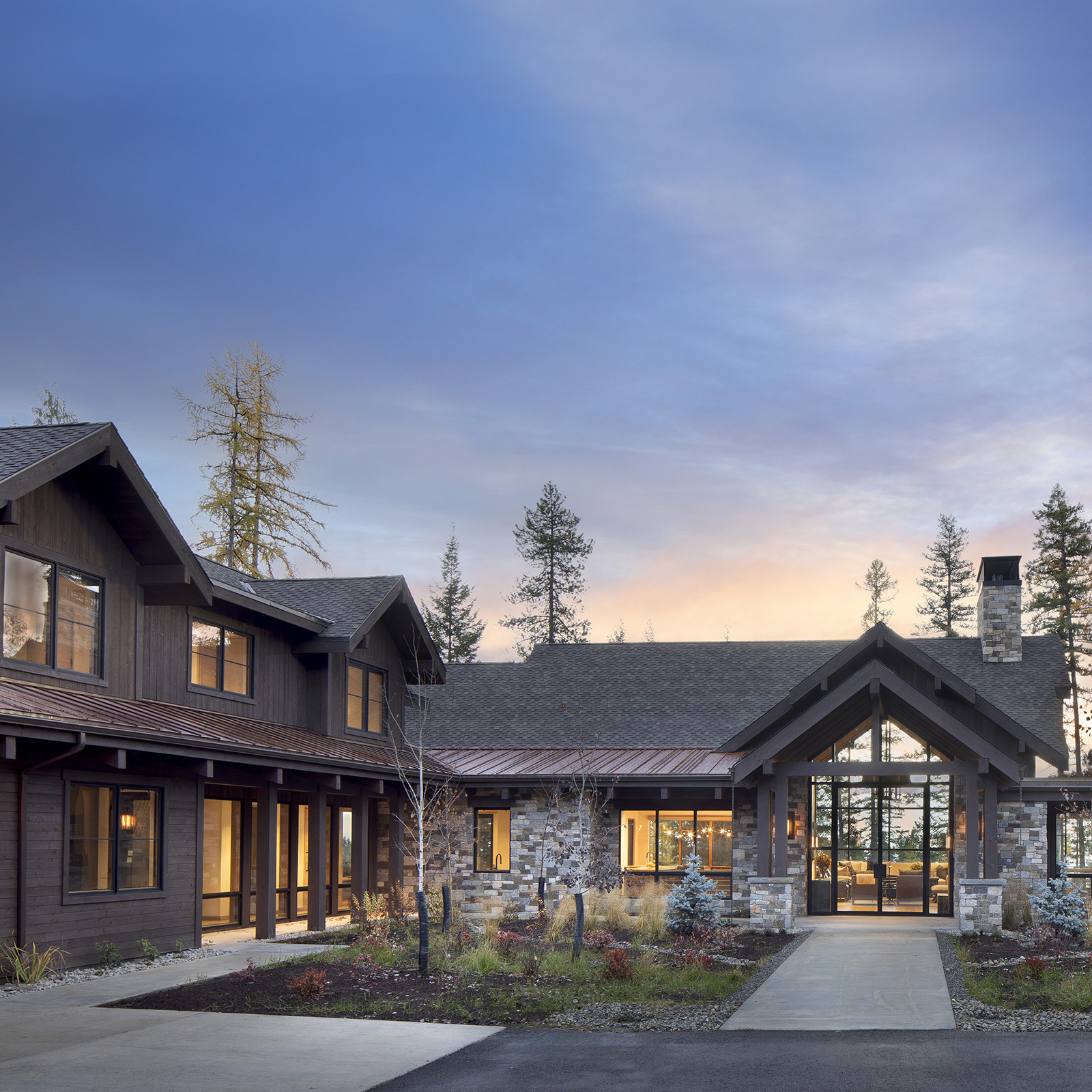
Nestled in the dramatic terrain outside Glacier National Park, where jagged peaks cut into big sky horizons and clear mountain lakes reflect a luminous blue, Montana is experiencing a design renaissance. Homeowners, architects, and builders are constantly embracing an emerging aesthetic: It is a style uniquely suited to the region’s landscape, one that blends the rugged character of the Rockies with contemporary lines, natural materials, and a deep reverence for that view.
More than a visual language, this approach represents an evolving relationship between people and place. It suggests comfort without excess, authenticity without nostalgia, and innovation without disrupting the natural drama that surrounds each home. In Montana’s high country where the landscape is the protagonist this style feels not only inevitable, but perfectly at home.
At the heart of it is a simple philosophy: Let the mountains speak. Homes are planned and shaped to embrace what Montana offers in abundance. Sweeping ridge lines, dense alpine forests, crystalline lakes, and the ever-changing theater of weather rolling in from the Continental Divide. Designers rely on expansive windows, clerestories, and full-height glass walls to frame the environment, creating a seamless connection between indoors and out. Yet unlike the stark minimalism often associated with contemporary architecture, this sensibility softens its edges through natural materials, reclaimed timber, regionally sourced stone, textured metalwork, and earthy palettes inspired by the wilderness. It is not about building against nature, but building with it.
The interplay between warmth and modernity defines the aesthetic. The solidity of hand-hewn beams balances the lightness of steel framing; an organic fireplace anchors a room beneath a ceiling of tongue-and-groove, while clean-lined furniture, organic textures and sculptural lighting bring an elevated, contemporary feel. This fusion avoids the heaviness and kitsch sometimes found in traditional “mountain lodge” design. Instead, the result is organic yet refined, timeless yet forward looking. An almost cocoon-like intimacy that still maintains the brightness and openness homeowners crave, especially during Montana’s long, crisp winter nights.
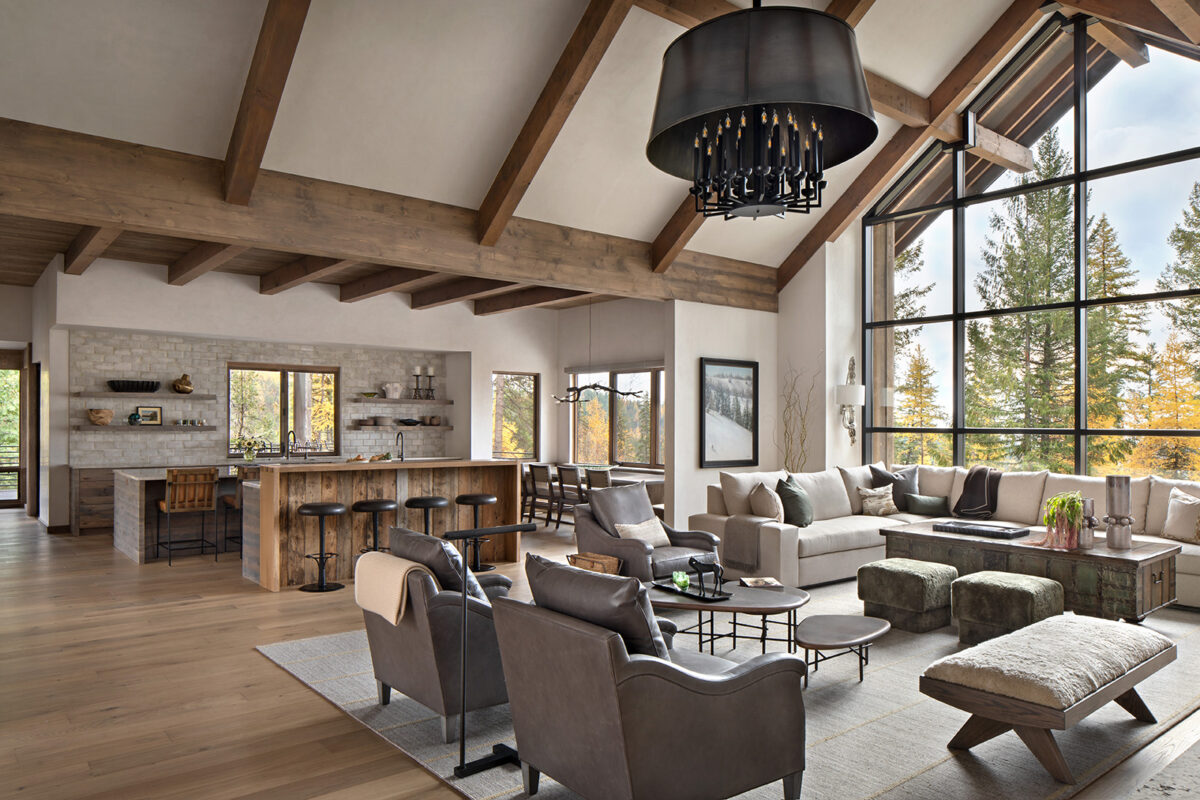

Because the landscape is so commanding, materiality carries particular significance. Homeowners and designers favor elements that age gracefully. Woods that deepen in tone, stone that gathers character, and metal that patinas beautifully in the alpine air. Reclaimed barnwood becomes feature walls and ceilings, rough cut stone grounds exterior and interior forms, structural steel echoes Montana’s mining heritage, and limewashed or plastered walls add soft depth. Flooring in wide-plank oak or fir brings warmth underfoot. The craftsmanship tends to be highly artisanal, often involving local woodworkers, metal smiths and stonemasons whose work ties each residence to the traditions of the region.
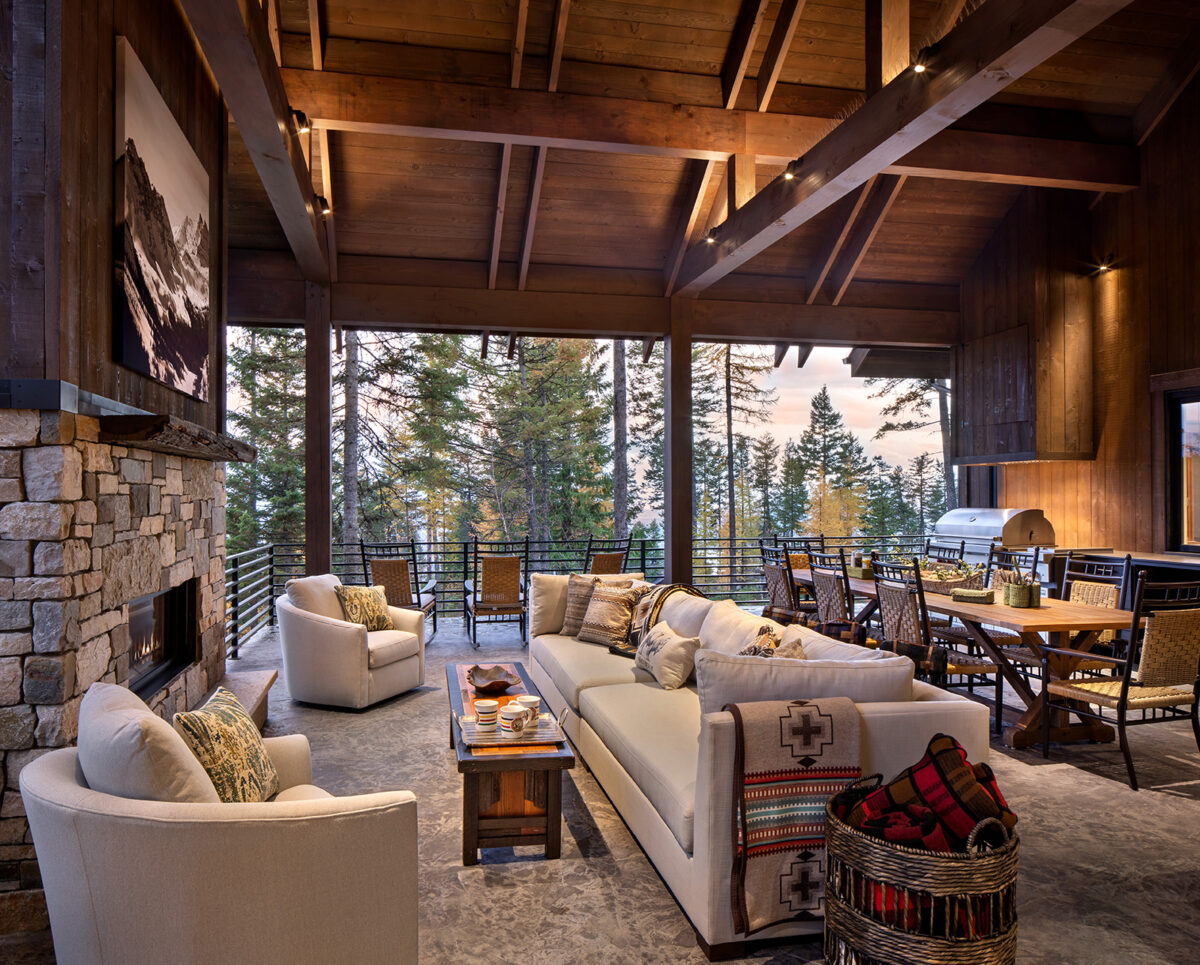
Montana’s lifestyle naturally extends beyond the home, and the design reflects that rhythm. Spaces open seamlessly to the outdoors through large sliding walls that lead to covered decks, outdoor kitchens, and fire features. Three-, even four-season rooms with retractable glass make stargazing possible even on cold nights. Mudrooms become gear hubs for skiing, fishing, hiking, and boating. Outdoor showers take advantage of forested privacy. With elk, moose, and the occasional bear never far from view, the home becomes a protected perch from which to observe the rhythms of the natural world.

A commitment to sustainability underpins much of this movement. In a region so defined by its natural beauty, responsible building is non-negotiable. Many homes incorporate passive solar orientation, high-performance windows, geothermal systems, solar, and super insulated envelopes to meet the energy demands of the alpine climate. Native landscaping reduces irrigation needs, and durable hardscaping supports natural snowmelt absorption. Sustainability isn’t treated as a feature, it is the quiet backbone of the style.
Ultimately, this all succeeds because it feels honest. It respects the history of mountain architecture. Timber frames, stone foundations, steeply pitched roofs are all translated into those traditions for modern living. It suits the active, outdoors oriented culture that thrives around Glacier National Park and the countless lakes, rivers and trails that define the region. It appeals to those who want luxury without pretense, comfort without clutter, and beauty that collaborates rather than competes with the majesty outside every window.
In Montana, the mountains take the lead. This design movement simply gives them the stage they deserve.