Lawsuit Accuses Lincoln County Officials of Rebuffing Public Records Requests Seeking Information on Petition to Loosen Cap on Canadian Mining Waste
Lincoln County commissioners filed a petition last year to undo safeguards protecting Lake Koocanusa from the mining contaminant selenium. Plaintiffs accused local officials of "doing the bidding for a foreign mining company."
By Tristan Scott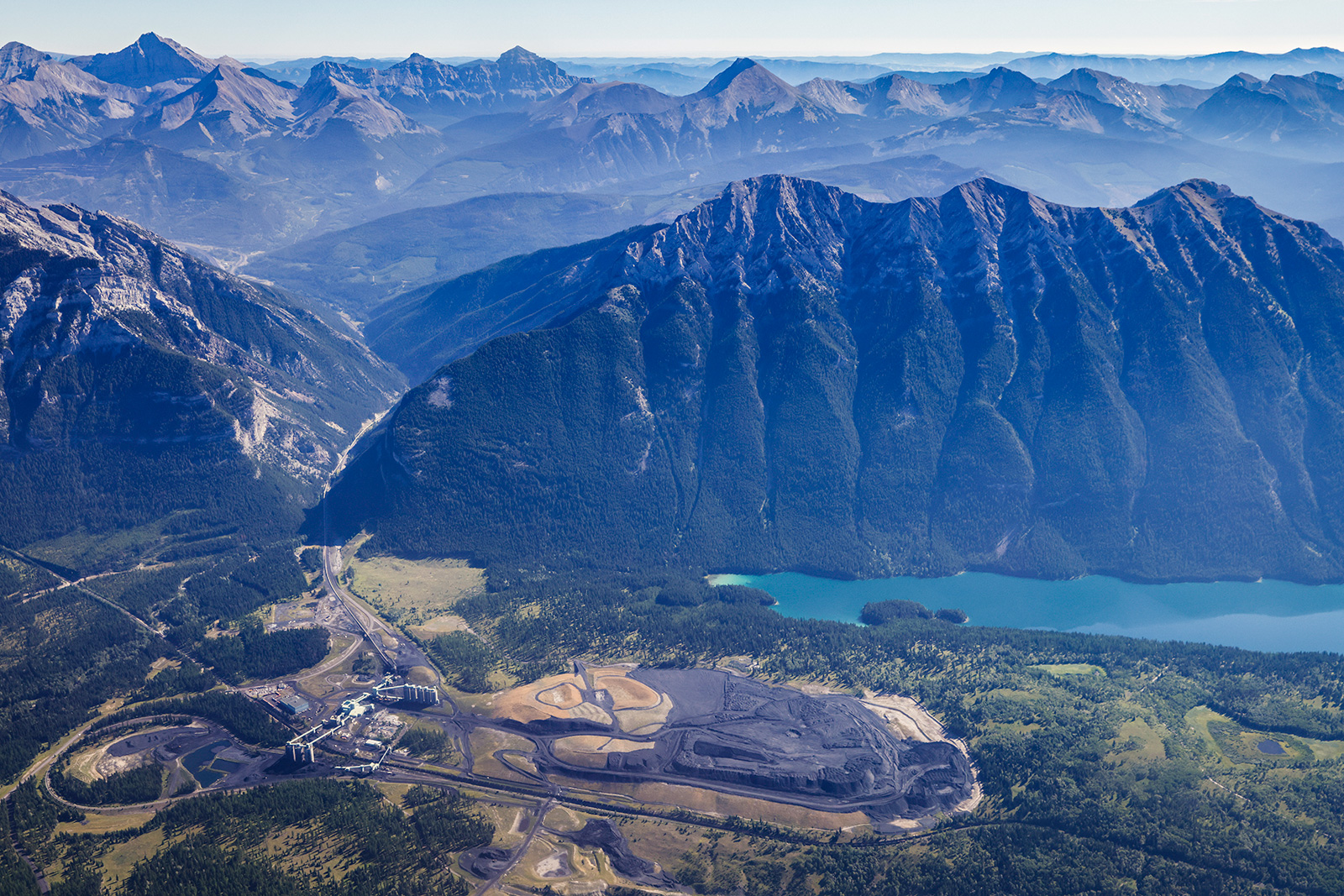
An environmental organization is suing the board of commissioners in Lincoln County for refusing to disclose public information surrounding their petition to weaken water quality standards at the U.S.-Canada border, where pollutants leaching out of piles of coal-mining waste in British Columbia are contaminating the international watershed at Lake Koocanusa.
The Montana Environmental Information Center (MEIC) filed the lawsuit Jan. 23 in Lincoln County District Court alleging the commissioners failed to respond to an information request for documents related to the commissioners’ June 2025 petition to the Montana Department of Environmental Quality (DEQ). The petition sought to roll back existing water quality criteria in favor of more permissive water quality standard for the mining byproduct selenium. Agency officials denied the petition last September, with DEQ citing broad public support for the state’s current site-specific selenium standard at Lake Koocanusa, which was adopted in 2020 as a defense against the Canadian mining toxins flowing from B.C.’s Elk River Valley and across the border into waterways spanning Montana and Idaho.
According to DEQ, the Lake Koocanusa selenium standard is based on years of collaborative, peer-reviewed scientific studies and “the expertise of the most highly regarded selenium scientists in the world.” The site-specific standard is not only justified, DEQ officials wrote in their decision denying the petition, but it is also “necessary to protect aquatic life from the toxic effects of selenium, and protect downstream water quality.”
“A site-specific standard remains appropriate and necessary to protect the designated beneficial uses of Lake Koocanusa and of downstream waters from the toxic effects of selenium,” according to DEQ Director Sonya Nowakowski in her written response last fall denying Lincoln County’s petition. Nowakowski further explained that the decision is supported by publicly available data showing fish egg and ovary tissue concentrations in Lake Koocanusa already exceed the federal standard.
In light of the broad support for Montana’s site-specific water-quality criteria at Lake Koocanusa, environmental groups have been puzzled by Lincoln County’s persistent efforts to reverse course on the protective standard, prompting MEIC to seek additional information from Lincoln County’s commissioners and, when those records requests were not fulfilled, to pursue litigation. According to the complaint, the rulemaking petition was submitted to DEQ on June 2, 2025; however, according to meeting minutes, the Lincoln County Commission did not approve its filing until two days later, basing its decision “on the documents provided.”
“But those documents are not in the minutes,” the lawsuit states.
“We’re in the business of holding our elected officials and corporations accountable,” Derf Johnson, MEIC’s deputy director, said in a statement after filing the new lawsuit. “When our public resources are offered up as sacrifice to a foreign, for-profit corporation with a history of polluting and leaving a mess, we definitely want to know what happened behind the scenes.”
After Lincoln County submitted the petition last year, MEIC requested all public documents and communications between the commissioners and Glencore, a Swiss-headquartered commodities trader doing business as Elk Valley Resources (EVR), which owns five coal mines in the Elk River Valley, upstream from Lake Koocanusa and the Kootenai River watershed. After six months of “radio silence and no indication from Lincoln County that they are going to provide the public documents,” MEIC filed suit to compel the release.
Lincoln County Commissioner Noel Duram previously told the Beacon that local elected leaders submitted the petition to state regulators based on “personal concerns” that the selenium standards could impede future mining and timber operations in local communities in northwest Montana.
According to DEQ, the commissioners’ concerns are unfounded because there is no evidence of naturally occurring selenium in the region, nor in any other nearby geologic features other than beneath the Canadian coal mines north of the border. There are also no public or private entities discharging into Lake Koocanusa with effluent limits that would be subject to a site-specific standard.
Still, Duram said he met with representatives of EVR and DEQ last April in Helena, where EVR gave a presentation to DEQ officials challenging the science that informed the state’s site-specific selenium standard. Although Duram confirmed the participation of EVR at the meeting, he said the commissioners did not submit the petition “in concert with Elk Valley Resources.”
Neither the Lincoln County commissioners, including Duram, Brett Teske and Jim Hammons, nor the attorney representing them in the lawsuit, Murry Warhank, of the Helana law firm Jackson, Murdo & Grant, P.C., responded to multiple requests by the Beacon for interviews about or comments on the lawsuit filed by MEIC.
“We just would like to have a standard that doesn’t restrict Lincoln County from further growth,” Duram told the Beacon in an interview last July. “If we have the opportunity to build something or grow our economic development, I don’t want the selenium levels in the lake to restrict what we can do.”
For Johnson, MEIC’s deputy director, Duram’s explanation “didn’t pass the smell test.”
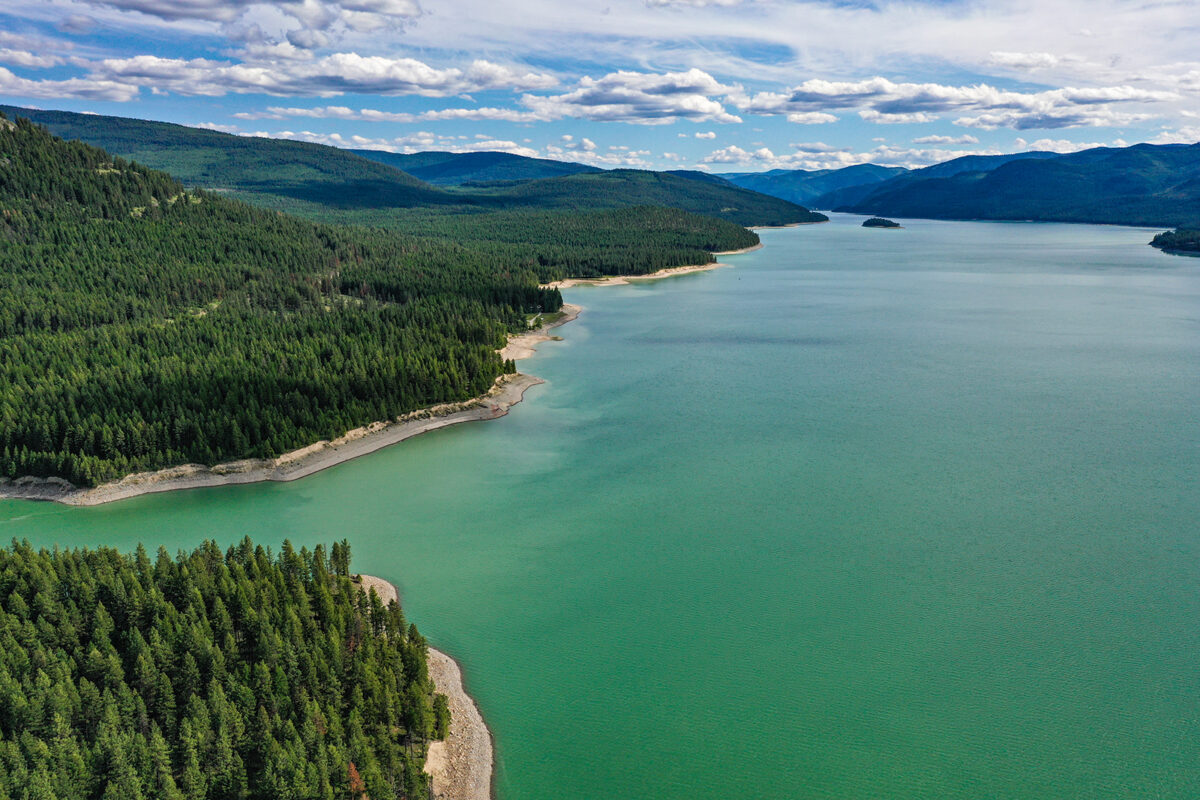
Despite years of research and collaboration by stakeholders and scientists to ensure the standard’s adoption is scientifically justified, elected leaders from Lincoln County have mounted several challenges attempting to overturn the environmental rulemaking surrounding selenium releases from Canadian coal mines. Those efforts have worried supporters of the rule, who say that without a protective value in place at the border, Montana is entirely at the mercy of a Canadian coal-mining corporation. Moreover, the state would be without recourse in the event of a costly environmental remediation.
Johnson said his lawsuit was prompted by the discovery of emails from an attorney representing EVR to DEQ officials in March 2025 to broker a meeting with state regulators, EVR and Lincoln County officials, and to set the meeting’s agenda.
“I think everyone on our side (both EVR and Lincoln County) are excited for this meeting since it will be the first significant step toward a cooperative process in many years,” according to an email from Ryen Godwin, an environmental and natural resource attorney for Schwabe, Williamson & Wyatt who represented EVR and Lincoln County in the discussions. “Attached is a draft Agenda for your review. It contains items that our respective clients want to address in the meeting so we are hoping you will ensure that the appropriate DEQ folks are at the meeting to discuss.”
Johnson said MEIC submitted its records request to determine whether the apparent coordination between EVR and Lincoln County is more extensive.
“It seems to me that Lincoln County is doing the bidding of this foreign mining company to try to change water quality laws, so I would like to know who wrote this petition and how much communication there’s been between EVR and the commissioners,” Johnson said. “And I think the public deserves to know that.”
In an interview with the Beacon, Johnson said any efforts to overturn Montana’s selenium standard represented a step backward in a decades-long process to guard northwest Montana’s waterways against upstream polluters.
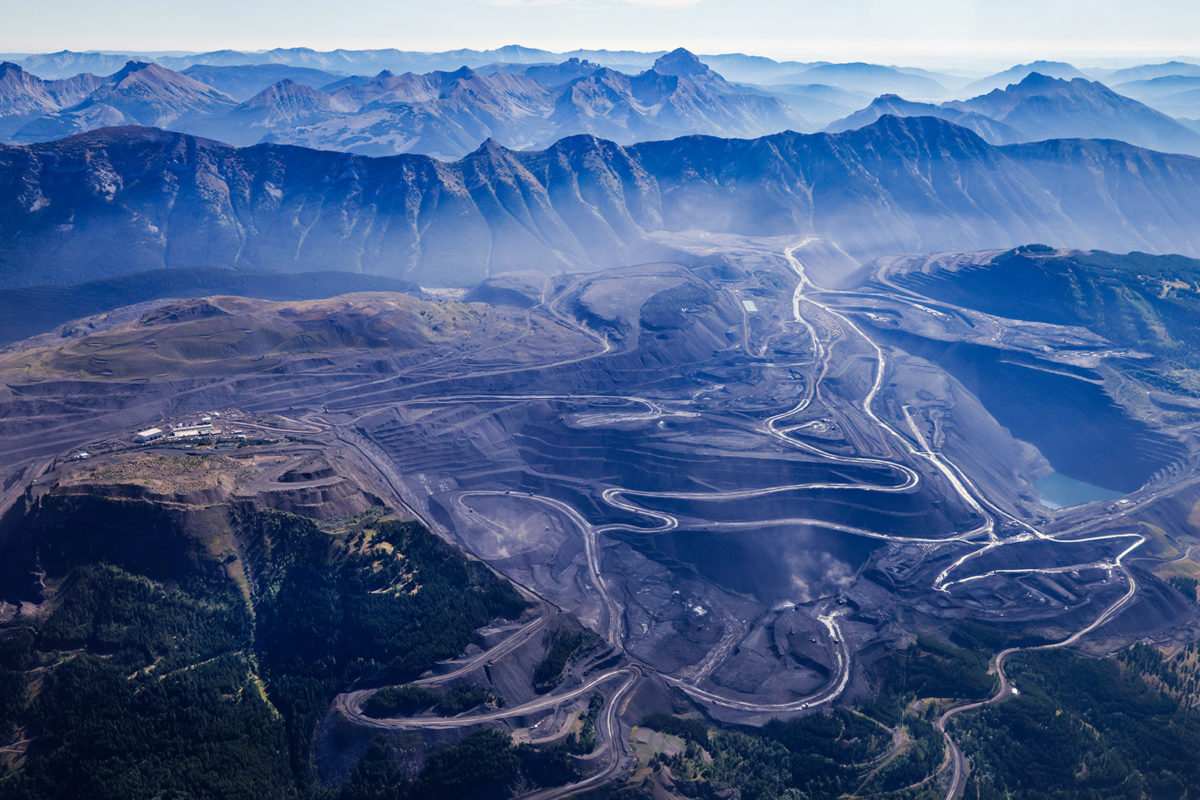
Those efforts began to take regulatory shape in 2016, when the EPA updated its recommended national criteria for selenium, capping it at a value of 1.5 micrograms per liter for lakes and reservoirs and 3.1 micrograms per liter for rivers, while also suggesting that states use site-specific standards wherever appropriate and applicable. In Montana, the DEQ opted to pursue a site-specific standard for Lake Koocanusa and the Kootenai River due to the sensitivity of its fish species and the increasing load of toxic chemicals bearing down on the waterway from piles of waste rock in Canada.
In December 2020, after more than five years of analysis, a multitude of state, federal and tribal agencies on both sides of the border arrived at a protective water quality standard to safeguard fish species in the Koocanusa reservoir as well as the Kootenai River in Montana and Idaho, where selenium continues to be detected at elevated levels in fish tissue and egg ovary samples. The state Board of Environmental Review (BER) approved a site-specific standard in December 2020, setting the new criteria at 0.8 micrograms of selenium per liter on the lake. Following BER approval, the DEQ forwarded the new water quality rule to the U.S. Environmental Protection Agency (EPA) for review. The federal agency approved it on Feb. 25, 2021.
Since the rule’s adoption, the Canadian coal miners have disputed the standard at every turn, including on the grounds that it “is more stringent than the comparable federal guideline for selenium,” according to the mining company’s requests to invalidate it, a line that also appears in the recent petition by Lincoln County.
In July 2024, Teck Resources sold its steelmaking coal business in the Elk Valley to EVR, a wholly-owned Canadian subsidiary of Glencore. According to MEIC’s Johnson, both corporate owners have a demonstrated track record of courting state and local government leaders, including in December 2022, when Teck drafted a letter challenging the EPA’s new water quality standard, which was then sent with BER approval.
DEQ then filed suit against the BER, which is the same governor-appointed board that adopted the standard in the first place. The MEIC joined the DEQ’s lawsuit as an intervenor to defend the water quality standard, while also suing the Montana Department of Justice in a separate lawsuit for refusing to turn over communications with the coal miners.
Those lawsuits have since been consolidated and are pending in Lewis and Clark County District Court, where Judge Kathy Seeley is expected to issue a ruling soon.
Repeated studies have shown the water quality in the transboundary Elk and Kootenai river watershed to be in peril. In November 2023, the U.S. Geological Survey (USGS) published a report revealing that since 1984 selenium and nitrates in the Elk River have increased by 581% and 784%, respectively, signaling unprecedented increases of the pollutants in the watershed.
Selenium is a naturally occurring element in sedimentary rocks and coal and can be toxic to fish at elevated levels, which are exacerbated by mining operations and the accumulation of waste rock, according to the U.S. Environmental Protection Agency (EPA).
“The science and technical expertise that informed this years-long rulemaking process is unassailable,” Johnson said. “It’s clear that selenium is a problem in the transboundary river basin and the standard is designed to protect the beneficial uses of a cherished resources. They’re going to have a heck of a time mustering an argument against that.”