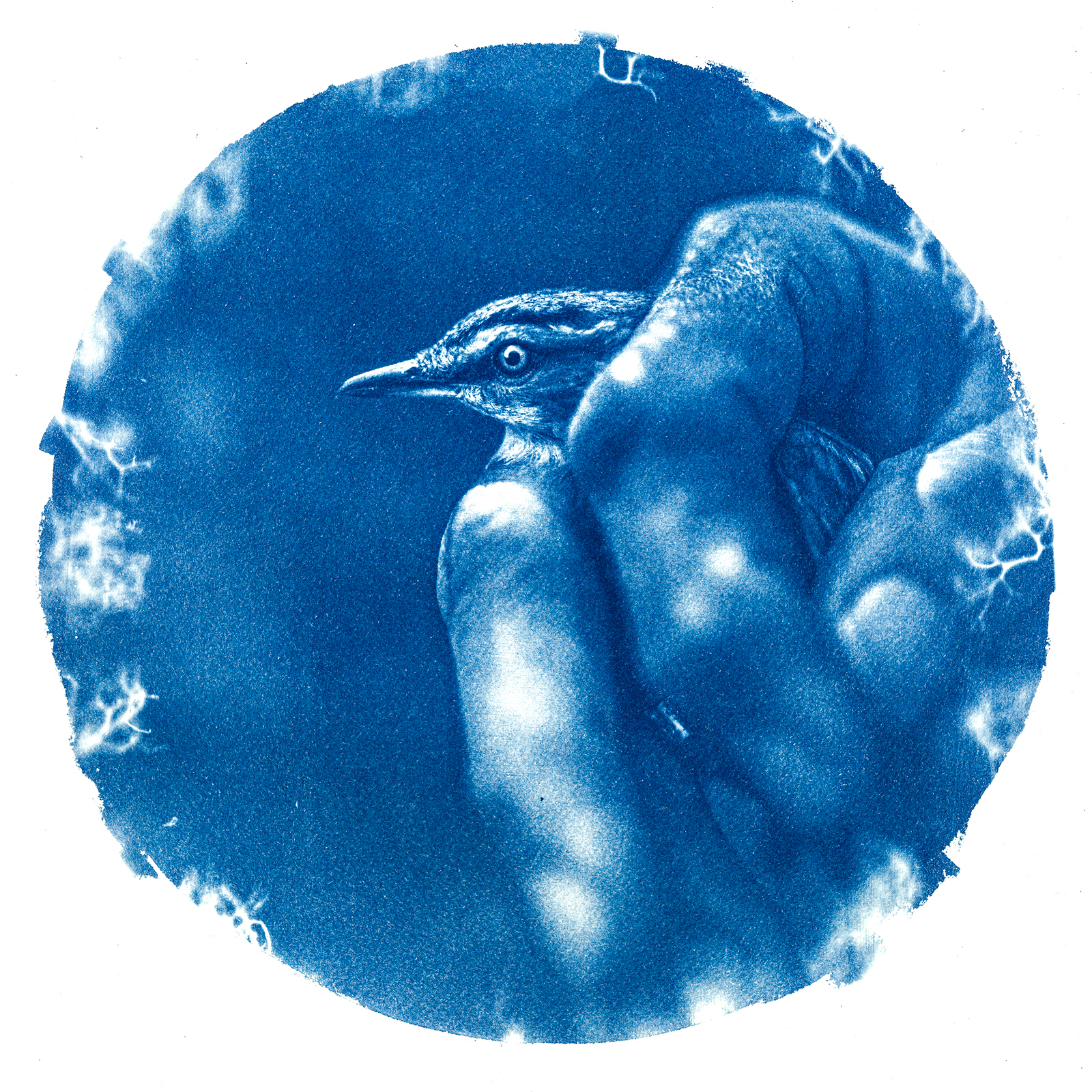
For as long as Daniel Lombardi can remember, a camera was never too far from his hands. At first something to play with while growing up on a farm in Montana, Lombardi’s camera quickly became a way to better understand the world around him.
“Photography and art have just always been the tool I’m using to interface with the world,” Lombardi said. “If I’m encountering any new thing, I’m probably going to try and make sense of it through art, whether that’s sketching, painting, photography, or writing, or whatever it is.”
In his early adulthood, Lombardi was fortunate to live with a group of wildlife biologists whose research introduced him to another one of his passions — something that is now the centerpiece of his first-ever photography show.
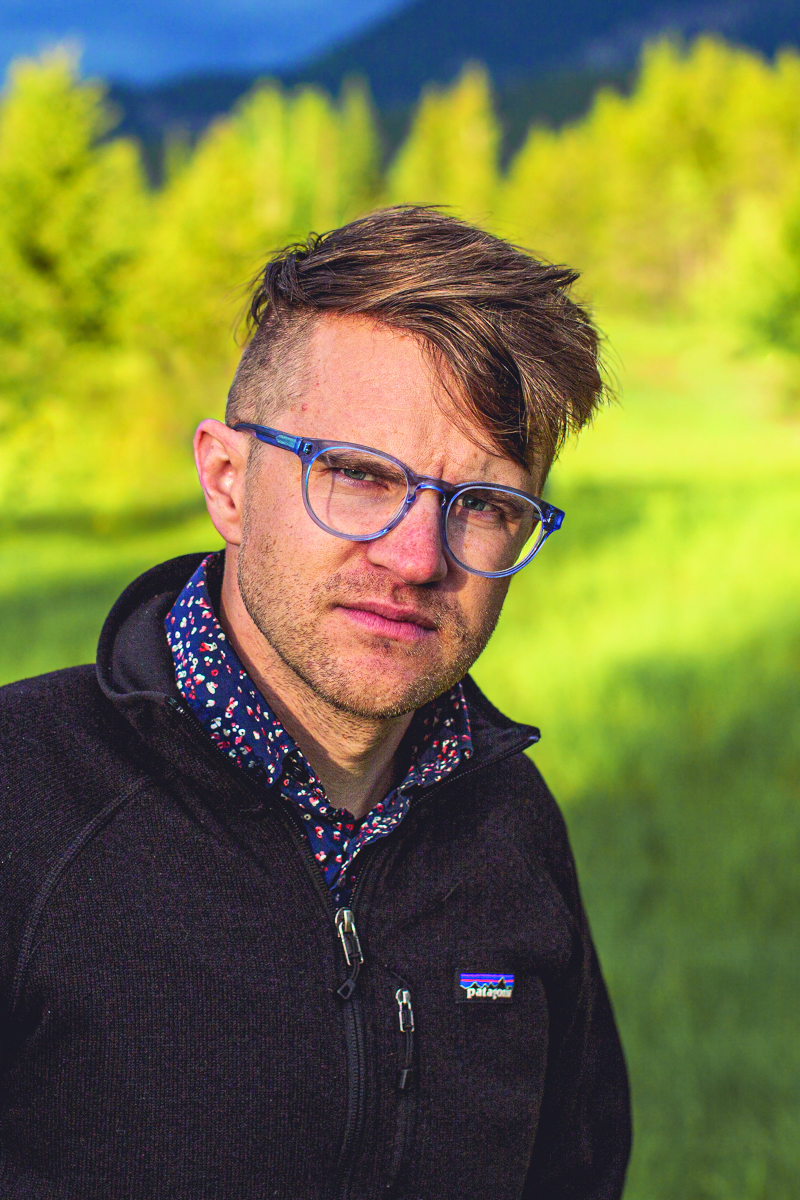
“They got me interested in the birds around me and it just slowly became a greater and greater interest of mine over the years,” Lombardi said. “Then in 2021, I started volunteering with bird banding stations.”
Bird banding is a tool used by researchers and conservationists that consists of the systematic capturing, measuring and marking of wild birds to monitor aspects of their life cycles to protect populations across the world.
“Individual birds of the same species are hard to tell apart. I can’t necessarily tell one robin from another robin,” Lombardi said. “It’s kinda like looking for the difference between two blue Subaru Outbacks at the trailhead parking lot.
“When you get to the trailhead and there’s a row of Subaru Outbacks, it can be tough to tell which one is my car again. But every car has a license plate so you can’t get really confused in the end, and bird banding is kind of like giving individual birds a license plate for identification.”
To feed his love for community science efforts, Lombardi volunteers his photography skills as part of the Institute for Bird Populations’ program, MAPS, which stands for Monitoring Avian Productivity and Survivorship. The program is a collaborative effort across North America to assist the conservation of birds and their habitats through standardized bird monitoring.
MAPS bird banders collect data to estimate key demographic parameters known as vital rates, such as productivity, recruitment, and survival of individual bird species, according to the institute. This information helps scientists understand which life-stages may be most important in driving population change.
“Bird banding is a really special kind of science. I think for a lot of people who do it, it is almost spiritual,” Lombardi said. “It’s very special to a lot of the people who practice this kind of research and science.”
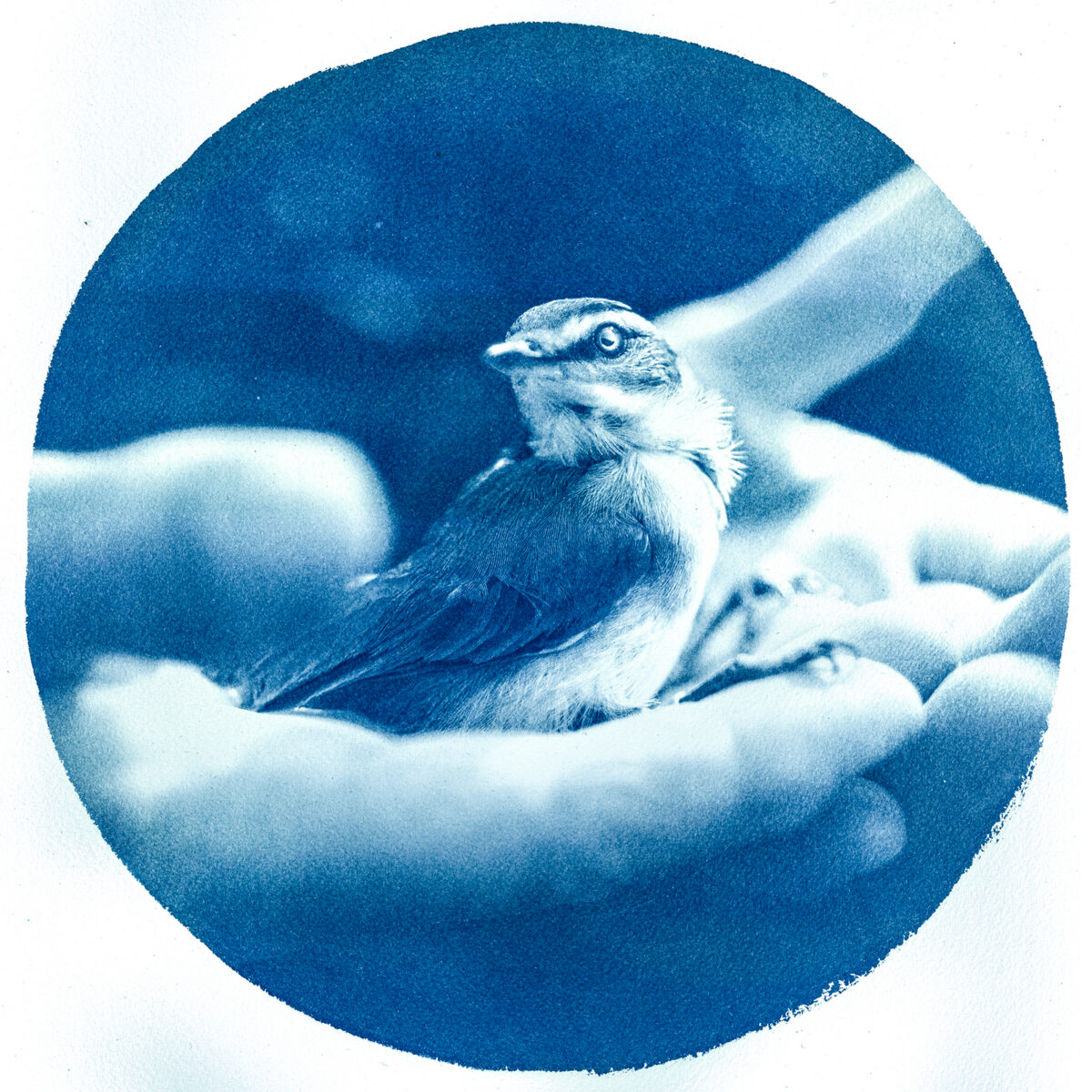
Starting in 2021, Lombardi began taking pictures of the birds being banded through the MAPS program, capturing images of birds from Northwest Montana and Southern Alberta.
Extremely detailed images of the birds were especially critical in the banding process to aid in researcher’s efforts to chronicle an important data point: the approximate age of each bird.
“It’s a pretty difficult thing to do and it’s a specialized skill,” Lombardi said. “One of the reasons it made sense for me to bring a camera to bird banding is that taking pictures of birds up close with open wings is helpful … for aging and examining the molt patterns in the birds’ feathers so that you can more exactly age them. Then, when you have those photos, you can just include that in the data set.”
Years after taking the photos for the program, Lombardi took a second look at the images — this time through a lens with a focus far beyond scientific.
“As I was looking back at all the photos, I realized how … I hesitate to use the word ‘spiritual,’ but it looks spiritual. As people are holding the birds, often right when they’re about to release them, it looked like a kind of religious gesture; like praying hands or something,” Lombardi said.
“When I printed those using the cyanotype printing process, that religious or spiritual look became even more pronounced, and that really got my mind wandering in sci-fi speculative fiction directions,” he added. “The images stopped looking scientific and started looking like ancient religious text and that’s when the idea for this project kind of came.”
Cyanotype is a 19th century photographic printing process that produces distinctive cyan-blue prints using UV light and was commonly used for botanical prints. The technique involves coating paper or fabric with a mixture of ferric ammonium citrate and potassium ferricyanide, arranging objects or negatives on top, exposing it to sun, then rinsing in water.
“Cyanotype photography had connections to scientific study from the very beginning,” Lombardi said. “So, this is kind of a continuation of that.”
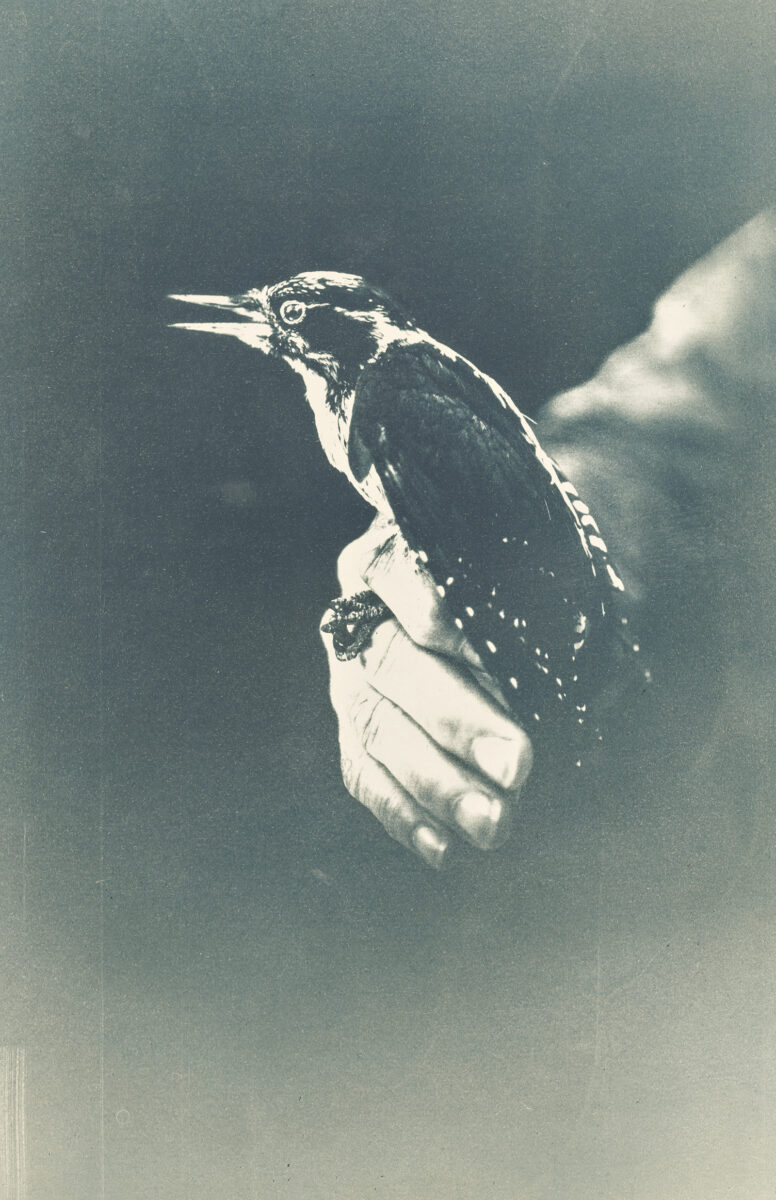
While bird banding is regimented and requires care and caution to ensure the safety of the birds, cyanotype printing is more experimental, Lombardi said, and allows him to relinquish control.
“There are many variables that you don’t understand, so you’ll go to print an image and it just won’t turn out because your water was a little too alkaline or because the paper you used had some sort of bleach in it,” Lombardi said. “Where bird banding requires a lot of strict caution, cyanotype is space where you have a lot of, ‘well, let’s see what happens.’”
Lombardi experimented with countless chemical combinations until he found the right ones to use for the 25 images featured in his show, “Recalling Birds,” which will be featured at Kalispell’s Good Luck Gallery this spring.
“Usually, it would take one or two tries or two or three tries before the image came out, but besides that, there were dozens and dozens of test prints for several years to get the process right,” Lombardi said.
“Recalling Birds,” which will run from March 6 to April 17, is about more than artistically capturing a moment in a scientific process, however.
At the heart of the show is an effort to raise awareness of the reduction of birds in North America, as nearly 3 billion birds have been lost since 1970, Lombardi said. All print sales from the show will benefit the Flathead Audubon Society.
Adding a science-fiction literary element to the show, Lombardi wrote three vignettes to encourage the viewer of the photographs to “stretch their imagination” and think about long-term possibilities in the future where there are no birds, he said.
“I’m excited for the show because it’s a chance to promote the value of science and expertise in studying the natural world, and share these animals that I find really important and I think a lot of other people do as well,” Lombardi said. “It’s also to raise awareness and remind people that the health of the natural world, including birds, is not guaranteed.”
The “Recalling Birds” exhibition will run at Kalispell’s Good Luck Gallery, 127 Main St., from March 6 through April 17. All print sales from the show will benefit the Flathead Audubon Society. A reception to celebrate the opening of “Recalling Birds” will take place from 5:30 p.m. to 7:30 p.m. on Friday, March 6. The opening is free and open to the public.