Court Ruling Delivers Win for Columbia River Salmon, but Raises Public Power Concerns for Western Montana Electric Utilities
A federal court ordered dam operators along the Columbia and Snake rivers must lower reservoir levels and increase spill to aid endangered salmon and steelhead populations, an adjustment that Flathead Electric officials say has "direct affordability implications" to members
By Tristan Scott
To help reverse the decline of salmon and steelhead populations in the Columbia River system, a federal judge in Oregon has ordered regional dam operators release more water for extended periods of time — a move that could assist migratory fish even if it means generating less hydropower for regional utilities, including those in northwest Montana.
The consequence of a long-running legal battle that began three decades ago, the preliminary injunction delivers a win for a coalition of conservation groups, tribes and the states of Washington and Oregon. Meanwhile, energy interests throughout the system warned the decision would strain hydropower operations at eight dams on the lower Columbia River and its longest tributary, the Snake River, decreasing power production and driving up electricity bills for consumers across the region.
The 47-page opinion and order was issued Feb. 25 by U.S. District Judge Michael Simon, of Oregon, and directs expanded spill and operational adjustments that are expected to reduced hydropower generation from the Federal Columbia River Power System beginning this year. Although the lawsuit was stayed in 2023 by the Biden-era Resilient Columbia Basin Agreement, which pledged $1 billion in investments to protect the fish species, the Trump administration’s abrupt cancellation of the agreement last June, through an executive order titled “Stopping Radical Environmentalism to Generate Power for the Columbia River Basin,” revived the dispute.
In the introduction to his opinion, Simon reflects on the protracted legal battle and its failure to resolve the differences between environmental advocacy groups and energy interests that violate the Endangered Species Act.
“For decades, the battle for the life of threatened and endangered salmon and steelhead has not been fought at the end of a hook and line, nor in the woven threads of a fishing net, nor even based on the appetites of sea lions, avian predators, or killer whales,” according to Simon’s opinion. “Instead, the greatest battle has been waged in the courts.”
“And yet the litigation continues in much the same way as it has for 30 years,” the opinion continues before granting many of the operational changes sought by plaintiffs in the lawsuit, including requiring dam operators to increase spill levels at the height of summer, when the demand for water is high, and expanding fall and winter spill to “provide immediate benefit to the listed species.”
In western Montana, where electric utilities purchase a significant portion of their wholesale power from the Bonneville Power Administration (BPA), a defendant in the case, the order could lead to higher costs for ratepayers. According to BPA’s projections, the operational measures required by the court order would result in a 17% rate increase for its power customers, in large part because the increase in water volume spills past the dams to improve fish survival instead of generating electricity by spinning through their turbines.
While those operational changes could assist salmon in their migratory journey to the ocean, community-owned electric utilities across six Pacific Northwest states raised immediate concerns, saying the changes limit the ability of dams to generate hydroelectric power that smaller electric utilities, including Flathead Electric Cooperative in Kalispell, rely on.
Mark Johnson, CEO and general manager of FEC, said the decision “has direct affordability implications” for its members in northwest Montana.
“When hydropower output from the federal system is reduced, BPA must replace that lost generation with higher-cost market purchases,” Johnson said in a prepared statement last week. “Those costs ultimately flow through to Montana consumers.”

The Montana Electric Cooperatives’ Association (MECA) also condemned the ruling, and said that further legal proceedings, including an appeal, are likely.
“The ruling directly impacts the supply of affordable and reliable power for Montana’s electric cooperatives served by BPA,” MECA CEO Mark Lambrecht said in a statement. “Requiring dams on the Columbia River system to reduce power generation and increase spill for fish recovery will make BPA rely more heavily on higher-cost market purchases, costs which will be passed on to consumers.”
Montana Gov. Greg Gianforte issued a statement criticizing the ruling, which he said jeopardizes Montanans’ access to “reliable, affordable hydropower from the Columbia River Power System.”
“[The] ruling from the U.S. District Court in Oregon unfortunately limits our ability to fulfill the energy demands of our state, especially at times when we experience severe cold weather events,” Gianforte said in the statement.
But Simon, an appointee of former President Barack Obama, noted that the abundance of salmon and steelhead has “dwindled to near extinction levels” and wrote that he was “unpersuaded by arguments that spill will create various catastrophic results.”
Instead, Simon found that the wellbeing of the imperiled fish species outweighed the economic and social interests raised by federal defendants, including the reliability of power and access to water.
“Defendants have raised these concerns each time spill is litigated without them coming to fruition,” according to the order. “The majority of the spill has been implemented over the years without such negative repercussions, and the Court does not anticipate such calamities will ensue from the current spill order.”
Simon also accused the defendants of attempts to “manipulate variables and engage in sleight of hand conduct to avoid making hard decisions and face the consequences of its actions.”
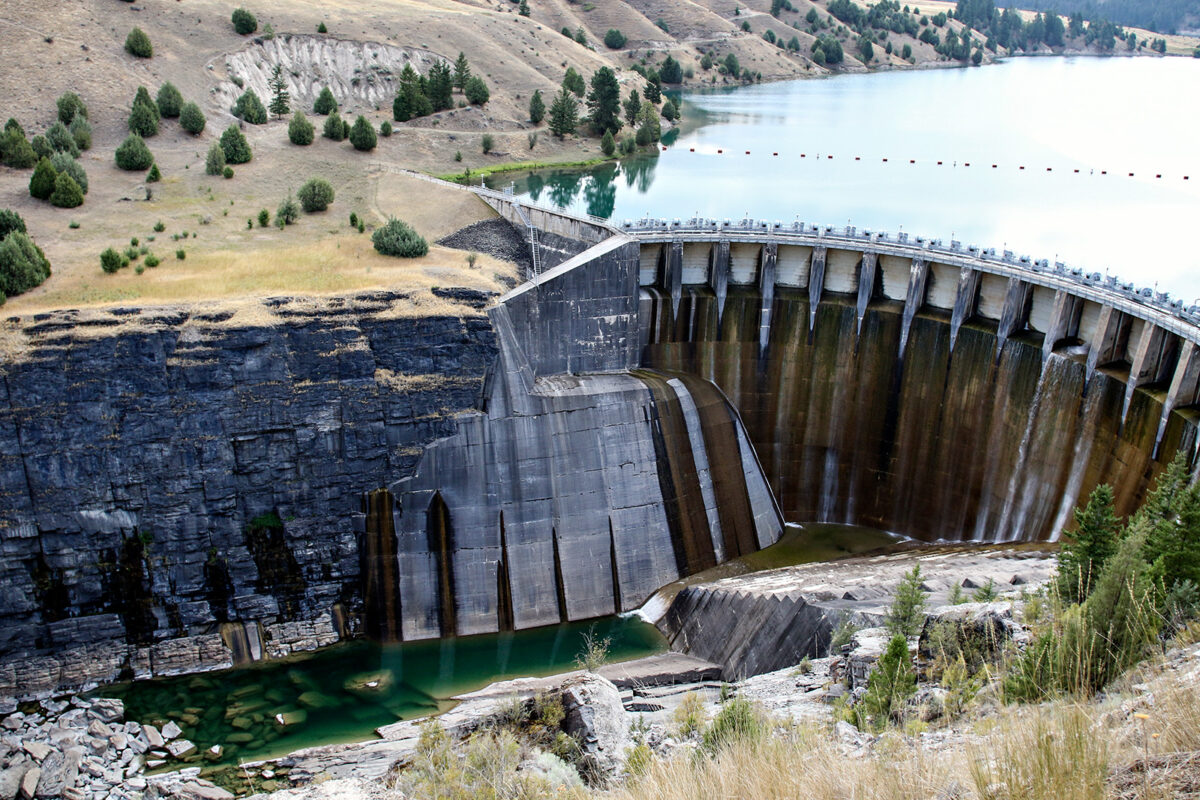
Brian Lipscomb, the CEO of Energy Keepers, Inc., the tribally owned entity that oversees hydroelectric operations at Flathead Lake’s Séliš Ksanka Ql’ispé (SKQ) Dam, said that while dam operators in Montana are not directly implicated in the order, “when the hydro-supply gets stretched, it stresses the entire system.”
“And the judge’s order increases the likelihood of stressing the system,” Lipscomb said.
For example, BPA, in coordination with the U.S. Army Corps of Engineers, has increased its spill on the Lower Snake River and on the main stem of the Columbia River during the fish passage season, and reduced the spill volume in August and September when there’s less water in the system.
“This order means they have to keep spilling at that level even after the water supply has dwindled and there is increased demand,” Lipscomb said. As BPA’s ability to deliver electricity to its customers is curtailed, it forces them to buy power off the marketplace to make up the difference, pushing the additional costs onto ratepayers.
Although the order doesn’t directly affect operations at Libby Dam or Hungry Horse Dam, which account for 40% of the storage capacity in the Columbia River system, it could have other downstream consequences.
“So all of that is going to have implications throughout the system, it is going to stress the system, and the cost of that is going to come directly to the ratepayers,” Lipscomb said.
Plaintiffs in the lawsuit pushed back on the notion that it would drive up energy costs, and expressed little sympathy for energy interests, accusing them of lobbying the Trump administration to roll back the Resilient Columbia Basin Agreement.
“Because of their actions, [this] ruling is necessary to protect fish and fishing in the Columbia River — and it will not disrupt energy production or reliability in the Northwest,” said Miles Johnson, legal director for Columbia Riverkeeper, a plaintiff in the lawsuit.
“These are the immediate and decisive actions we need to help prevent salmon and steelhead extinction,” added Nick Kunath, conservation director at Idaho Rivers United, another plaintiff in the lawsuit. “The court recognizes that we must listen the advice that fisheries managers and scientists have been sharing for decades before it’s too late.”