Flathead Free-heelers Rejoice in Telemark Ski Renaissance
Industry professionals and local tele-vangelists will converge March 28-29 at Blacktail Mountain Ski Area for the second-annual TeleFestivus, which celebrates the region's history — and its future — as a breeding ground for top tele skiers
By Tristan Scott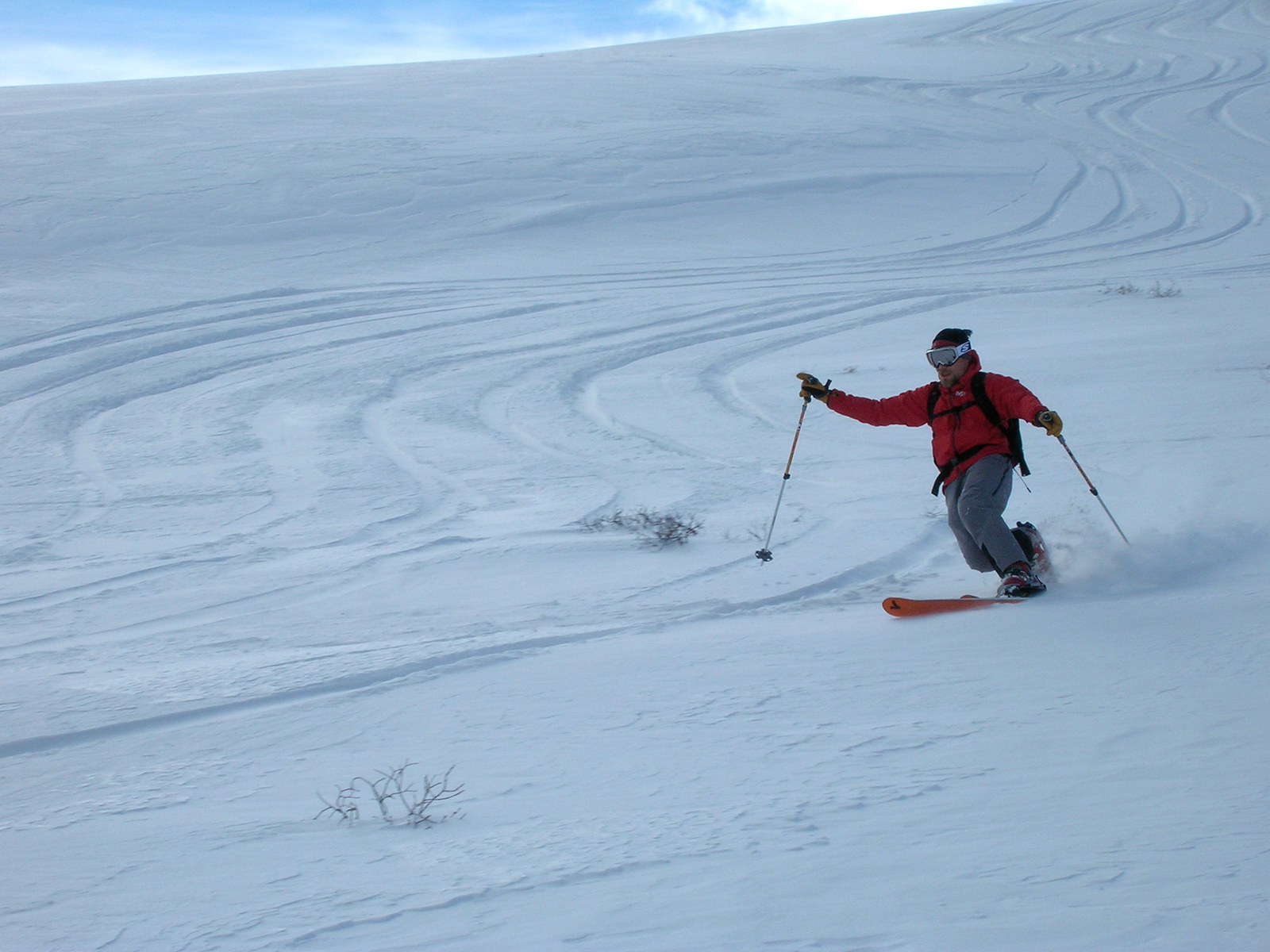
With St. Patrick’s Day, spring break and the opening rounds of the NCAA college basketball tournament coinciding in close succession, the month of March serves up one excuse after another to engage in random revelry and raucous behavior. But as the Irish among us tippled green beer and the spring breakers filled out their brackets on their way to visit the blue lagoon, a scrappy subset of skiers blinked off its collective hangover after observing World Telemark Day on March 7 and wondered: What’s next?
We’re glad they asked.
For those who celebrate, as well as for those who didn’t get the memo, there’s another opportunity this month to toast the fringe sport of telemark skiing. So, free your heel and free up your schedules for the weekend of March 28-29, when industry professionals and local tele-vangelists will converge at Blacktail Mountain Ski Area for the second-annual TeleFestivus, a salute to the region’s history, and its future, as a breeding ground for top tele skiers.
Even if the storied local culture of telemark skiing may not yet figure prominently into the golden triangle of March mayhem, the fringe sport that alpine skiers love to deride is making an undisputed comeback. And in the Flathead Valley, the tele-renaissance (tele-ssaince?) is already well underway.
“For decades, telemark skiing was a fixture of the Flathead Valley’s ski culture,” said Jandy Cox, owner of Rocky Mountain Outfitter in downtown Kalispell, an independent gear shop that for 50 years has been keeping its finger on the pulse of the ski industry, trafficking in telemark gear even when the sport’s vital signs appeared to be flatlining.
“I mean, 25 years ago we were home to the U.S. Telemark Team,” Cox said, referring to a period between 2000 and 2007 when Whitefish and Big Mountain were the focal point of telemark racing in the U.S., with locals Neil Persons, Glenn Gustafson and Reid Sabin racing for the team. “We sold telemark equipment, repaired telemark equipment, talked a lot of shop about telemark equipment. But it’s also kind of always been the red-headed step child of the retail wall. There hadn’t been a lot of newcomers to the sport. Until recently.”
What’s changed recently, you ask? First, for the unenlightened, let’s clear up some confusion about what telemark is and isn’t.
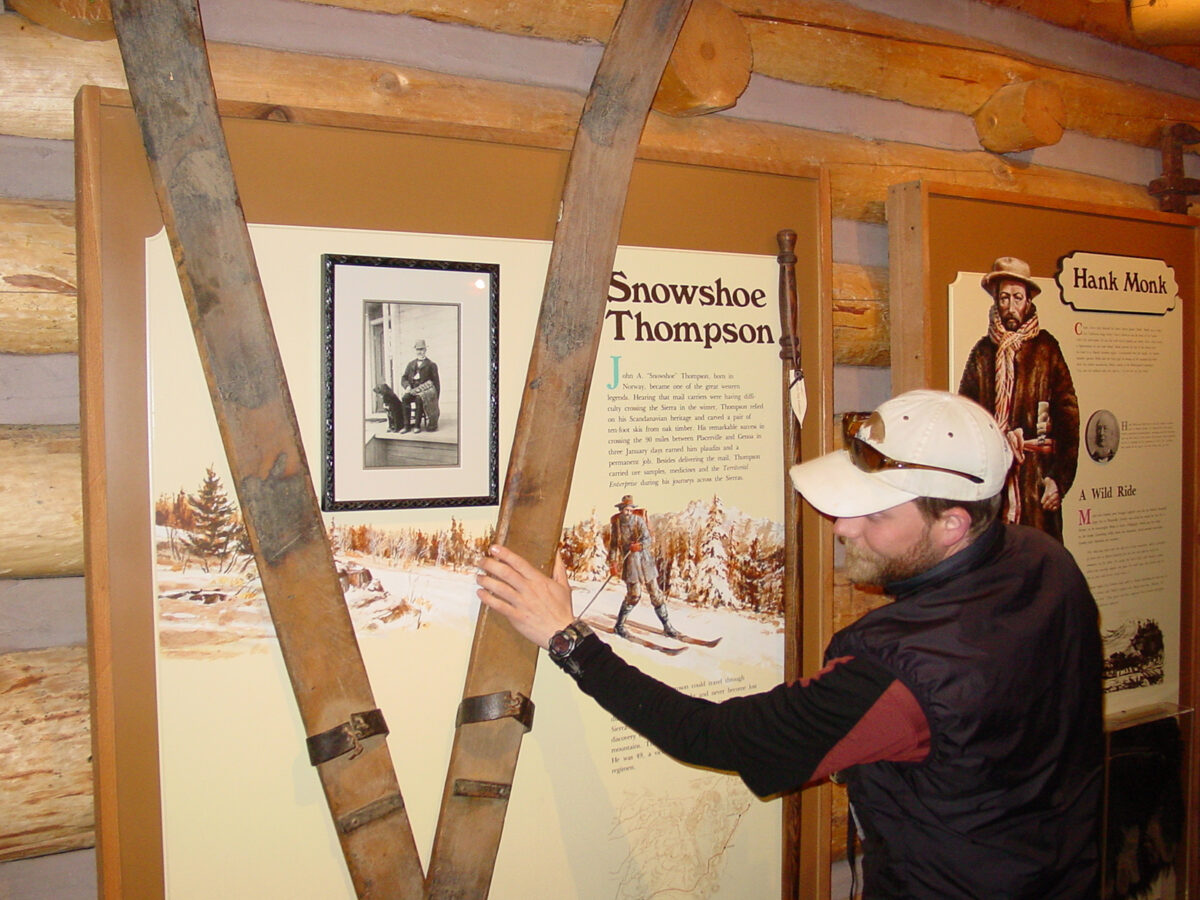
Telemark skiing is a versatile discipline with a rich history (think John “Snowshoe” Thompson coming to America from the Telemark region of Norway in the mid-19th century and traveling on 10-foot long wooden skis to deliver mail across the Sierra Nevada mountain range). Combining elements of alpine performance and Nordic agility, telemark skiing employs a free-heel technique and a staggered stance to execute turns; as the downhill ski lunges forward and the uphill ski thrusts back, the skier’s knee drops and their heel lifts to transition between turns, creating a cursive “S” script down the mountain.
Over time, telemark technology evolved from flimsy leather duckbill boots and three-pin bindings to the development of New Telemark Normal (NTN) systems, which improved power transfer and edge control. Telemark skiing also provided the early impetus for backcountry skiing and remained at the sport’s leading edge until the advent of ultra-light alpine-touring (AT) gear, which all but rendered telemark equipment obsolete and halted industry innovation in its tracks.
“There was a time when you couldn’t give away an old pair of tele skis with cable bindings,” Cox said. “Now people are just clamoring for the new telemark products.”
For the past two decades, telemark ski gear has continued to evolve incrementally, even if its innovations haven’t always been well-received by the telemark community. Because telemark skiers account for such a minute share of the winter sports industry, companies have often paid them short shrift. But a few dedicated gear manufacturers — Voile, 22 Designs, Scarpa, Meidjo — have remained at the center of the telemark universe, relying on members of the marginalized community for research and development.

Ski it. Break it. Fix it. Repeat.
“There was no R and D in telemark ski gear. We were the R and D,” said Michael Jamison, a longtime Whitefish telemarker and habitué of the weekly Tele-Tuesday posse that assembles on Whitefish Mountain Resort’s Big Mountain, which, along with a small roster of western ski resorts, has remained a bastion for telemark skiing, preserving its arcane history in amber even as larger ski areas abandoned it for dead.
“We’d go out, blow up our gear and then figure out how to fix it,” Jamison said. “That’s how it evolved. That, and the fact that a couple of the local shops, RMO and Runner Up, kept replenishing their inventory of tele gear.”
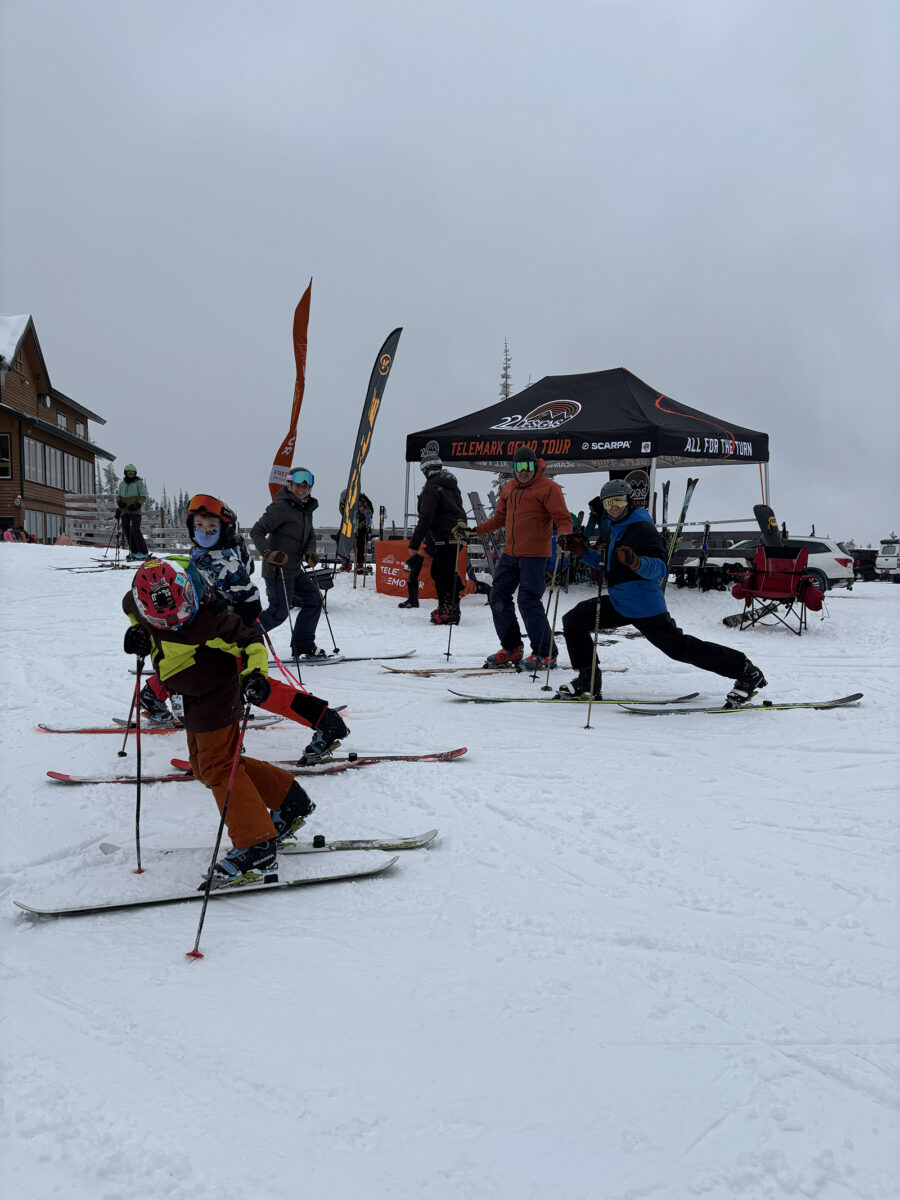
The low-angle trajectory of the tele-evolution steepened last year, when the team from 22 Designs attended the inaugural TeleFestivus at Blacktail Mountain Ski Area in Lakeside and brought a van load of new telemark gear for festival-goers to demo. Based in Driggs, Idaho, 22 Designs has been pioneering new innovations in lightweight telemark binding technology. Meanwhile, the Italian boot maker Scarpa had just released its first new telemark boot in 16 years, unveiling early prototypes of its TX Pro — a lightweight, low-volume, plush touring boot — and introducing the line to significant fanfare in early 2025. At the inaugural edition of the TeleFestivus last March, Cox brought samples of the Scarpa boots for skiers to demo and pre-order, but not to purchase, so scarce was the new boots’ supply.
“Last year was the first year they were available, and we hosted this festival but we were completely sold out of the product,” Cox said. “Now it’s become our best-selling boot. You know, because it was Scarpa’s first tele boot in over a decade, people were really hungry for it. So a lot of customers pre-purchased all this gear last spring, and now 22 Designs has four tele bindings on the market, and all of a sudden this neglected slice of the industry is seeing a dramatic improvement in boot-and-binding technology and performance.”
“It’s kind of a perfect storm,” he added.

The industry trends are also providing an on-ramp for a younger segment of skiers whose biggest barrier of entry to telemark, aside from its obscurity, has been the dearth of available gear.
“Every tele skier in the world has a basement full of tele gear that gets handed down and passed around and helps seed the next generation of tele skier,” Jamison said, adding that his basement full of tele gear includes a setup that his daughter learned to use when she was 7 years old. By the age of 10, she and a group of friends were competing at Whitefish Mountain Resort’s Thursday Night Tele Race League as the “Tele-Kinetics.”
For Jamison, the early years of telemark skiing on Big Mountain were defined by the access the sport afforded to backcountry skiers eager to explore the side-country adjacent to Flower Point and Hellroaring Peak. With the addition of a race league and local ski shops that specialized in telemark equipment, the stars aligned behind the local tele scene and positioned it for growth.
“If you combine the race league and the culture that grew up around it — the friendships, the camaraderie, the community of people that grew up around telemark skiing — and then you add the high level of athleticism and competition that started driving people to actually race, and the fact that we had a kind of side-country, slack-country oasis right off Big Mountain, with folks touring out to Flower Point and Hellroaring and Pirate Ship, you realize that this town and this mountain, they were just built for tele,” Jamison said. “Or tele was built for us.”
Before Whitefish resident Reid Sabin became the two-time World Telemark Champion in 2000 and 2001 and the five-time national champion from 2000 through 2006; before he carried the Olympic torch in the 2002 Winter Games on its way to Salt Lake City; before he helped define Whitefish as an incubator for world-class telemark skiers, he arrived at the University of Montana in Missoula with a beat-up pair of telemark skis he’d learned to ski on as a kid growing up at Crystal Mountain in western Washington.
Fortunately, the local Missoula ski areas at Marshall Mountain and Snowbowl had already nurtured a robust telemark skiing scene, with hundreds of free-heelers turning out each week to ski, race and guzzle beer. Sabin felt right at home.
“I don’t think I even knew what the equipment was or that it had a name,” Sabin said. “It’s just what I grew up skiing on as a child. A huge percentage of tele skiers in my era got involved with telemark for the touring aspect. That was the whole deal. The option was either a telemark setup or some super heavy alpine-touring option that didn’t work. Later on, I learned that there was a race league, and then I learned there was a U.S. Telemark Team. But I had no idea about any of that when I first got started. I was just trying to get out and about.”
Sabin insists he doesn’t deserve credit for anointing Whitefish as the back yard of America’s finest telemark racers, but by 1999, that’s exactly what it had become. Three members of the eight-man U.S. tele team lived in Whitefish — Sabin, Neil Persons and Dow Powell — as did Cody Thompson, Whitefish’s lone female World Cup tele team member. In 1999, Big Mountain played host to World Cup racers from around the globe, with skiers from Switzerland, Finland, Norway, Germany, France, Japan, Canada, and other countries joining the best of Whitefish for three days of free-heeling fury.
With signature humility, Sabin attributes Big Mountain’s glory days of telemark skiing to his predecessors, including Powell, who pioneered telemark racing at the Big Mountain in the late 1970s. Most of the racers who cut their turns on Big Mountain grew up on the week-night race league, which served as a de facto starting gate for tomorrow’s World Cup winners. Sabin recalls mentoring a generation of younger telemark skiers on the slopes of Big Mountain two decades ago, but said the ranks of committed telemark skiers has grown thinner through the years.
Recent evidence suggests that trend may be shifting, however. The University of Montana Telemark Skiing Club has begun hosting an annual “tele takeover” at Teton Pass Ski Area. The club also furnishes its new members with rental gear, allowing them to test out their tele prowess before committing to the sport.
As a freshman at UM this year, Lily Madison, who was born in Whitefish but grew up downhill skiing in Bozeman, said the club’s weeknight race league was a perfect option for newcomers to telemark skiing to test their mettle during a winter in which snow was in scarce supply, even if it made for bulletproof conditions between the racing gates.
“It was baptism by fire for sure,” Madison said. Still, it was a fun activity for her and her friends, who competed as the Quad Queens every Thursday, donning costumes that corresponded with the theme of the week.
“There was Canadian Tuxedo night, Wizards and Warlocks,” she said. “The whole culture up there is super fun and it feels really welcoming, especially for someone who had never tele’d before and is definitely one of the slowest racers.”
That’s music to Mike Miller’s ears. The longtime RMO ski technician, and the lead organizer of the upcoming Telefestivus at Blacktail, said indoctrinating the next generation of telemark skiers is as satisfying as it gets for a self-described “old fart.”
“One of the neatest things for me, being a die-hard telemark skier my whole life, is bringing so many new people into the world of telemark and seeing how excited they are about it,” Miller said. “They’re excited to try something new, and they’re excited about the old-school vibe and culture that’s endured in the telemark scene even as we start to see new gear.”
Sabin, who attended the tele-takeover event at Teton Pass last year, said he, too, is heartened by glimmers of growth in the telemark scene.
“It’s awesome to witness the enthusiasm and involvement of the twenty-somethings,” Sabin said. “To be honest, I felt old and a bit out of place. But that, I think, is actually a great sign. The fact that it wasn’t entirely an old crew speaks volumes to new growth and interest in the sport. I’m happy to see the younger generation getting so involved.”
The TeleFestivus takes place March 28-29 at Blacktail Mountain Ski Area in Lakeside, with 22 Designs and Scarpa offering free demos and RMO providing group ski tours. The two-day event also features a raffle fundraiser and film showing from 5 p.m. to 8 p.m. on March 28 at Tamarack Brewing Company in Lakeside to support the nonprofit Friends of the Flathead Avalanche Center. At 6 p.m. on March 28, representatives of 22 Designs will show “Worthless Milk.” Attendance is free of charge.