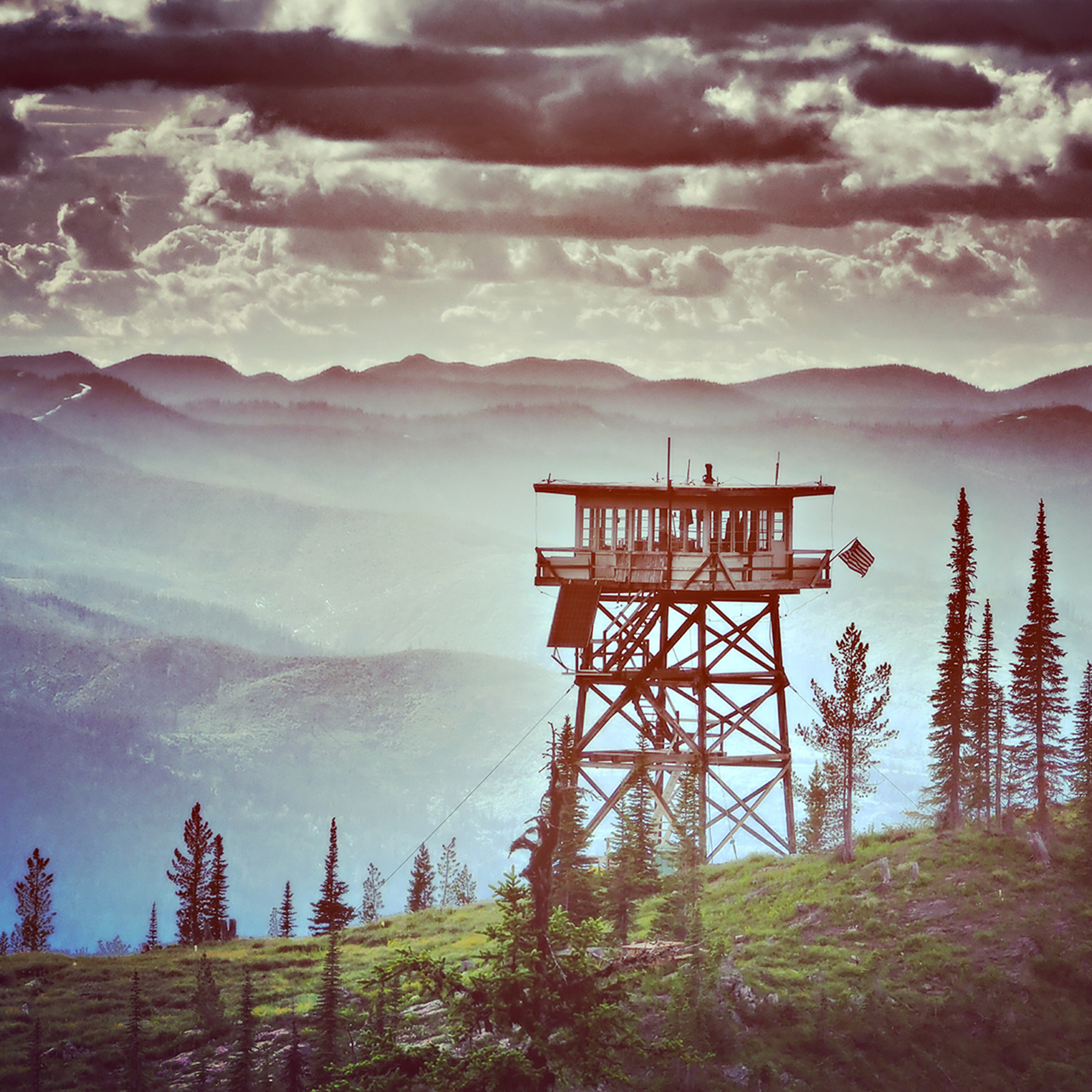
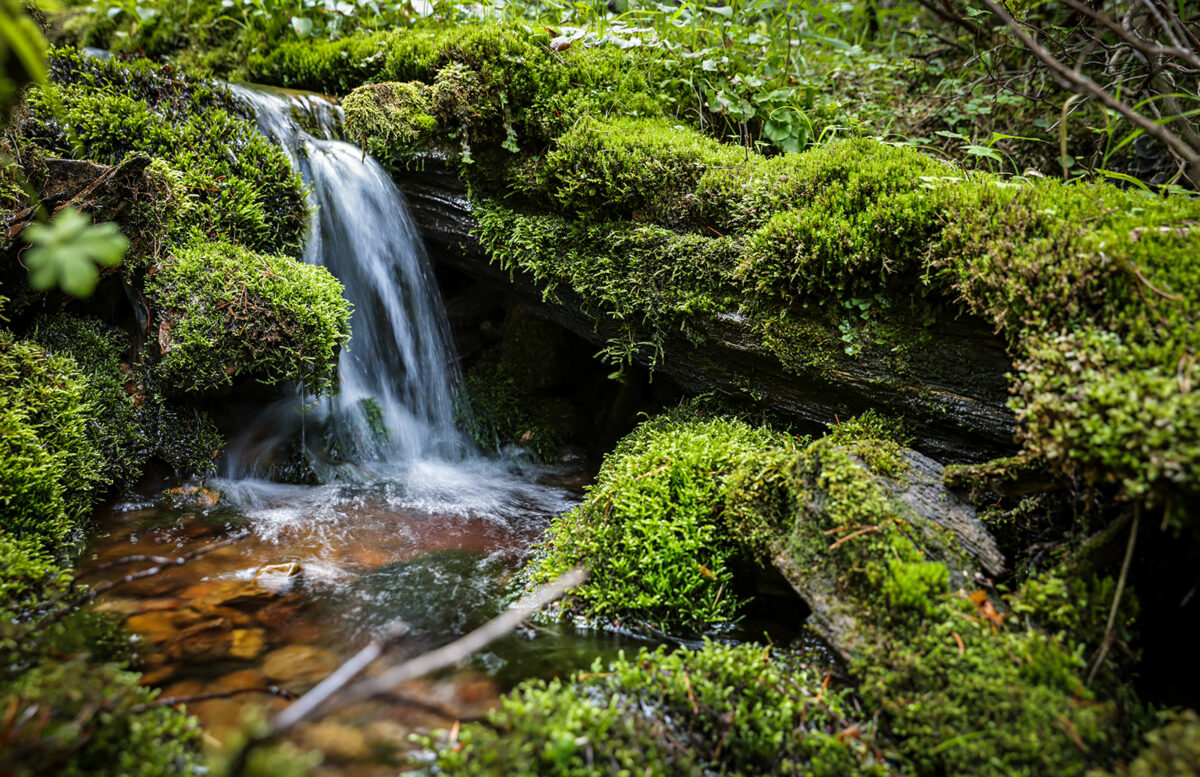
Mid-morning light made soft by wildfire smoke filters through the pine boughs in the Whitefish Range. Leif Haugen, Northwest Montana’s longest serving fire lookout, ventures out for drinking water ahead of the hottest part of the August day. He walks about a mile and a half down to a mossy stream 1,000 vertical feet below his post at Thoma Lookout. He loads a few gallons into a container and slides it into a pack, striding back upslope with a weightlessness attained through 32 years of hiking to work.
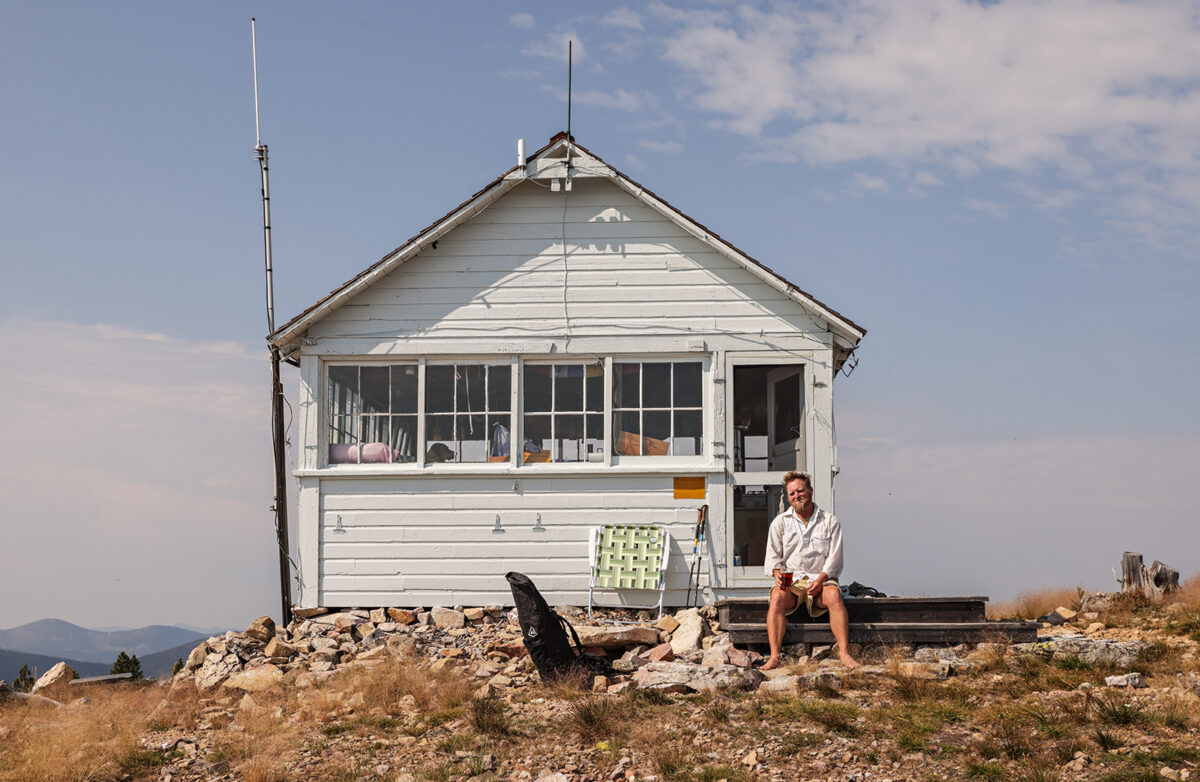
Thoma, like many of its counterparts in forests around the nation, is approaching its 100th birthday. Constructed in 1930, the white, wooden-shingled structure sits on a 7,104-foot-high prominence a few miles shy of the Canadian border. Even through the brownish haze of wildfire season, the surrounding scenery is inspiring, with the peaks of Glacier National Park towering over the North Fork River valley to the west.
Coincidentally, from Thoma, Haugen maintains an excellent third-person view of the stunning territory around one of his old posts, the Numa Ridge Lookout, which is perched above the cerulean waters of Bowman Lake.
“It’s an incredible way to spend a summer,” Haugen said.
Not unlike the air they spend their working hours breathing, fire lookouts are a relatively rarefied breed.
After the Great Fire of 1910 torched more than 3 million acres across Idaho, Montana, Washington and Canada, the fledgling United States Forest Service trained its focus on wildfire suppression. Lookouts served as the foundation of the agency’s fire detection strategy. As many as 8,000 lookout structures once dotted the highlands, a large portion of which were constructed by the Civilian Conservation Corp during the Great Depression. Fewer than 2,000 remain standing today, about 300 of which are manned.
The maturation of aviation after World War II led to dramatic reductions in lookout numbers. Algorithmic eyes have since joined human ones in watching over the landscape. Satellites map the Earth from hundreds of miles overhead. The unblinking lenses of strategically placed remote cameras paired with pattern recognition software can “see” and report potential signs of fire at all hours of the day. Meanwhile, expanding cellphone networks affords any John Q. Citizen on a day hike the opportunity to swiftly report an emerging smoke plume.
The declining trend of fire lookouts is not entirely mono-directional, however. In the 1990s, for example, Haugen said only about five human lookouts reported to Kalispell dispatch; now, about a dozen do.
As of this year, about 53 lookouts still stand across Northwest Montana in the Kootenai and Flathead National Forests, Glacier National Park and adjoining state lands. Of those, 16 are actively staffed with a combination of federal and state employees and volunteers.
Human lookouts retain an invaluable edge in a number of respects and continue to prove their worth, particularly in heavily timbered environments like Northwest Montana. Unlike a day hiker or an AI-powered camera, an experienced lookout becomes so attuned to the terrain, they notice the subtlest change in their neck of the woods.
And as any lookout will point out, fire detection is only part of the job. Lookouts communicate nuanced, real-time, hyper-localized weather information to fire crews. They can act as a radio communication relay when topography limits signal range. They know of obscure roads and trails that a computer system might not.
Some forests in other parts of the country have leaned into AI-based fire detection, such as Arizona’s Coconino National Forest. Presently, the technology is better at spotting smoke or hotspots in more open landscapes, but isn’t quite as successful at finding fire in dense trees. As of today, Haugen said remote cameras aren’t used much for fire in the Flathead National Forest. A human monitoring an incident from the right vantage also adds a layer of safety and peace of mind for firefighting crews.
“They have always said that at the end of the season when I see them, how comforting it is to them on the ground to know that I’m in the neighborhood above them,” Haugen said. “Watching weather, fire behavior, listening to the radio, making sure if there’s something that’s coming up that they need to know about, they will hear about it from me.”
A lookout’s core tools remain virtually unchanged, simple and reliable: an Osborne Fire Finder, binoculars, detailed topographical maps, and a two-way radio. An Osborne Fire Finder is an alidade, or rotating sighting ruler, mounted on a circular map in the center of the lookout structure. It’s used to determine the azimuth of a blaze. If another lookout can see the same blaze, that lookout takes a reading from their position, and the fire’s location is triangulated with a high degree of precision.
In Haugen’s view, emerging technologies can augment the power of the human role, rather than diminish it.
“The funny thing is in my 30 plus years of doing this, technology like cell phones, mapping systems in your phone … were things that people thought might make lookouts go away,” Haugen said. “All it allows me to do is do my job better because it allows me to both talk to and communicate more freely with my supervisors and fire managers. And the ability to text a photograph to a manager has been a huge boon in the past 10 years.”

Manned or not, the direct primary perennial threat to the continued existence of remaining lookout structures remains natural, not technological. The high winds and unrelenting freeze-thaw cycles of mountain tops dooms them to rapid deterioration without regular maintenance.
Volunteer organizations such as the Northwest Montana Lookout Association are dedicated to the preservation of area lookouts, and partner with government agencies to help keep them in serviceable condition. Chuck Manning chairs the association. Born and raised in the Flathead Valley, he served as the Thoma Lookout in the summer of 1963. At 80 years old, Manning still climbs to mountain summits, demonstrating those who taste the lookout experience risk a lifelong love affair.
“I still have 20 more years of working on the lookouts, so I gotta keep myself fit and ready to go,” Manning quipped.
Lookout Mark Hufstetler, formerly a professional historian, repeatedly stumbled across similar sentiments in his research.
“I looked up a lot of obituaries of folks who might’ve been 80 or 90 years old, and who spent a single summer as a lookout 60 years before, and it was remembered by them almost universally as being a highlight of their lives — a defining moment, and I think that’s pretty cool,” Hufstetler said.
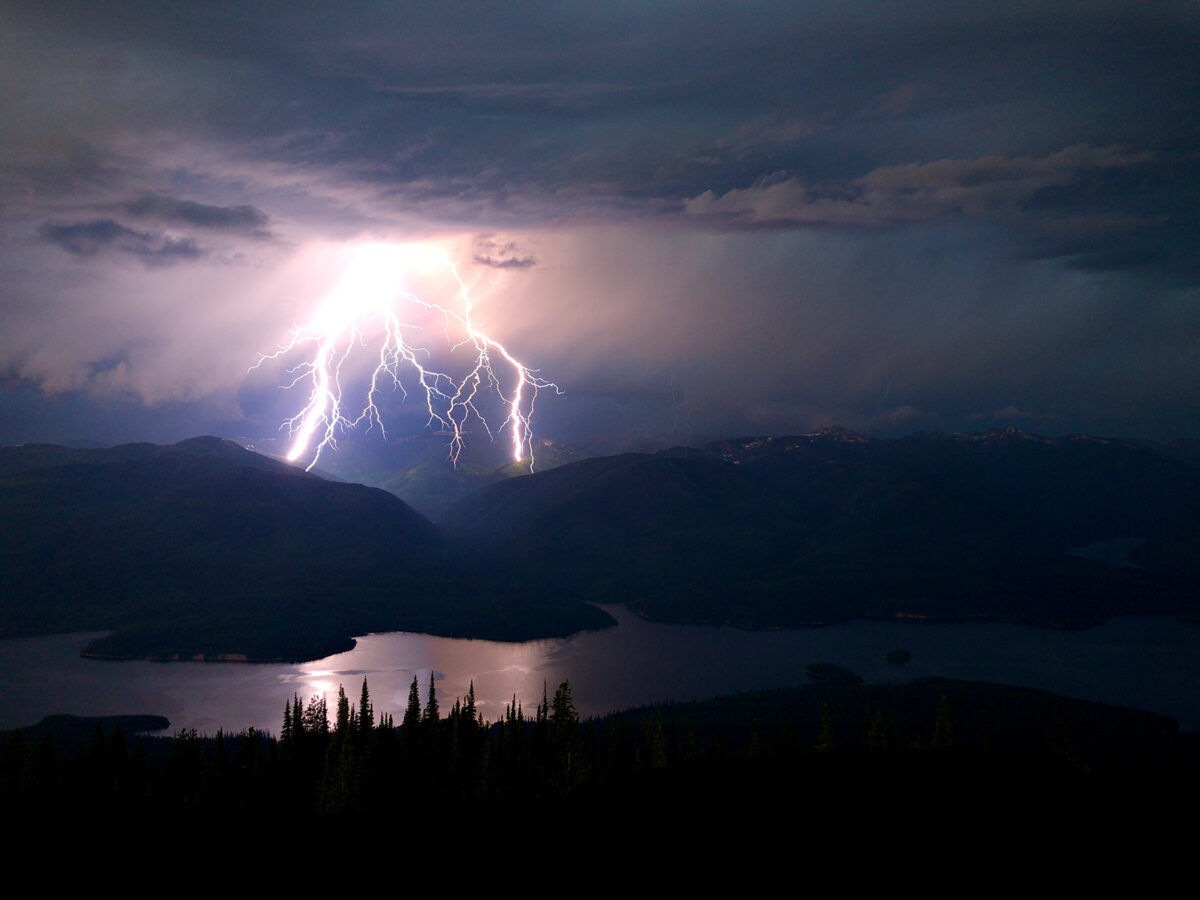
Hufstetler now works for the Forest Service at the Baptise Lookout, keeping watch over the terrain around the Hungry Horse Reservoir. The stately silhouette of the “R6 treated timber flattop” style tower figures prominently in the compositions of his Instagram posts. Awe-inspiring dawns, smoke plumes pierced by sunbeams, lightning strikes and his canid companions are recurrent snapshot subjects. He started as a volunteer in 2015, after meeting Haugen at Thoma and learning of the forest’s volunteer lookout program.
“There’s the appeal of separating oneself from the human world for a period of time, but there’s also the opportunity to connect with nature in a way that you really can’t with more superficial experiences or shorter visits,” Hufstetler added. “There’s also the opportunity to develop a little bit more self-reliance in one’s life. You’re up there on your own. I haul my own water up the mountain. I chop wood. I do all of those things that you don’t do anymore living in a town.”
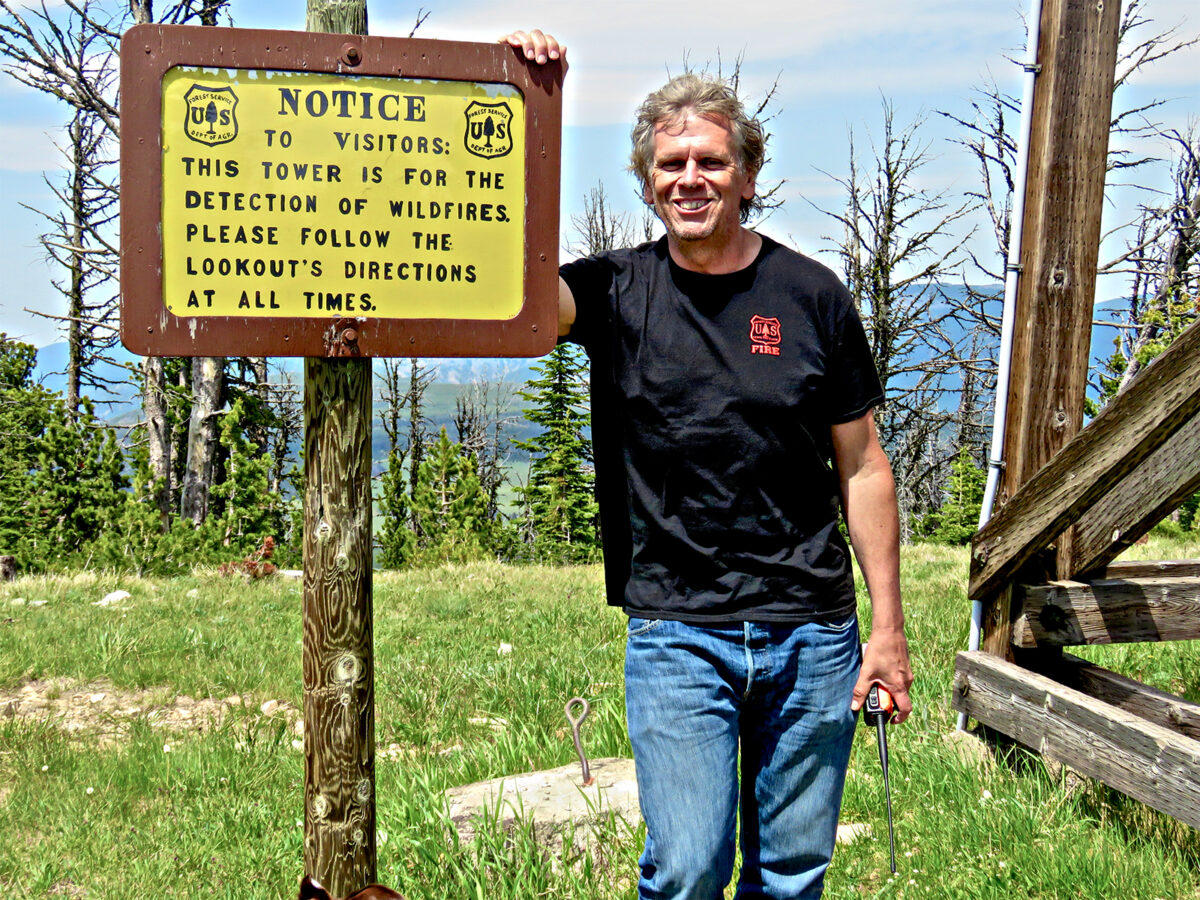

Indeed, the lookout job is best reserved for those who are comfortable in their own company. Back at Thoma, sometimes a couple of weeks pass before Haugen sees another human being. In the meantime, he shares the lookout with his waist-high watchdog, Ollie, who dutifully alerts Haugen to the arrival of the occasional hiker, or roving grizzly bear, between naps in the warm sunbeams spilling through the single-paned windows.
“I think what’s so tricky talking about the lookout experience is you’re not talking to anybody about it, so you more intuit it, you more experience it. I think that’s why I always use the term resonance because you just can feel it and sense it,” Haugen mused in a 2017 mini-documentary about his work. “Maybe that’s fanciful, but it certainly is the way I feel about it. You know, you just find yourself sitting on the porch watching the world go by for hours on end. It’s beautiful.”
Such feelings have held steady since the inception of the American fire lookout over a century ago. In 1919, one of Montana’s most renowned literary figures, Norman Maclean, served as a fire sentry for the forest service on Grave Peak, in the heart of the Selway-Bitterroot Wilderness. No lookout structure existed on that mountain until 1924, so the 17-year-old Maclean slept in a leaky tent. His only connection to the outside world was a telephone cable strung precariously from tree to tree for miles all the way back to the ranger station. He later wrote, “It doesn’t take much in the way of body and mind to be a lookout. It’s mostly soul.”