‘Shock Factor’ Jolts Sheriff’s Race as Flathead County GOP Endorses Heino’s Challenger in Contested Primary
The move rankled some local Republicans, who defended incumbent Sheriff Brian Heino at the Flathead County Republican Central Committee's Thursday night meeting and on social media, saying the local party’s endorsements in primary races have widened divides
By Mariah Thomas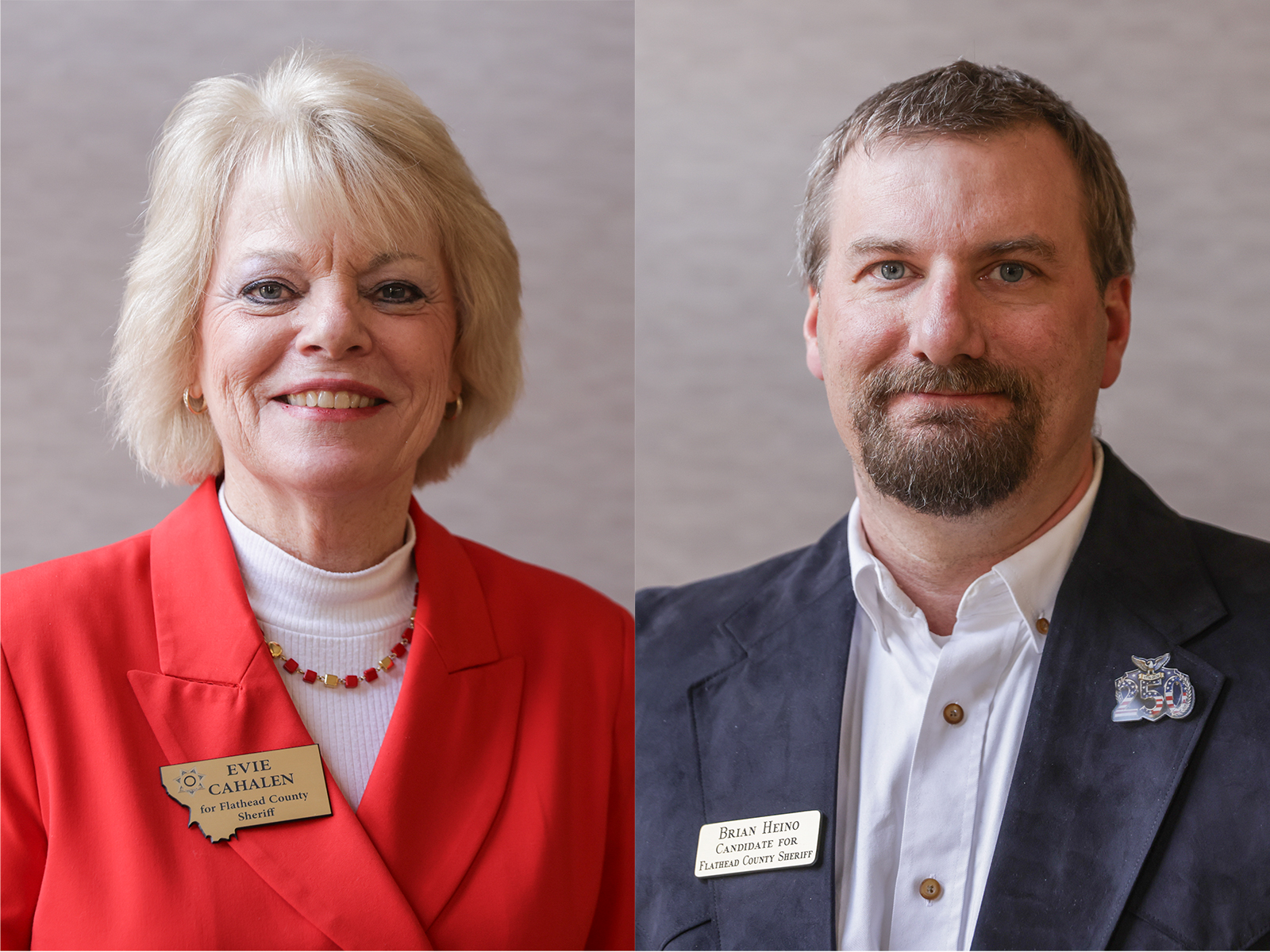
In its latest round of endorsement decisions Thursday night, the Flathead County Republican Central Committee (FCRCC) voted in a close roll call to back Evie Cahalen in the primary race for county sheriff instead of current Sheriff Brian Heino, who’s running to retain a post he’s held since 2018.
It’s a move the sheriff called a “shock factor” in his race. Heino said he has not seen the party attempt to influence the outcome of the sheriff’s race in the eight years since he first ran for the position.
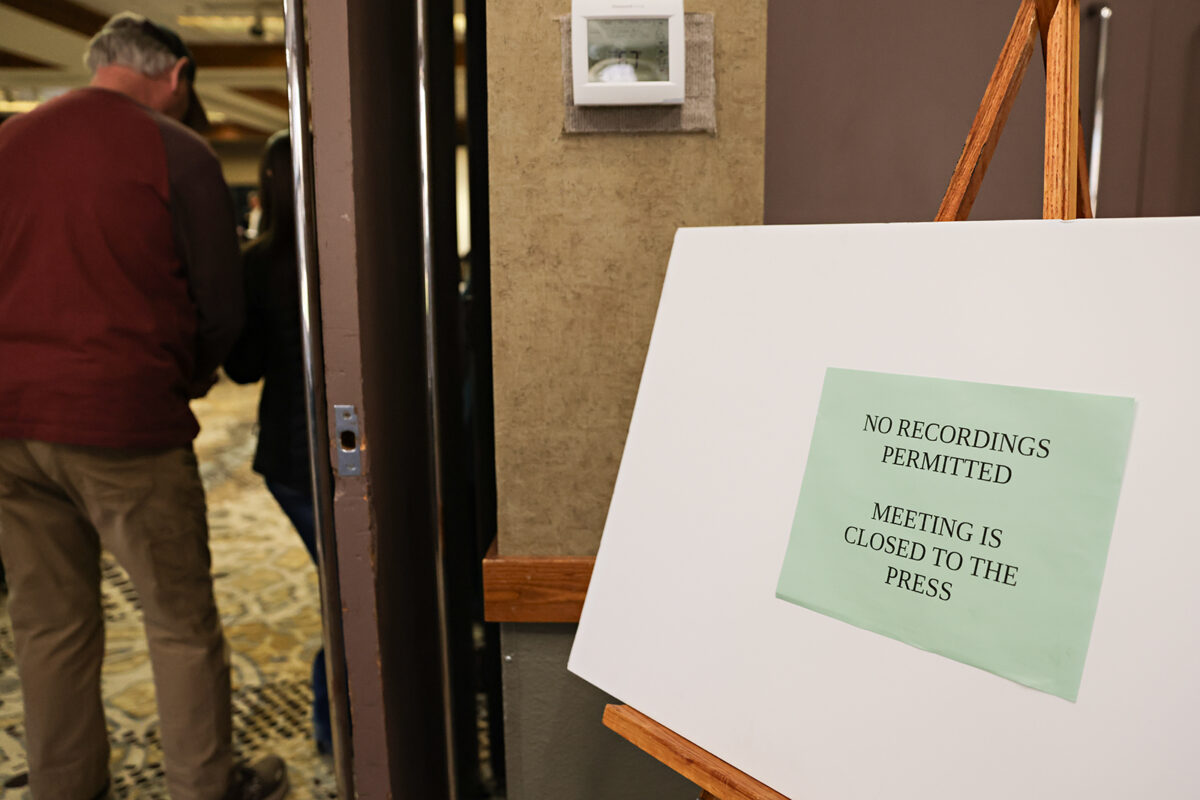
The endorsement decisions came the night before the sheriff candidates were slated to meet at a Glacier Country Pachyderm Club forum Friday afternoon. Those meetings are typically public, though the club is a private group. Members of the press were turned away at the door of the forum Friday afternoon.
The FCRCC has weighed in on other primary races since Heino first mounted a bid for the sheriff’s office, perhaps most prominently through endorsements of local legislators.
“You have a lot of proven people out there that have been elected, have done good jobs in Helena, and there’s unknowns that are being put up against those people,” Heino said. “So, I can’t really explain it. It’s something that, you know, being born and raised here, having multiple generations here, the supporting of candidates from these unknowns from out-of-state (is) strange to me.”
Al Olszewski, the FCRCC chairman, said the central committee’s decisions to issue endorsements come from the lead of the statewide party. At the state convention last year, Olszewski said there was demand for the party to vet candidates to ensure their Republican credentials. The state GOP has yet to endorse any candidates in the 2026 primary cycle. But on the local level, a vetting and endorsement process has taken place in the past two election cycles, at least for legislative races.
Candidates are all invited to fill out a questionnaire about their stances on the Republican Party’s platform. Those questionnaires are then forwarded on to a vetting committee. Olszewski declined to name the members of that committee in a Friday interview with the Beacon. The vetting committee conducts phone interviews with candidates before making recommendations to the central committee as a whole. The entire committee then votes on endorsements.
“You know, I think that we can truly say over the last three to four years, the Flathead County Republican Central Committee is pertinent,” Olszewski said. “You know, our work in the community and in the county of getting Republicans elected and our ability to stand up and say that we support one candidate over the other in the primary is not popular, but we’re doing our best to let people know who is willing to stand up freely and say they support the Republican platform.”
When the committee first doled out endorsements in 2024, some candidates called the process “disappointing” and “divisive.” Accusations flew about bias among vetting committee members. Some Republican candidates at the time raised concerns about the party putting so much focus on primaries, rather than supporting all Republicans who opted to run.
At Thursday night’s meeting, the combination of a decision not to back Heino and revelations that the committee dumpted much of its war chest into primary races raised concerns for some of the committee’s members and Republican elected officials, who took issue with the FCRCC’s meddling against members of their own party.
“I think this will build support for the sheriff,” said Brad Abell, a Republican county commissioner and precinct committee member who on Thursday night advocated for the FCRCC to endorse Heino. “I think that people will rise up and support Sheriff Heino and his run for office and will be offended that the central committee got involved this late in the game.”
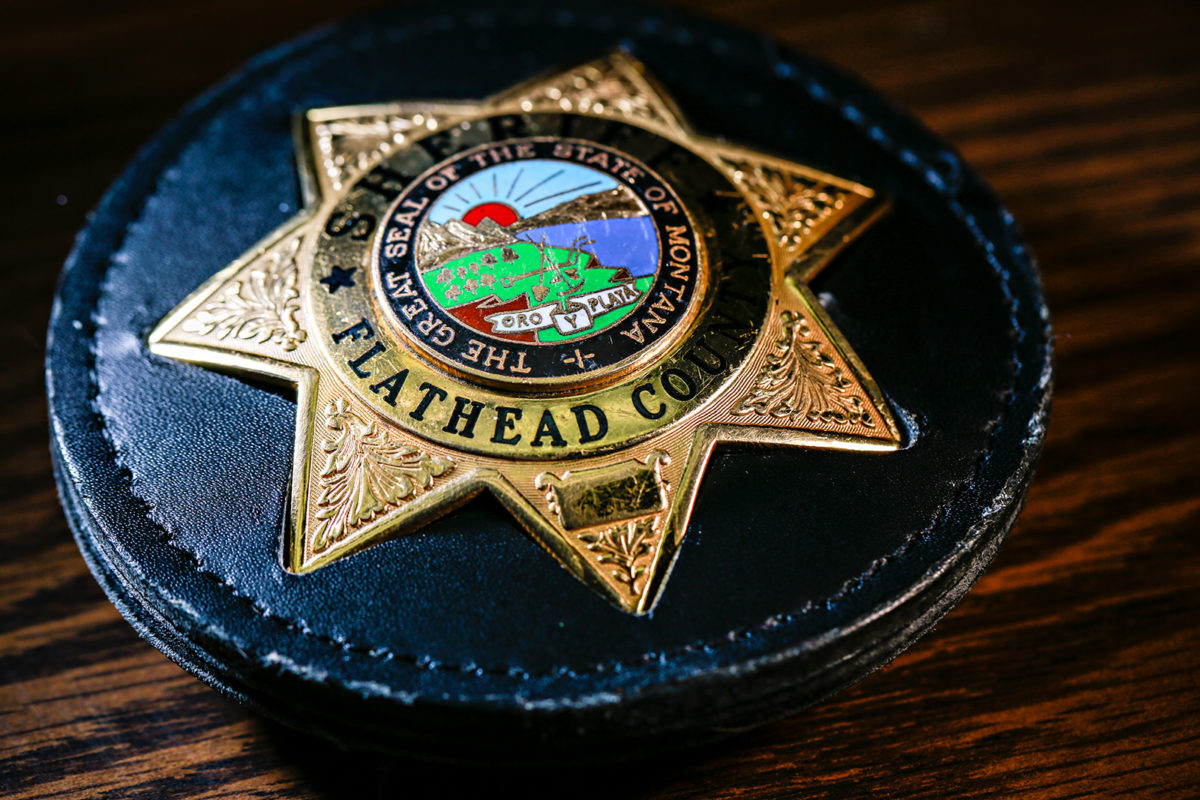
The race for the role as Flathead County’s sheriff is a matchup between two law enforcement veterans.
Heino boasts 23 years with the Flathead County Sheriff’s Office. He currently wears hats as the sheriff, coroner and director of the Office of Emergency Services. He first ran and won election to the position in 2018, coming out of a crowded primary field in a resounding victory. A fourth-generation Flathead resident, the sheriff has a degree in criminal justice. He worked as the Search and Rescue Coordinator and served in several other units prior to becoming the sheriff in 2019.
Cahalen, Heino’s opponent, has more than 25 years of law enforcement experience, including serving as a consultant for the U.S. State Department since 2012, according to her campaign website. She holds a Bachelor of Science in administration of justice and a master’s degree in police management from Johns Hopkins University. Cahalen served in her local police department as director of the internal affairs division, family crimes division and as district commander of the field services bureau. The Beacon previously reported she moved to Montana in 2014. She lives in Marion.
Cahalen also serves as the board president of the Flathead County Republican Women. That group is listed as an affiliate of the FCRCC.
The Beacon contacted Cahalen for comment on this story, but did not hear back from her before the publication deadline.
The sheriff said he didn’t receive an explanation for why the FCRCC’s vetting committee recommended against endorsing his re-election campaign. Olszewski said the committee’s Thursday discussion and eventual choice to endorse Cahalen included factors like “a pattern of poor response to the community” from the sheriff’s office, and conversation about a woman in a rural area in the Flathead feeling as though she had to depend on neighbors for safety, as opposed to relying on the sheriff’s office or sheriff’s deputies.
For Heino, the FCRCC’s vote to endorse Cahalen over him came as a disappointment. But he said he has since received “hundreds” of calls verifying the community’s support for him.
In his eyes, his tenure in the job as sheriff has been successful. He highlighted several goals that he defined upon assuming office that have since translated into achievements: growing agency partnerships, starting a K-9 unit, increasing technology capabilities and even passing a bond to build a new jail. Should he win re-election, he hopes to continue working on growing his staff and paying his staff more-competitive wages.
He heralds his experience as a critically important factor in the election.
“I think being sheriff here is different than a lot of places, right? I’m the coroner, sheriff and OES director, so that means every emergency, every aspect, you’re out there,” Heino said. “You have to have the knowledge base and the contacts to be able to do that, and you also have to keep the peace, so that means you meet with all sides of discussions to try to, you know, keep things settled.”
It’s Heino’s wealth of local experience that caused Abell, along with Rep. Steve Kelly, R-Kalispell, and Rep. Braxton Mitchell, R-Columbia Falls, to stand in support of him at the FCRCC’s Thursday meeting.
“Really, the big deal is we’re dealing with somebody who’s experienced for Flathead County, and somebody who’s not,” Kelly said. “That’s what it comes down to.”
Kelly, a state representative and central committee member who worked as a sheriff’s captain in Washoe County, Nevada, said his support of Heino hinges on having a sheriff in office with a deep understanding of the community he is tasked with keeping safe. While Kelly has no personal problems with Cahalen, he said he raised several questions at the meeting about how her experience aligns with the tasks of the Flathead County sheriff’s job.
He named several differences between Cahalen’s experience and Heino’s that concern him when it comes to serving the area. Among them: differences in culture, geography, rural versus urban policing (Cahalen comes from a populous county in Maryland, he said), staffing levels in the departments, and contending with Montana’s laws.
Mitchell said he usually falls in lockstep with the FCRCC’s activity. He respects both candidates running to serve as the next sheriff, but for him, prior experience in the Flathead gave Heino a boost.
“I think that Flathead Republicans’ brand is pretty respected in the valley, but obviously, there’s people who might disagree on a race here or a race there,” Mitchell said. “… It’s politics, it’s life, you know, there’s disagreement. And last night I was in disagreement with the vetting committee’s decision.”
Abell agreed with Mitchell and Kelly on the point about Heino’s experience serving as an important factor to consider in the endorsement decision.
But Mitchell and Abell diverged when it came to the principle of endorsements — and what they indicate about the local party arm — on the whole.
“Like I said, I believe the decision is to be left to the voters,” Abell said. “I mean, we saw what happened in the congressional race and the senatorial race here in Montana, and we heard from people that, you know, we don’t want our leaders picking our candidates for us. And I think this is people at a local level trying to pick our candidates for us.”
Rep. Courtenay Sprunger echoed Abell’s point. The FCRCC has now twice passed over Sprunger, a Kalispell Republican, for endorsements in her re-election races to serve as the representative of House District 7, which runs through downtown Kalispell. In 2024, she called the FCRCC’s vetting process biased and said Friday she has declined to participate in the process. On Thursday night, she took to Facebook to lambast the FCRCC’s choice in the sheriff’s race, and to encourage Republicans to vote for Heino in the primary.
“This is not a competency discussion anymore,” Sprunger said. “It’s really about seeking out candidates who are willing to do the party’s bidding ahead of the people, and Brian (Heino) is loyal to the people of Kalispell first.”
To Mitchell, the assertion that the FCRCC’s endorsements are comparable to concerns about party bosses pre-selecting preferred candidates, which grew in stature following U.S. Rep. Ryan Zinke’s and U.S. Sen. Steve Daines’ decisions not to seek office in the final days — and minutes — of candidate filing, is off base.
He said anyone can join the conversation at local central committee meetings, which are often public. And the people who run to serve in leadership roles are local.
This year, several of those local leaders, known as precinct captains, will be new faces. Some members of Kalispell’s business community filed to fill open precinct seats. Per reporting from the Montana Free Press, the filings came partially in response to frustrations about the FCRCC’s lack of involvement in the city’s mayoral race last fall.
Olszewski, the FCRCC chair (and a candidate for Zinke’s congressional seat), said that in a nonpartisan race, the FCRCC cannot technically make an endorsement; however, it can issue a recommendation. The group in October issued a recommendation to vote for Kisa Davison. In the end, Democratic-aligned candidate Ryan Hunter prevailed in the race. Davison and Sid Daoud (who has run as a Libertarian previously) split the Republican vote in the city.
As new precinct captains join the FCRCC’s ranks, Olszewski said he hopes the upstart candidates are “truly Republicans.”
“I look forward to having, I think, (an) increased number of precinct captains,” he said. “This is what the central committee is. It’s not a small club. It should be a large organization that’s passionate and will get good work done to get Republicans elected in the general election.”
Abell agrees — that should be the central committee’s goal — but said it doesn’t feel like that’s been the reality.
“I have stated they’ve spent more time fighting against Republicans than they do, you know, fighting — I said, they should get involved in the general election,” he said.
He and Heino both said the FCRCC also voted Thursday night to mete out a large chunk of its war chest, roughly $50,000, to preferred primary candidates in county races, legislative races, and races for the Public Service Commission and western congressional district.
Abell pointed to the funding given out in primary races as illustrative of his point: challenging members of their own party in primaries has dominated the conversation in the FCRCC, as opposed to focusing on general election contests that pit Republican candidates against Democrats.
Olszewski, who was reached over the phone while driving, said he didn’t know off the top of his head how much the FCRCC had handed out to primary candidates, but that the group gave “good contributions.”
And that’s in line with the group’s goal, in Olszewski’s mind, which is to raise funds for and elect Republicans.
“Look, we’re a very red county,” Olszewski said. “I believe that in this process, I think people will pay attention to (endorsements), but ultimately, the people of Flathead County — the Republicans of Flathead County — will make their own decision.”