
Like many journalists, Jodi Cobb — the award-winning, 30-year mainstay National Geographic photographer — found her way into the line of work by possessing a simple character trait: “curiosity about what’s going on.”
“Every story I did would lead to another one because I would learn something that I didn’t know about and I thought, well, I don’t know about this, so I bet a lot of other people don’t either,” Cobb said while recalling a time where travel wasn’t as popular and small, high-resolution cameras weren’t in everyone’s pockets.
That insatiable cycle of asking and answering questions snowballed into a nearly half-century career marked by a series of “firsts,” capturing cultures largely unknown to the West and documenting societies on the brink of immense change.
From being among the first photographers to cross China when it reopened to the West in the late 1970s; to being the first person given permission by the king to photograph the women of Saudi Arabia; to being the first photographer to be welcomed inside the secret world of Japan’s geisha, Cobb has devoted herself to learning as much as she can from the world — bringing us all along for the ride.
“Everything I’ve learned is from the people that I photographed; everything I know,” Cobb said. “I learned how and why people sell other people into slavery, and I learned why people want to help the people who are much less fortunate than themselves, and that there are so many good people in the world who are trying to right the world’s wrongs.”
Now, Cobb is sharing deeper insights into these lessons learned in a speaker series, “4 Decades Through the Lens,” which she will be bringing to Flathead Valley Community College’s Wachholz Center at 7 p.m. on April 7 as part of its “Changemaker Speaker Series.”
The event will feature Cobb chronologically recounting her extensive photojournalism career, from her time in the newspaper industry and as a rock and roll photographer to her most acclaimed work with National Geographic.
“I can’t believe that I did all those things,” Cobb answered when asked about the experience of reflecting on her decades-long career for the event. “I absolutely look back and I say, ‘How did I do that?’ Then I realized it’s just one foot after the other over a long period of time.”
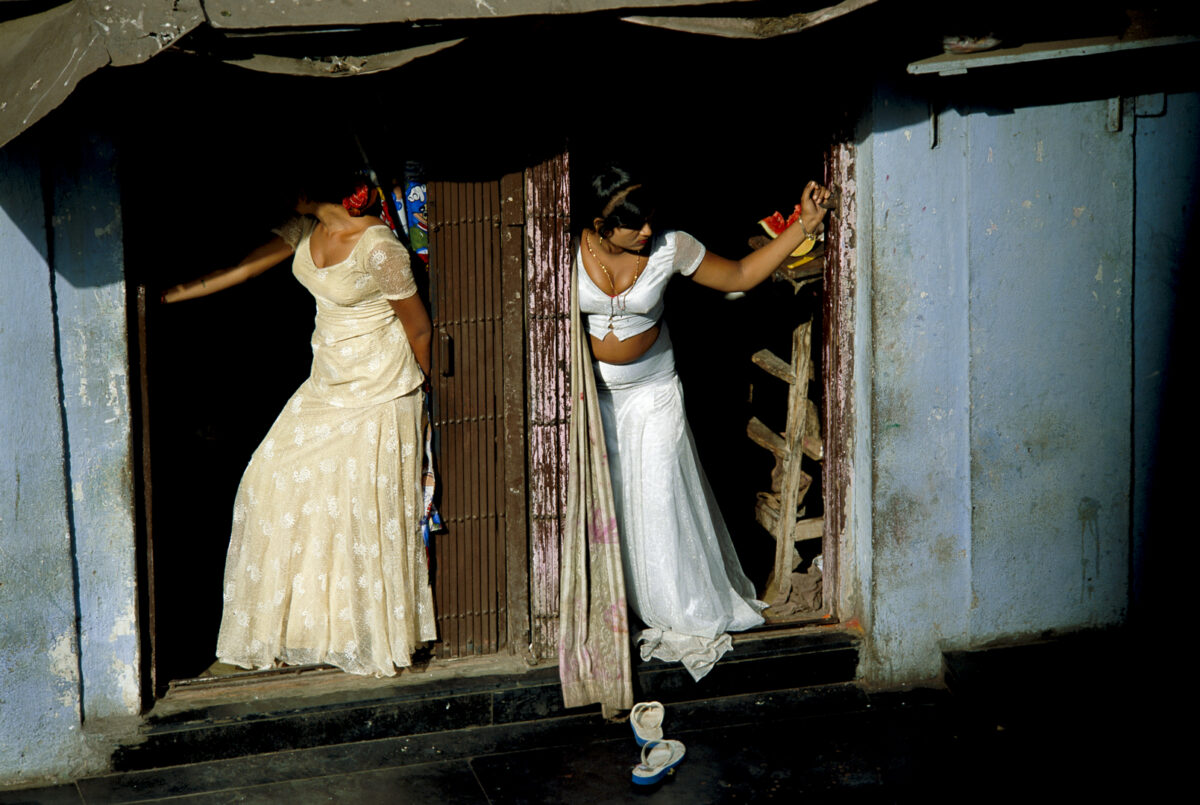
The flames of Cobb’s deep affinity with global travel may have been fanned by her work at National Geographic, but by no means was it the genesis of the fire.
Cobb’s childhood was largely spent in the Eastern hemisphere, growing up in Iran because her dad worked for the world’s largest oil refinery at the time. With her parents being avid travelers who “wanted to see everything,” it was common for Cobb and her family to travel for weeks at a time. Naturally, Cobb had been to 15 countries before the age of 12.
“I saw how big and diverse the world was, so when I came back to the [United] States, I studied journalism because I thought that would be a great way to get back out into the world,” Cobb said. “Because I didn’t want to stay at home and I didn’t want to move to a small town. I wanted to be out there.”
“There was just a general acknowledgement or recognition of how little I knew about the world and how much there was to learn, and how endlessly fascinating it could be and has been,” she added.
After graduating from the University of Missouri, Cobb spent the earliest days of her career in the newspaper industry and as a rock-and-roll photographer — an endeavor she began during her time in college.
“I just loved it,” Cobb said. “I loved the music. I wanted to be around the music, and I had wanted to be a musician myself, but I had no talent. So, the camera was my excuse to be there at the concerts and to be backstage.”
But when it was National Geographic instead of Rolling Stone that rang in the mid-1970s, Cobb didn’t hesitate to answer the call.
Cobb’s earliest assignments, however, didn’t have her stamping her passport quite yet. Instead, she was sent domestically, predominantly to the South: the Suwanee River, Nashville, and Plains, Georgia, home of the then newly elected president, Jimmy Carter.
It’s her work in these small pockets of America — such as her second-ever National Geographic assignment photographing the coal mines, rivers and hollers of West Virgina — that set her on a course to be one of the most widely published photographers in the world.
“In West Virginia, I was there … for months at a time just by myself driving around the hollers and the back roads, just looking for what people’s lives were like and how it was,” Cobb said. “So I learned just a kind of self-reliance and how to be lonely. I learned how all these big, huge, global stories are made up of little individual stories that you find anywhere.”
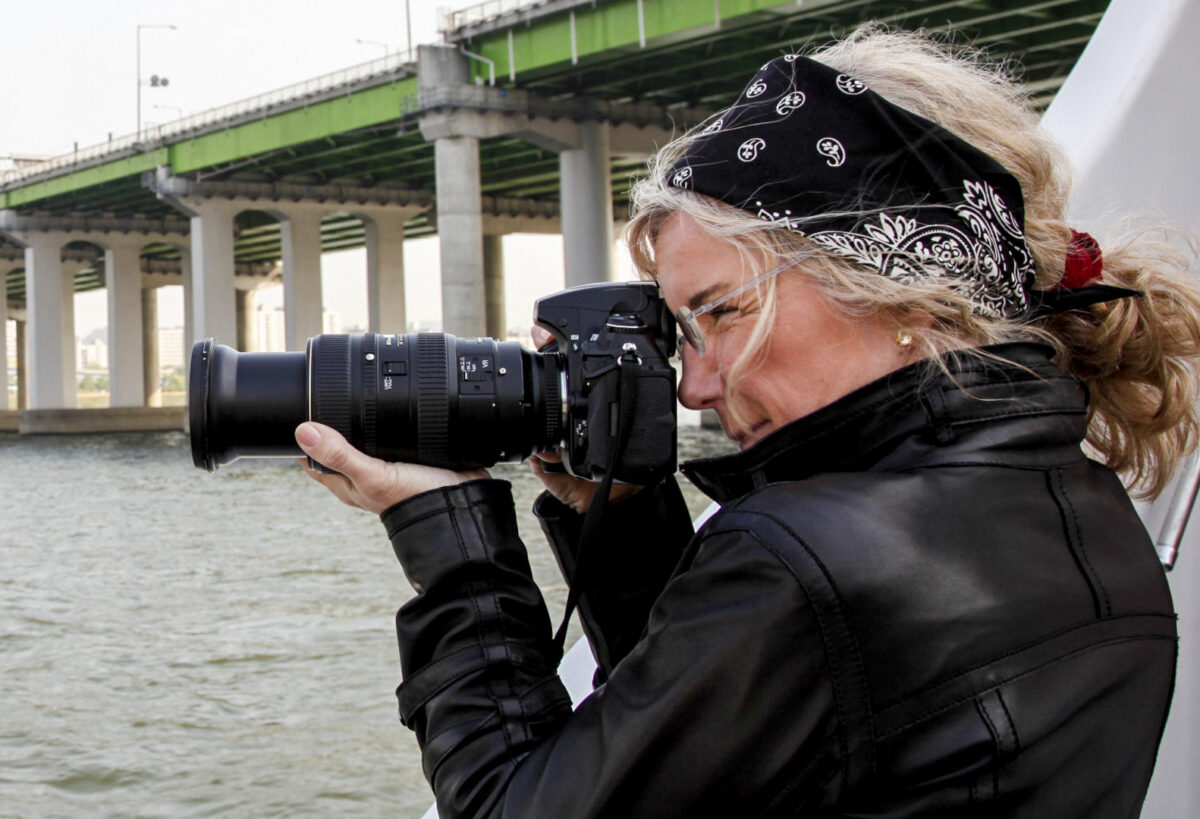
The ability to find a story anywhere helped Cobb cement herself as a National Geographic staff field photographer — a coveted title that she is still the only woman to ever hold.
“I was trying to do everything that the guys could do, and not just one guy, but all of them,” Cobb said with a laugh. “Because there was a lot of pressure and a lot of the attention being paid to whether a woman could do this job or not. It was pretty intense in that regard, so I did everything they could do.”
Being one of the few women in a profession traditionally marked by a macho culture offered its pressures and challenges, but Cobb found that being the only woman in the room also gave her the keys to rooms yet to be unlocked.
“I started noticing that most of my favorite pictures and interest in all these places I would go were about the women, because the men had portrayed women in just a certain way in the magazine,” Cobb said. “They were sort of decorative objects or they had the male gaze, as it’s known now.
“So I tried to show women in every story that were actually doing things and accomplishing things, so I was able to go to a lot of places that the guys couldn’t go.”
But just because Cobb had the opportunity to cover what she refers to as “closed worlds,” didn’t mean she was automatically granted the necessary access. For Cobb, rejection was usually the flavor of the day.
“Well, I always felt like ‘no’ was the starting point, and then how you got from ‘no’ to being in a geisha’s bedroom, that’s the hard part,” Cobb said.
“It involves an enormous amount of research to know what you’re looking at, then you have to figure out who’s going to help you get there and see it,” she added. “In every country I had what we called fixers that would sort of arrange to get you where you needed to go, but even they couldn’t get into some of these worlds.”
It took Cobb six months across three years in the geisha districts to gain the access needed for her never-before-seen exploration into the world of Japan’s geisha, which culminated in her Pulitzer Prize-nominated book: “Geisha: The Life, the Voices, the Art.”
“It was just one by one,” Cobb said. “One geisha, and then you earn her trust, and then you ask her if she has any friends. Just one by one is what it was.”
Once Cobb got into a room, it was this same persistence that was the catalyst for her intimate, peak-behind-the-curtain work for which she is known.
“Everybody has a pose, and I just learned to outlast,” Cobb said. “Make them stop trying to entertain me or worry about what I was doing. They would go back to their real life … and that’s where the pictures were. I just call myself a stubborn photographer. I wouldn’t leave and I wouldn’t quit until I got a picture.”
Cobb’s dedication and stubbornness translated into a multi-decade career that has culminated in history-painting images and numerous accolades, including being the first women named White House Photographer of the Year and receiving Lifetime Achievement Awards from the American Society of Media Photographers and National Geographic’s Photo Society.
Such a storied career has earned Cobb monikers and descriptors ranging from trailblazer to groundbreaking to pioneer. Now, as part of the Wachholz Center’s speaker series, another has been added to the list: changemaker.
When asked what the title means to her, Cobb was amused by the small, full circle moment, saying she “actually became a photographer because [she] wanted to change the world.”
“The hippies, well, that’s what we wanted to do,” Cobb said. “We marched in the streets and for civil rights and women’s rights and against the war in Vietnam. That’s what my focus was back then, was to get involved in the cultural and social upheaval that was going on in this country at that time. That’s what sort of led me to to journalism, and then led me to all the rest of it. First it was a desire to see the world, and then it was a desire to change it.”
Jodi Cobb will speak at the Wachholz College Center in Kalispell at 7 p.m. on Tuesday, April 7. Tickets for “4 Decades Through the Lens” are on sale now and are $17, or free for students of all grade levels. Tickets can be purchased here.