Federal Judge Suspends Tally Lake Logging Project West of Whitefish
Conservation groups sued the Flathead National Forest last year, arguing that approving a fuels reduction project to lower the risk of wildland fire on nearby communities violated federal law
By Tristan Scott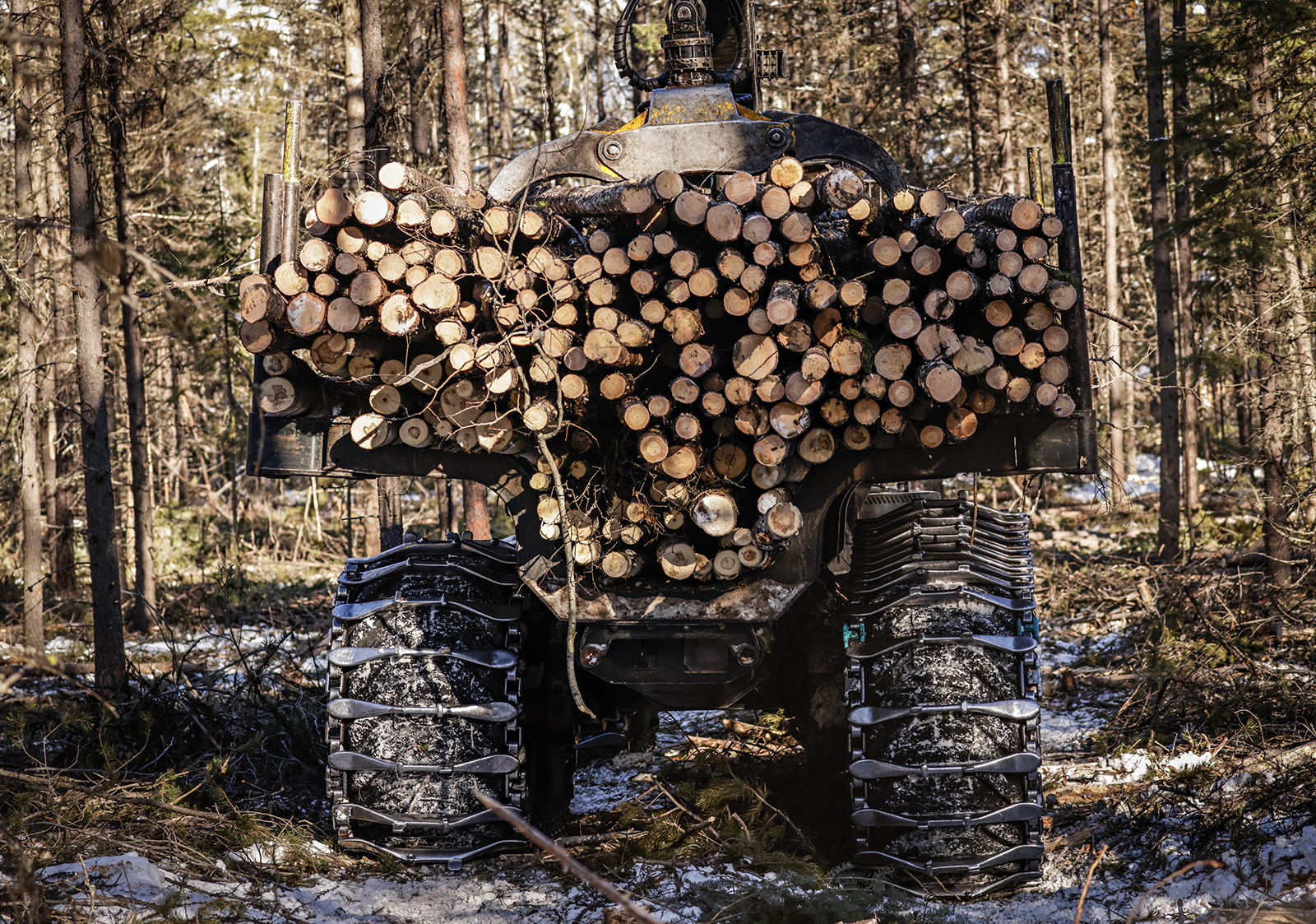
In January 2025, when a coalition of conservation groups sued to stop a logging project near Tally Lake west of Whitefish, a federal judge allowed the loggers to continue working in the woods while the litigation proceeded in federal court. This week, that work was formally suspended after the judge determined federal land and wildlife management agencies had fumbled aspects of their environmental analysis, including by not considering the cumulative effects of an adjacent logging project, and by not properly considering the effects on threatened lynx habitat.
U.S. Magistrate Judge Katie DeSoto, of Missoula, halted the project but did not vacate it, instead remanding it back to the agencies to remedy shortcomings and address deficiencies in the assessment.
Called the Round Star Project and first proposed in December 2021, it authorized a range of forest management actions across the 28,300-acre project area, including commercial timber harvests on up to 6,324 acres and non-commercial vegetation treatments on up to 2,827 acres, as well as the construction of more than 20 miles of new roads. The project includes 580 acres of clearcut.
The plaintiffs in the case are four environmental groups — Alliance for the Wild Rockies, Council on Wildlife and Fish, Yellowstone to Uintas Connection, and Native Ecosystems Council. They filed suit on Jan. 8 in U.S. District Court in Missoula. The complaint accuses the Flathead National Forest of violating the National Environmental Policy Act as well as the National Forest Management Act. It also names as defendants the U.S. Fish and Wildlife Service, as well as Tally Lake District Ranger William Mulholland, who signed the decision notice authorizing the project.
“We are thrilled the Court acknowledged the sheer extent of logging on the Tally Lake Ranger District and sent the Forest Service back to the drawing board to consider the extent of its massive logging and roadbuilding apparatus in that area,” Mike Garrity, executive director of the Alliance for the Wild Rockies, said in a prepared statement following the March 31 order.
Because 92% of the project area is in the wildland urban interface (WUI), and because the project is aimed at reducing wildland fire risk, the Flathead National Forest relied on an exemption to its own forest plan, called the Lynx Amendment, that allows fuels treatment projects to occur in Canada lynx habitat. However, citing confusion as to which definition of the WUI boundary the Flathead National Forest used to determine compliance with the Lynx Amendment — the boundary defined in the local community wildfire protection plan or a WUI buffer as defined statutorily by the Healthy Forest Restoration Act (HFRA) — Judge DeSoto said the court “is unable to reasonably determine compliance” with either the Flathead’s own forest plan or the National Forest Management Act.
“At best … references to WUI boundary in the administrative record are confusing and ambiguous,” DeSoto wrote in her order. “At worst, the agency relied on the Community Plan and a WUI boundary that was not compliant with HFRA.”
DeSoto also sided with plaintiffs’ argument that the Flathead National Forest’s cumulative effects analysis failed to address the adjacent Cyclone Bill Project, also located near Tally Lake. The Flathead National Forest argued that omitting Cyclone Bill from the assessment was reasonable, given that Cyclone Bill had not yet been authorized when the Round Star environmental assessment was finalized.
“Because it was not reasonably foreseeable, defendants argue, Cyclone Bill did not merit inclusion in the EA’s cumulative effects analysis,” according to DeSoto’s order. However, citing case precedent, DeSoto said “projects need not be finalized before they are reasonably foreseeable,” ruling that Cyclone Bill should have been included in the project’s cumulative effects analysis.
The Flathead National Forest in its environmental assessment of Cyclone Bill did include in its analysis the cumulative effects of the Round Star Project.
In July 2025, the same four conservation groups who sued to stop Round Star also sued to stop Cyclone Bill.
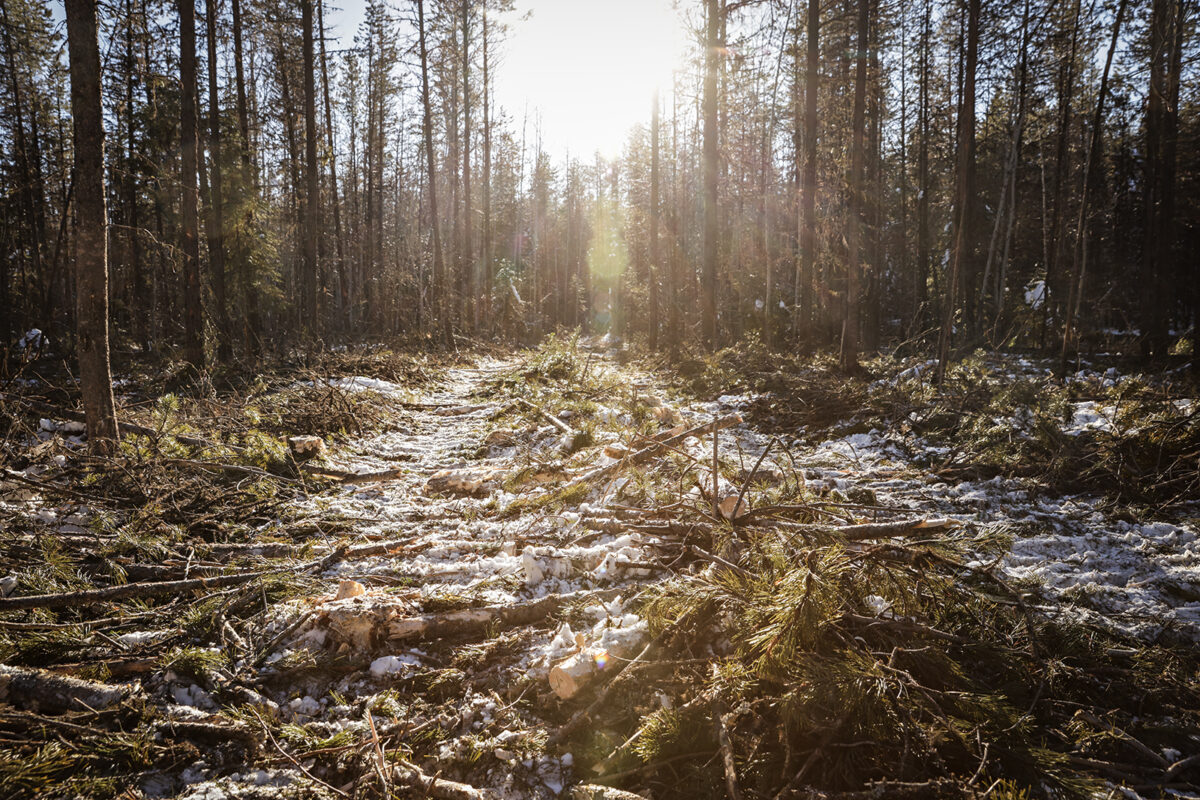
A spokesperson for the Flathead National Forest, citing agency policy, declined to comment on pending litigation. However, the spokesperson confirmed that timber contracts had been formally suspended, with notices issued Thursday to local operators including Weyerhaeuser, F.H. Stoltze Land & Lumber Company, and Leever and Sons.
The case also includes two defendant intervenors: the American Forest Resource Council (AFRC) and the Montana Department of Natural Resources and Conservation (DNRC).
Sara Ghafouri, lead counsel for AFRC, said in an interview that although the order was disappointing to the trade group and its members, she was pleased that the court order was relatively narrow, with DeSoto seizing on what she characterized as “minor legal issues” that can be easily remedied.
“Although we are ultimately disappointed by the outcome, AFRC is very pleased that the Court did not vacate the Round Star Vegetation Project’s Environmental Assessment or require that the Forest Service prepare an Environmental Impact Statement on remand,” Ghafouri said in an emailed statement. “We hope that the Forest Service can remedy the minor issues that were identified in Magistrate Judge DeSoto’s ruling so that the Forest Service can quickly move forward with the important work of reducing wildfire risk and providing for increased firefighter and public safety in the Project area. AFRC members were awarded several timber sales to help achieve the Project’s admirable goals, and we hope that they continue that work with minimal delay.”
The project area is located on the northwest side of the Flathead Valley, approximately 13 miles west of Whitefish. It extends from Round Meadow to the northwest corner of Star Meadows. The project would expand the Round Meadow Cross-Country Ski Area by creating 5.6 miles of additional trails as well as infrastructure to keep pace with increasing recreational use.
Most of the project area was identified in the 2020 Montana Forest Action Plan as a priority for fuels reduction to protect residential communities. It is also partially located within the Connecting Fuels Treatments in the Salish Mountains and Whitefish Range Joint Chiefs’ Landscape Restoration Partnership Project Area.
The judge rejected other claims brought by the advocacy groups, including alleged violations of the Endangered Species Act and the federal protections it furnishes on grizzly bears.