High Fertilizer and Fuel Prices Boost Costs for Montana Farmers as Tight Margins Persist
As the war in Iran bottlenecks supply chains, the price increases have added to steep input costs for local producers. Meanwhile, low commodity prices remain a barrier to offsetting those costs.
By Maggie Dresser
Before the war in Iran disrupted global fuel and supply chains in February, Tryg Koch, who co-owns Heritage Custom Farming, bought nitrogen-rich fertilizer for $640 a ton for his spring wheat crops.
The price of that same fertilizer, which contains a nitrogen compound called urea, has since spiked by 25% and now costs $900 per ton locally, according to Koch. The price increase comes at a time when most producers have already mapped out their plans for the season, while others have already begun seeding spring crops. The inopportune timing means it’s too late for producers to replace their grains with pulse crops like peas and lentils, which use less fertilizer.
“The unfortunate part is by the time this war hit and these prices have been influenced, probably 80% of farmers already have their plan in place,” Koch said. “Most people have been seeding for weeks. Their cropping intentions are already in place.”
Koch was able to dodge the price increase when he bought his fertilizer in the middle of February, but not all producers are as fortunate. He said it’s unclear how much volume local companies like CHS will purchase at the high price, meaning there could be a shortage this fall.
According to the American Farm Bureau Federation, countries tied to the Persian Gulf export nearly half of the global urea supply and 30% of its ammonia, both of which are used in nitrogen fertilizer. Urea, which contains about 46% nitrogen, is the most widely used solid nitrogen fertilizer.
Since the war in Iran started last month, urea has joined a growing list of commodities locked up in the Middle East as the Strait of Hormuz blockage bottlenecks supply chains, causing rising prices for producers.
“Grain markets, fertilizer markets — everything follows oil,” Koch said. “The minute crude starts going up, everything goes up.”
Eric Belasco, the department head of agricultural economics at Montana State University, said the impacts of fertilizer prices are minimal for producers right now, but it will become a long-term issue if the war continues disrupting supply chains over the next few months.
Fertilizer prices have been historically volatile and the global market experienced similar spikes in 2022 when Russia invaded Ukraine. Urea nitrogen fertilizer rose to more than $1,100 per ton locally when both countries suspended fertilizer exports to the United States.
But four years ago, higher commodity prices helped offset those input costs, which is not the case today as bushel prices remain low.
“Fertilizer was a big issue a couple years ago and came down, but now it’s back up,” Belasco said. “Fuel is up and margins are so tight. Extra costs are never a good thing.”
Last year, grain hovered around $5 per bushel, prices comparable to what they were in the 1970s, as countries like Russia, Ukraine and Brazil produce cheaper and lower quality products, causing an oversaturated market.
Koch said commodity prices for winter wheat have gone up to $6.75 per bushel since then, but the price doesn’t pencil out as the oversupply of grain stalls its transportation and sale.
In early April, the futures price (or the cash price) of wheat was at $6.75, but that value is subtracted by the basis price, which equals the actual value of the commodity.
“The basis is essentially your freight bill getting to the port,” Koch said. “The vessels that we are sending our commodities to — if they are not moving product to China, Japan, any of those countries — if they don’t want it, they want the farmer to just sit on their grain.”
With the current supply, Koch said the basis price is 90 cents, meaning the futures price of wheat drops to $5.85.
“There’s no grain moving,” Koch said. “There’s too much grain and not enough export.”

In Conrad, wheat farmer and Montana Farm Bureau Federation President Cyndi Johnson said the tight margins limit how much cash some producers can spend upfront for input costs.
“My biggest concern is, if we don’t solve this situation in the Middle East, it will impact more people — not just farmers,” Johnson said. “We are so accustomed to dealing with adversity. If we’ve got it figured out, we’ll be OK. But if we don’t, it’s going to be a struggle.”
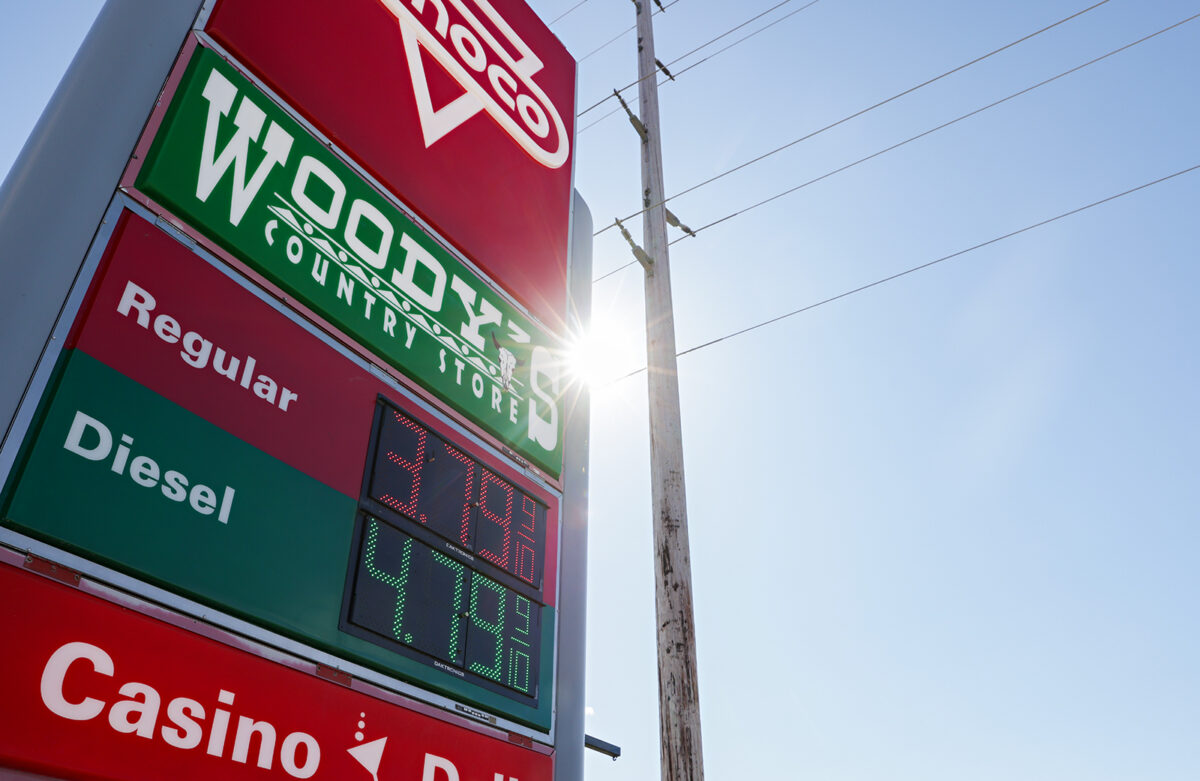
Farmers with limited storage space and capital won’t be able to stockpile fertilizer or fuel, which hovers around $5 per gallon, and although spring planting won’t see significant impacts of high costs, Johnson wonders what fall planting will bring if the war in Iran continues and high input costs persist.
For Koch’s part, he said fertilizer eats up about 30% of his entire budget while fuel is significantly smaller. But with low grain prices, that price isn’t offset.
“When fertilizer goes up, it’s a big deal,” Koch said.
The rising costs of fuel and fertilizer only add to the high input costs producers already face after the Trump administration placed a 50% levy on steel last year, spiking the cost of farm equipment.
“The biggest challenge in agriculture right now is the inputs are just so high compared to the price of commodities,” Koch said. “It doesn’t stop at fertilizer and fuel.”