Finalist for UM’s Presidency Makes His Case for Top Job
Jeremiah Shinn, current interim president at Boise State, discussed his thoughts on higher education and the future of the Missoula university at a series of community events
By Katie Fairbanks, Montana Free Press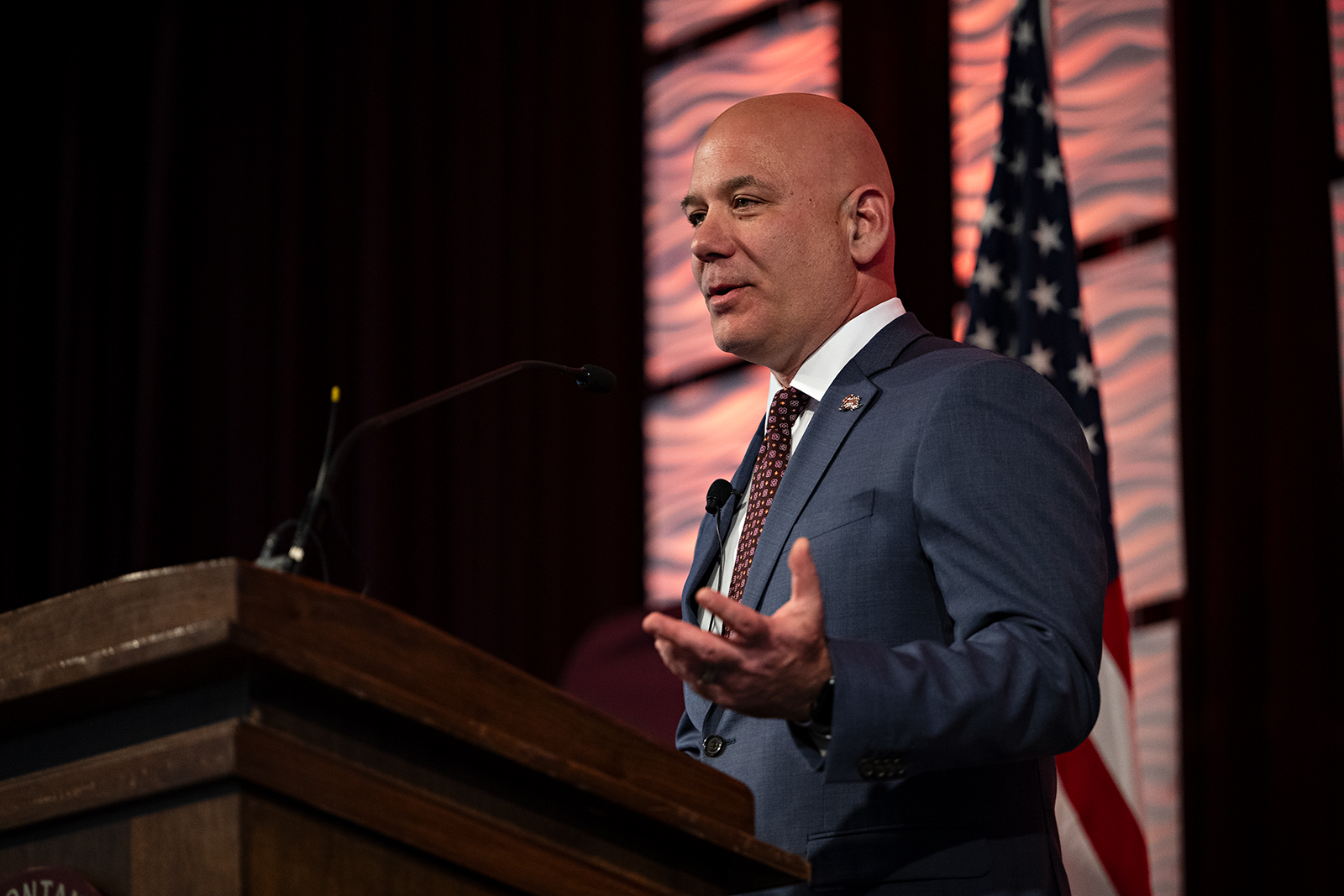
Jeremiah Shinn answered dozens of questions lobbed at him during his visit Monday at the University of Montana in Missoula. From his stance on transgender rights and inclusion to how to maintain UM’s liberal arts and humanities legacy, the finalist candidate to lead the university outlined his vision in a series of meetings with staff, students and the public.
The 49-year-old interim president of Boise State University is the only named finalist for the role as UM’s president, vacated by Seth Bodnar in February
During an hour-long public forum and following interviews with the press, Shinn was visibly enthusiastic when speaking about the importance of higher education.
“I’m passionate about this,” he told members of the media. “There’s absolutely nothing I would rather be doing than leading a university and having important conversations about the impact of higher education.”
Bodnar, who was UM president since 2018, announced his resignation in January and filed to run for U.S. Senate as an independent in March.
Montana Commissioner of Higher Education Clayton Christian began an expedited search in January for a new president, aided by AGB Search, a subsidiary of the Association of Governing Boards. More than 70 candidates applied, and a group including Christian, UM faculty, a former regent, and staff and student leaders interviewed nine.
Shinn is the only finalist invited to campus at this time. Christian said that because of the expedited search and competitive market for university presidents, many candidates do not want their names announced in advance of selection. While the next steps are still up in the air, Christian said those involved thought this was the right opportunity to bring Shinn to campus.
“We’ve brought a candidate that the search group felt like is a very viable possibility to be our next president,” he said. “The other groups that we’ve talked to along the way, regents along the way, feel the same.”
SO, WHAT DO WE KNOW ABOUT SHINN?
Unlike Bodnar, who was an unconventional pick as a former GE executive and Green Berets veteran, Shinn has a 20-plus-year career in academia.
Before taking the BSU interim president role last year, Shinn was the university’s vice president of student affairs and enrollment management, according to his resume. He previously held the same position at Louisiana State University from 2019 to 2023. Before that, Shinn held various positions at BSU for about a decade after time at Indiana University Bloomington and Eastern Michigan University.
Shinn told the media that he has experience in fundraising, government and alumni relations, managing large portfolios of facilities and auxiliary enterprises, managing large budgets and managing student crises. During his career, Shinn has worked in every pay grade a university has, from a graduate student assistant to interim president, he said.
“I understand the work that’s getting done at each one of those levels,” Shinn said. “And I think that’s a view that a lot of folks that are in my role don’t have. And I’m certainly proud to bring that to the table.”
Shinn graduated with a bachelor’s in natural science from Arkansas Tech University in 1999. He has a master’s in higher education from the University of Michigan and earned his Ph.D. in educational leadership from Eastern Michigan University in 2015. Shinn also attended Harvard’s Institute for Educational Management in 2024.
Shinn said Monday he was a first-generation college student from a rural area who navigated college without family support. After the forum, Shinn told reporters that he tried college because he was good in school. But Shinn said he might not have stuck it out if not for the great people on his campus because it was unfamiliar and there were barriers and administrative hurdles.
“So that’s why I’m so passionate about removing those things and being sure that any student that wants to attend college could,” he said. “After college, I decided that I wanted to work in higher education because it had such an impact on me. … This has become my life’s work.”
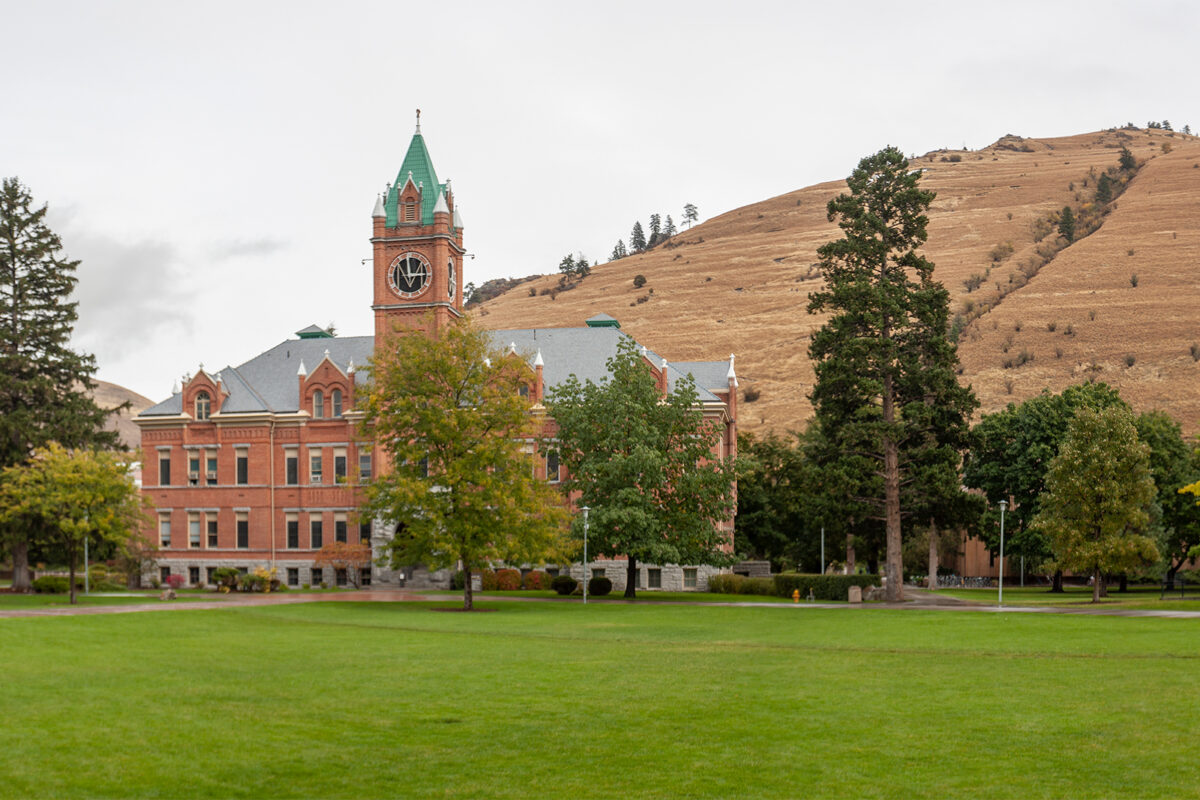
During the forum Monday, Shinn told the crowd he was drawn to UM after visiting last year to consult on a program review. Shinn said his conversations with staff and students left a palpable impression of a sense of community, pride and what the university means for the state.
Shinn said the role of university president has changed over time, becoming more than an academic leader and now including fundraising, relationship building and crisis management.
“They have be the one that embodies the values of the university and invites other people to care deeply about it, whether that’s inviting more students into the university, whether that’s inviting donors to invest in the university, whether that is working with legislators to tell the story of the university and the impact that it has on their community,” he said. “That’s certainly something that I embrace as a cheerleader, as a supporter, as a storyteller and as a leader.”
During the public forum, faculty members asked many of the questions, including how Shinn views the president’s role, how he will work with the university’s shared governance system and how he would communicate with departments that feel they haven’t had enough say in proposed cuts or changes.
Shinn said the university and higher education overall, are facing “significant headwinds” from a decline in public trust, a student affordability crisis and the expectation of being more “workforce aligned.”
“When I talk about being workforce aligned, I mean that there can’t be a lot of distance between what we’re providing to our students and what they’re going to need when they leave here,” he said.
This story originally appeared in the Montana Free Press, which can be found online at montanafreepress.org.