Montana Judge Upholds Lake Koocanusa Water Quality Rule
Conservation groups and the state's environmental regulatory agency prevailed in a lawsuit challenging efforts by B.C. coal miners and a state oversight board to invalidate Montana's 2020 selenium standard
By Tristan Scott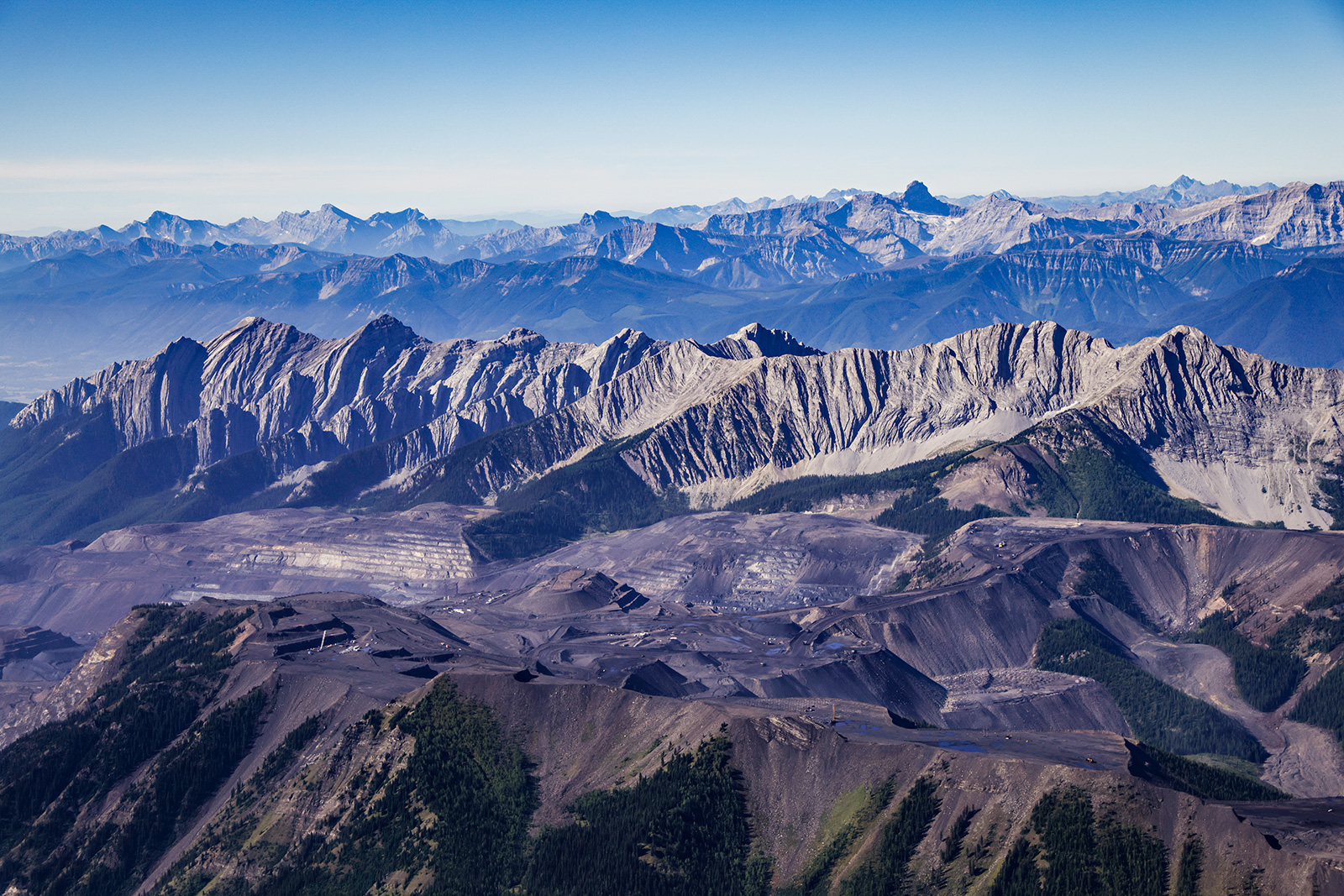
A Montana district judge on Wednesday upheld an embattled water quality standard for Lake Koocanusa, a transboundary reservoir that open-pit coal mines in British Columbia have supercharged with pollutants. The ruling resolves years of legal fighting over the legitimacy of a site-specific water quality rule that Montana adopted in 2020 as a defense against upstream mining contaminants leaching from piles of waste rock into state waterways.
The court ruling delivers a win for conservation groups and the state’s top environmental regulatory agency, which fought to maintain the standard for a mining byproduct called selenium even as coal interests continue seek to invalidate it.
In 2023, a coalition of Montana and Idaho-based conservation groups went to court alongside the Montana Department of Environmental Quality (DEQ) to defend the water quality standard against challenges from the mining company responsible for the pollution, as well as the Board of Lincoln County Commissioners and the Montana Board of Environmental Review (BER), who sought to roll back existing water quality criteria in favor of a more permissive water quality standard for the mining byproduct selenium.
Although it is a naturally occurring mineral, selenium is toxic to fish and other aquatic life at high concentrations. Ninety-five percent of the selenium entering Lake Koocanusa comes from B.C.’s Elk River Valley, where the Swiss mining corporation Glencore operates five metallurgical coal mines. The coal mines were previously owned by Teck Resources Limited. Under Glencore’s ownership, the mines are operated by a spinoff company called Elk Valley Resources (EVR).
“We’re happy to see that the Court made the right decision by protecting Montana’s waters from upstream Canadian coal mine pollution,” Derf Johnson, deputy director of the Montana Environmental Information Center, said in a statement Thursday. “Montana’s water quality standards for selenium are based in science. Not only do they protect our water quality, but they also protect wildlife and the outdoor recreation economy that depends on clean water.”
According to DEQ, the Lake Koocanusa selenium standard is based on years of collaborative, peer-reviewed scientific studies and “the expertise of the most highly regarded selenium scientists in the world.” The site-specific standard is not only justified, DEQ officials have maintained, but it is also “necessary to protect aquatic life from the toxic effects of selenium, and protect downstream water quality.”
Since the rule’s adoption, the Canadian coal miners have disputed the standard on the grounds that it “is more stringent than the comparable federal guideline for selenium.” In December 2022, Teck drafted a letter to DEQ challenging the new water quality standard, which was sent with approval by the Montana Board of Environmental Review (BER).
DEQ then filed a petition for judicial review against the BER, which, in an odd twist, is the same governor-appointed board that adopted the standard before reversing course after the appointment of new members in 2021. The BER also claimed the rule was more stringent than federal guidelines, despite assurances from the U.S. Environmental Protection Agency that the selenium standard complied with the Clean Water Act. The MEIC filed a separate lawsuit to defend the water quality standard, as did the Clark Fork Coalition, the Idaho Conservation League and Idaho Rivers United.
The lawsuits were ultimately consolidated. On April 8, Lewis and Clark County District Judge Kathy Seeley granted a motion for summary judgment supporting DEQ’s claims as well as those of the conservation groups while denying cross motions from BER and EVR.
Despite years of research and collaboration by stakeholders and scientists to ensure the standard’s adoption is scientifically justified, state lawmakers and elected leaders from Lincoln County have mounted challenges attempting to overturn the environmental rulemaking surrounding selenium releases from Canadian coal mines. Those efforts have worried supporters of the rule, who say that without a protective value in place at the border, Montana is entirely at the mercy of a Canadian coal-mining corporation. Moreover, the state would be without recourse in the event of a costly environmental remediation.
In an interview with the Beacon, MEIC’s Johnson said any efforts to overturn Montana’s selenium standard represented a step backward in a decades-long process to guard northwest Montana’s waterways against upstream polluters.
Those efforts began to take regulatory shape in 2016, when the EPA updated its recommended national criteria for selenium, capping it at a value of 1.5 micrograms per liter for lakes and reservoirs and 3.1 micrograms per liter for rivers, while also suggesting that states use site-specific standards wherever appropriate and applicable. In Montana, the DEQ opted to pursue a site-specific standard for Lake Koocanusa and the Kootenai River due to the sensitivity of its fish species and the increasing load of toxic chemicals bearing down on the waterway from piles of waste rock in Canada.
In December 2020, after more than five years of analysis, a multitude of state, federal and tribal agencies on both sides of the border arrived at a protective water quality standard to safeguard fish species in the Koocanusa reservoir as well as the Kootenai River in Montana and Idaho, where selenium continues to be detected at elevated levels in fish tissue and egg ovary samples. The BER approved a site-specific standard in December 2020, setting the new criteria at 0.8 micrograms of selenium per liter on the lake. Following BER approval, the DEQ forwarded the new water quality rule to the EPA for review. The federal agency approved it on Feb. 25, 2021.
Lake Koocanusa straddles the Montana-Canada border and is part of the Kootenai River watershed that stretches from B.C.’s Elk River Valley through Montana and Idaho and into the Columbia River. For decades, coal mines have polluted B.C.’s Elk River with elevated concentrations of selenium. The trout population of the upper Fording River, located below Teck’s mines, collapsed in recent years and the company was ordered to pay a $60 million fine under Canada’s Fisheries Act for its role.
In November 2023, the U.S. Geological Survey (USGS) published a report revealing that since 1984 selenium and nitrates in the Elk River have increased by 581% and 784%, respectively, signaling unprecedented increases of the pollutants in the watershed.
“It is unconscionable that Montana’s Board of Environmental Review would ignore recommendations from both the Environmental Protection Agency and Montana Department of Environmental Quality on the selenium standard, allowing a Canadian coal company to pollute our state’s waters,” said Mary Cochenour, a senior attorney with Earthjustice who represented the conservation groups. “Lake Koocanusa is beloved for its recreation opportunities and is a uniquely biodiverse watershed. We must fight any attempt to allow a foreign company to destroy this regional gem.”