Flathead Forest Authorizes Logging Project West of Blacktail Mountain
Officials said the West Truman Project near Lakeside will use emergency logging and thinning to reduce wildfire risk and protect the community. The decision authorizes 2,823 acres of treatment and 5.6 miles of temporary roads.
By Tristan Scott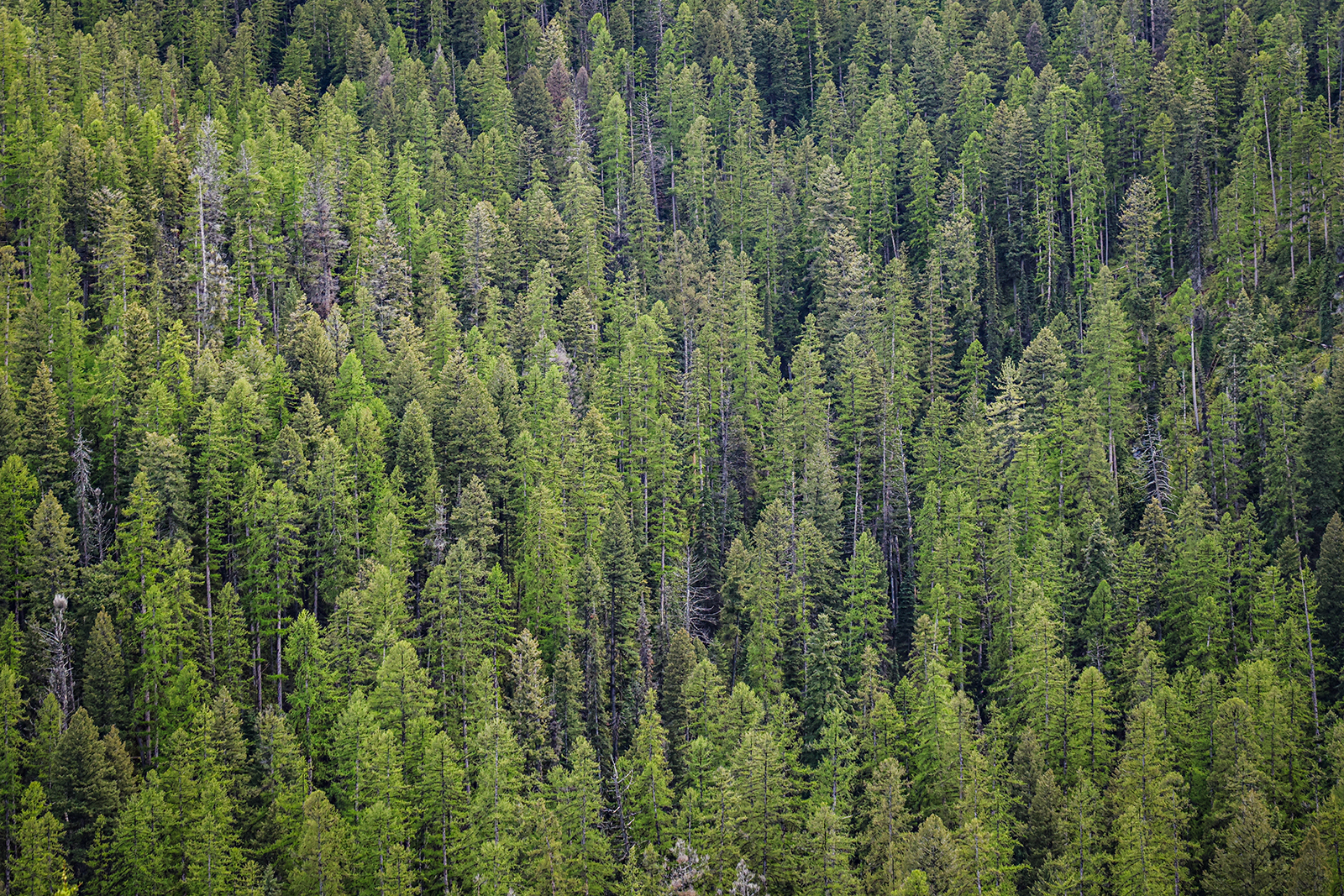
Flathead National Forest officials have authorized an emergency logging and thinning project in the Salish Mountains near Lakeside, three miles west of Blacktail Mountain, with the aim of reducing wildland fire risk and improving forest health.
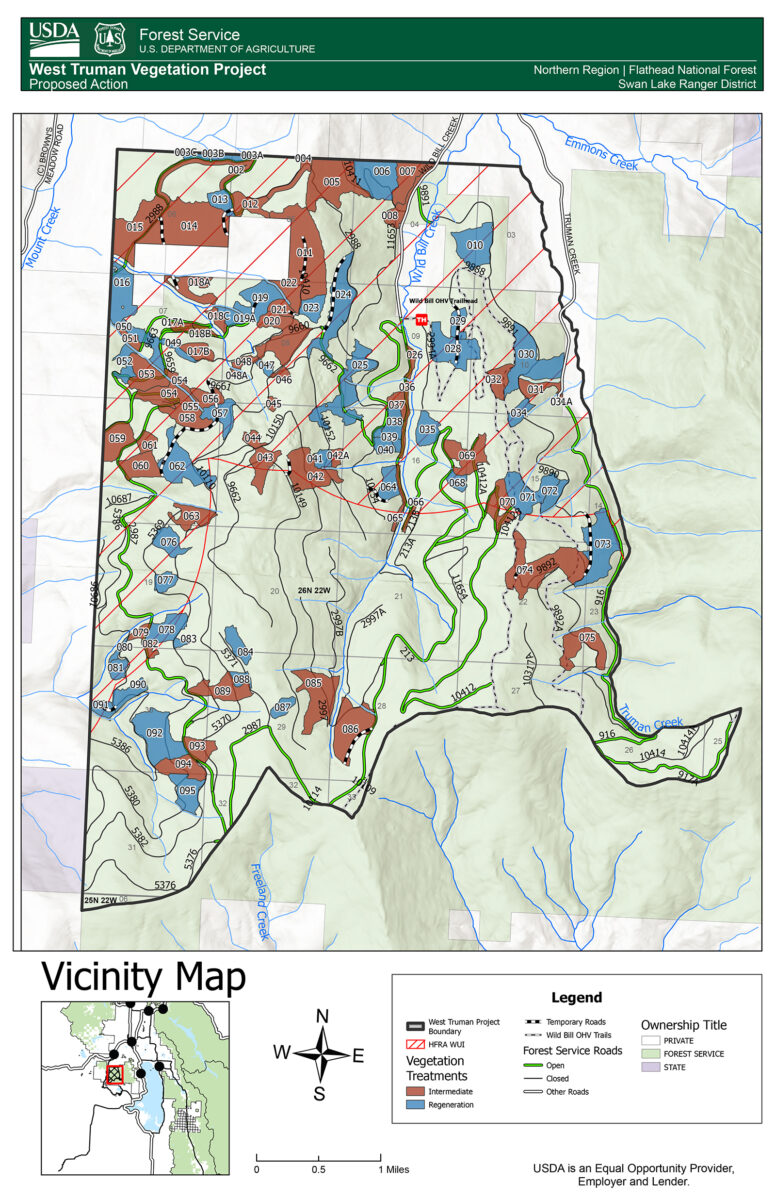
The decision authorizes 2,823 acres of commercial vegetation treatment and construction of approximately 5.6 miles of temporary roads. Crews will use more than 67 miles of existing roads and haul routes.
First proposed last October, the West Truman Project advanced quickly through the U.S. Forest Service’s environmental compliance process under a categorical exclusion, receiving final approval on April 14. Implementation of the project could begin “as early as fall 2027,” according to the decision and finding of applicability and no extraordinary circumstances (FANEC) signed by Swan Lake District Ranger Sarah Canepa.
Federal agencies have long used a range of “categorical exclusions” that allow them to forgo environmental assessments and environmental impact statements required under the National Environmental Policy Act (NEPA). Under the banner that it helps reduce paperwork and save time on activities with a negligible environmental impact, categorical exclusions have been increasingly prescribed to fast-track fuels reduction projects aimed at decreasing the risk of wildland fire to communities and mitigating extreme fire behavior.
In this case, the Swan Lake Ranger District determined the project is appropriate for categorical exclusion because it does not exceed 3,000 acres and does not establish new permanent roads (temporary roads may be constructed but must be decommissioned no later than three years after the project is completed). More importantly, about half of the 13,017-acre project area falls within the Wildland Urban Interface (WUI) established by the Flathead County Community Wildfire Protection Plan. It also qualifies for categorical exclusion under Section 605 of the Healthy Forests Restoration Act because it promotes wildfire resilience.
“The project will reduce the risk of high-intensity wildfires,” according to the decision. “By reducing tree densities and fuel loading within the wildland-urban interface, we reduce fuel available for future wildfires. Less fuels results in less intense fire behavior in the future and improves the resiliency of vegetation communities.”
Forest officials also say the West Truman Projects meets the U.S. Department of Agriculture’s newly established criteria for an Emergency Action Determination (EAD). Combined with recent revisions to NEPA, the EAD exempts the project from the customary layers of permitting compliance, including an administrative objection period and public comment.
“The West Truman project area is located directly adjacent to the Blacktail Mountain and Lakeside communities and is topographically aligned with prevailing wind patterns that may increase potential fire behavior and risk of wildfire,” according to a press release announcing the decision. “The project activities will reduce fuels and fuel continuity, reducing the risk of fire spread within the wildland-urban interface. Once completed, the project work will improve ingress and egress to create a safer environment for firefighters through strategically located fuel breaks.”
The project would commercially thin 736 acres while using improvement cuts on 939 acres. It would treat 346 acres for shelterwood and 802 acres for seed tree.
More information about the project, as well as the finding of applicability and no extraordinary circumstances document, can be found on the West Truman Project website.