Glacier Park Prepares to Release Shuttle Reservations Amid Access Changes
Vehicle reservations are not required, but shuttle reservations are required beginning July 1 after a new three-hour parking limit takes effect at Logan Pass. Advance shuttle reservations go on sale May 2.
By Tristan Scott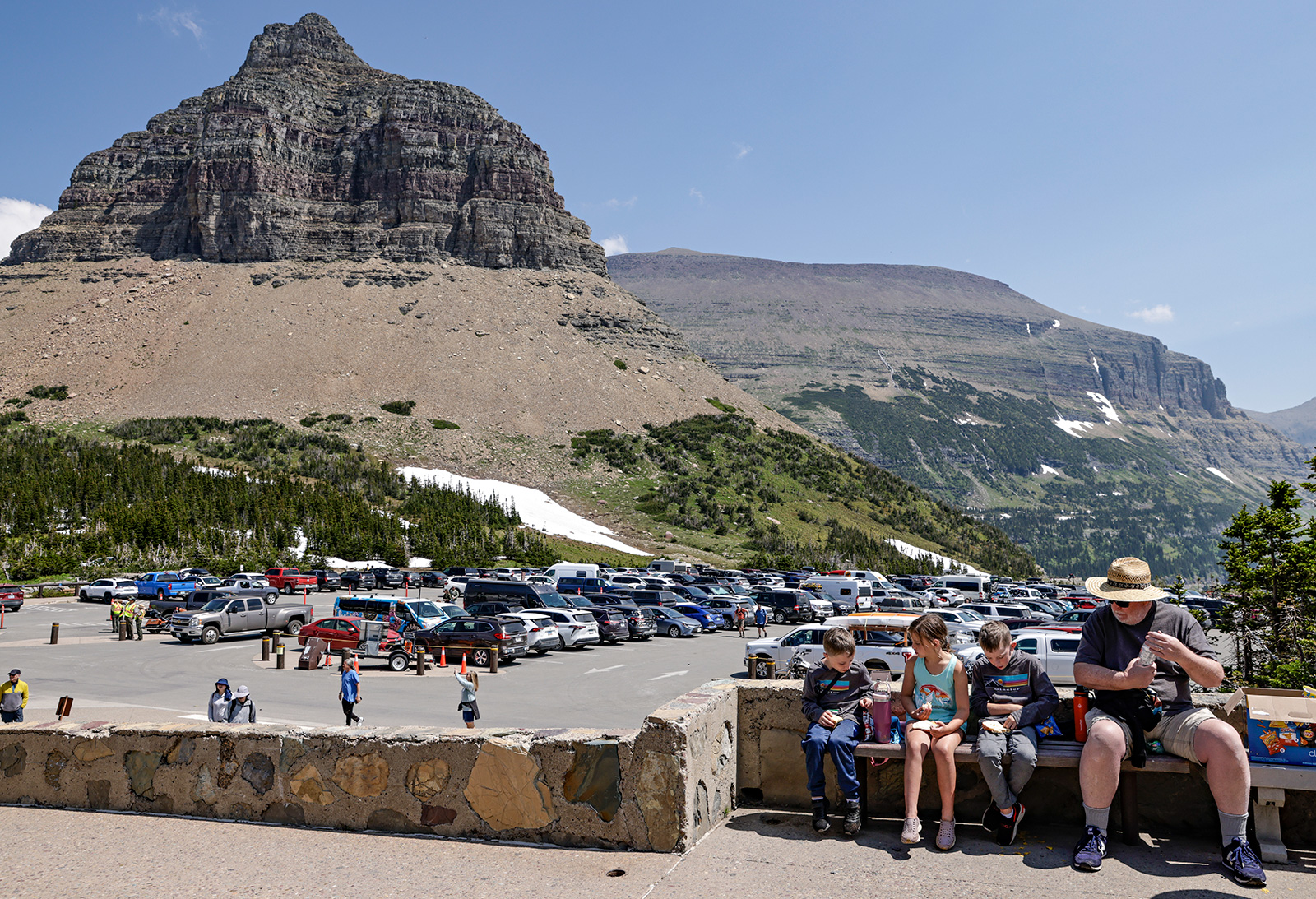
As Glacier National Park prepares to release the first tranche of advance tickets for its new reservation-only summertime shuttle system, officials are reminding visitors about a gamut of access changes set to take effect July 1, including a three-hour parking limit at Logan Pass.
The most dramatic change visitors will encounter this summer is the rollback of vehicle-reservation requirements that have, in some form or another, been in place since 2021 as part of an effort to manage congestion along the park’s Going-to-the-Sun Road corridor. That pilot program took a slightly different shape each summer as park administrators refined the strategy, with a mixed reception from visitors and business stakeholders in a volatile tourism economy.
Although park officials described locating a visitor-use “sweet spot” as the adaptive pilot program ran its course over five years, allowing administrators the flexibility to troubleshoot bugs and iron out kinks from one season to another, they ultimately conceded that the vehicle reservation system hadn’t relieved congestion at the park’s most popular destinations, including the Logan Pass Visitor Center, park entrances and popular trailheads.
In dropping the vehicle reservation requirement, which will not go into effect anywhere in the park in 2026, Glacier is supplanting it with a reservation-only shuttle system, which is tailored to visitors seeking longer experiences in the alpine stretches of the Going-to-the-Sun Road. The new reservation-only shuttle system replaces the park’s first-come, first-served shuttle system. Shuttles to Logan Pass will not pick up passengers who do not have shuttle tickets.
“With the new trial measures, we aim to improve the public’s ability to visit Logan Pass for short durations and allow the shuttle system to perform more reliably for a more specific purpose,” Glacier National Park Superintendent Dave Roemer said in February when he announced the changes. “This initiative reflects our continued learning and listening as we refine park transportation and access to better serve the public and safeguard the integrity of the park’s resources.”
Tickets are required for each visitor over the age of 2 and are valid for one day. They will be available through Recreation.gov for a $1 service fee.
Even though the new reservation-based express shuttle system isn’t scheduled to begin until July 1, assuming the Sun Road’s upper reaches are clear of snow by then, reservations will be available to visitors 60 days in advance beginning May 2 at 8 a.m. and on a rolling basis thereafter. Shuttle reservations for next-day entry will be released daily starting on June 30 at 7 p.m.
As those dates approach and the summer season looms, park officials are reminding visitors about the changes, first announced in February. To help visitors plan ahead, Glacier has created a dedicated page with everything visitors need to know about 2026 access and shuttle changes.
Shuttle Routes and Schedules
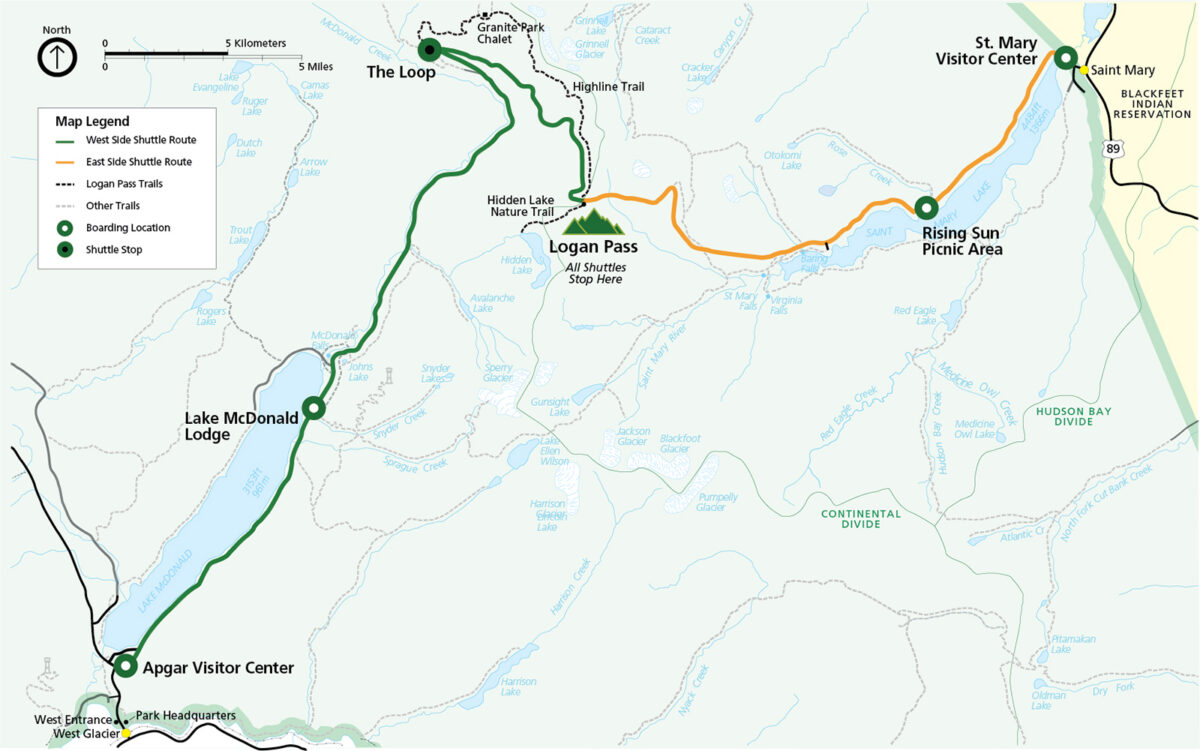
The shuttle, which includes early morning express routes, will ferry visitors to the popular Logan Pass Visitor Center from both the east and west sides of Going-to-the-Sun Road, while the three-hour parking time limit is “intended to increase parking turnover and provide more visitors the opportunity to experience the area.”
“Three hours allows time to hike to Hidden Lake Overlook, visit the Logan Pass Visitor Center or attend an interpretive program, visitors planning longer hikes that begin at Logan Pass, including the Highline Trail to Granite Park Chalet or to the Loop Trailhead, must obtain a shuttle ticket,” according to Wednesday’s news release.
Overnight parking will not be permitted at Logan Pass except for permitted backcountry users and registered guests of Granite Park Chalet.
West side express routes will depart from Apgar Transit Center beginning at 6 a.m. and Lake McDonald Lodge at 7 a.m., with stops at the Loop in the afternoon and Logan Pass.
East side express routes will depart from St. Mary Visitor Center and Rising Sun. Riders may transfer between routes at Logan Pass.
Avalanche Lake and Trail of the Cedars will not be accessible by park shuttle in 2026.
Route details, boarding times and stop locations are available here.
Shuttles will depart Logan Pass every 60 to 90 minutes. The last shuttle to depart Logan Pass for the day to return to west side boarding locations is at 7:30 p.m. The last shuttle to depart Logan Pass for the day to return to east side boarding locations is at 8 p.m. There are no other public transportation services available if visitors miss the last shuttle.
Shuttles will stop in both directions at The Loop, allowing shuttle riders to start or end their hike at The Loop and return to their boarding location. The estimated travel time between The Loop and Logan Pass is 30 minutes. In the afternoon, shuttles headed up to Logan Pass will stop at The Loop to pick up passengers that need to get back to Logan Pass to transfer to eastbound shuttles. Eastbound shuttles will pick up passengers approximately every 60 to 90 minute, with the first pick-up time at noon and the last pick-up time at 7 p.m.
Many Glacier, Two Medicine, and North Fork Vehicle Reservations
Because vehicle reservations will not be required in Many Glacier, Two Medicine or the North Fork in 2026, visitors may be “temporarily diverted when areas reach capacity,” according to park officials. Visitors with lodging, camping, boat tour, horseback ride, guided hike or backcountry reservations will be permitted entry during temporary restrictions but may experience delays.
Going-to-the-Sun Road opening
Snow removal operations began in early April and typically continue until Logan Pass opens between mid-June and early July. Snowstorms and avalanches often continue through May, and the park cannot predict an opening date.
Road crews work across approximately 40 avalanche paths, and progress depends on snow and avalanche conditions.
“The park cannot predict when Logan Pass trails will open,” according to park officials. “Popular routes, including the Highline Trail, may remain closed due to hazardous snow conditions.”