Lincoln County Releases Kootenai River Recreation Plan
The cross-jurisdictional planning framework identifies specific infrastructure investments to improve recreational access and safety from the Libby Dam to the Idaho border
By Tristan Scott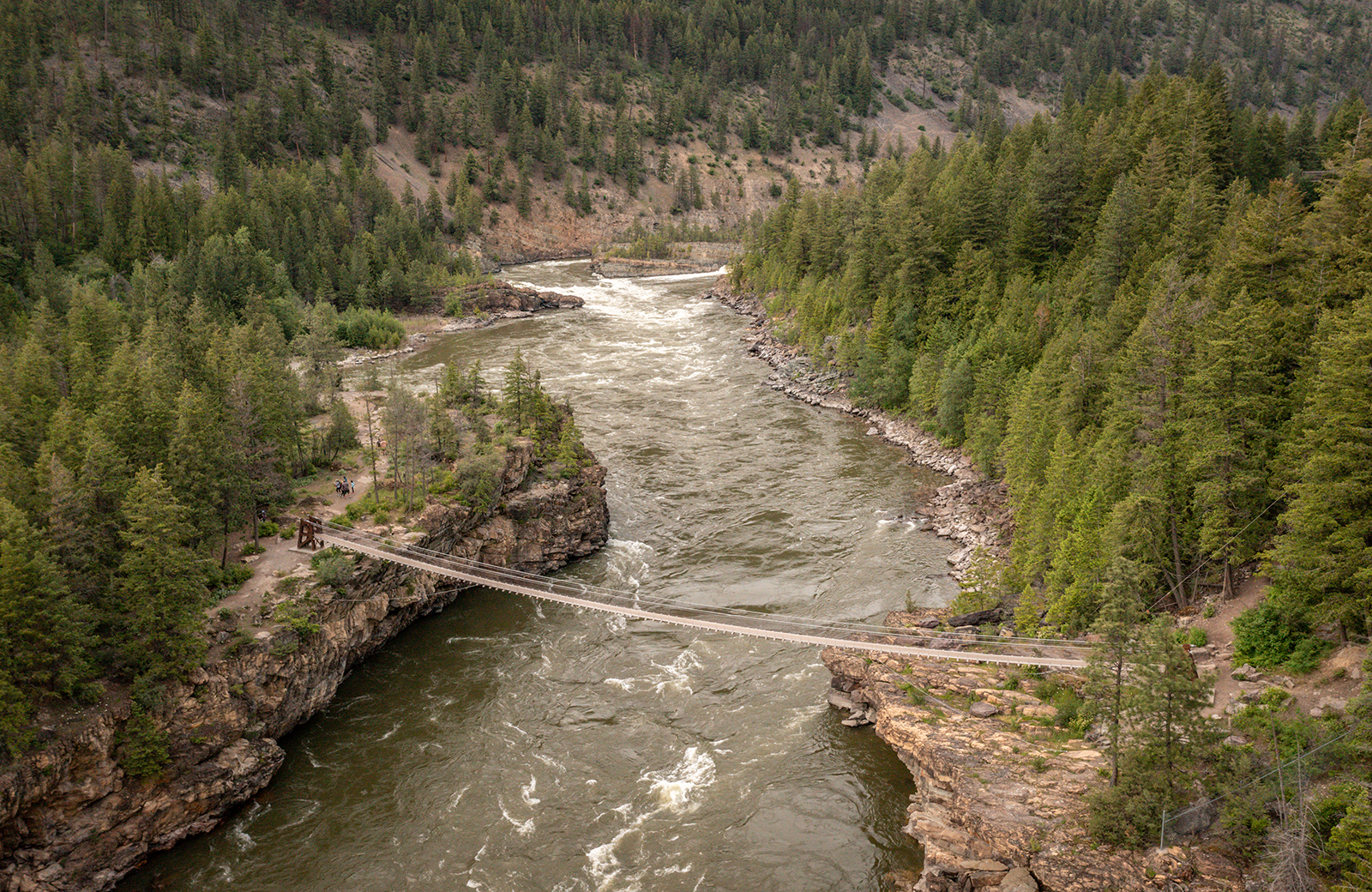
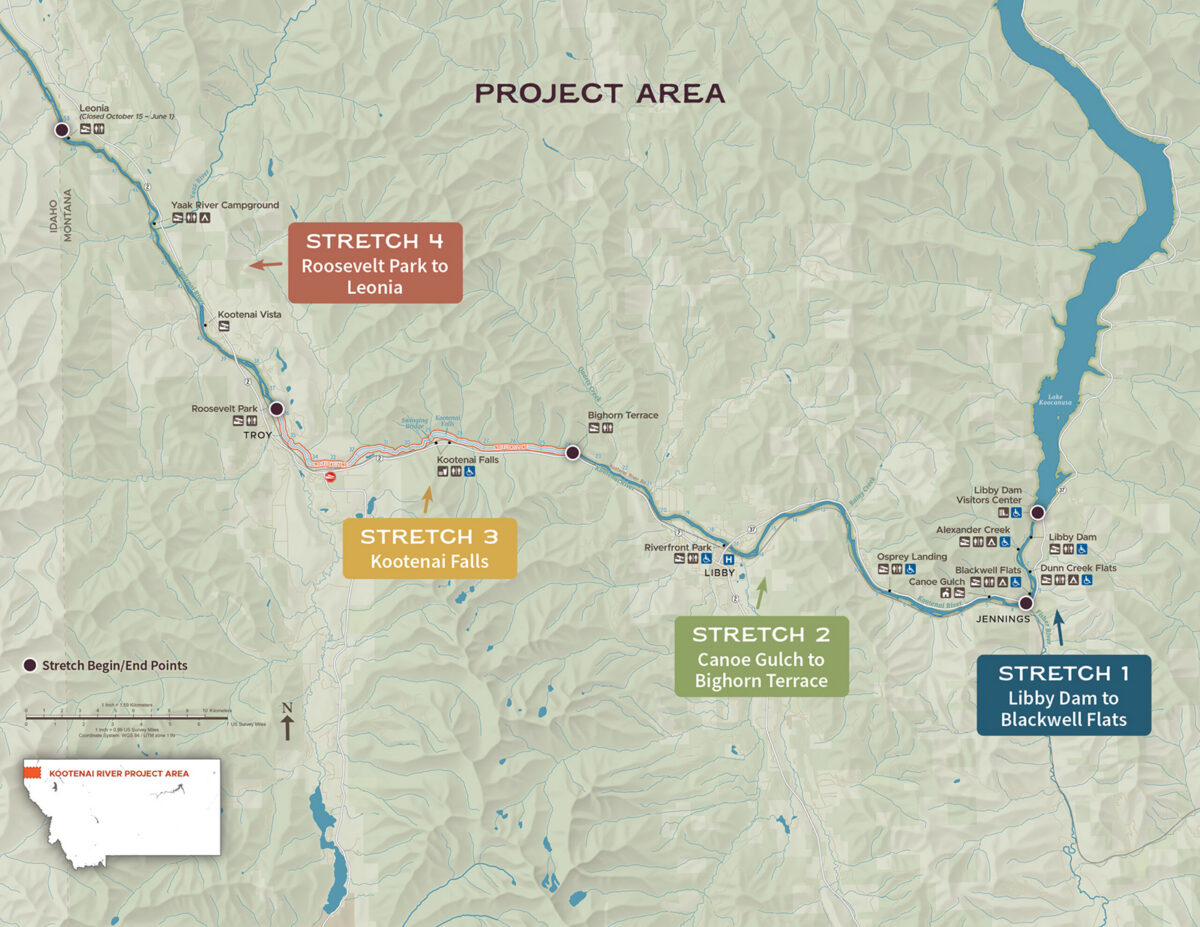
What began as an ad hoc effort by Lincoln County officials to secure grant money for a boat-ramp improvement project has evolved into a collaborative, comprehensive plan to enhance public safety and access at 13 sites spanning 50 miles of the Kootenai River, stretching from the Libby Dam to the Idaho border.
Earlier this year, Lincoln County and its partners released the Kootenai River Recreation Framework, a master strategy for improving safety, accessibility and signage at recreation access points in Lincoln County. The framework was developed in response to longstanding infrastructure gaps at river access sites, including the need to extend the boat ramp at Riverfront Park in Libby. When county officials learned that river recreation projects weren’t eligible for funding under traditional outdoor recreation grant programs, however, they decided to try a new approach.
In 2023, Lincoln County identified a funding opportunity through the Natural Resource Damages Program (NRDP), which provides funding on behalf of the public for restoration projects to offset environmental degradation that’s occurred due to the release of hazardous substances. In this case, Lincoln County drew a connection between the river-recreation and restoration projects it had proposed along the Kootenai River corridor — such as the boat-ramp extension project — and the legacy of vermiculite mining in Lincoln County that led to widespread asbestos contamination, a deadly public health crisis and a Superfund designation. The pot of NRDP money is dedicated exclusively to restoration activities — such as restoring, replacing, rehabilitating, or acquiring the equivalent of injured natural resources — and to developing and implementing restoration plans; the money is not intended for environmental remediation work.
In November 2024, NRDP finalized its Interim Restoration Plan, approving seven early restoration projects guided by community input, including the Kootenai River Recreation Framework project. Funding became available in June 2025, and the project convened its first official meeting the following month.
Enter Outdoor Community Partners, a Montana-based nonprofit specializing in community-driven outdoor recreation planning. The cross-jurisdictional committee conducted a field inventory of all 13 access points in summer 2025, including a separate inventory by an adaptive recreation specialist, and distributed a Community Values Survey last fall that solicited feedback from local river users.
Tom Lang, the project lead for Outdoor Community Partners, helped coordinate the stakeholders to marshal resources and tackle a gamut of long-standing challenges surrounding river access, recreation and safety.
“It was three years in the making, from trying to upgrade the boat ramp to finding this pot of NRDP money that is uniquely suited to Lincoln County’s needs because it includes recreation access improvements among its definition of restoration,” Lang said. “And then we thought, well, let’s not do it alone; let’s build regional steering community and create a model for regional river recreation. Because rivers are always regional; they’re never in one single jurisdiction, they crisscross all over the place and lace together all kinds of public and private interests.”
Under Lang’s guidance, a 10-person steering committee coalesced around the idea, including representatives from Lincoln County, Montana Fish, Wildlife and Parks, the U.S. Forest Service, U.S. Army Corps of Engineers, the Confederated Salish and Kootenai Tribes, Summit Independent Living, David Thompson Search and Rescue, and Linehan Outfitting.
“For too long, improving access and safety on the Kootenai meant navigating a complicated patchwork of jurisdictions with no shared plan or funding,” Lincoln County Commissioner Jim Hammons said. “Now, we have that plan, a clear timeline, and the partnerships in place to bring needed resources to the river.”
The framework recommends updates across access and safety, signage, monitoring, and co-management strategies, with a three-year implementation timeline. The most foundational work will be completed in 2026, including ADA parking upgrades, restroom improvements, bear-resistant trash installations, and initial signage upgrades. Kiosk expansions, river hazard signage, and a shade shelter may follow in 2027.
The boat-ramp extension project at Riverfront Park, which is the most complex project, is proposed for 2028 alongside a full-time monitoring program and permanent wayfinding signage on U.S. Highway 2. Meanwhile, to support co-management, the framework recommends the adoption of a Memorandum of Understanding (MOU) among the managing agencies as well as exploring the creation of a River Recreation Coordinator position.
“Together, these updates will build the infrastructure, data, and cross-agency coordination needed to sustain the Kootenai River as a world-class recreation resource for Lincoln County and beyond,” according to the plan.
Because the framework provides a replicable model for regional river recreation planning,” Lang said he hopes it demonstrates how communities and agencies can align interests and priorities to make practical investments that improve safety and access.
“It also supports co-management within a river system, like the Kootenai, made up of a complex mix of jurisdictions and ownerships, which is common on many rivers in Montana,” Lang said.
To learn more about the plan and to review the framework, visit the Outdoor Community Partners website here.