Missing Glacier National Park Hiker Killed in Apparent Bear Attack
An investigation is underway into the death of Anthony Pollio, a 33-year-old Florida man reported missing earlier this week in the Mount Brown Lookout area. The last fatal bear attack in Glacier Park occurred in 1998.
By Tristan Scott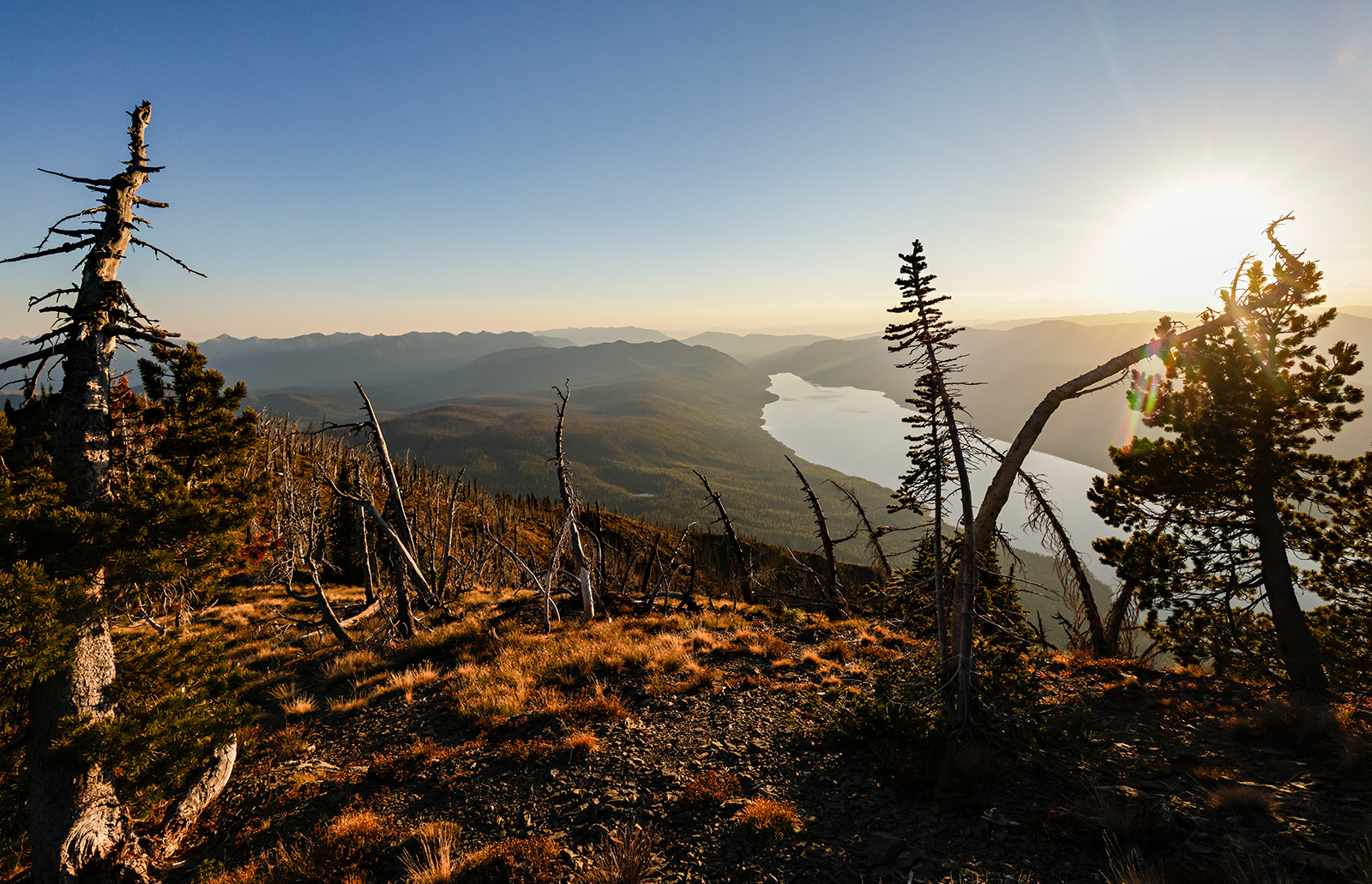
The search for a missing hiker in Glacier National Park ended Wednesday after his remains were discovered 50 feet off of a popular trail in the Lake McDonald area. The victim’s fatal injuries are consistent with a bear attack, park officials said in a Thursday press release.
If the circumstances of the hiker’s death are confirmed, it would mark the first fatal bear attack in the park in nearly three decades. In response to the hiker’s death, park officials closed a wide expanse of trails between Sperry and Lincoln Lake trailheads on the west side of Lake McDonald.
The missing hiker, Anthony Pollio, 33, of Fort Lauderdale, Fla., had communicated plans to hike to the Mount Brown Fire Lookout above the Lake McDonald Valley. He was last heard from on Sunday, May 3, when he sent a text message at approximately 8:20 p.m.
At noon on May 6, search and rescue crews discovered human remains about 2.5 miles up the trail to the Mount Brown Fire Lookout, in a densely wooded area littered with downed timber, according to details in the press release. The manner of death was consistent with a bear attack, officials said, but the investigation into the circumstances is ongoing.
“Wildlife [experts] and law enforcement personnel are currently assessing the area for bear activity and any ongoing public safety concerns,” according to the release.
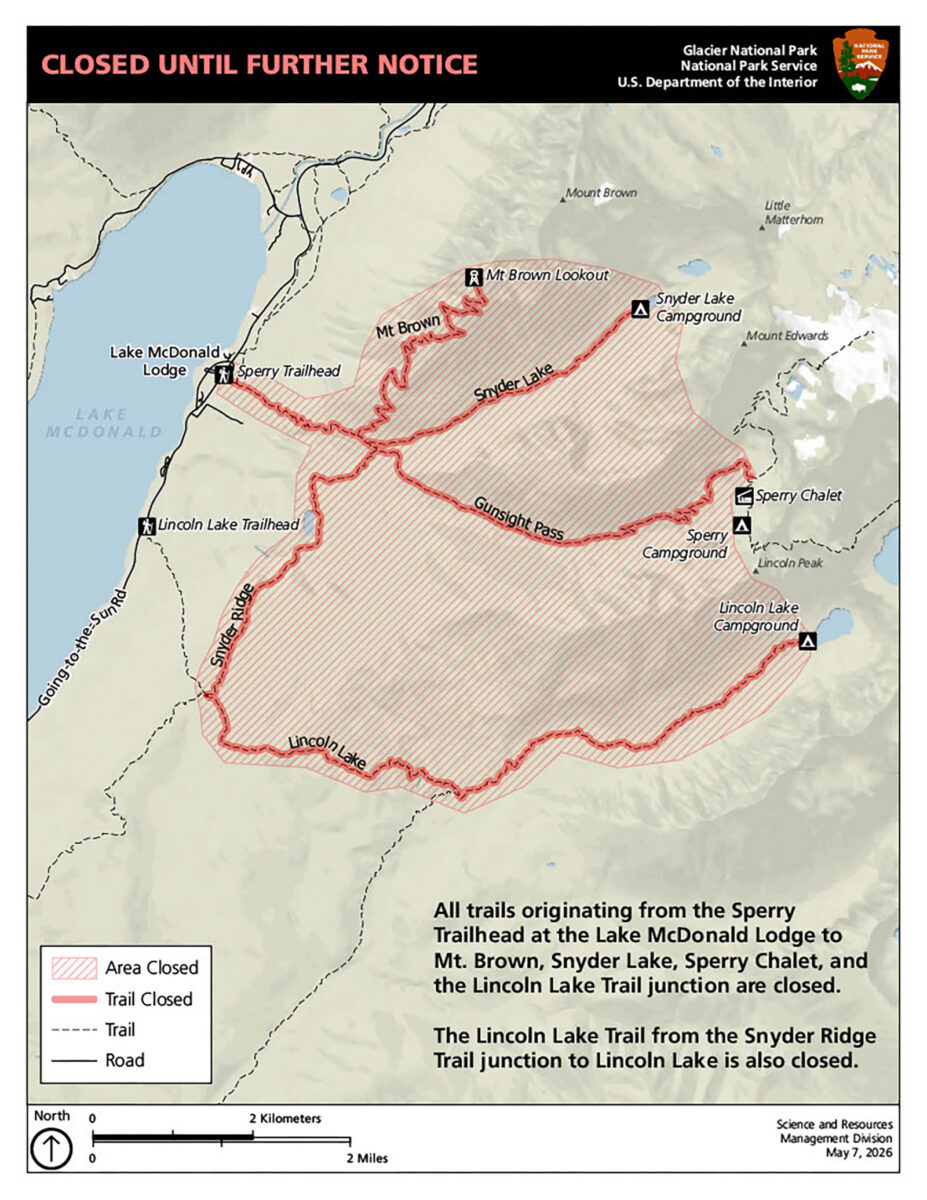
Officials have temporarily closed area trails while the investigation continues, including all trails beginning at the Sperry Trailhead at Lake McDonald Lodge. The trails to Mount Brown Fire Lookout, Snyder Lake, Sperry Chalet, and Lincoln Lake are closed, as is the Lincoln Lake Trail from the Snyder Ridge Trail junction. Park staff are working to determine next steps based on field assessments and wildlife behavior monitoring, the press release states.
Park officials on Friday opened the Going-to-the-Sun Road to Avalanche Creek on the west side. Opening an additional section of the popular thoroughfare, which had been closed at Lake McDonald Lodge, should help disperse visitor congestion.
The park was notified of Pollio’s disappearance on Monday afternoon, and discovered his vehicle parked at Lake McDonald Lodge, near the trailhead.
Park officials said Pollio had communicated his plans to hike toward the Mount Brown Fire Lookout, which involves a 10-mile out-and-back trek along a trail that ascends more than 4,000 feet, with numerous switchbacks and blind corners that could lead to surprise wildlife encounters.
The last human fatality caused by a bear occurred in 1998 in the Two Medicine Valley. The last time a bear injured a human was in August 2025.
Numerous agencies cooperated in the search and rescue and recovery operations, including Flathead County Search and Rescue, North Valley Search and Rescue, Montana Fish Wildlife and Parks, Minuteman Aviation, Civil Air Patrol, Montana Army National Guard, Flathead County Sheriff’s Office, U.S. Forest Service, U.S. Wildland Fire Service, Montana Disaster and Emergency Services, U.S. Geological Survey, ALERT, Border Patrol, Malmstrom Air Force Base, U.S. Air Force Rescue and NPS staff.
Park officials encourage visitors to be “bear aware” while hiking in grizzly bear and black bear country, publishing tips to its “bear safety” page.
Find up-to-date information on trail closures on the Trail Status Reports page.
In a separate bear incident earlier this week, two hikers were injured in Yellowstone National Park on May 4. According to a press release, emergency responders, including law enforcement, EMS personnel and interagency partners, responded to the scene northwest of the Old Faithful area and provided aid before transporting the two male hikers, ages 15 and 28, by helicopter to a hospital. Park officials believe that incident involved a female grizzly bear with two or three cubs-of-the-year (cubs in their first year of life).