2026 Primary Election: Heart of Kalispell Sees Two-Way Primary Between Incumbent and Unseen Challenger for House District 7
Courtenay Sprunger is facing off against Luke Maxwell in her bid to retain her seat this spring
By Mariah Thomas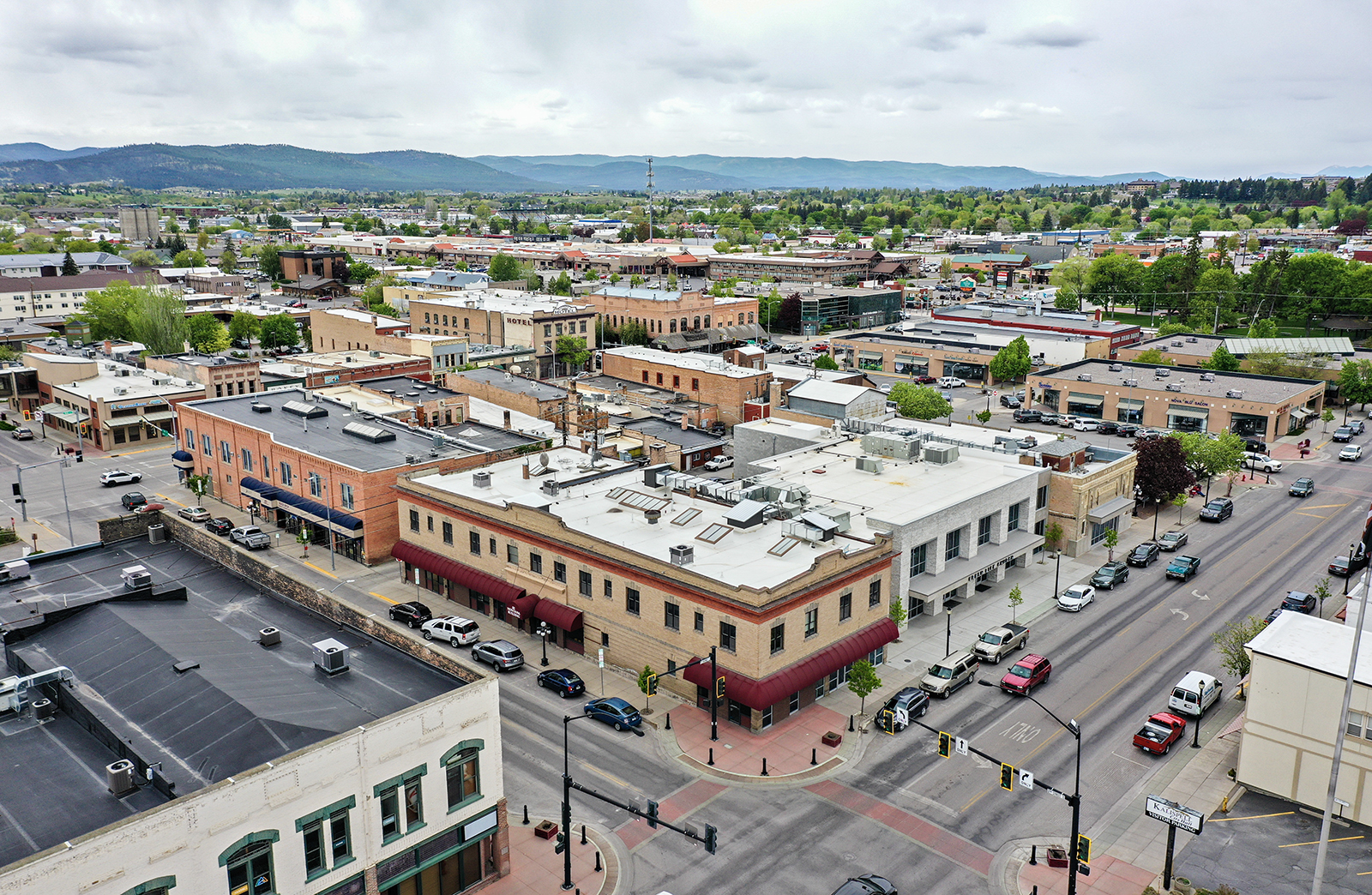
House District 7 runs straight through the center of downtown Kalispell, and for two terms, Rep. Courtenay Sprunger has held the seat.
This primary season, she’s looking for the chance to pass her Republican challenger on the path to returning to Helena to continue serving her constituents. During her first two legislative sessions, Sprunger has earned a reputation as a legislator willing to cross the aisle on some issues. That reputation, however, has put the legislator at-odds with the local GOP and other groups. Throughout the spring, Sprunger has contended with a district full of outside noise as Americans for Prosperity-Montana has named her as part of “accountability campaigns,” she’s faced PAC attack ads and been passed over as a preferred candidate by both the local and state GOP.
Still, Sprunger has called herself a “conservative for the common good,” and carries a solidly conservative voting record, voting with the side taken by most Republicans in the legislature 90% of the time in 2025’s session.
Sprunger is facing off against Luke Maxwell in her bid to retain her seat this spring. The Beacon shared a candidate questionnaire with the email address Maxwell listed alongside his filing for House District 7 with the Secretary of State’s office, but did not receive a response. He does not have a phone number listed with his filing. Maxwell has an active campaign website. The website has a donation portal, but contains no biographical information about the candidate, nor does it contain any information about where he stands on the issues. Maxwell has received an endorsement from the local GOP and was designated as an honor roll candidate by the state GOP.
Sprunger did return a questionnaire, and her answers can be found below. The primary election takes place June 2. Ballots were mailed out to absentee voters May 8. Voters can check their registration status here: https://voterportal.mt.gov/WhereToVote.aspx, and find their legislative district here: https://www.legmt.gov/districts/.
Candidate questions
- Why did you decide to run for the legislature, and what makes you a strong candidate?
- What do you think will be the most pressing issue facing the legislature in 2027, and how would you propose tackling that issue?
- During the last legislative session, property taxes emerged as a flashpoint issue, and the consequences of the legislature’s property tax reform has been a topic rife for debate since. What are your thoughts on the property tax reform passed during the last session?
- How might the state continue to work on this issue?
- One prominent storyline in the state over the course of the past two years has been divisions within your party. How do you view the state of the Montana GOP, and where do you hope to see it move in the future?

NAME: Courtenay Sprunger
AGE: 44
HOMETOWN: Fifth generation Flathead Valley resident
EDUCATION LEVEL: Bigfork High graduate; Bachelor of Arts from Vanguard University
OCCUPATION: Founder and CEO of a public involvement firm that provides services throughout Montana and the Inland Northwest and employs 11 people
PREVIOUSLY HELD OFFICES: State representative for House District 7 since 2023
1. In 2021, the effects of the COVID crisis were hitting Kalispell hard. Housing shortages, rising costs of living, increasing traffic congestion, and growing public safety concerns were putting heavy pressure on working families and small businesses. Standing by and watching our community struggle wasn’t an option. I decided to run for the Legislature because I wanted to help solve problems, protect our heritage, and ensure Kalispell remains a place we are proud to call home. That same motivation drives my decision to seek re-election and it emanates from deep roots.
For more than 125 years my family has lived in the Flathead, and serving this community is a part of our heritage. My great grandparents homesteaded here, my grandmother was a local justice of the peace, and my father taught at Flathead High for 30 years. Long before holding public office, I was invested in this community. I have served on the Kalispell Chamber Board, put in time as a Rotary youth basketball coach, and served as a board member for CASA for Kids; additionally, I founded “Feed the Need,” which benefits the Flathead Food Bank — an effort I remain actively involved in four years later. As a small business employer, I also understand firsthand what it means to create jobs, balance budgets, make difficult decisions, and meet payroll. Over the past two legislative sessions, I’ve combined that real-world experience with a strong conservative voting record and a proven track record of getting results. I’ve sponsored and passed 19 bills focused on the issues people care about most: public safety, infrastructure, trade education, and protecting Montana’s way of life.
Community safety has remained one of my top priorities. In my initial term, I passed legislation cracking down on fentanyl trafficking, strengthened protections for survivors of domestic violence though Emily’s Law, and supported our Sheriff’s Posse with a bill that allowed approved posse members to carry appropriate weapons to ensure their safety and ours.
I’ve also worked to improve infrastructure and strengthen Montana’s workforce. The SAFER Act helps maximize roadway improvements across the state, while HB 672 reduces costly highway construction delays. Through my bill, Career Technical Education Advanced Opportunities, we expanded pathways for students to participate in internships, apprenticeships, and hands-on workforce training opportunities.
Protecting our way of life is also central to my work. The Montana Hunters First Act seeks to tackle increasing crowding from non-resident hunters, and The Legal Act holds employers accountable who exploit illegal labor and undercut law-abiding Montana employers. My focus remains on preserving the values, opportunities, and quality of life that make this place special.
2. In 2025, the conservative majority passed legislation to reduce the income tax burden for Montanans; this is legislation I strongly support. As Montanans face rising utility, food, fuel, and housing costs, keeping more money in family budgets matters. However, reducing income taxes also comes with a practical reality: Montana’s state budget is primarily funded through income tax revenue, and the legislature will need to responsibly balance the budget in 2027. Current estimates suggest lawmakers may need to identify roughly $300 million in savings to meet Montana’s constitutional requirement for a balanced budget.
The Legislature will need to take a disciplined approach focused on prioritizing core services, improving government efficiency, and ensuring taxpayer dollars are being spent wisely. That starts with examining areas where state government has grown too quickly, identifying duplicative programs, modernizing outdated processes, and reducing unnecessary administrative costs. Montana should also continue looking for ways to streamline project delivery and improve coordination between agencies so taxpayer dollars go further — such as the work we’ve already done on infrastructure efficiency and reducing delays in highway construction projects.
At the same time, we need to continue strengthening Montana’s workforce and economy. We must do this by further expanding career and technical education, reducing the burden on small businesses, and creating more opportunities for jobs that pay well; implementing such strategies helps grow the tax base naturally, without placing additional burdens on Montana families.
Montanans expect government to operate the same way families and businesses do: prioritize needs over wants, budget responsibly, and focus spending on what delivers real value.
3. During the last legislative session, property taxes became one of the most important issues facing Montana families. In the Heart of Kalispell, many longtime homeowners — particularly seniors and working families — were being taxed on rapidly increasing home values that existed mostly on paper, not in their bank accounts. Providing relief for full-time Montana residents was important, and that’s why I supported the homestead exemption reforms passed during the session. Overall, I believe the legislation delivered meaningful relief for many primary homeowners in my district who were struggling with rising housing costs, inflation, utilities, groceries, and insurance. Helping full-time Montanans stay in their homes was the right priority.
At the same time, it’s clear there were unintended consequences that deserve attention as we move forward. In downtown Kalispell, many commercial property owners and small businesses saw significant increases in their tax bills. In addition to the changes that arose from the Homestead Act, raising commercial appraisals, existing tax increment finance (TIF) district structures, and increasing local government costs all contributed to those impacts.
I believe the Legislature should continue refining the policy while protecting the core goal of homeowner relief. One area that deserves attention is Montana’s appraisal system. Greater consistency, transparency, and accuracy in both residential and commercial valuations would help restore confidence that taxpayers are being treated fairly.
4. As the state continues refining the system, there are several areas I believe deserve attention. We need to look for solutions to limit local budget growth without deeply infringing on local control, create greater accountability for TIF district structures, and make improvements to the appraisal process.
Montana needs greater transparency and consistency in the appraisal process so taxpayers can better understand how properties are valued. There was considerable, understandable frustration this cycle with the Department of Revenue’s appraisal values in the Flathead — for both residential and commercial properties. Creating a more predictable, transparent model should be a priority. In addition, I’d like the Legislature to explore how often reappraisals are made. We need to find a balance between the growing impact of unrealized gains for present homeowners and shifting the full burden to the next generation of homeowners. Equally important, the Legislature should revisit how TIF districts are extended and sunsetted to ensure there is strong public accountability and ongoing community discussion about their long-term impacts on downtown businesses and commercial cores.
As a Legislature, we also need to start thinking creatively to reduce the property tax burden while maintaining critical local services. As an example, I sponsored the Right Back Act, a separate but complementary property tax reform proposal addressing over-collection on the 95 school equalization mills. Under the previous system, excess revenue generated by rising property values simply flowed into the state general fund instead of providing relief back to taxpayers. The Right Back Act corrected that by using those over-collections to buy down permissive school levies tied to items like school transportation and teacher retirement costs.
Importantly, the Right Back Act benefits all property taxpayers — not just primary homeowners — while still maintaining appropriate school funding. Over time, that reform is projected to return tens of millions of dollars annually back to taxpayers, and I believe we should continue looking for practical structural solutions like the Right Back Act to provide broad-based property tax relief wherever possible.
Property tax reform is not a one-session issue. There is still more work to do, but I believe Montana can continue building a system that is fairer, more transparent, and more sustainable for homeowners, seniors, working families, small businesses, and local communities alike.
5. Over the past two years, there’s no question the Montana Republican Party has experienced internal divisions, which is unfortunate because it limits our ability to deliver what Montanans expect. In my experience, most Montanans care far more about whether elected officials are solving problems than which intra-party faction they belong to. If you agree with someone 80-90% of the time, most people see that as alignment — not a reason for constant infighting and political posturing.
Conservative principles are deeply important to me, and my record reflects that. I’m proudly pro-life, pro-Second Amendment, supportive of lower taxes and limited government, and committed to protecting constitutional freedoms. In 2025, I voted with the Republican majority 90% of the time, earned a 94% conservative rating from Conservative Political Action Conference (CPAC), a 100% rating from Montana Family Foundation, and an A rating from the NRA.
It is my belief that strong conservative values and effective governance are not mutually exclusive. Public office should not be consumed by internal political fights and purity tests. The responsibility of elected leaders is first and foremost to the people of Montana and the communities they represent. That means focusing on the issues families and businesses care about: public safety, affordability, infrastructure, workforce development, protecting hunters and outdoor traditions, and defending constitutional freedoms.
When Republicans fracture as we have over the past two years, conservative voters are not served well. Elections become harder to win, resources donated by hardworking Montanans get wasted, and divisions grow — many over relatively small differences despite agreement on most core issues and values.
Moving forward, I hope to see the Montana GOP move toward greater unity, focus, and effectiveness. Montanans want leaders who will set aside internal divisions to put Montana first, govern responsibly, and deliver results.
Serving the Heart of Kalispell has been one of the greatest honors of my life. I’m proud of what we’ve accomplished together over the last two terms and would be grateful for the opportunity to continue fighting for the Montana way of life we all value.