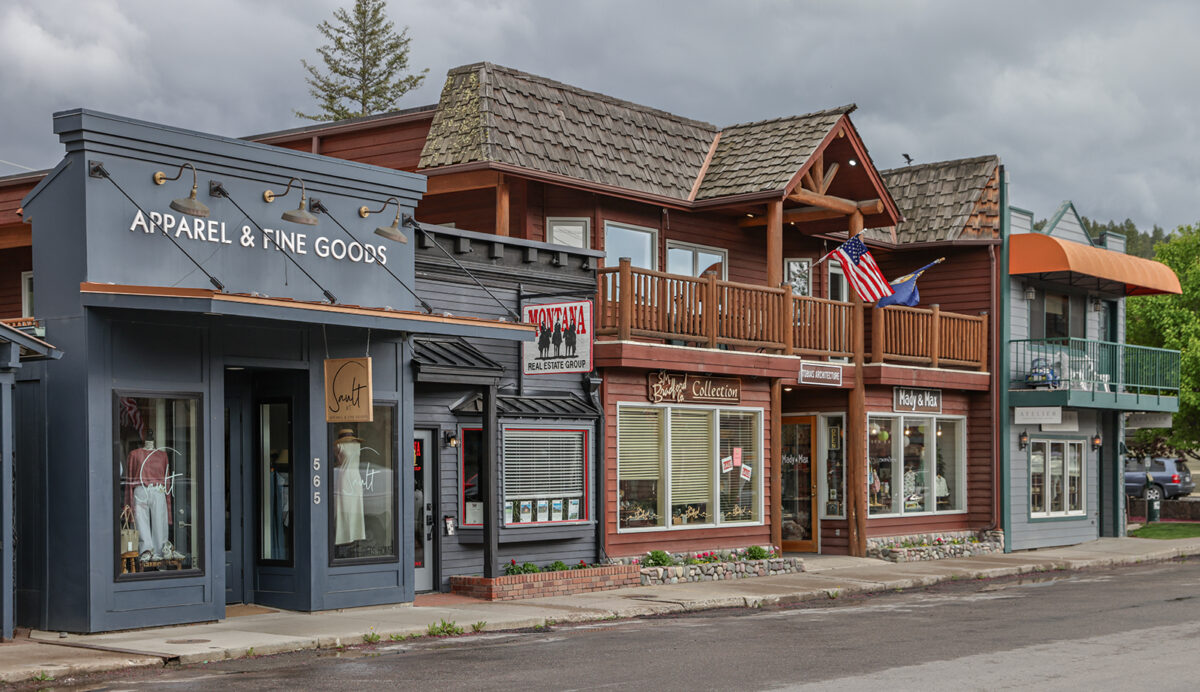
How is a community born? For most towns, it’s a pretty easy answer. Kalispell was platted in 1891 and formally incorporated in 1892, about the same time the Great Northern Railway arrived in town. Whitefish was incorporated in 1905, about the same time the aforementioned Great Northern had left Kalispell in the dust — much to the chagrin of residents there — and moved its main line through the north valley community. Columbia Falls came along a few years after that, in 1909. The list goes on from there.
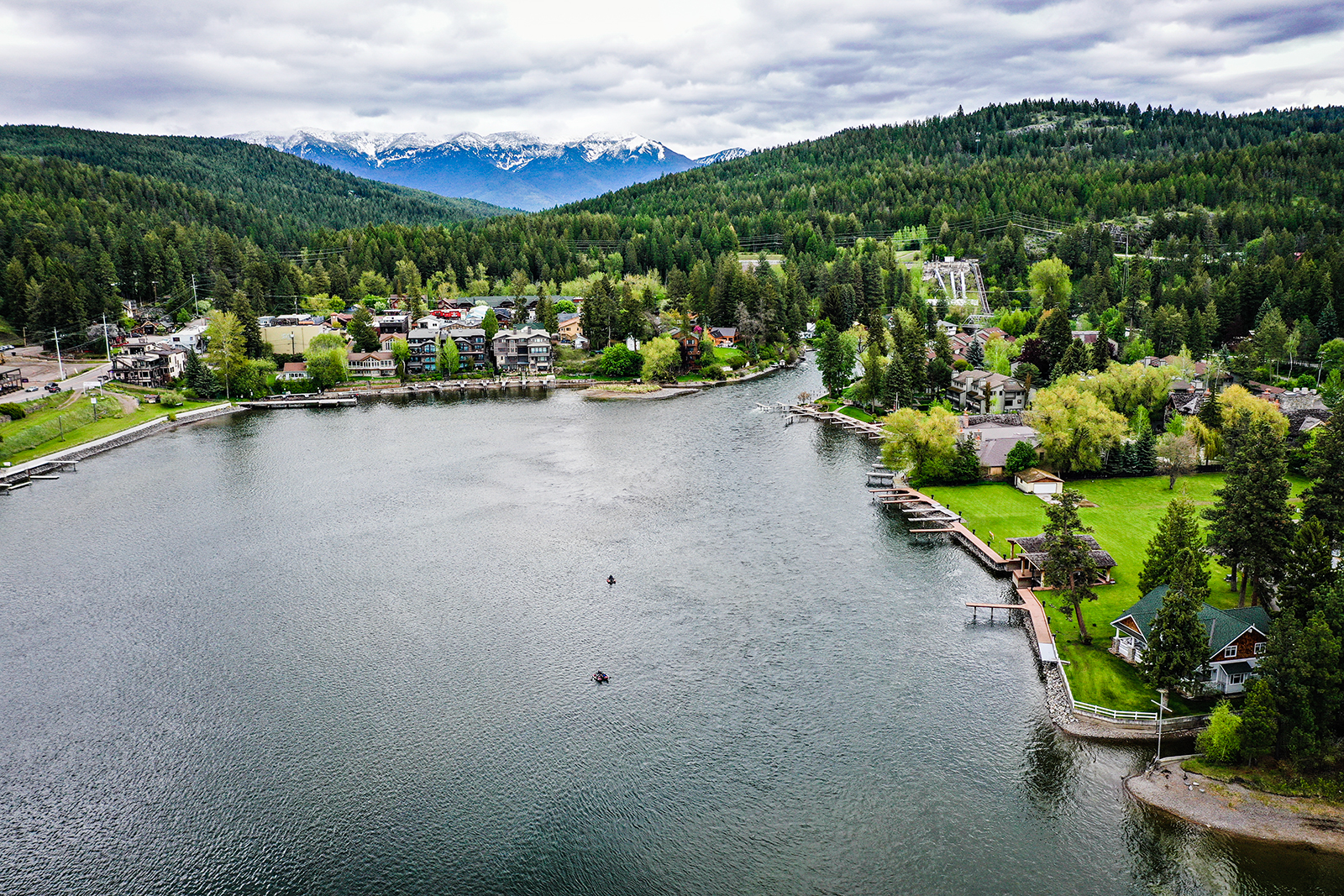
But pinning down a date for a place like Bigfork — one of the state’s largest unincorporated communities — is a little harder. The closest thing the community on the shores of Flathead Lake has to a date of incorporation might be 1901, the year Everit L. Sliter platted what would today be known as Bigfork.
But it’s not like no one had ever set foot in Bigfork before Sliter mapped out the town. In fact, for thousands of years, Bigfork and the area surrounding the north end of Flathead Lake were crisscrossed with Indigenous trails. The confluence of the Swan River and Flathead Lake was, and is, an exceptional place for fishing, and the nearby landscape was full of berries and other foods. But the Kootenai, Salish and Pend d’Oreilles tribes wouldn’t have it to themselves forever. In the early 19th century, French-Canadian fur trappers began visiting the area. In the decades that followed, more and more people arrived in the region, and places like Kalispell began to grow. Among the new arrivals in this part of Montana was a man by the name of Sliter. Originally from Michigan, he migrated to Helena in 1883, worked for the Montana Central Railroad, and opened a cigar store there. After running that for a few years, he continued west and ended up in what would eventually become Bigfork. According to legend, he was convinced to stay in the Flathead Valley because he filled the bottom of a canoe with trout in a matter of hours; he reckoned if the fishing in the Flathead was that good, then everything else was probably good, too. Sliter purchased some land along Flathead Lake for $320. He eventually developed the land, planting hundreds of apple, plum, cherry and pear trees. Later, he and his new wife, Lizzie Osborn, built a 15-room hotel and general store. They also convinced the federal government to open a post office there, with him as the postmaster. In 1902, he filed a plat for Bigfork, dividing the townsite into 94 lots across 11 blocks. While Bigfork was never incorporated, it’s safe to say that 1902 is when it was put on a map — literally.
Despite its lack of legal incorporation, that didn’t stop Bigfork (now population 5,100) from developing into a proud community. Today, it’s well known across the state as an excellent summertime destination, but locals wanted to ensure that visitors knew it was more than that. The result was the Bigfork History Project.
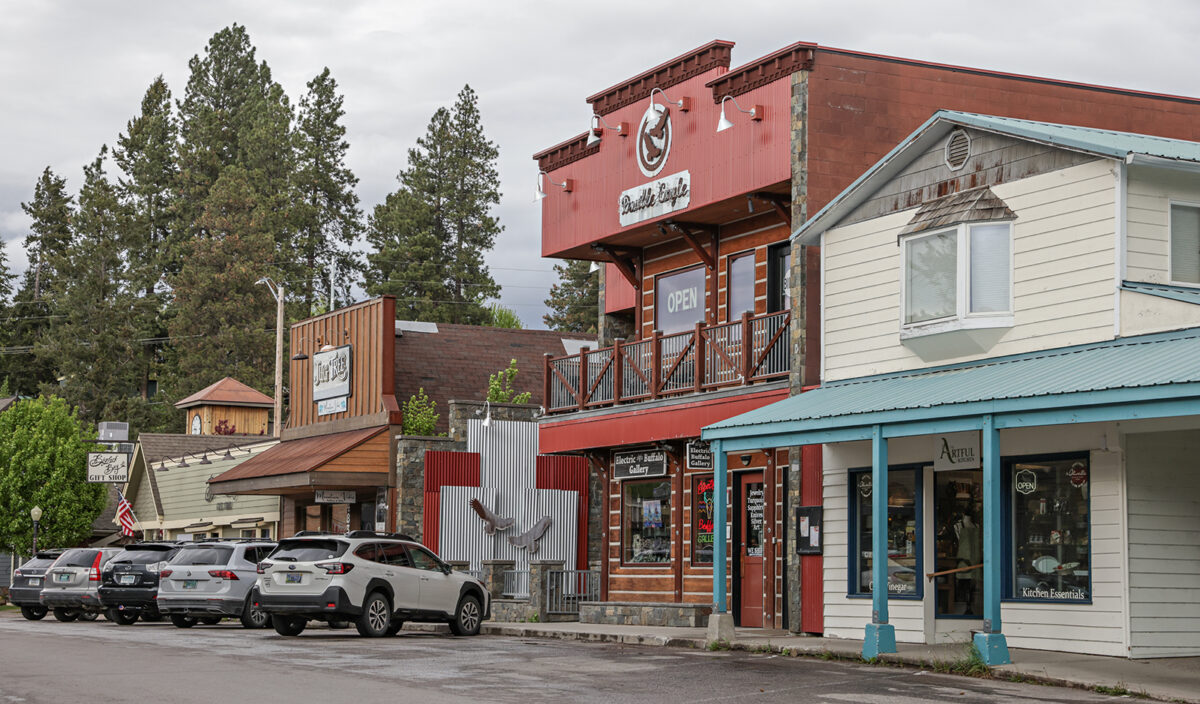
“We thought that someone should tell Bigfork’s story,” said Edward Gillenwater, one of the volunteers who spearheaded the endeavor that began more than a decade ago. “At the time, a lot of people visited here and thought we were just a resort town. But we wanted to make sure that people also knew we were a hometown.”
Gillenwater and others began interviewing old-timers, getting their stories recorded before they were gone. They also began to gather old photos and artifacts from Bigfork’s past. The result was a documentary and book.
Not wanting that material to sit unused or forgotten, Bigfork History Project volunteers began working with the Bigfork Art & Cultural Center at the corner of Electric Avenue and River Street downtown to preserve and display what they had worked so tirelessly to gather. Julie Buttum, executive director of the Bigfork Art & Cultural Center, said the material that went into the original documentary and book is sure to inspire others to keep recording the community’s history — past, present and future.
“It was a great foundation, but there is more work to be done,” she said.
Buttum said the cultural center’s goal was to open the history project as a standalone exhibit before the 125th anniversary of Sliter platting the community, and in May they did just that. Now people can learn the story of Bigfork through historic artifacts and interactive digital exhibits. And it’s all thanks to the many volunteers who made it possible.
“Bigfork is a small community and this was done by people with big hearts,” she said.
The Bigfork Art & Cultural Center is open from 11 a.m. to 5 p.m. Tuesday through Saturday, and Sunday and Monday by appointment. For more information, visit baccbigfork.org.