‘A Moment of Impact:’ Whitefish Nonprofit Turns to Clean Energy to Power Festival
The Westland Impact Festival, which runs from June 11-13, is setting out to be one of the first multi-day, multi-venue festivals in the country to power the entire event with solar-charged, portable batteries
By Lauren Frick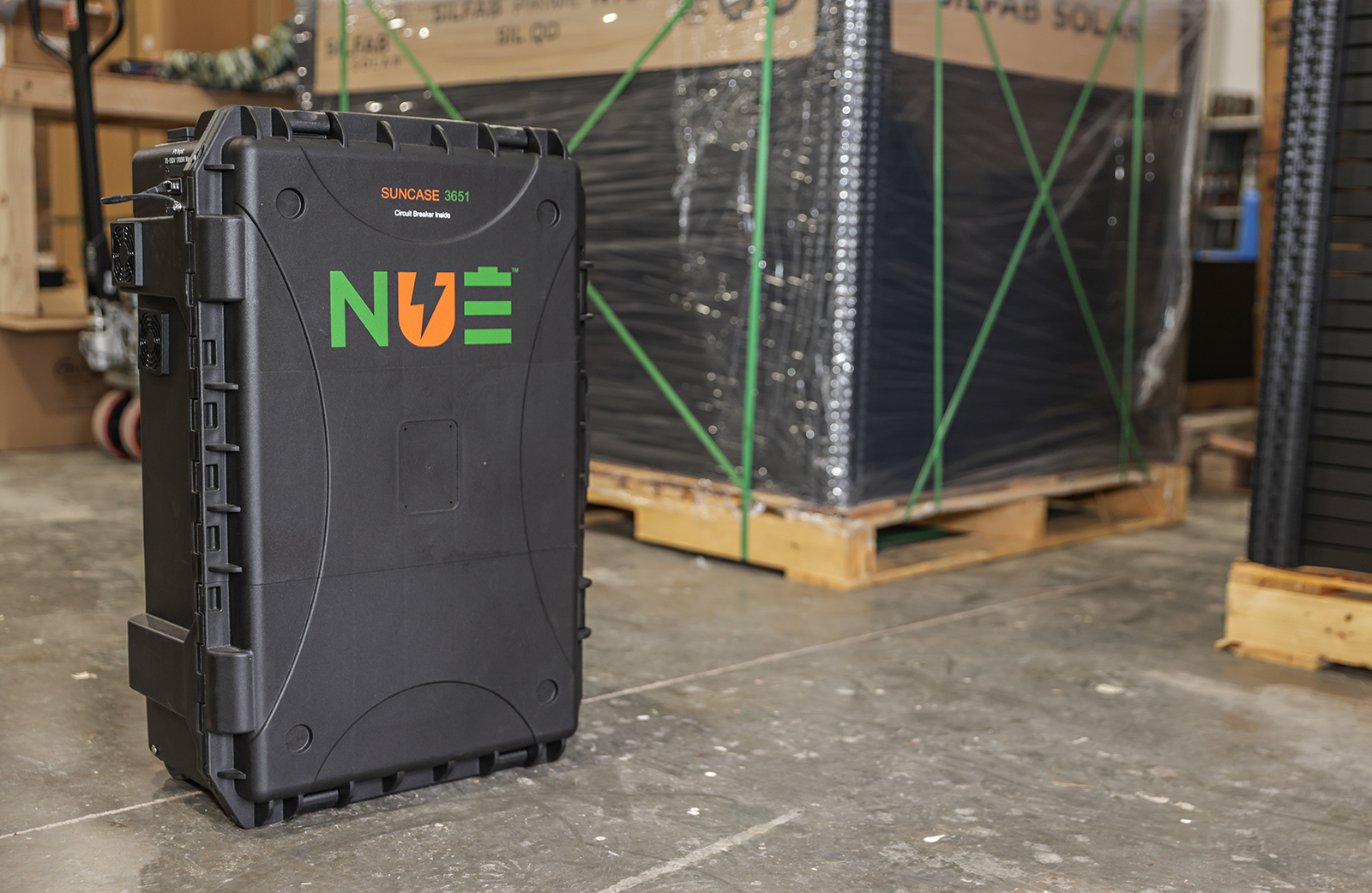
Twenty-six films, 15 panel discussions, 40 speakers and four concerts spread across four venues in downtown Whitefish — all powered by batteries and solar energy.
This was the vision of founder Anderson Rosenthal and her Project Winterland team as they pieced together the latest edition of the Westland Impact Festival, which will bring together filmmakers, entertainers, sustainability experts and speakers to the Flathead Valley for a three-day film, music and storytelling event.
Only in its second year, the festival is setting out to be one of the first multi-day, multi-venue festivals in the country to power the entire event with solar-charged, portable batteries, not using the grid, Rosenthal said.
“I can’t call this thing an impact festival if there’s no impact,” Rosenthal said. “To have a clean energy demonstration on site…that’s a moment of impact.”
“Our platform is about how can we make the world a better place in a variety of ways,” she added. “One of those would be to tell stories that are not gloom and doom around the environment or the climate, but to tell the success stories as well, so why we call it an impact festival is when people hear these stories, it might open their hearts and minds to a better future.”
The 2026 Westland Impact Festival will run from June 11 through 13, featuring a slate of all-day events ranging from movie screenings to an Indigenous forum to panels with a selection of experts spanning finance, sustainable data center innovation, attainable housing, traditional ecological knowledge and more. The series of events will span across four venues in downtown Whitefish.
The three, 14-hour days will be powered by batteries from New Use Energy (NUE), an Arizona-based mobile solar and battery systems company.
The partnership with NUE sparked when Rosenthal met the company’s vice president of sales at a concert for NUE’s client, AY Young, who will be performing for free at 8 p.m. on Friday in Depot Park. AY Young is a musical artist, producer and the visionary behind the Battery Tour: the longest-running clean energy-powered global concert series with a mission to complete 1,000 concerts powered entirely by renewable energy while raising awareness and accelerating solutions tied to the United Nations Sustainable Development Goals.
“We continued the relationship talking about what we might do for this festival with the music only because that’s all I knew, was that he was using it for concerts, both for AY and others,” Rosenthal said. “While we were on the call, I said, why can’t we do this for everything we’re doing? So I guess it was asking the right question at the right time, and… he thought about it, and said he didn’t have any reason why we couldn’t.”
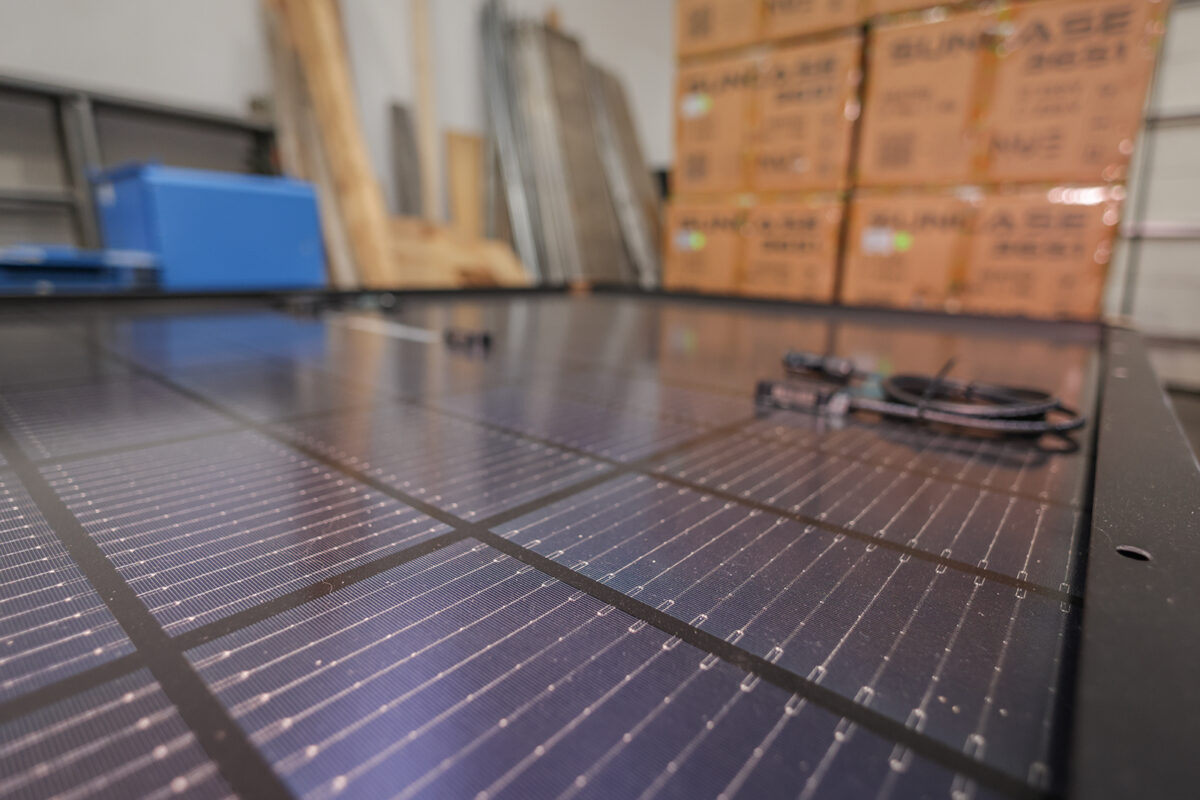
Rosenthal, however, didn’t stop with the NUE partnership. Knowing she wanted to avoid traditional or legacy power sources to recharge the batteries, Project Winterland turned to a familiar, local partner in Northstone Solar to provide panels to create a “solar pavilion” for the festival.
“We’re not relying on the grid,” Rosenthal said. “Depot Park has grid power in it. If we wanted to charge those solar batteries using the grid, we could, and it would be very easy to charge them on the spot using the available power there. We’re not doing that.”
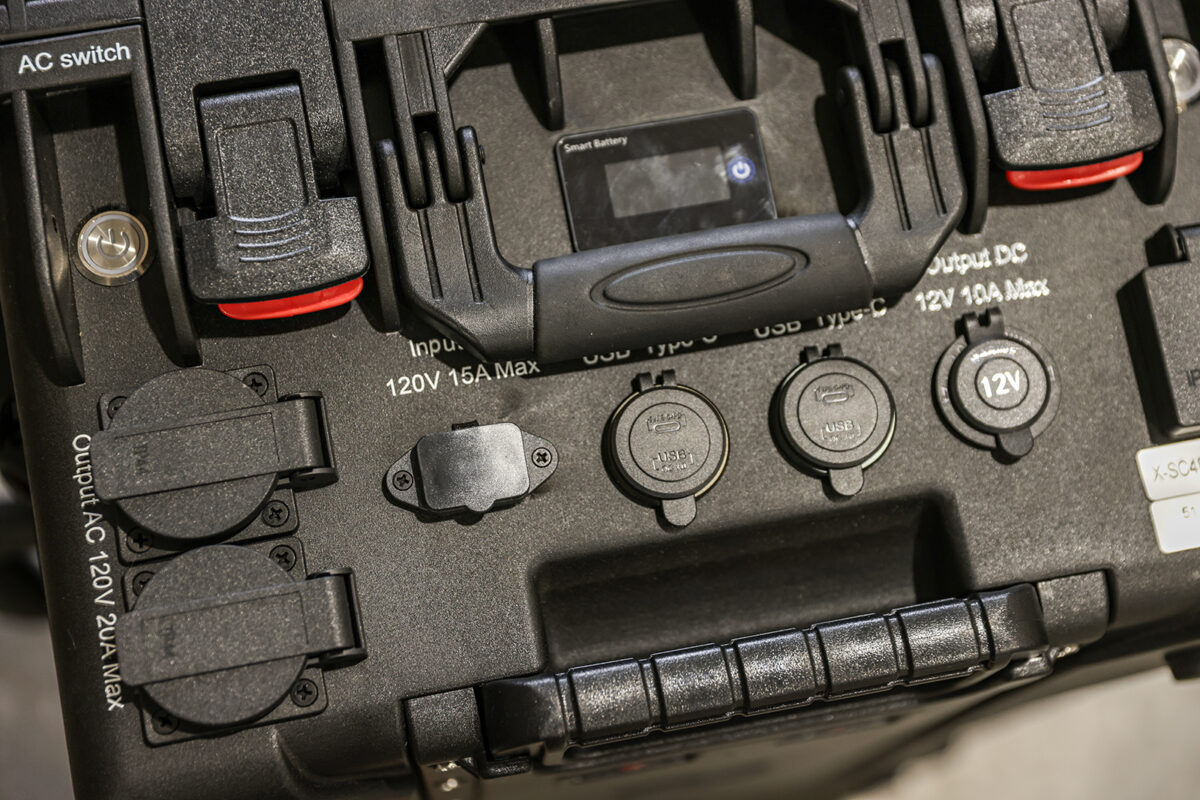
Sixteen of the NUE batteries, which were shipped to Whitefish from a Google event in San Francisco, will be used to power the festival, with the batteries rotating between the recharging station at the solar pavilion and the events, Thomas Clark of Northstone Solar said.
HUNGRY FOR MORE?
Local food, culture and events: Never miss a moment with Flathead Beacon. Stay at the table by becoming a member with a one-time or recurring donation of any amount.
“Three of these solar panels can charge one of the batteries, so we’re going to be charging four batteries at a time,” Clark said. “It’ll take about four hours to charge the batteries, and then we’re going to be switching them out from different locations. We’ll have some plugged in at the [Great] Northern, some at the O’Shaughnessy [Center], and then as they start to drain, these other ones should be starting to get to their charging capacity, and then we’ll go switch out the batteries.”
And while the Flathead Valley has seen a bit more rain than sunshine over the past few days, Rosenthal’s belief in the power source isn’t clouded — at least not anymore.
“Did I lose a little sleep thinking it’s gonna rain all day? Yes,” Rosenthal said with a laugh. “But what I learned is that the sun is always charging those panels. The panels can stay charged when it’s raining, when it’s not sunny, and we can still use them. Power from the solar is stored in those panels.”
Clark echoed the sentiment, saying lack of sun is one of the many misnomers in Montana on the viability of solar energy.
“The reality is we have the third highest green energy potential of any state in the United States,” Clark said. “Some of that is wind, some of that is hydroelectric, but some of that, of course, is solar. We’re just below, interestingly enough, the national averages for sunny days, which most people would think we’re way below… but we get more of it than people think because we have the long summer days, and that goes into the spring and into the fall.”
“As electricity costs continue to rise, we’re seeing more and more people continue to want to pursue it…we found that there’s more demand than there ever used to be for solar projects and battery backup projects,” he added. “So it’s a cool time to be working on a highly visible project like this.”
The O’Shaughnessy Cultural Arts Center, which will host a bulk of the festival’s events this weekend, is the latest example of investing in solar power. Clark said Northstone Solar had been in talks with Jen Asebrook, the executive director of the Whitefish Theatre Company, about installing a solar setup for a while, but fundraising efforts had slowed the project. The upcoming festival and installation of the temporary solar panels at the center served as a catalyst to push the project toward the finish line, he said.
“We’re going to start with these 12 [panels] and get them set up this week, then in a month we’ll install the other 32 and then we’re going to plug that into the grid and have it be a fully functional grid-tied solar array,” Clark said. “It’s a cool, mutually beneficial kind of three-pronged thing. It’s going to benefit the O’Shaughnessy, it’s going to benefit Anderson’s festival short-term, and then it’s helping us with just getting some advertisement and being involved in something that we want to do.”
Rosenthal hopes the O’Shaughnessy’s solar project is just one of many “moments of impact” this weekend, especially when it comes to the portable batteries and solar energy. One goal of hers is for local businesses or entities in the Flathead Valley to purchase all 16 batteries before the festival’s conclusion.
“We’re showing people the power of these military-grade batteries and what they can do in the field, whether it’s construction or event production or personal use at a home,” Rosenthal said. “That’s just sort of a cool thing that we weren’t anticipating in the beginning.”
Click here to view the festival’s schedule or for more information on the Westland Impact Festival. Click here to purchase single-event and/or multi-day passes.