Montana is Aging More Quickly Than Expected
Updated forecasts point to more retirees, fewer children and slower natural population growth
By Jacob Olness, Montana Free Press
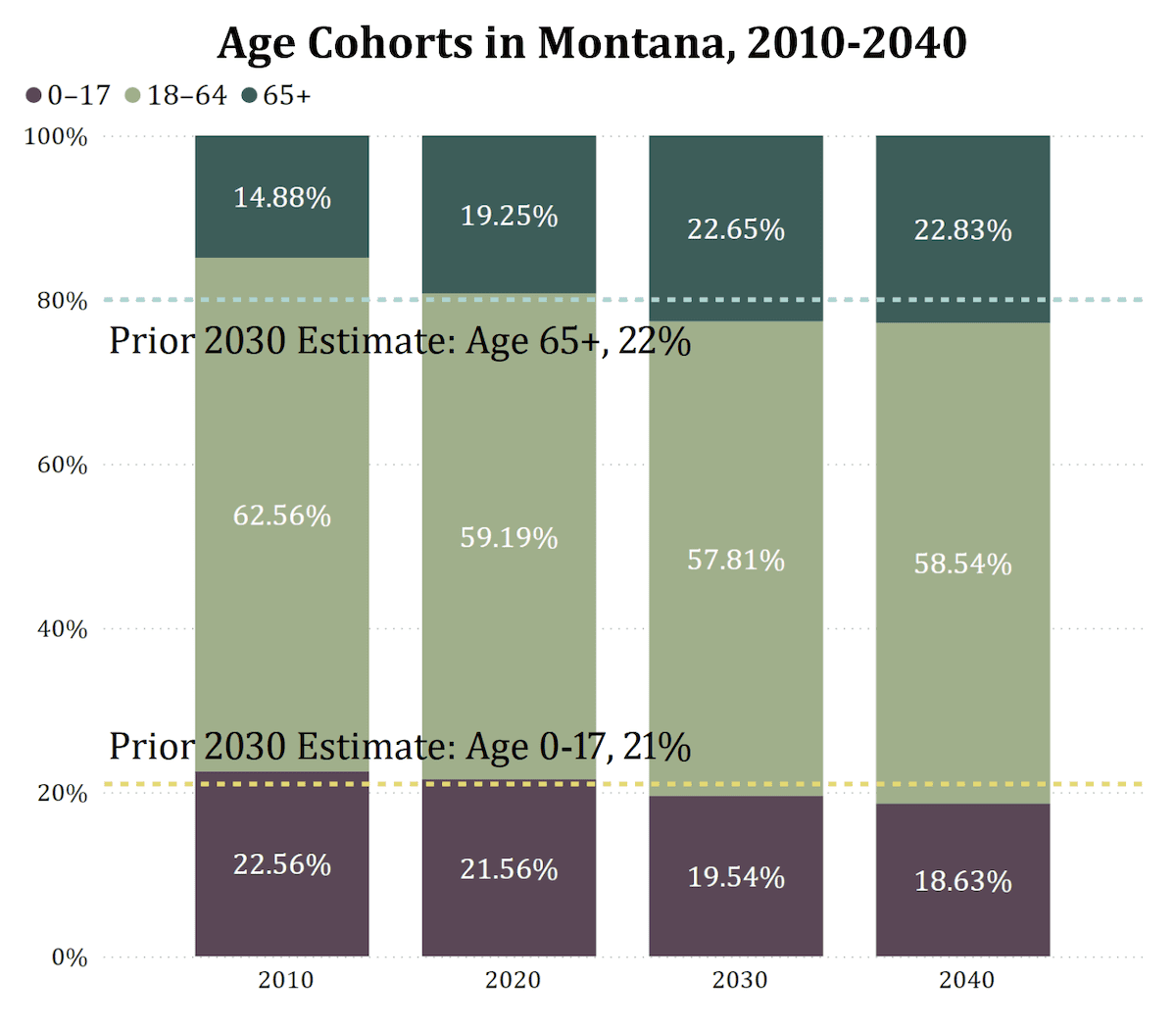
New projections from the Legislative Fiscal Division presented to Montana lawmakers June 24 show the state is aging more quickly than previously forecast. The updated projections indicate that by 2030, seniors will make up a larger share of Montana’s population, and children a smaller share, than earlier projections forecast 5 years ago.
The updated demographic outlook, discussed during a Legislative Fiscal Committee meeting, revises estimates first released in 2021.
By 2030, Montanans age 65 and older are expected to account for 22.65% of the state’s population, up from the previous projection of 22%. The population share of children age 17 and under is now projected at 19.54%, a drop from the earlier estimate of 21%.
The revised numbers reflect ongoing declines in birth rates and continued growth in the state’s retirement-age population. According to information presented to lawmakers this week, lower birth rates combined with an aging population have limited so-called natural population growth, with deaths exceeding births every year of this decade except 2024, when natural population growth was positive by only 12 people. The combination of declining birth rates and an aging population has made Montana increasingly dependent on people moving into the state for population growth.
Montana already ranks among the nation’s oldest states. In 2024, approximately 21.2% of residents were 65 or older, placing Montana eighth nationally. Neighboring states have lower elderly populations, with 65 and older residents in Idaho and the Dakotas registering in the mid 17% range, and in Wyoming at 20%.
While Montana’s proportion of working-age adults is expected to remain relatively stable, state analysts said, the state’s growing number of retirement-age residents is already affecting Montana’s labor force. The state’s labor force participation rate, or the share of residents who are working or actively seeking work, has fallen from 68.8% in 2000 to 62.4% in 2025.
Analysts told lawmakers that decline is largely demographic rather than economic or generational, as labor force participation rates among all age groups have remained steady or grown. The dominant factor in the decline, analysts said, is a continuing influx of retirement-age residents.
About 221,000 Montanans were retired in 2025, representing nearly 24% of residents age 16 and older.
The new projections suggest Montana’s population will continue to grow through the end of the decade before stabilizing. At the same time, a diminishing proportion of children and lower birth rates could present long-term challenges for schools, employers, communities and the state Legislature as it plans for the state’s future.
This story originally appeared in the Montana Free Press, which can be found online at montanafreepress.org.