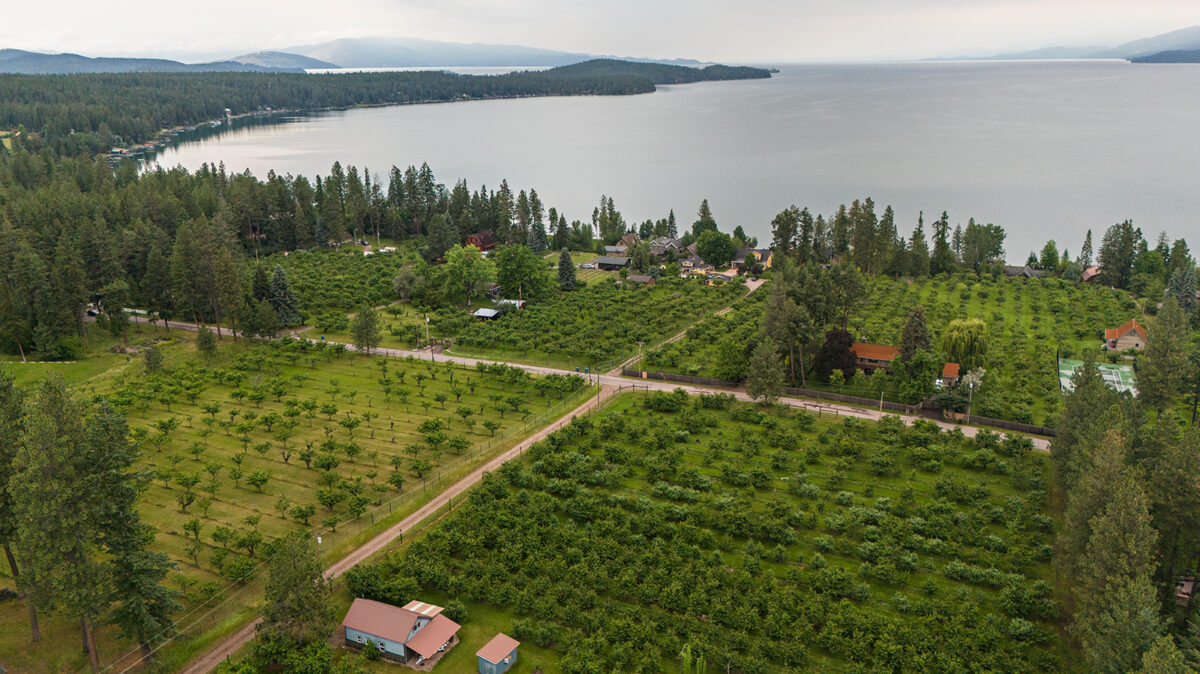
Flathead Cherry Producers Say Harvests are ‘Hit or Miss’ this Summer
An early spring cold snap froze a portion of cherry buds on Flathead Lake’s east shore while early summer rain is splitting the fruit’s skin as a low supply from Washington is driving up prices
By Maggie DresserAfter an early spring cold snap froze a portion of Flathead cherry buds at the start of the fruit’s bloom, producers say this year’s crop is “hit or miss” on the east shore while a low supply from Washington will raise prices in northwest Montana.
Brian Campbell, a field representative for Monson Fruit Company based in Washington and a cherry farmer on Finley Point, said a late-April cold front hovering around 30 degrees Fahrenheit froze some crops that dipped below freezing, while other orchards stayed above that threshold and were not impacted.
Flower bud-opening rates in some orchards ranged from 25% to 50% when temperatures in those locations dropped to 26 degrees, which made them vulnerable to the elements and resulted in a partial crop loss for some producers.
“The variation of four degrees is super crucial,” Campbell said. “There’s a 90% cull at 26 degrees and a 10% cull at 28 degrees. It varied from orchard to orchard and tree varieties make a difference.”
Lapin, Sweethearts and Rainiers make up most cherry varieties in the 86 orchards that are part of the Flathead Lake Cherry Growers cooperative, each of which has its own unique flavor and different climate tolerances.
The varieties typically tolerate Montana’s cold climate compared to other species in the Pacific Northwest that are meant for hotter temperatures. Some producers still have decades-old Lambert trees on their properties, which were historically cold-tolerant but weren’t as lucrative because the cherries lose their firmness after a few days on a shipping truck.
Campbell described Lapins as a dark, sweet “work horse,” representing a hardy cherry that’s less prone to splitting — another challenge producers are facing this year after recent prolonged rain.
An overabundance of moisture during certain cherry stages can infiltrate the skin’s permeable membrane, absorbing the water and causing the skin to expand and split.
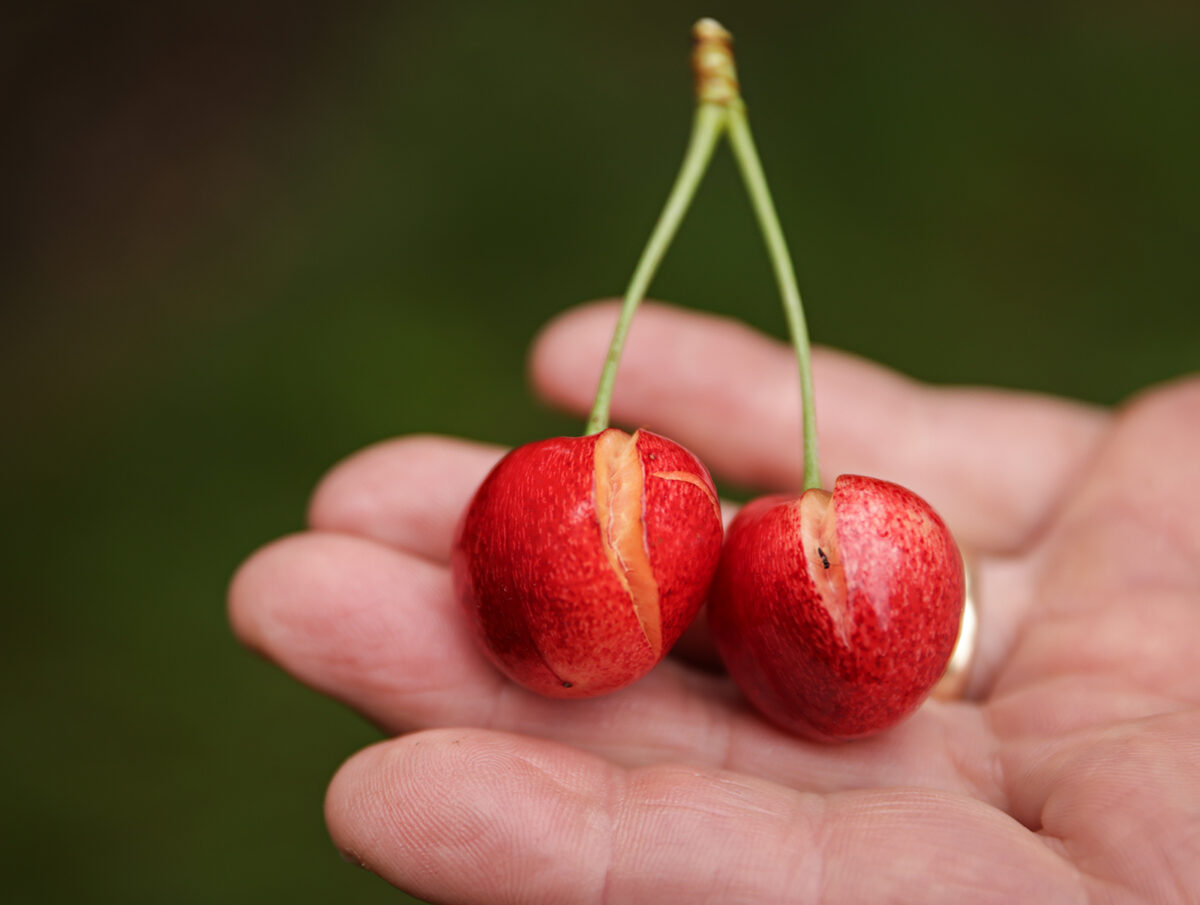
Small splits don’t have a dramatic impact on the cherry crop, Campbell said, but the openings speed up the rotting process.
Despite the environmental factors that resulted in a mediocre crop this year, this summer’s harvest is dramatically better than two years ago when sharp temperature swings in January caused a near-total crop loss.
Above freezing temperatures followed by an Arctic front that dropped temperatures close to 60 degrees within a few days killed the cherry buds and even some trees.
After the 2024 loss, Campbell said the cherry trees overcompensated the following year in a process called stress-induced flowering, over producing low-quality fruit.
“It’s nature’s way of compensating so they just spit out a ton of blooms — what we call a snowball bloom,” Campbell said. “Everything is just totally white, and we had really good pollination and just had a gazillion cherries.”
But that oversupply also followed Washington’s overproducing trends, leading to a drop in demand and a dip in pricing.
“The market was really bad last year because we had an overabundance of small cherries,” Campbell said.
But this year, a scant supply from Washington will trigger a high demand for Flathead cherries and a spike in prices.
While roughly two-thirds of Flathead Lake Cherry Growers cooperative harvests are sent to Washington for packaging and distribution, the remaining fruit will be on stands along the east shore starting in mid-July.
“I think the majority of stands will open July 15,” Campbell said.