The Miracle on Melita Island
From its early Indigenous inhabitants to a long-term ownership agreement with a secret fraternal organization – and, finally, a mysterious benefactor's bestowal to the Boy Scouts – Flathead Lake's "64.5-acre jewel" has endured for centuries as a remote island retreat
By Butch Larcombe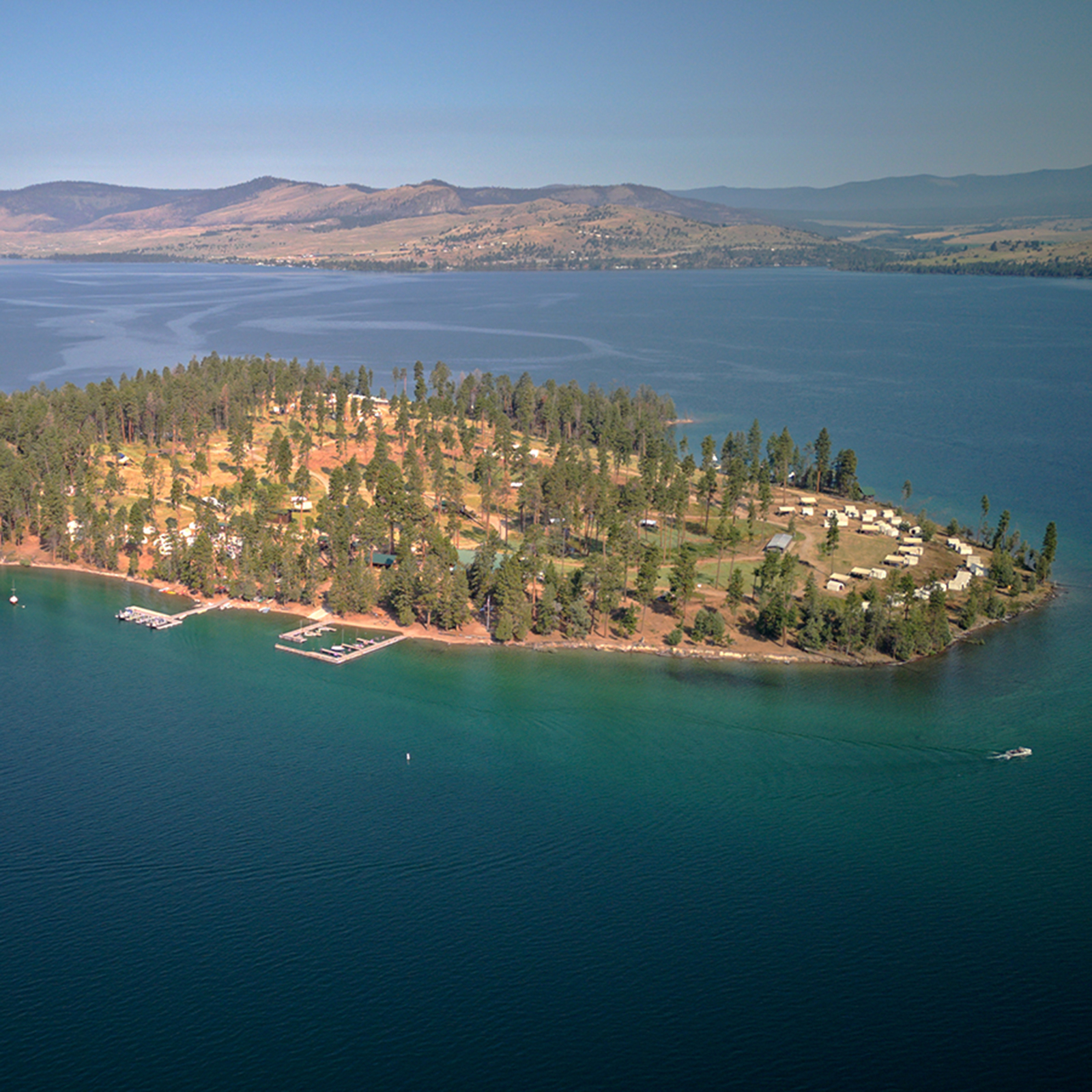
The largest and best-known islands in Flathead Lake sit in the lake’s Big Arm about a third of the way up its west shore. Wild Horse Island, at roughly 2,100 acres, is the largest of the more than 20 named islands. To the northwest of the big island sits Cromwell Island, known to early residents as Papoose Island. At 350 acres, Cromwell is the second largest in the lake.
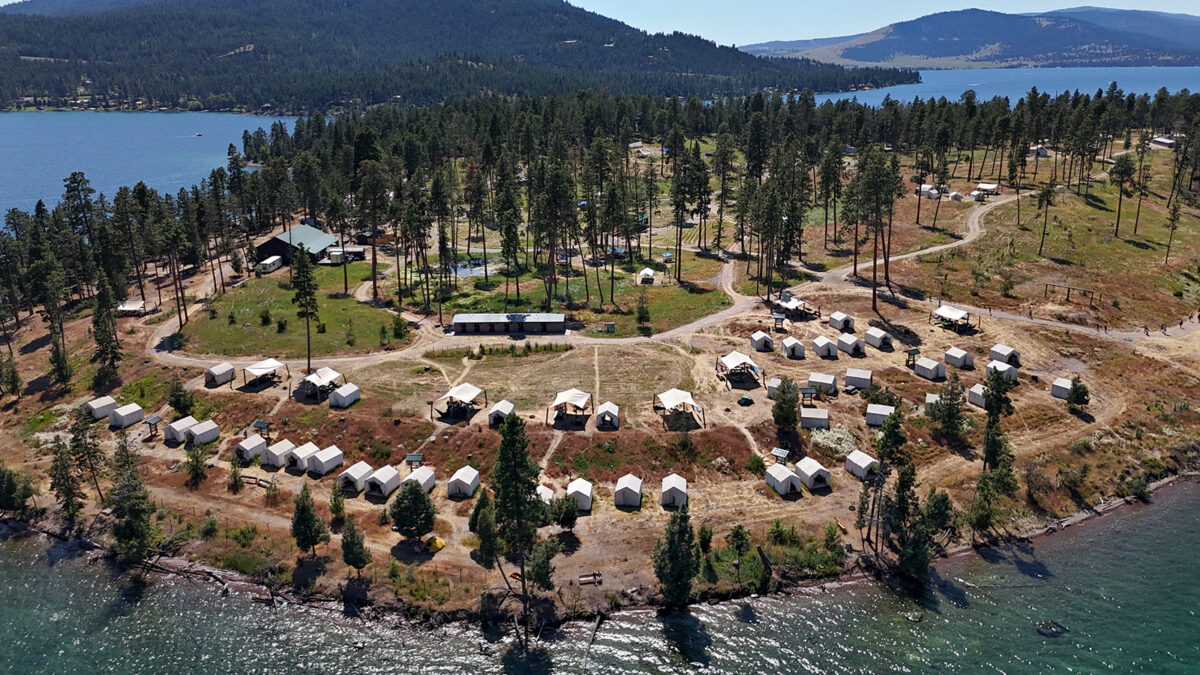
Sitting south of Wild Horse is the significantly smaller Melita Island. While only 64 acres, the island comes with a sizable story featuring likely use by native inhabitants, long-term ownership by a somewhat secretive fraternal organization, decades of use by Boy Scouts and a mysterious, deep-pocketed benefactor.
Early in the 20th century, much of the land on the Flathead Indian Reservation was split into parcels that were allotted to native residents in an attempt to convince them to take up an agricultural lifestyle. After a few years, allotments unclaimed by tribal members were offered to homesteaders. In some cases, larger parcels of “surplus land” on the reservation were offered for sale to any and all.
In 1915, enticed by the seclusion, a Masonic order bought at auction 17 “villa” sites on what was then known as Wilgus or Wild Goose Island. The price for all the sites, which together comprised the entire island, was $2,500. The plan was to create a “Masonic mecca” for get-togethers and recreation, according to a 1927 article in a magazine published by the fraternal order. “The natural beauty of this island, together with the advantages it offers for fishing and boating, make it an ideal meeting place and playground,” the article stated. It was also a secluded place to practice the rites of Freemasonry, an organization with roots that stretch to the Middle Ages and the Crusades.
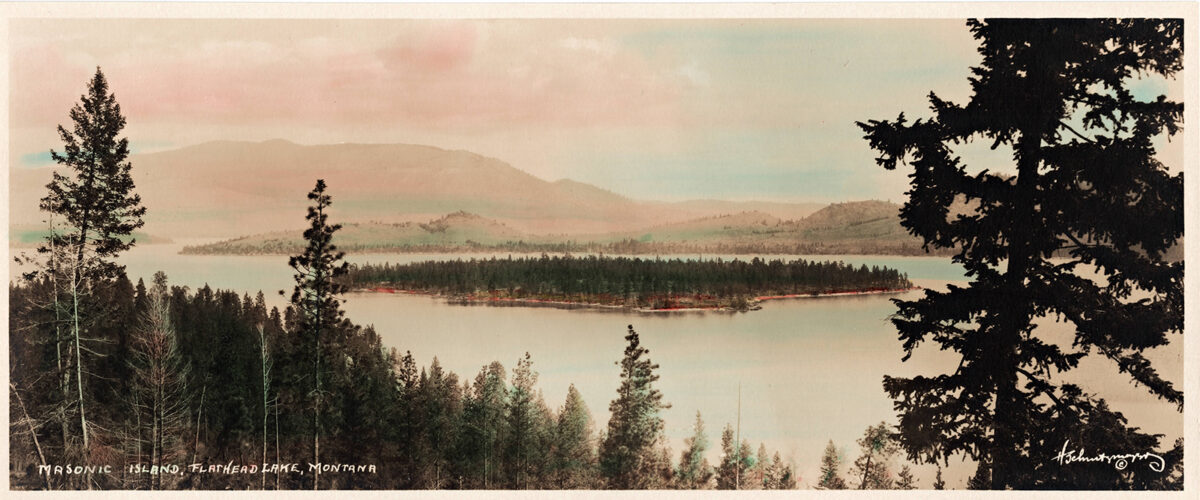
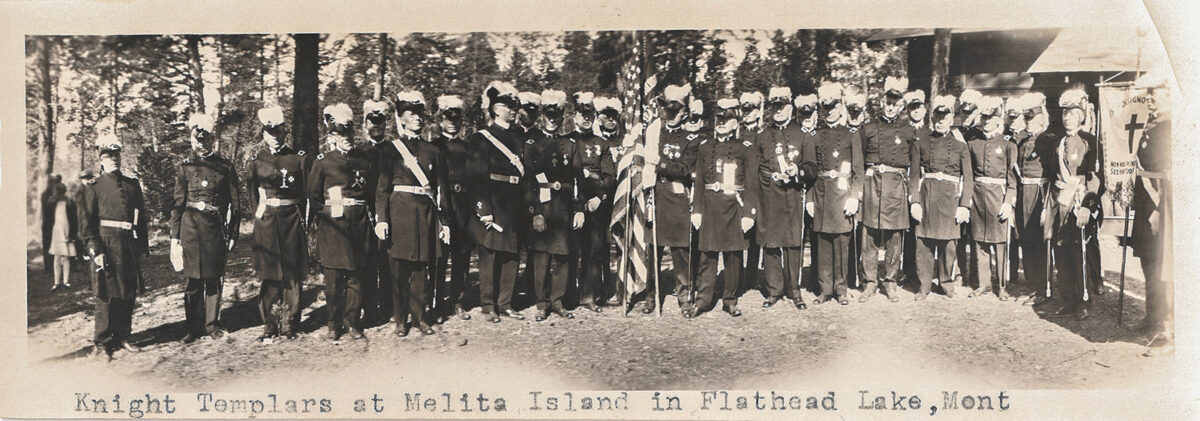
By 1928, the Masons had constructed a large lodge building on the island, renamed Melita, a reference to the Mediterranean island of Malta. Described in a news account as “a cavernous medieval lodge,” the structure included a massive stone fireplace, possibly an architectural nod to the origins of Freemasonry, an organization that counted stone masons, some of whom helped build ancient European cathedrals, as early members. Along with the lodge, other buildings arose and the island was served with electricity by cable buried in the lake bed.
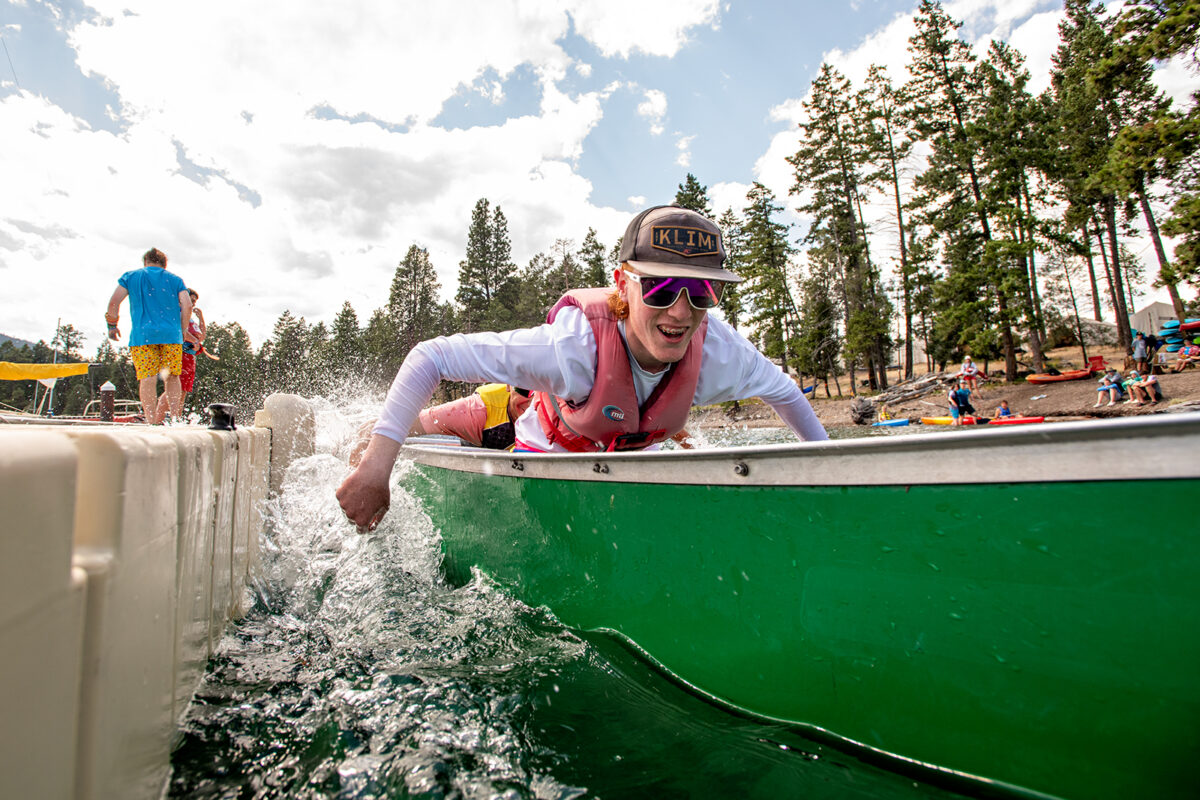
In the years after World War II, the Masons struck a deal with the Montana Boy Scout organization that allowed Scouts from across the state and region to use the island as a summer camp. For decades, the Boy Scouts earned merit badges in areas that included sailing, swimming and orienteering and took memorable field trips to nearby Wild Horse Island. The annual lease payment for this idyllic island camp was reportedly just a dollar per year.
But in 1975, after three decades of Melita Island summers, the Boy Scouts got a startling notice: The Masons had decided to sell. While the Scouts had the right of first refusal, they didn’t have the $300,000 needed to buy the island with 2.5 miles of Flathead Lake shoreline.
The Masons had little trouble finding a willing buyer. The initial purchaser presented a plan to sell lots for homes. But that plan ran aground as Lake County officials balked at allowing a large number of septic systems on the island. Back on the market, Melita caught the eye of a Nevada couple, Fred and Harriet Cox, who thought the island could be a great Montana home for themselves and their children. The couple bought Melita and 17 acres on the nearby lakeshore in 1988.
Fred Cox later admitted that he and his wife were mistaken about the island’s home potential. They decided to instead build on the more accessible lakeshore. “We never were going to develop it, but we concluded we didn’t want to build there,” Cox told an interviewer in 2003. “So we asked ourselves, what will we do with this island?”
A technology entrepreneur who grew up in Texas, Cox was also a Boy Scout in his early years. In 1998, the couple had begun allowing Scouts to again use Melita for the first time since the mid-1970s. Not wanting to sell the island and see it developed, the couple approached the Scouts with a proposal: They would sell the island to the Scouts for $1.5 million, which amounted to about half of its appraised value, although observers believed the island’s development potential made it worth significantly more. An agreement gave the Scouts until January 2005 to round up the money.
Donations came only at a trickle and emotional pleas for help appeared in many Montana newspapers in the waning months of 2004. “I fell in love with Melita Island the moment I stepped from the boat and beheld its beauty,” wrote Gregory Mullin of Missoula in November of that year. “My life, and the lives of many other Scouts has been changed forever by the magic and excitement of Melita Island and its summer camp.”
In December 2004, the Scouts had raised less than $300,000 and fundraising was faltering. A headline from the Daily Inter Lake in Kalispell on Dec. 15, 2004 told the story: “Melita Island buyout sinking.” The accompanying news story noted that internal dissension and the troubled finances of the state Scout organization had hindered efforts to raise money. It appeared that Melita, known to generations as “Scout Island,” was slipping away, as it had in 1975.
Salvation came via the U.S. Postal Service. In the mail arrived a check to the Scouts for $1 million, the senders only publicly identified as an “anonymous couple from western Montana.” The big donation jumpstarted fundraising, although the Scouts were still at least $250,000 short and the deadline was looming. But money began to roll in.
“We were getting so much mail in, and all the mail had money in it,” Arnold “Smoke” Elser, a legendary wilderness outfitter, Eagle Scout, and volunteer fundraiser, told the Missoulian newspaper. “From $5 up to $50,000, it really helped.” Scout officials told of receiving donations of more than $30,000 on Dec. 31 and scrambling to line up short-term loans help cover pledges not yet received to seal the deal. The purchase paperwork was signed less than nine hours before the deadline. The Missoulian top-of-the-front-page headline on Jan. 1, 2005 read: “Scouts secure Melita Island retreat.”
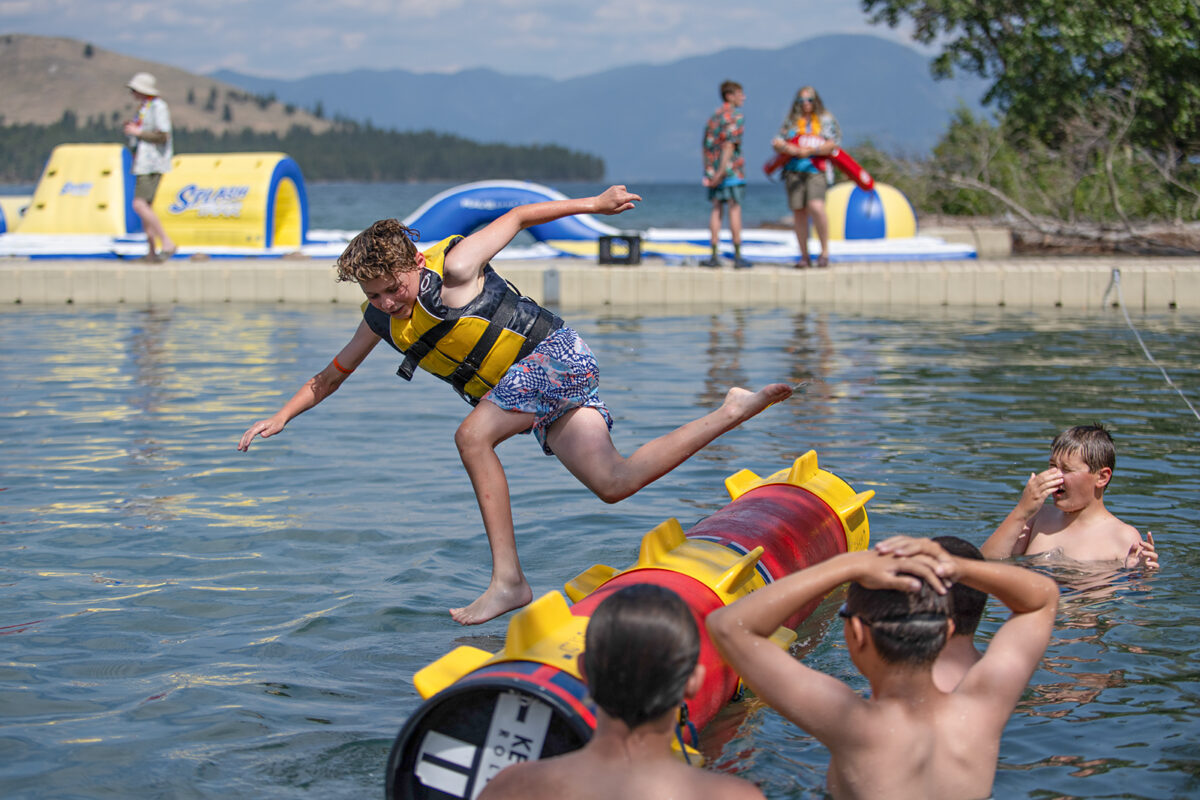
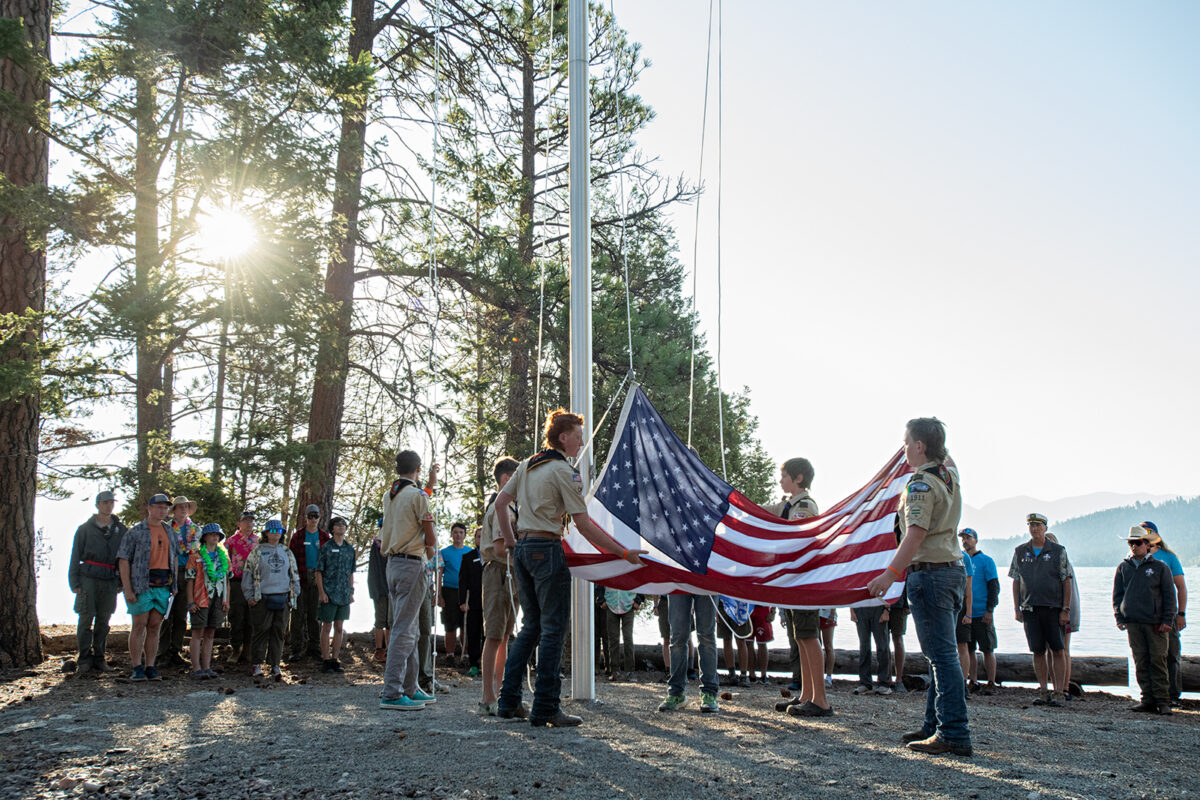
Fast forward a couple of decades and Melita appears to be flourishing. Scouts, both girls and boys, from all over the U.S. flock to the island each summer for a unique experience and wide-ranging water activities, instruction in robotics and science fields, hiking on nearby Wild Horse Island, and other outdoor adventures.
The weekly cost for each Scout for next year is about $600, not including transportation. “We sell out about a year in advance,” said Terry Dutton, chief operating officer for the Montana Council/Scouting America. While the Scout fees cover most of the cost of operating and maintaining Melita, the Scouts still rely on financial help to help with big-ticket projects, including the launching this summer of a gleaming new boat, the Island Scout. The 44-foot, twin-hulled craft can haul up to 49 passengers, their gear and supplies to and from the island and to points around Flathead Lake.
The boat, like the 2005 purchase of the island once described as “a 64.5-acre jewel,” was made possible, Dutton said, “by some very generous donors.”