Report Details Fatal Glacier Park Grizzly Bear Attack
An interagency review concluded that Anthony Pollio, a 33-year-old solo hiker from Florida, was killed on May 3 after he surprised an adult male grizzly bear while descending the Mount Brown Lookout trail, likely in darkness
By Tristan Scott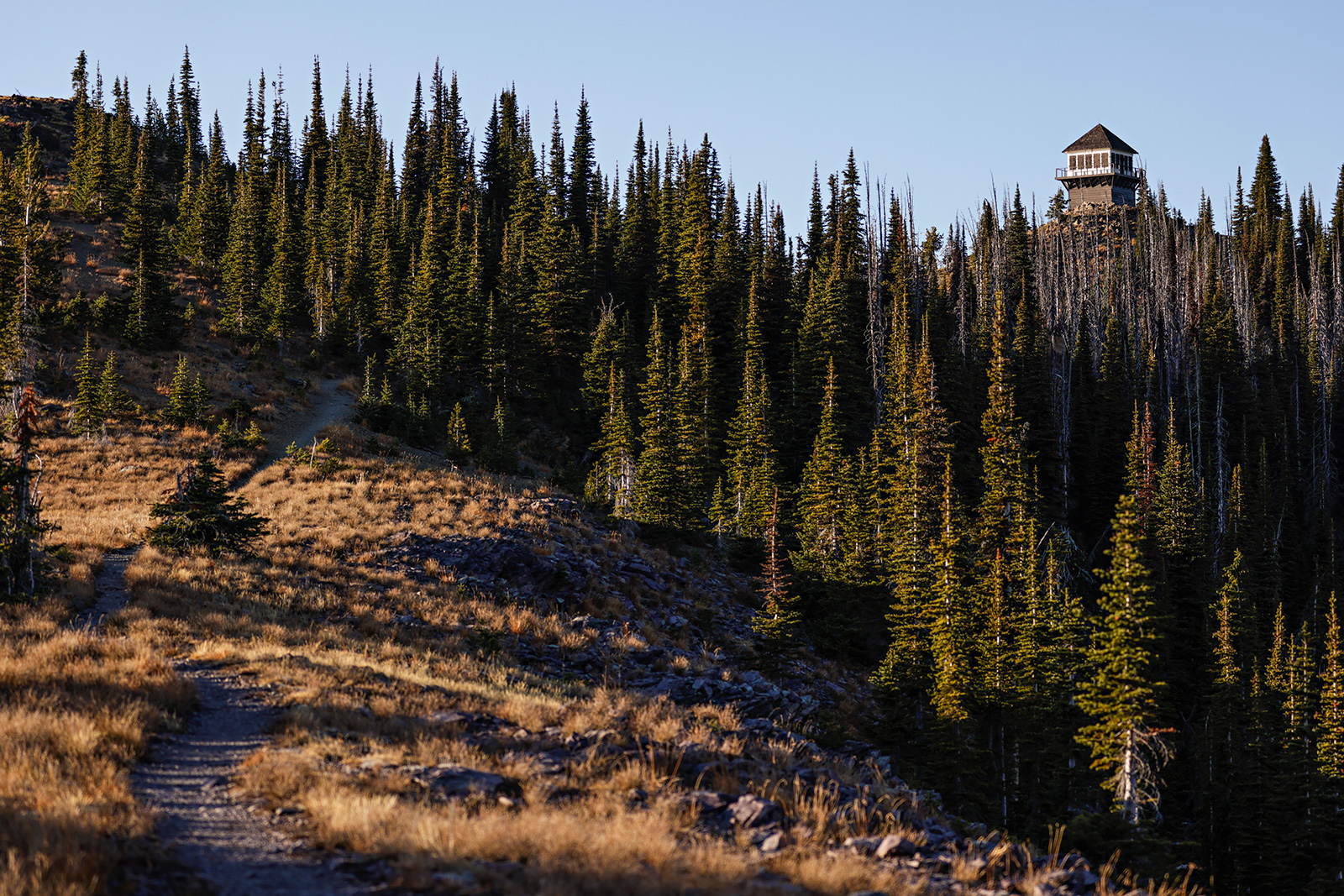
The 33-year-old Florida man killed in a bear attack in Glacier National Park on May 3 likely surprised a male grizzly at close range while descending the steep, deadfall-choked trail from Mount Brown Lookout alone and after dark, according to an interagency review of the incident published this week.
The July 20 report, which reconstructs the attack that killed Anthony Pollio in chilling detail, was issued by a special Interagency Grizzly Bear Committee (IGBC) Board of Review consisting of state and federal wildlife officials from the U.S. Fish and Wildlife Service, Glacier National Park, Montana Fish, Wildlife and Parks, Wyoming Game and Fish, and the Flathead County Coroner’s Office. Interagency personnel spent more than two months working on the investigation before publishing their findings, which offer the most comprehensive account to date of the circumstances surrounding Glacier Park’s first bear-related fatality inside its boundary since 1998.
Investigators puzzled out the sequence of the attack by drawing on evidence at the site, including claw marks, a displaced rock and Pollio’s scattered gear, including a fully discharged can of GrizGuard bear spray, though it’s unknown if the bear came into contact with the deterrent. A gray Carhartt beanie, a smart phone and charging bank with bear scat on the surface, a closed pocket knife, and a plastic bear spray holster with a broken belt clip were among the other personal effects investigators discovered at the scene of the attack, which the report described as being consistent with a defensive response by a grizzly bear and was not predatory.
DNA from hair and scat samples that investigators collected were analyzed by a wildlife genetics laboratory in Nelson, British Columbia. The samples matched “with high confidence” to a local grizzly bear with no conflict history. The bear is registered in the Northern Continental Divide Ecosystem grizzly bear monitoring database as male grizzly bear #138239. Researchers obtained the bear’s fur from a rub-tree sample in 2011 and submitted it for genomic analysis.
“This would make the bear at least 15 years old,” the report states, adding that the bear’s parents were also identified in a 2004 DNA survey. “His father had a large home range stretching from Coal Creek east to Upper Two Medicine Lake. His mother lived in the area around Cutbank Pass. Neither had any history of conflict with people. Bear 138239 appears to be a life-long resident of the park and does not have a conflict history, capture history, or known history of aggression towards people.”
In addition to summarizing the incident and management response, the review includes photos and maps to support the investigation’s conclusions about what prompted the attack, as well as its timing and duration, and the victim’s response. Drawing from text messages Pollio sent to friends and family, the report also pieces together a timeline of the victim’s activity leading up to the hike, as well as of the search and rescue response.
On Sunday, May 3, Pollio was traveling across Montana with a friend when they parted ways in Wisdom, nearly 300 miles south of West Glacier. Pollio continued driving in a rental car to Glacier, passing through the park’s west entrance at approximately 4:45 p.m. and driving along the Going-to-the-Sun Road until its gated closure at Lake McDonald Lodge. He’d been communicating intermittently with family and friends throughout his journey, the report states, and described his intention to climb to the Mount Brown Lookout, which is located 5.1 miles from the trailhead with more than 4,200 feet of elevation gain. He said he planned to watch the sunset and hike out in the dark, then find a place to camp, according to the report.
On Monday, May 4, at 2:19 p.m., Pollio’s father called Glacier Park emergency dispatch to report that his son had not been in contact with him since the day prior, when Pollio notified him of his plans to hike to a lookout, but did not specify which one. Park rangers were sent to all lookout trailheads in the area (Huckleberry, Apgar and Mount Brown) before narrowing the search to the trailhead at Lake McDonald Lodge.
On Tuesday, May 5, additional resources converged on the area to search for Pollio, including North Valley Search and Rescue, Flathead County, U.S. Forest Service, U.S. Geological Survey, and aircraft from A.L.E.R.T, the National Guard, the Civil Air Patrol, and Minutemen Aviation.
“Despite the intensified search, including infrared FLIR flights by a National Guard Blackhawk helicopter, Mr. Pollio was not located,” the report states.
On Wednesday, May 6, at approximately 12:10 p.m., a search party on Mount Brown discovered Pollio’s remains after spotting a can of bear spray laying in the brush just off the trail.
“The team began looking in that direction and quickly discovered the body,” the report states. “The searchers verified that Mr. Pollio was deceased and that he appeared to have suffered traumatic injuries consistent with a bear attack. The search team transmitted the information to the incident command.”
Pollio was wearing hiking boots, jeans, a shirt, an unzipped lightly insulated coat, and a small hydration backpack with a water bladder.
That afternoon, a team of investigators consisting of Glacier National Park’s chief ranger, the Flathead County deputy coroner and two law enforcement rangers hiked to the site of the fatality. A Wildlife Human Attack Response Team (WHART) consisting of a park wildlife biologist and two Montana Fish, Wildlife and Parks Grizzly Bear Management Specialists hiked into the site about one hour later and collected bear hair, bear scat, and measured bite marks on the victim’s body. At 6 p.m., Pollio’s remains were flown off Mount Brown by helicopter and long-line transferred to the custody of the Flathead County Coroner’s Office.
Although the “victim’s injuries were severe and fatal,” the report notes that there was no evidence of predation, no caching and no covering of the victim with dirt or debris.
“No bears were observed or detected in the vicinity during the search or during this investigation,” the report states. “A survey of the area by a National Guard helicopter equipped with a FLIR camera detected mountain goats nearby but no bears. There were no animal carcasses present, or any evidence of bear foraging found at or near the scene.”
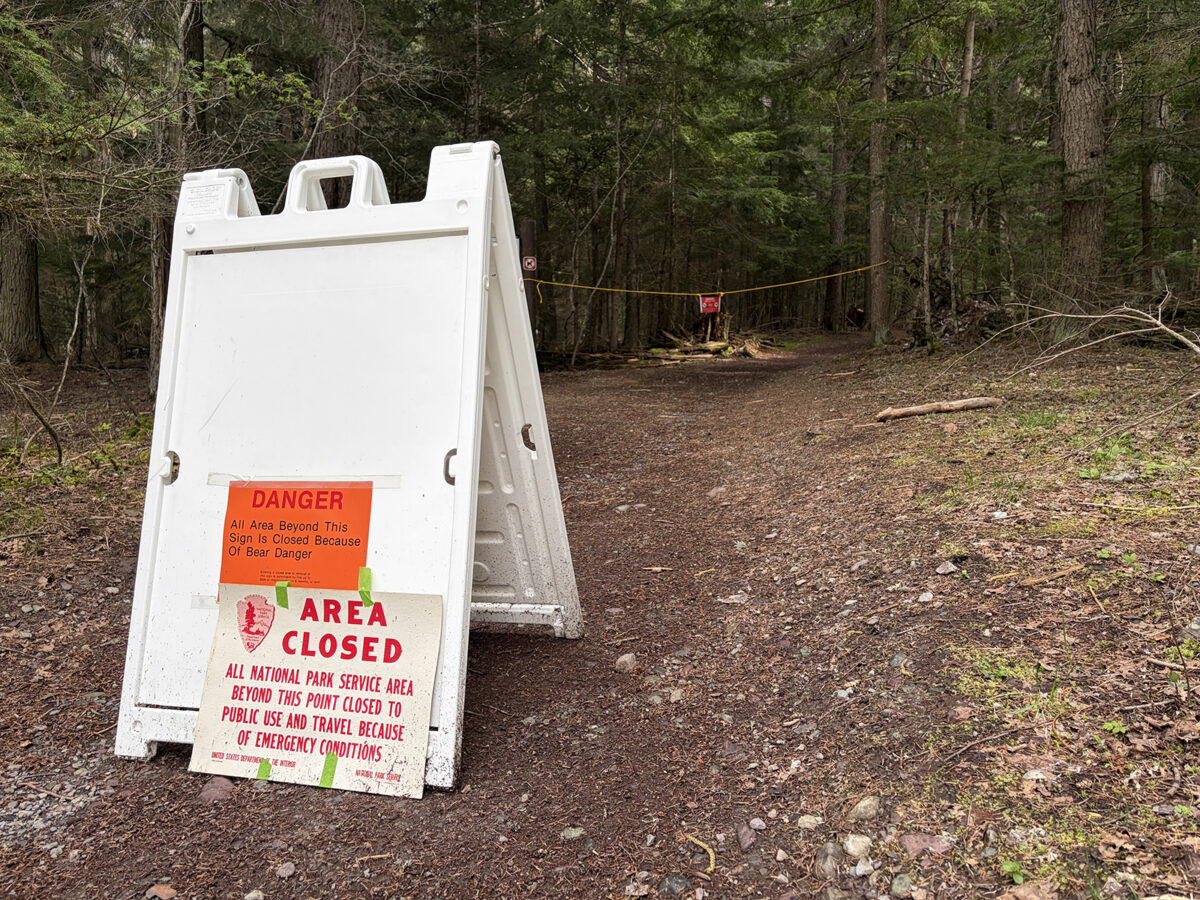
In Pollio’s last known communication — a text message to his girlfriend sent at 8:20 p.m. on May 3 — he stated that he had “climbed over 2,000 ft and 3 miles” and that he had “2,400 ft to gain.” While the mileages and elevations didn’t match exactly, the search team estimated that his position at the time of the text message was 0.9 miles above where his remains were recovered.
The attack appeared to have been initiated near a switchback on the Mount Brown trail approximately 2.3 miles from the Gunsight Pass trailhead at Lake McDonald Lodge. The trail at the time of the attack was littered with wildfire-burnt deadfall trees brought down by windstorms during the winter, especially on segments of the trail above the attack site, and several downed trees crossed the trail below the switchback.
“The easiest way to navigate around them would have been to cut the switchback about 23 ft downhill,” the report states. “Claw marks on a burned tree and a displaced stone suggested that the bear launched its attack from this point. This is also where the discharged canister of bear spray was located.”
“Fallen trees and poor light would have probably obscured the bear. As the bear attacked, the victim fell or was thrown downhill,” the report continues, detailing gruesome evidence of the mauling. “We believe the bear followed Mr. Pollio downhill, continuing the attack. Spatters of blood increased in frequency and volume down the hill.”
Based on blood marks and the orientation of branches, the report continues, “it appears as though Mr. Pollio managed to climb back up slope approximately 18 ft at which point the bear re-engaged and inflicted the fatal bites to Mr. Pollio’s head.”
The report also estimates that the attack occurred in darkness after 9:30 p.m.
“Based on his last text message, trail condition and distances, he was most likely descending the trail in darkness,” the report states in its conclusion. “Darkness and deadfall on the trail would have prevented the bear and Mr. Pollio from seeing each other until they were very close. We don’t know if Mr. Pollio was making any noise. He may have been using his cell phone flashlight. During the initial assault, Mr. Pollio managed to discharge his bear spray, but it is unknown if and where the spray contacted the bear. Mr. Pollio tumbled down slope, probably while the bear continued its attack, for 93 ft. We surmise that the bear broke off the attack at that time allowing Mr. Pollio to climb upslope approximately 18 ft at which point the bear re-engaged and killed Mr. Pollio with crushing bites to the head. The attack was likely brief and intense and not prolonged. There was no consumption or caching of the victim by the bear. There was no evidence that Mr. Pollio was fighting back. After the attack, the bear left the area. Mr. Pollio appears to have been the victim of a defensive attack by a surprised grizzly bear.”
During 2025, there were no sightings of adult male grizzly bears on Mount Brown that warranted management concern, the report states. The majority of the 46 reported grizzly bear sightings in the Mount Brown area during 2025 were of two family groups that spent most of their time on the Gunsight Pass trail near Sperry Chalet. There was only one reported sighting of a grizzly bear in 2026. That sighting on April 29 by a visitor was of a lone adult near Lake McDonald Lodge. The species of the bear could not be verified.
To avoid surprise encounters with bears, follow these Recommendations:
• Stay alert and use all your senses to detect bear activity, especially where visibility or hearing is limited (woods, bushy areas, streams, poor light).
• Make noise by talking, singing or clapping. This may not be necessary continuously but is critical when visibility and hearing are limited. Do not scream or shriek, as this may startle or confuse a bear.
• Travel in a group. Groups of people are usually noisier and less likely to surprise bears. Don’t let your group get spread out. Stay close to each other so everyone is visible and can gather even closer together if a bear is encountered.
• Carry bear spray close in an immediately accessible place and know how to use it.
• Avoid traveling at night, dawn, or dusk when bears are most active. If you do, use a good flashlight or headlamp.
• During an encounter with a bear: If a bear charges you and is going to make contact with you, go face down on the ground, cover your neck and head as much as possible, and deploy your bear spray in the bear’s face. If you are unsure of the species, but you recognize it is defensive, play dead. If the attack is prolonged and no longer defensive, fight back!
• Let others know your detailed plans before you start your hike.