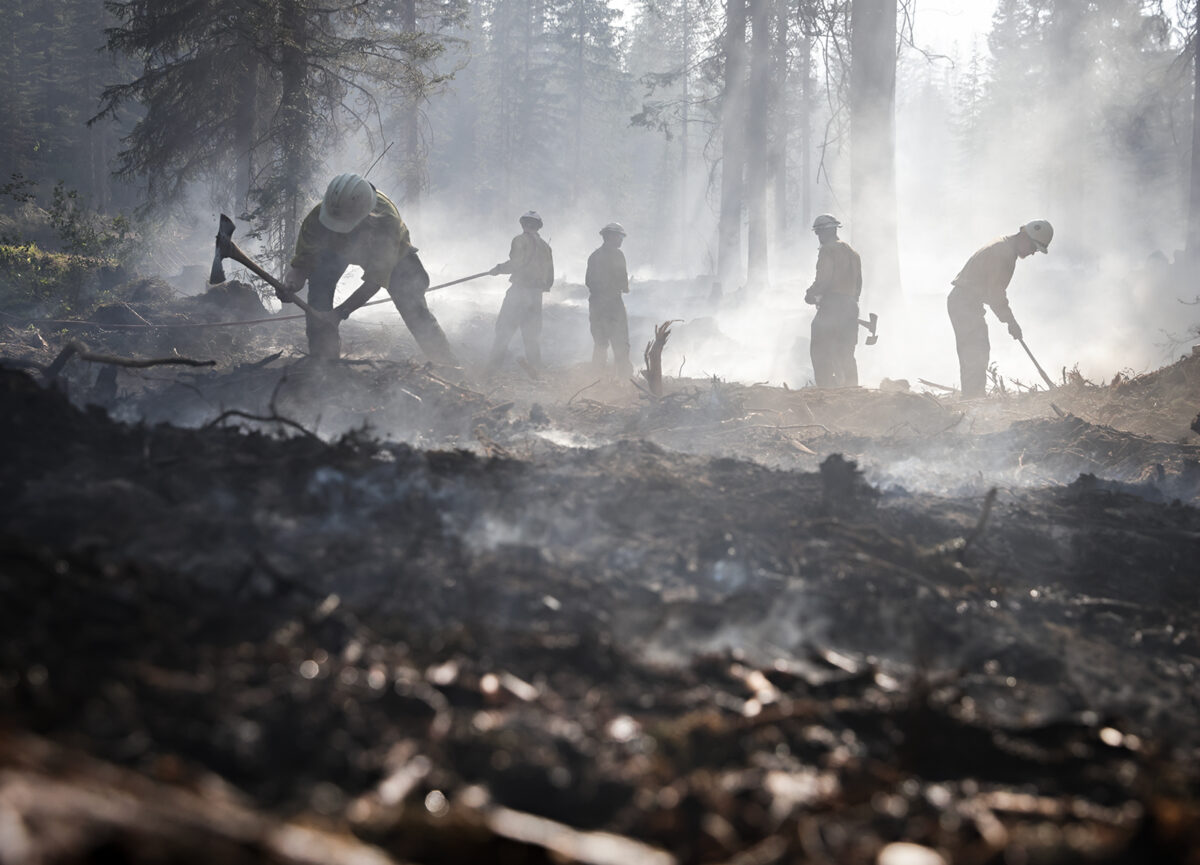
Amid Evacuation Order, Incident Command Team ‘Cautiously Optimistic’ About Skillet Fire West of Olney
At a Tuesday community meeting, officials broke down their plan to contain the 2,700-acre wildfire and protect residents’ homes
By Jules Lingenfelter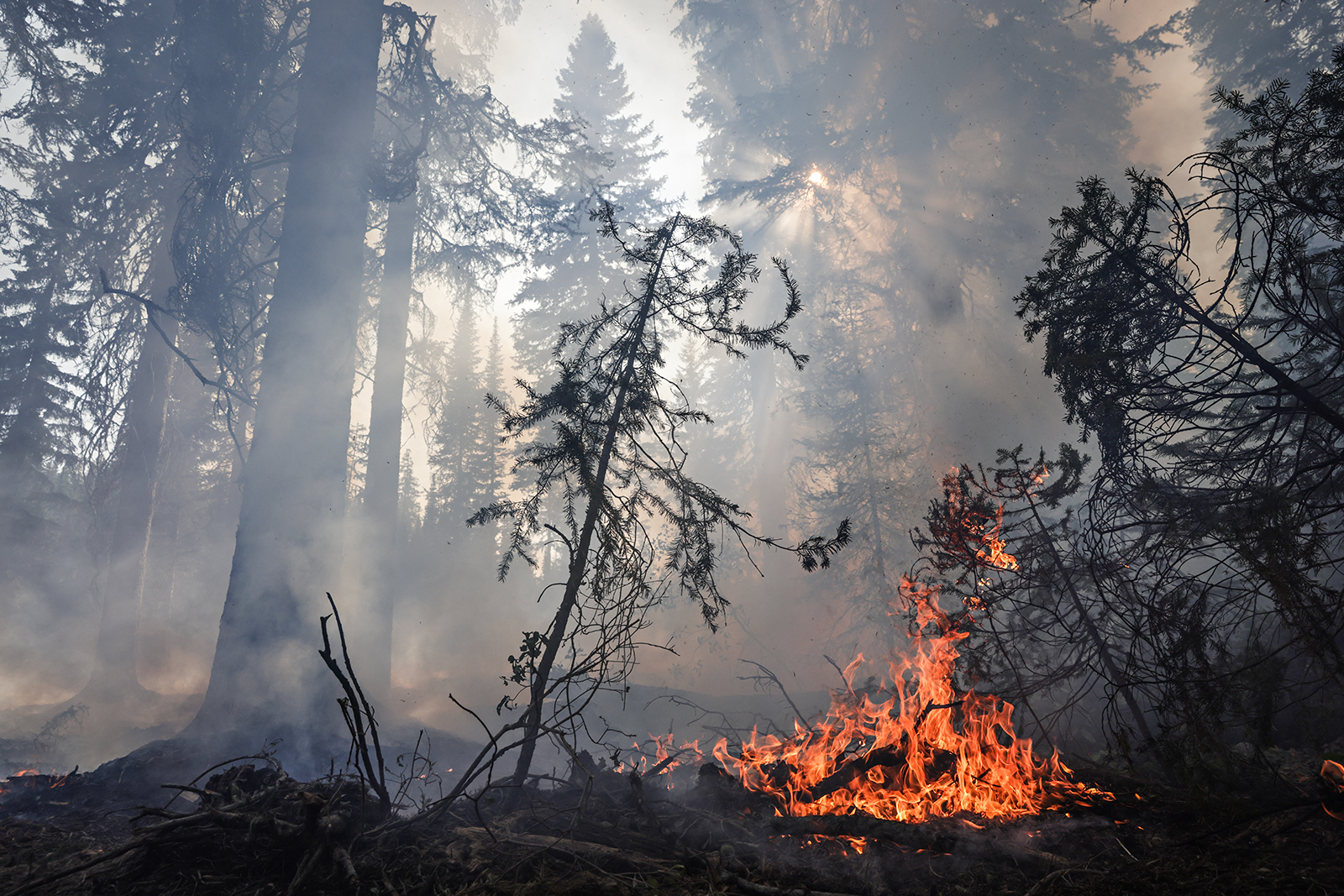
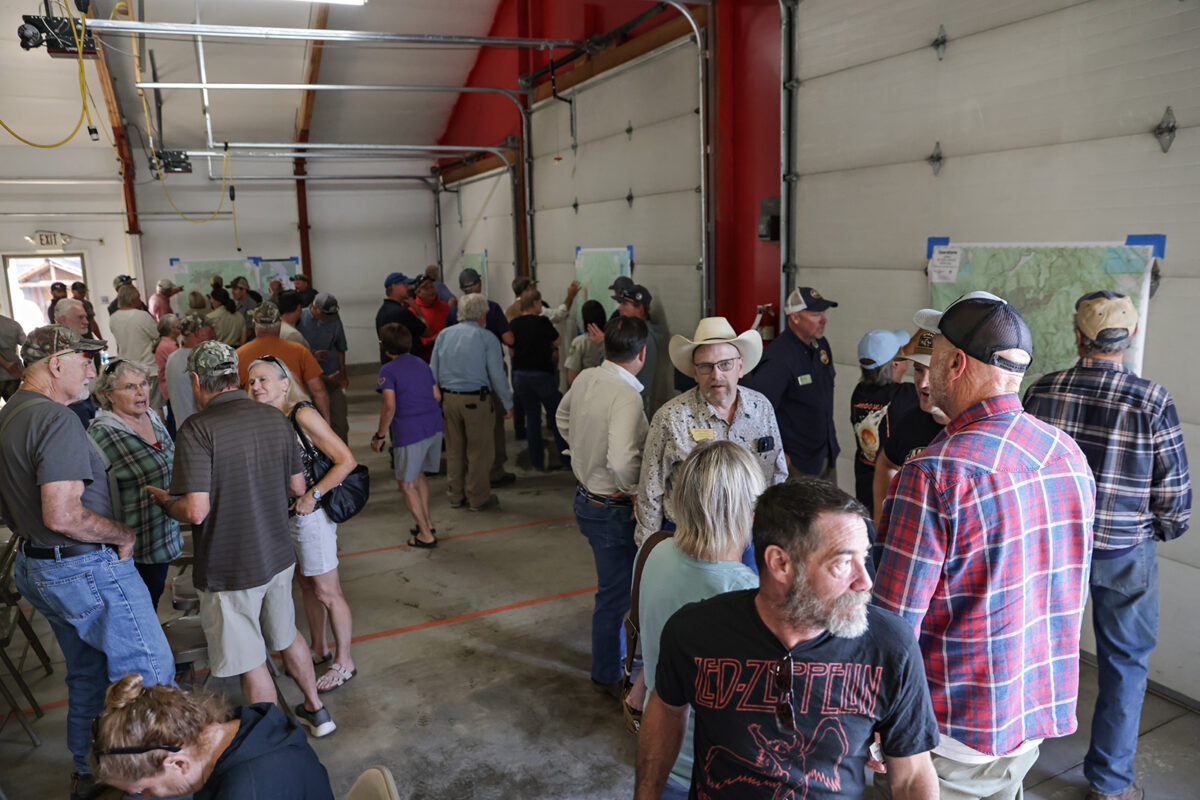
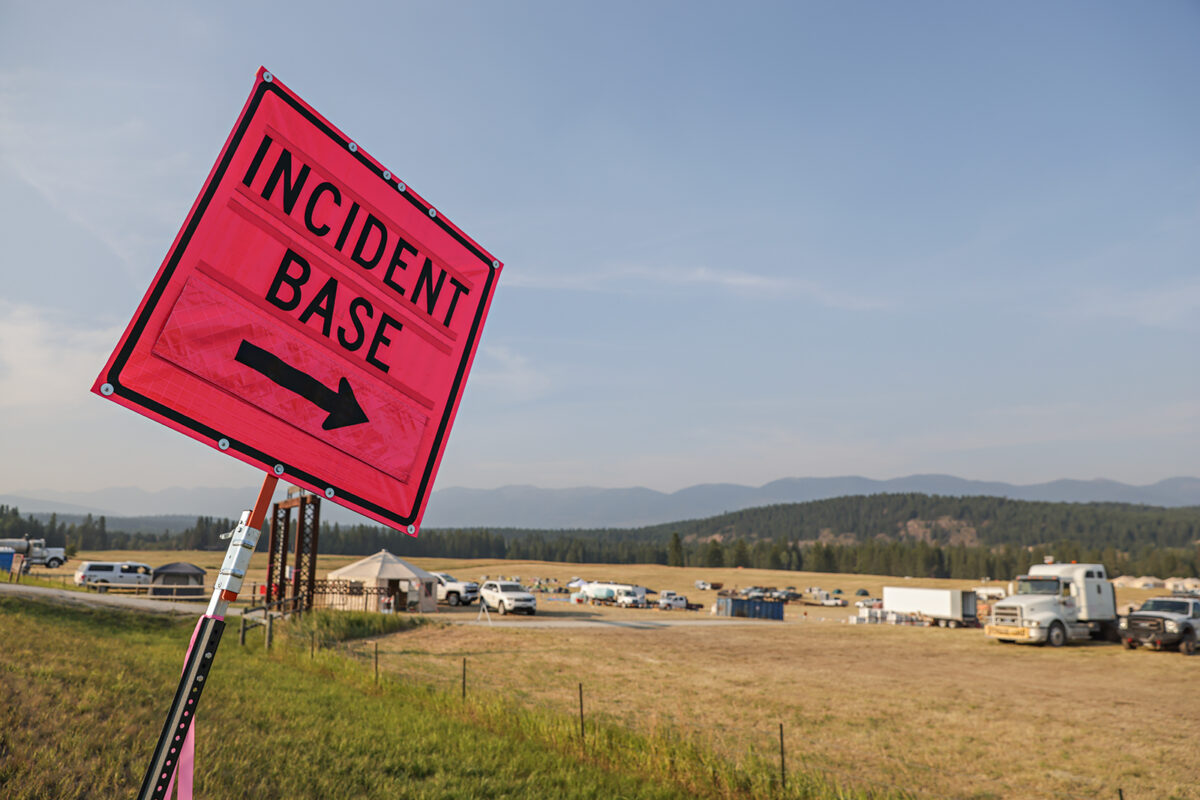
On Tuesday evening, Great Basin Team 7 and local agencies held a community meeting to debrief the uncontained Skillet Fire. Residents — some of whom have been under an evacuation order for days — packed into the Olney Fire Station on folding chairs and stood along the walls to hear the latest updates.
“We are cautiously optimistic,” Mike Johnston, the Incident Commander for Great Basin Team 7, told community members in attendance. The national interagency team took command of the fire on Sunday and has been coordinating with local agencies in an effort to contain the Skillet Fire.
As of Aug. 5, approximately 362 personnel had been assigned to the lightning-caused wildfire, which broke out on July 29. Over the weekend, it picked up significantly following heavy winds coming from the Pacific Northwest. Its behavior, the team said, is largely attributed to heavy fuels in the area, particularly after a blowdown event from last December. Progression has since slowed down — as of this morning, the fire has reached a size of 2,700 acres — but forecasts of hotter temperatures as the week continues could cause an uptick in fire activity.
On Aug. 1, three days after the fire broke out, the Flathead County Sheriff’s Office ordered an evacuation on sections of Good Creek Road and all of Alder Creek Road. That decision, Sheriff Brian Heino said, was not taken lightly. “The main reason was we were seeing this heavy wind that was coming in,” Heino said. The unpredictability of the wind, and the detection of a wind tunnel pointed toward Alder Creek, ultimately pushed Heino to order an evacuation.
“I want to give you as much time to make those decisions,” he said. “Some of you have stock animals, some of you have important valuables. We want to give you all that time.” He referenced the sudden wildfires in Spokane in which 65,000 people were ordered to evacuate almost immediately. That situation, Heino said, is what they hoped to avoid.
As residents leave behind their homes, the Sheriff’s Office has put in 24-hour law enforcement to help the transition and prevent any “riff-raff.” They have also been working with Flathead County Office of Emergency Services on a structural protection plan should the fire spread into the area.
“Hopefully we don’t get to that level,” Heino said, “but that’s what we want to be prepared for.”
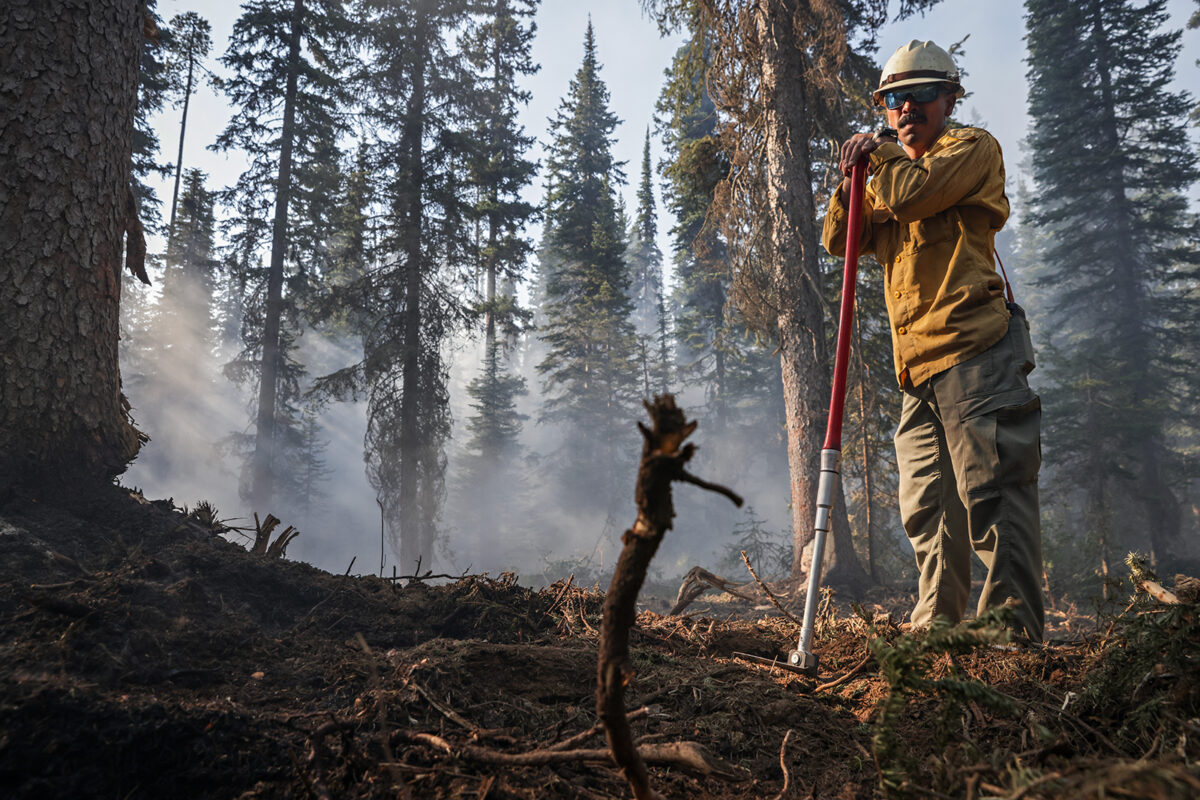
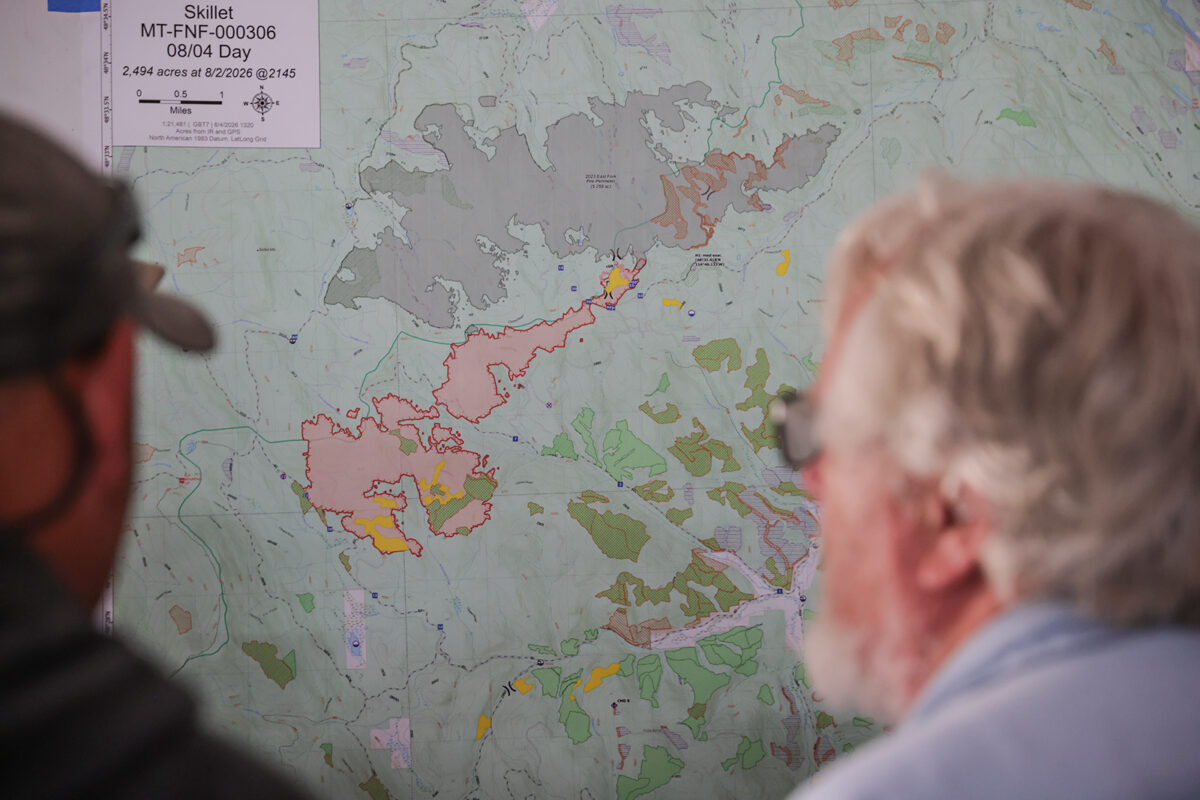
Cody Kidd, Operations Section Chief with Great Basin Team 7, broke down their plan for containment. Following the team’s deployment on Sunday morning, firefighters were able to gain an anchor point along 60 Road and near Good Creek. “So we have a good, safe spot to keep progressing around the fire,” Kidd said.
The fire’s northwest edge has been pushing towards the burn scar from the 2023 East Fork Fire, which presents a natural fuels barrier. The team plans to take advantage of the fire’s movement into the buffer, tying off the fire around its southern and eastern borders.
Operational efforts, Kidd said, have been focused on the southeast corner of the fire due to the risk posed to communities in that area. “In two days,” Kidd said, “we’re going to have a really good handle on the fire between the 60 Road and Alder Creek.”
Strained national resources have created additional hurdles to contain the Skillet Fire. Across the U.S., Johnston told the group, 145 large fires have broken out. Additionally, Canada has significant ongoing wildfires and is unable to provide some of the resources it typically might spare. “We’re getting enough to do what we need to do,” Johnston said, but sparse resources have required the team to be strategic in their efforts.
Without being able to rely on an abundance of national resources, community members were urged to do what they can to mitigate the risk of wildfires. “My attitude is, it’s our job to provide you the information,” said Flathead County Fire Warden Lincoln Chute. “If we don’t provide it, that’s on us. But if we provide it, and you don’t do it, that’s on you.”
Residents were encouraged to protect their homes by removing potential fire hazards, especially those in areas that have not been evacuated. Firesafe Flathead, a local organization working to create fire-adapted communities, offered residents more information on how they can protect their homes, including on-site consultations. They were also encouraged to sign up for emergency alerts from Flathead County at flatheadcounty.genasys.com/portal to stay informed as the fire continues to burn.
“This is our typical wildland fire season in northwest Montana. We got all of August and September. Nationally, there’s no incident management teams left. There are very little resources,” Chute said. “So we really need to do everything we can to prevent any human-caused fires.”