Historic Preservation Specialists Volunteer to Complete Wheeler Cabin Restoration on Glacier’s Lake McDonald
Built in 1942 by U.S. Sen. Burton K. Wheeler and his wife, Lulu, the cabin is nearing its final stage of a multi-year, $1.5 million transformation into the Waterton Glacier International Peace Center
By Tristan Scott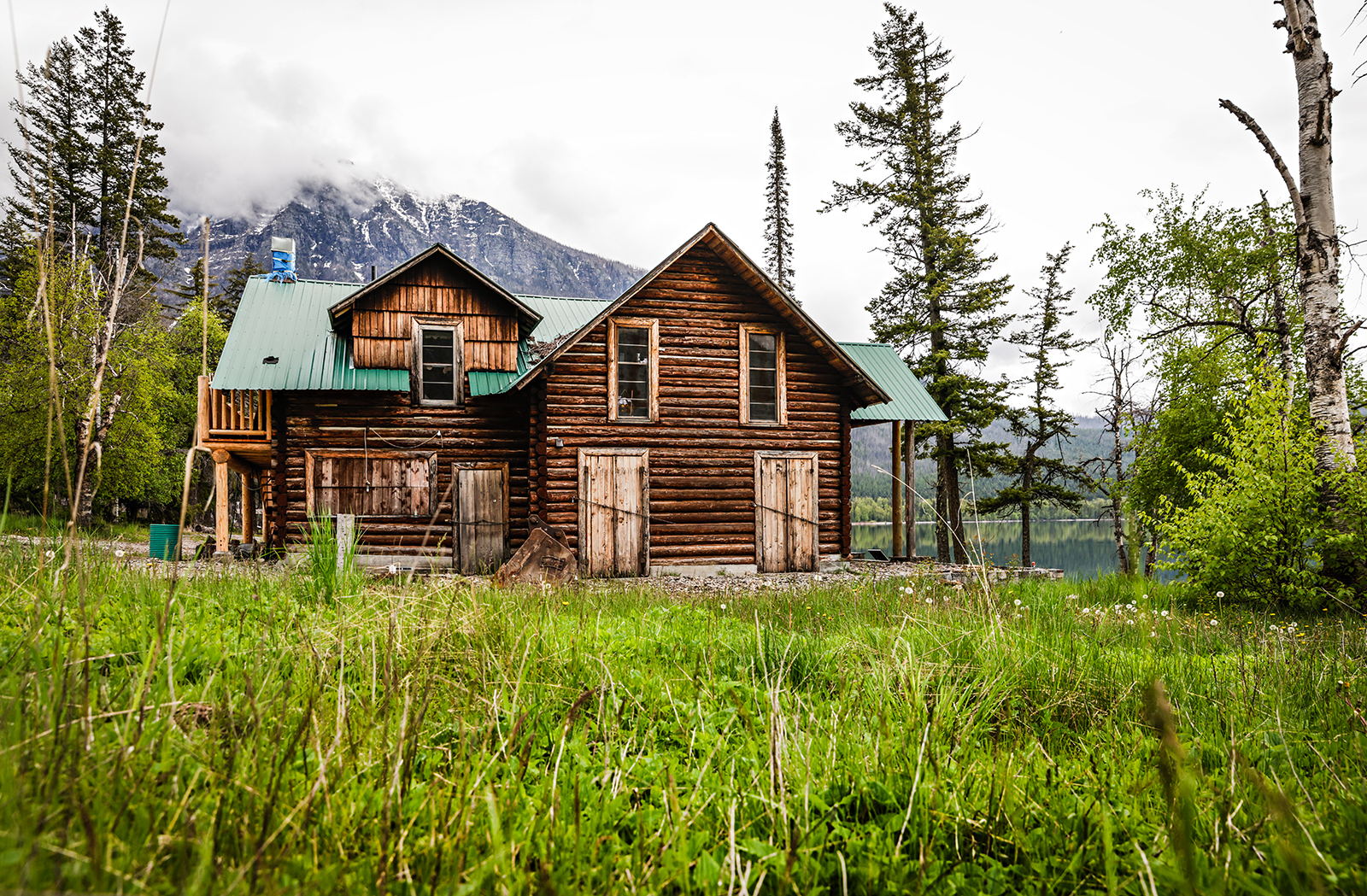
Eight years after wildland firefighters rescued the historic Wheeler Cabin from flames that swept through Glacier National Park, a volunteer team of preservation specialists has converged on the shores of Lake McDonald to put the finishing touches on a $1.5 million restoration project to preserve the property as a peace center for future generations.
This past month, members of the Preserve Montana Trades Corps, a statewide nonprofit preservation organization, restored the cabin’s windows and doors, marking one of the final steps in a multi-year effort to transform the idyllic property that once served as a legendary Montana lawmaker’s refuge from Washington politics into the Waterton Glacier International Peace Center.
The cabin was built in 1942 by U.S. Senator Burton K. Wheeler and his wife Lulu as a replacement for a more primitive cabin the couple had owned since 1916. Located on property leased from the National Park Service, the first cabin burned in 1941.
For nearly a century, multiple generations of the Wheeler family used the cabins as a summer home, beginning when Wheeler served as U.S. District Attorney in Butte. Even throughout the senator’s career in the Washington, D.C. area, the family would decamp to the shores of Lake McDonald, often staying for the entire summer after making the long cross-country journey.
While Burton Wheeler died in 1975, the lakeside cabin was used by family members for nearly four more decades. As part of a 1942 deal that facilitated construction of the current cabin, the Wheelers agreed to turn over the structure sitting on leased land to the National Park Service after the death of the last of their six children. The transfer occurred in 2014.
The Wheeler Cabin was added to the National Register of Historic Places in 1998. The nomination form notes that the one-and-a-half-story log-walled cabin, largely designed by Lulu Wheeler, maintains the rustic style of the original version that burned.
The durability of the senator’s political career and its complicated trajectory adds to the historical significance of the cabin, the nomination notes. A Democrat who served in the U.S. Senate from 1923 to 1947, Wheeler played a key role in the investigation of the Teapot Dome oil scandal and later was a key supporter of the New Deal. Later, he became critical of President Franklin D. Roosevelt’s “court-packing” initiative to add judges to the nine-member U.S. Supreme Court.
A vision rooted in the world’s first peace park
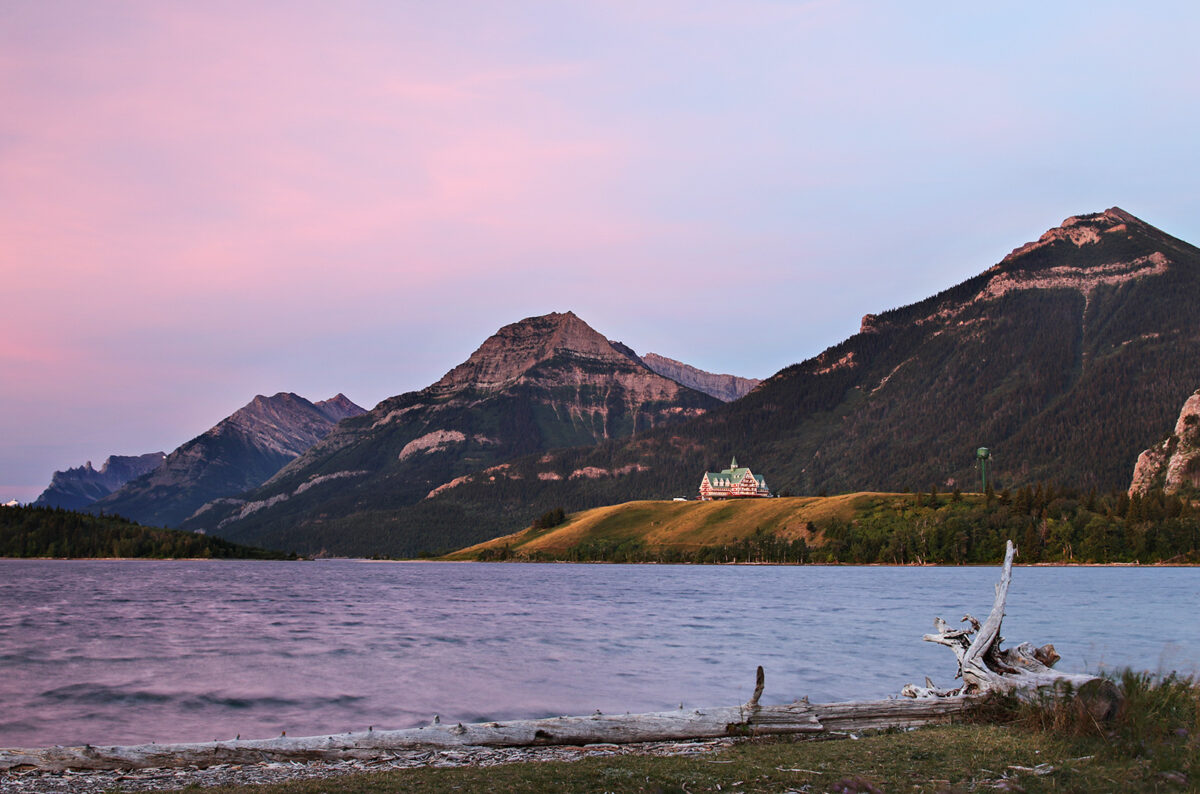
The idea of transforming the cabin into an international gathering place traces back to former Glacier National Park Superintendent Jeff Mow, whose vision helped set the project in motion. Mow saw an opportunity to tie the cabin’s legacy to the broader — and largely overlooked — history of Waterton-Glacier International Peace Park itself: in 1932, the U.S. Congress and the Canadian Parliament simultaneously passed legislation establishing the world’s first international peace park, uniting Montana’s Glacier National Park with Alberta’s Waterton Lakes National Park in the wake of World War I.
Mow’s vision was for a place where visitors — from Waterton officials to international guests — could come stay at the Wheeler Cabin and engage with that history directly, using the site to explore the goals of international peace parks and the ways countries can work seamlessly across borders on conservation.
“I think this is a project that sort of captures the idea of what’s possible in terms of building off that International Peace Park title, which is not insignificant given that both the U.S. Congress and the Canadian Parliament came together to establish a location in the park where we can talk about the goal of international peace,” Mow said.
That model has since taken root elsewhere in the world, often in places with far more fraught politics than the Montana-Alberta border. The concept has been championed by the International Peace Parks Foundation, based in South Africa, where the late Nelson Mandela used the establishment of peace parks to help settle conflicts with neighboring countries by finding common ground in the shared need for conservation. Similar efforts have supported mountain gorilla habitat across Central African borders, and media mogul Ted Turner once explored whether a peace park might be established in the Korean Demilitarized Zone — a 2.5-mile-wide corridor separating North and South Korea. Even the former border between East and West Germany has been repurposed to accommodate a prominent portion of of the Iron Curtain Trail bike path, which runs from the Barents Sea down to the Black Sea, tracing the former Cold War border that split Europe.
Closer to home, a workshop organized by Canadian conservationist Harvey Locke and the University of Montana’s Matthew McKinney recently brought together 35 practitioners from around the world working in transboundary conservation. Their stories underscored how collaboration persists even without formal diplomatic ties — one participant, a Kurdish official from northern Iraq, described coordinating with counterparts in Iran to manage shared wetlands fed by snowmelt that crosses the border regardless of political tensions.
“Snow falls in Iran but flows into Iraq,” Mow said. “And that means they have to coordinate and collaborate on natural resource management.”
The Waterton-Glacier peace park itself has its own roots in grassroots diplomacy: it was Rotarians from Canada and the United States who first pushed the idea and persuaded their governments to act. Rotary clubs still mark the occasion each year with a “Hands Across the Border” celebration in September. This year’s gathering is planned for Sept. 25-27 in Kalispell, with Mow helping organize the event; organizers are working to include activities at the Wheeler property. A similar gathering in 2014 drew roughly 120 Rotarians from both countries, with speakers including representatives from the Blackfeet Nation and the Confederated Salish and Kootenai Tribes.
The Wheeler Cabin project’s original partnership was broader still, bringing together the National Park Service, the University of Montana’s school of forestry, the Glacier Institute, and the Glacier National Park Conservancy. The University of Montana was initially expected to take the lead, modeled in part on a similar transformation of a historic ranch property at Grand Teton National Park led by the University of Wyoming.
Mow gave the Glacier National Park Conservancy extra credit for maintaining fundraising momentum on the restoration project while overcoming unexpected obstacles.
“Some of the rehabilitation has taken longer than expected, primarily because of how different grant money was distributed and the National Park Service’s need to prioritize other rehabilitation work at the north end of Lake McDonald,” Mow said.
WHAT DO THESE CHANGES MEAN FOR NORTHWEST MONTANA?
We’re committed to highlighting our great outdoors and the policies and conversations shaping it. And you can help! Become a member to support more reporting on public lands and keep you and your neighbors in the loop and on the trails.
Lacy Kowalski, associate director for programs and policy at the Glacier National Park Conservancy, said the Wheeler Cabin “holds a unique place in the story of this landscape and the people who have shaped it.”
“Partnering with Preserve Montana and its Trades Corps allows us to restore this building with the craftsmanship and care it deserves, while building toward a future where it can host the kind of dialogue and learning this place has always inspired,” Kowalski said.
Although Mow acknowledged that “this is not the most welcoming time for international programs,” some of which were defunded by the Trump administration’s Department of Government Efficiency (DOGE), he said “we think of parks in much more enduring terms than any one administration.”
“I often say, ‘This too shall pass,'” Mow said. “And when it does, we want to be ready and prepared to advance our international peace park plans. So, the fact that they are tying the Wheeler cabin into those plans is really great.”
Restoring the cabin’s “historic fabric”
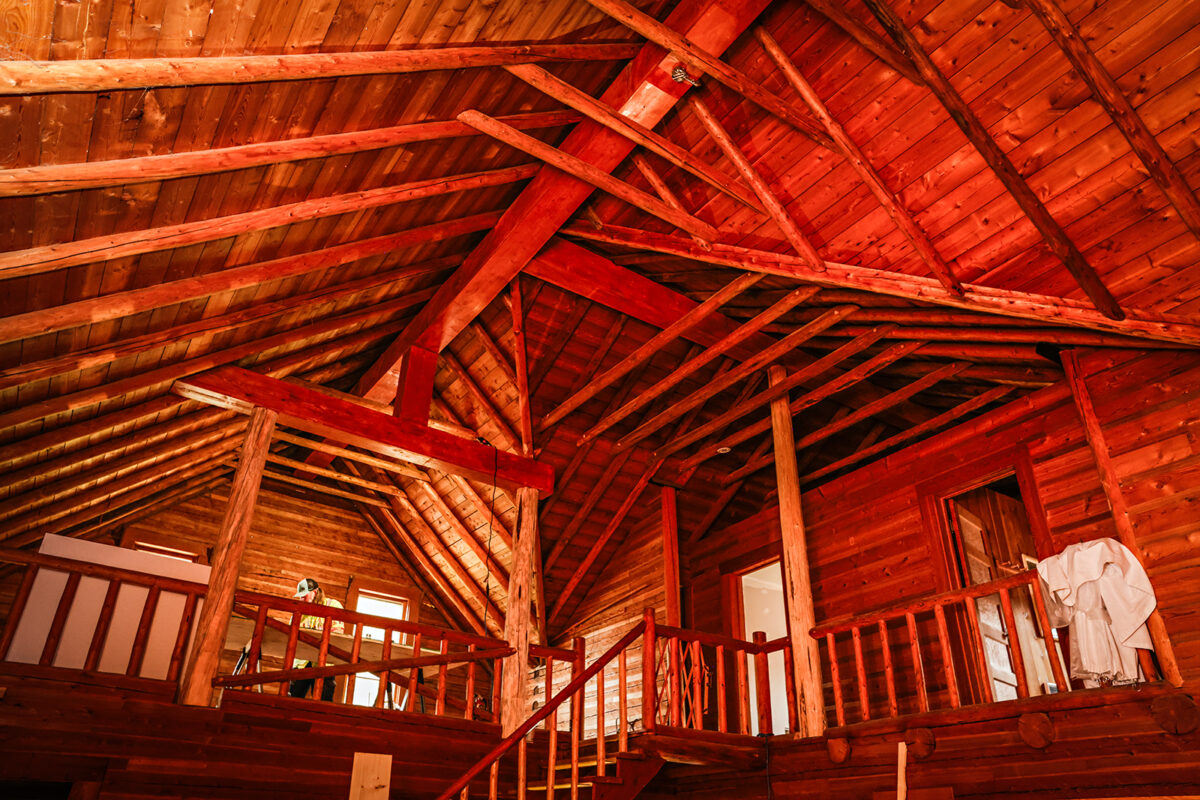
Restoring the Wheeler Cabin’s windows and doors may not seem like a heavy lift to the casual observer, but it requires a specialized workforce to achieve a lofty goal — in this case, preserving the building’s historic fabric while advancing a broader vision for the site as a place of education, dialogue and connection.
“This project is exactly the kind of hands-on preservation work our Trades Corps was built for,” Jenny Buddenborg, executive director of Preserve Montana, said. “We’re proud to bring traditional trades skills to a building with such significance to Montana’s history, and to help lay the groundwork for a space that will serve visitors and communities for generations to come.”
Once complete, the Waterton Glacier International Peace Center at Wheeler Cabin will offer interpretation of Wheeler’s legacy and serve as a day-use hub for discussions on pressing issues facing communities today. The center will also host workshops promoting conservation through an environmental peacebuilding approach, fostering education and collaboration across borders and disciplines.
The Preserve Montana Trades Corps trains the next generation of preservation tradespeople through hands-on restoration projects on historic buildings across the state. This year’s cohort brought together young adults ages 18 to 29 interested in building careers in preservation trades, and Wheeler Cabin was one of the program’s premier projects — a two-week window and door restoration effort that built on a relationship between Preserve Montana and the park dating back to an earlier NPS-partnered window restoration workshop at the cabin.
The work is more technical than it might appear. Because Wheeler Cabin is a log structure, decades of settling had opened significant gaps around the door frames, requiring door thresholds to be built from scratch — fine carpentry work — alongside repairs to the cabin’s floor-to-ceiling, multi-pane windows. Crews sanded down wood worn by weather despite the shutters, replaced broken and oddly frosted glass panes, and reglazed the windows. A common final step was applying linseed oil, a natural alternative to latex paint that seals wood against moisture and weather while helping deter rodents and improve energy efficiency.

Two full-time Preserve Montana restoration staff and three Trades Corps apprentices worked on site, joined for a few days by Buddenborg herself.
The effort reflects a broader mission for Preserve Montana, a statewide nonprofit founded in 1987 dedicated to protecting Montana’s historic places, traditional landscapes and cultural heritage through advocacy, documentation, National Register listings, and — increasingly, over the past decade or more — hands-on restoration and trades training. The Trades Corps was created in response to a nationwide shortage of preservation tradespeople skilled in work like historic window restoration and plastering, even as much of the country’s building stock passes the half-century mark. Buddenborg has described the approach as “boots on the ground” — a direct response to a workforce shortage in the preservation trades, and a way to address what advocates say amounts to billions of dollars in deferred maintenance on federally managed historic properties nationwide.
“There has been this real loss of preservation trades people across the U.S. for many years now and it’s hit our cultural and historic properties hard,” Buddenborg said. “It’s not easy to find people who specialize in historic windows or plastering, and yet many of Montana’s buildings are 50 years or older. There’s a huge inventory of buildings that need care, not just because we love their heritage and want to preserve their historic presence, but also to balance existing community needs.”
A narrow escape, and the road ahead
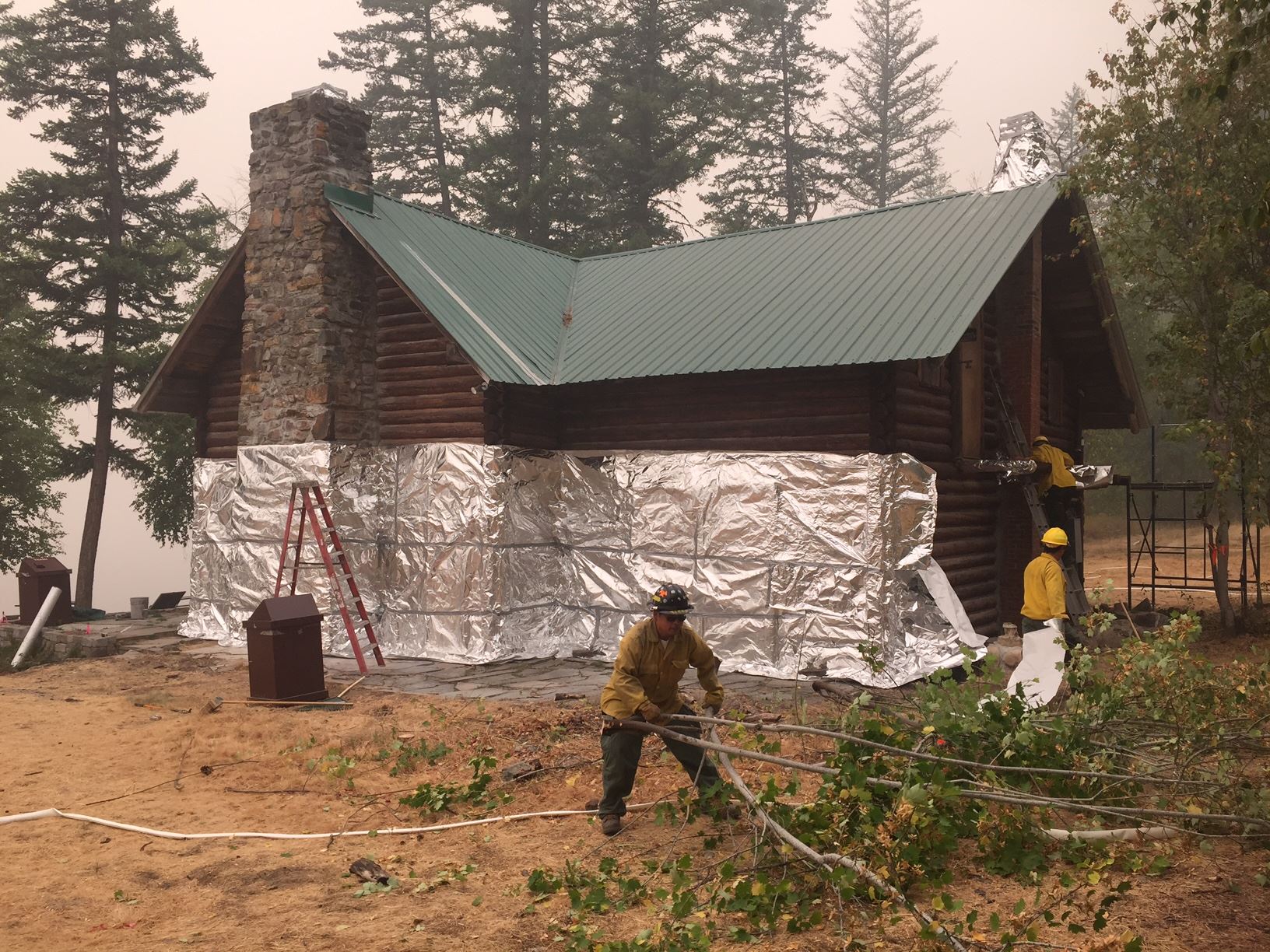
Another part of the project involved the razing and removal of several guest cabins and outbuildings near the Wheeler Cabin that were heavily damaged in the Howe Ridge Fire in 2018. Working to save the main cabin, quick-witted fire crews used a home fire extinguisher to douse flames in the cabin’s eaves and saved the structure from extensive damage, said former Glacier Conservancy Director Doug Mitchell. Charred trees rest on the ground just a few yards from the cabin, serving as stark reminders of its narrow escape.
A big chunk of the money for the cabin project came from a 2023 state historic preservation grant for $500,000. Needing more money to complete the work, the Glacier National Park Conservancy worked to raise money to reach the project’s full $1.5 million cost.
Some phases of the rehabilitation took longer than expected, partly tied to the timing of different grant awards and partly to construction access — work on the north end of Lake McDonald was greatly facilitated once a new bridge was completed nearby.
Work remaining includes daubing between the cabin’s logs — Preserve Montana has yet to find a contractor skilled in the historical technique, though the group is likely to take on that piece next year — along with upgrades to the property’s chlorination system, landscaping (deliberately delayed until construction traffic tapers off), and improvements to an upstairs bathroom. None of that work is expected to be finished before next summer, though the property should be substantially complete and usable by the end of this summer.
As work continues, Preserve Montana and the Glacier National Park Conservancy will share updates on the project’s progress and on opportunities for the public to engage with the future Peace Center.